

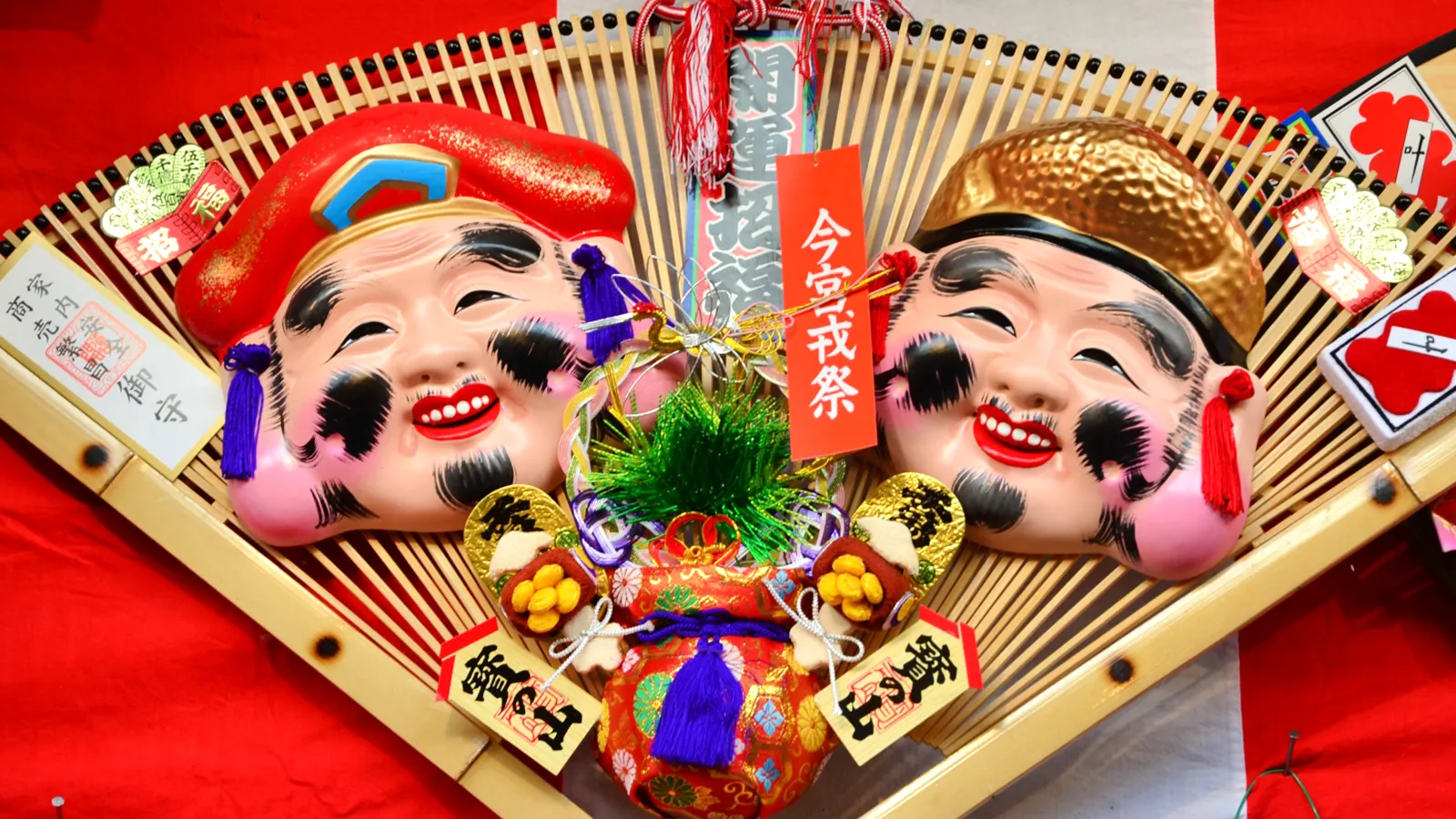
Toka Ebisu (十日戎) is known as the Kansai region’s largest New Year event for praying for business prosperity, attracting many worshippers from across the nation every year from January 9th to 11th. Particularly noteworthy are the lucky bamboo charms crafted by artisans, where traditional craftsmanship breathes life into intricate decorations and auspicious ornaments unique to each region.
This article provides comprehensive explanations from both cultural and practical perspectives, covering the background and meaning of these lucky charm crafts, worship procedures and etiquette, and the characteristics of major shrines worth visiting in 2026. This “complete guide” will be useful not only for first-time visitors to Toka Ebisu but also for readers who wish to deeply appreciate traditional events and craft culture.
Table of Contents
What is Toka Ebisu? The Kansai Region’s Largest New Year Event for Business Prosperity
Toka Ebisu (十日戎) is a New Year event held at Ebisu shrines throughout the Kansai region over three days every year: January 9th, 10th, and 11th, dedicated to praying for “business prosperity”. Among these, Osaka’s Imamiya Ebisu Shrine, Nishinomiya Shrine, and Kyoto Ebisu Shrine are called the “Three Great Ebisu Shrines” and attract many worshippers annually.
Within the shrine precincts, “lucky bamboo” (fukuzasa) symbolizing business prosperity is bestowed by fukumusume (福娘, lucky maidens) at auspicious stalls, and visitors enjoy selecting lucky charms decorated with rakes, gold coins, sea bream, and other ornaments. This deeply rooted event in the Kansai region, where merchant culture has flourished since the Edo period, is characterized by a wide range of worshippers including corporations, sole proprietors, and shop owners who visit with the intention of boosting economic fortune. In 2026, as in previous years, large crowds are expected to gather for this vibrant New Year event following the first three days of January.
Toka Ebisu 2026 (Reiwa 8) Event Overview
Imamiya Ebisu Shrine Toka Ebisu
- Event dates: January 9th, 10th, and 11th
- Worship: Available 24 hours during Toka Ebisu period
- Lucky bamboo distribution: 7:00 AM to 1:00 AM the following day
- Fees: Worship/lucky bamboo free; auspicious ornaments (kiccho) to decorate the bamboo are paid
- Access: 1-6-10 Ebisucho-Nishi, Naniwa-ku, Osaka, Osaka Prefecture 556-0003
- Official website: https://www.imamiya-ebisu.jp/
Nishinomiya Shrine Toka Ebisu
- Event dates: January 9th, 10th, and 11th
- Lucky bamboo distribution hours: January 9th 8:00 AM-12:00 AM / January 10th 6:00 AM-1:00 AM the following day / January 11th 8:00 AM-1:00 AM the following day
- Kaihonshinsji Fukuotoko Selection: Early morning of January 10th
- Fees: Worship free; lucky bamboo large ¥3,000, small ¥1,500
- Access: 1-17 Shakeimachi, Nishinomiya, Hyogo Prefecture 662-0974
- Official website: https://nishinomiya-ebisu.com/about/
Kyoto Ebisu Toka Ebisu
- Event dates: January 8th-12th
- 8th Shofuku Festival 9:00 AM-11:00 PM
- 9th Yoi Ebisu Festival 9:00 AM-open all night
- 10th Toka Ebisu Grand Festival open all night
- 11th Nokorifuku Festival -12:00 AM
- 12th Teppuku Festival 9:00 AM-10:00 PM
- Fees: Worship free; lucky bamboo ¥3,500
- Access: 125 Komatsucho, Higashiyama-ku, Kyoto, Kyoto Prefecture 605-0811 Ebisu Shrine
- Official website: https://www.kyoto-ebisu.jp/
The 2026 Toka Ebisu will be held as usual over three days: January 9th “Yoi Ebisu” (Eve Ebisu), 10th “Hon Ebisu” (Main Ebisu), and 11th “Nokori Ebisu” (Remaining Fortune Ebisu). At Imamiya Ebisu Shrine (Naniwa-ku, Osaka), Nishinomiya Shrine (Nishinomiya City, Hyogo Prefecture), Kyoto Ebisu Shrine (Higashiyama-ku, Kyoto), and other Ebisu shrines throughout the Kansai region, lucky bamboo and auspicious ornaments will be distributed, prayers for business prosperity offered, and food stalls will be set up, with crowds from early morning to late at night. The 10th, Main Ebisu day, is particularly crowded, bustling with visitors watching the lucky bamboo distribution by fukumusume and the famous “hashiri-mairi” (running worship style where worshippers run within the shrine grounds).
In 2026, January 10th falls on a Saturday, and depending on the holiday alignment, even larger attendance than usual is expected, with increased worship demand from corporate representatives, shop owners, and sole proprietors. Worship during early morning hours (5:00-7:00 AM) is relatively smooth, and if you want to enjoy the food stalls, the evening hours (after 4:00 PM into the night) are the liveliest. For those considering worship while avoiding crowds, visiting during the nighttime hours of Yoi Ebisu (January 9th) is also an option.
Origin of the Festival: Ebisu Faith and the History of How the “God of Business Prosperity” Spread
Ebisu-sama, the central figure of Toka Ebisu, is one of the Seven Gods of Fortune and has long been worshipped as the “god of business prosperity” and “god of bountiful fishing”. While there are various theories about its origins from the Heian period through the medieval era, it was originally worshipped as a deity governing fishing and maritime safety, which was later embraced as a guardian god for merchants from the medieval period onward.
When commercial cities such as Osaka, Sakai, and Hyogo developed during the Edo period, Ebisu faith spread rapidly, and many merchants began visiting Imamiya Ebisu and Nishinomiya Shrine for “New Year wishes at the beginning of the year.” The lucky bamboo and auspicious ornaments distributed at Toka Ebisu became beloved as lucky charms symbolizing Ebisu’s “prosperity” and “good fortune” among merchants, and this tradition continues to the present day.
Lucky bamboo often carries wish plaques for attracting good fortune, business prosperity, and household safety, while auspicious ornaments (Ebisu lanterns, sea bream, small mallets, etc.) function as decorative items expressing specific wishes. From this historical background, Toka Ebisu has been firmly passed down as an important event that “determines business fortune for the year.”
Reasons for Taking Root in Kansai: Regional Background in Osaka, Kobe, and Kyoto
Osaka Prefecture
The reason Toka Ebisu particularly developed in the Kansai region is closely tied to the area’s merchant culture. Osaka has been called “the nation’s kitchen” since ancient times, and during the Edo period, as the center of commerce with a substantial merchant class, Ebisu faith naturally merged with prayers for business prosperity. During the Meiji era, merchant associations from various industries including fish markets (zakoba), lumber merchant associations, hemp and ramie merchant associations, wax merchant associations, lacquer merchant associations, and hardware merchant associations formed religious societies, making Toka Ebisu even more prosperous.
Hyogo Prefecture
In Hyogo and Kobe, due to the historical background as a port town—from Owada-no-tomari in the Heian period, the artificial island construction by Taira no Kiyomori in the 12th century, to serving as a route base for kitamaebune ships during the Edo period—fishing and commercial faith overlapped, increasing affinity with Ebisu deity. The tradition of offering seafood such as tuna, sea bream, and yellowtail from the Kobe Central Wholesale Market reflects this port town character.
Kyoto Prefecture
Kyoto has approximately 800 years of tradition since Kyoto Ebisu Shrine (Ebisu Shrine) was established in Kennin 2 (1202) as the guardian shrine when Zen priest Eisai built Kenninji Temple. With a long history of traditional culture and artisan neighborhoods, Ebisu was embraced as the guardian of handicrafts and commerce. At Kyoto Ebisu Shrine, unique ceremonies are held where maiko and actresses distribute lucky bamboo, characteristic of the coexistence of culture and faith. Notably, Kyoto Ebisu Shrine was the first to popularize bamboo in the form of talismans, and the current lucky bamboo style is said to have originated in Kyoto.
Due to these regional characteristics, in Kansai, “starting work” and “fortune-inviting events” became unified, establishing Toka Ebisu as regional culture. Today, local companies, shopping districts, artisan associations, and commercial associations also visit to worship, and traditional performing arts such as Awaji ningyo joruri (puppet theater) are dedicated, passed down as a “Kansai-style New Year event where industry and faith coexist.”
Highlights and Worship Points for Toka Ebisu 2026
Toka Ebisu is widely known as the Kansai New Year event for praying for business prosperity, but the “lucky bamboo” distributed in the shrine precincts actually retains strong elements of traditional lucky charm crafts, including bamboo work, paper crafts, and ornamental metalwork (kazari-kanagu).
In 2026, it will be held on a large scale from January 9th to 11th at Imamiya Ebisu, Nishinomiya Shrine, Kyoto Ebisu Shrine, and other locations, with the atmosphere differing each day. Main Ebisu day is particularly lively, enveloped in energy from worshippers receiving lucky bamboo from fukumusume. Each lucky charm distributed has meaning, and the unique pleasure of Toka Ebisu is being able to appreciate the charm of “craft-like auspicious decorations” created by artisan handiwork.
Differences Between Yoi Ebisu, Hon Ebisu, and Nokori Ebisu and the Meaning of the Three Days
Toka Ebisu begins with “Yoi Ebisu” on January 9th, followed by “Hon Ebisu” on the 10th, and concludes with “Nokori Ebisu” on the 11th. Yoi Ebisu is the day to “prepare the place” to welcome the year’s fortune, suitable for those who want to worship leisurely and carefully select lucky bamboo and charms. Hon Ebisu is the most crowded, the central day when shrines hold fukuotoko selection and special events.
In the precincts, lucky bamboo with bamboo craft frameworks are arranged in large quantities, being handed to worshippers one after another—a sight worth seeing. Nokori Ebisu is considered “the day to receive remaining fortune,” and as crowds subside, it’s an easy day to worship while confirming the meaning of auspicious decorations along with prayers for household safety and business prosperity.
Since the atmosphere changes throughout the three days, choosing a day according to your purpose allows for a deeper worship experience.
Famous “Fukumusume” and Distribution Ceremonies: Types and Origins of Auspicious Ornaments, Lucky Bamboo, and Lucky Charms
The symbol of Toka Ebisu is the distribution of “lucky bamboo” by fukumusume. Lucky bamboo consists of bamboo stalks made from green bamboo with auspicious decorations attached, and these decorations contain many traditional craft elements. For example, gold coins and treasure chests are metalwork crafted by ornamental metal artisans, while treasure ships and rakes are made using woodworking and paper craft techniques.
Sea bream decorations have long been passed down as symbols of business prosperity, while straw bags and winnowing baskets (mi) are folk craft motifs representing agricultural tools symbolizing abundance. Each decoration has meaning, and at some shrines, you can choose the number and combination of items to attach to the bamboo.
While the sight of fukumusume gracefully waving lucky bamboo is gorgeous, behind it exists an “artisan culture that continues creating auspicious decorations,” making Toka Ebisu a seasonal event where craft demand peaks. When worshipping, selecting decorations while knowing their meanings allows you to spend the year with greater attachment.
Evening Precinct Production and Food Stall Area Charm
At night during Toka Ebisu, the precincts are illuminated, and the green bamboo and golden auspicious ornaments shine in the light, creating a gorgeous atmosphere. The metalwork and paper decorations attached to the lucky bamboo reflect light, offering craft beauty different from daytime viewing—a unique charm.
The food stall area is most crowded from evening onward, but with typical Kansai variety, many diverse stalls line up where you can enjoy street food and festival games. For those wishing to avoid crowds, Yoi Ebisu evening or Nokori Ebisu morning are relatively smooth. Early hours suit families, while evening illumination times are ideal for those wanting to take photos or carefully examine auspicious decorations.
Walking through the precincts from a craft perspective allows you to clearly see lucky bamboo construction, differences in craftsmanship, and the individuality of decorations at each shrine, enabling deeper appreciation of the “world of auspicious items” unique to Toka Ebisu.
Guide to Major Shrine Characteristics and Navigation
Toka Ebisu is held throughout the Kansai region, but the atmosphere, lucky bamboo decoration distribution, and worship flow differ at each shrine. Particularly, the three shrines of Imamiya Ebisu (Osaka), Nishinomiya Shrine (Hyogo), and Kyoto Ebisu Shrine are considered the “Three Great Ebisu Shrines of Kansai” and attract many worshippers annually.
Knowing the liveliness of each precinct, decoration variations, and unique shrine events allows deeper enjoyment of Toka Ebisu. Additionally, the auspicious ornaments attached to lucky bamboo have strong aspects as “lucky charm crafts” combining bamboo, paper, woodwork, and metalwork, with subtle design differences between shrines being an interesting point. Here we introduce the characteristics and navigation tips for each of the three shrines.
Imamiya Ebisu Shrine (Osaka): The “Headquarters of Business Prosperity” with National Recognition
Imamiya Ebisu Shrine is so popular it’s called the “headquarters” of Toka Ebisu, with over 1 million worshippers visiting over the three days in some years. The precincts are a treasure trove of lucky charm crafts, with particularly abundant varieties of auspicious ornaments to attach to lucky bamboo. In addition to gold coin, straw bag, and sea bream decorations, there are mini rakes using bamboo work and treasure ships made of colored paper crafts, with Osaka-like brilliance standing out.
Lucky bamboo distribution by fukumusume is Imamiya Ebisu’s specialty, enveloped in enthusiasm with the call “Bring bamboo for business prosperity!” while gently shaking the base of the bamboo. As a navigation tip, since Hon Ebisu (10th) is extremely crowded, targeting Yoi Ebisu (9th) evening or Nokori Ebisu (11th) morning is relatively smooth.
Additionally, the approach from shopping streets to the shrine has many food stalls and artisan shops selling lucky charms scattered about, offering the enjoyment of comparing lucky bamboo decorations from a craft perspective.
Nishinomiya Shrine (Hyogo): The Enthusiasm of Hon Ebisu Known for Fukuotoko Selection
Nishinomiya Shrine is famous nationwide for the “Fukuotoko Selection” ceremony. On the morning of the 10th, when the gates open, participants run through, and the person who reaches the main hall first becomes the “fukuotoko”—a powerful event symbolizing the start of Hon Ebisu.
In the precincts, wood-carved lucky charms and auspicious ornaments using gold leaf line up, characteristic of reflecting Hyogo’s craft culture. Befitting the center of Ebisu faith in Kansai, decorations tend toward calm, refined designs, with many corporate managers and shop owners visibly coming to receive distributions in bulk.
For navigation, morning to midday on Hon Ebisu is most crowded, so if not watching fukuotoko selection, targeting evening hours or Nokori Ebisu is recommended. Multiple stalls by decoration artisans are present, offering the unique charm of Nishinomiya Ebisu where you can closely observe woodwork and paper crafts.
Kyoto Ebisu Shrine: Refined Worship Experience and Cultural Charm Befitting the Ancient Capital
Kyoto Ebisu Shrine offers the charm of a refined atmosphere befitting Kyoto, the ancient capital, with an elegant worship experience where the cityscape and shrine atmosphere harmonize during Toka Ebisu. Compared to the other two shrines, crowds are gentler, suitable for those wanting to carefully select lucky bamboo and auspicious ornaments.
Decorations often feature delicate designs characteristic of Kyoto, including wood-carved Ebisu statues, paper craft treasure ships, and subdued ornamental metalwork—high-craft artisan work is characteristic. Additionally, since Kyoto is close to production areas for washi paper, mizuhiki cords, lacquer, and woodwork, materials used in lucky charms are often “authentic craft materials”—an attractive point.
As a navigation tip, since the precincts are relatively compact, morning hours are recommended for avoiding crowds. With proximity to the Gion geisha district with old machiya townhouses, you can enjoy a walking plan combining Toka Ebisu with craft shop tours.
Worship Etiquette and Lucky Charm Selection
At Toka Ebisu, many lucky charms centering on “lucky bamboo,” including rakes and treasure ships, are distributed, but knowing the meaning of each and selecting accordingly makes worship more fulfilling. Particularly, decorations attached to lucky bamboo are “lucky charm crafts” where artisan techniques using bamboo, paper, wood, and ornamental metalwork come alive, with solid origins remaining in types and combinations.
Additionally, since appropriate decorations differ depending on business type and work style, thinking beforehand about what to attach makes decision-making easier. After worship, the basic etiquette is to carefully display items for one year and return them the following year. Here we explain in an easy-to-understand manner from the meaning of lucky charms to selection methods and proper handling.
Differences Between Lucky Bamboo, Rakes, and Treasure Ships and Concepts of Benefits
The most symbolic item at Toka Ebisu is “lucky bamboo.” Green bamboo stalks symbolize “prosperity, growth, and purity,” with auspicious ornaments tied to them believed to invite business prosperity fortune. Decorations like sea bream, coins, and straw bags each represent financial luck, abundance, and business success, with woodwork, paper crafts, and metalwork crafted by artisans used at various shrines.
Meanwhile, “rakes” are famous at the Kanto region’s Tori-no-Ichi Market as tools to “rake in fortune,” and at Osaka’s Toka Ebisu, small rakes made with bamboo work are popular. “Treasure ships” are auspicious motifs carrying the Seven Gods of Fortune, long beloved particularly as “beings that carry fortune into the new year.”
Selection by Business Type: For Shop Owners, Freelancers, and Company Executives
Depending on business type, the suitability of lucky charms attached to lucky bamboo changes.
Shop Management (Food Service, Retail)
Since items are often displayed at storefronts, sea bream, treasure ships, gold coins, and other “visibly understandable fortune” are recommended. Combining bamboo craft rakes strengthens the wish to “attract customers” and adds brilliance to the shop appearance.
Freelancers, Sole Proprietors
When displaying at home-office spaces, motifs meaning “steadily accumulating” such as straw bags, treasure chests, and gold coins are popular rather than overly large decorations. Paper craft treasure ships and other lightweight, easy-to-handle items are also suitable.
Company Executives, Those Leading Teams
When wishing for business expansion and increased business transactions, adding treasure ship or Daikokuten motif decorations to lucky bamboo is common. Metal craft decorations have presence, and when displayed in reception rooms with business partners, easily convey “the will to wish for prosperity” and give a positive impression as corporate culture.
In all cases, what’s important is “selecting while understanding the symbolism embedded in decorations,” with Toka Ebisu being an opportunity to design the year’s fortune.
Return Methods and Connection to the Following Year: Proper Handling and Storage Precautions
Lucky bamboo and charms received at Toka Ebisu are basically displayed for one year and returned at the following year’s Toka Ebisu. When returning, the formal method is to place them in the shrine’s “old bamboo collection area” (furuzasa nousho) or “old talisman collection area” (kofuda nousho). Returns are accepted year-round at most shrines, not limited to Toka Ebisu period. At Imamiya Ebisu Shrine, return hours are 6:00 AM to 10:00 PM, and postal returns are also possible—in such cases, write “old bamboo” (furuzasa) or “old talisman” (kofuda) in the item name field on the delivery slip.
Display locations should be “places where people enter and exit” such as entrances, shop entrances, or offices. More ideally, if there’s a kamidana (household altar), place it there; if not, “a clean place higher than eye level” is recommended. The direction for display should be south-facing or east-facing as auspicious, because these represent the path the sun travels (south) and where the sun rises (east), believed to receive the powerful energy of Amaterasu Omikami. Avoiding direct sunlight and humidity is key to longevity; lightly dusting off when dusty is sufficient. There’s no need to wash or disassemble.
Receiving new lucky bamboo the following year allows “fortune renewal,” and the cycle from return to distribution is important for marking business milestones. As a craft combining bamboo, paper, and metal, being able to encounter new craftsmanship each year is a unique pleasure of Toka Ebisu. Returning to the original shrine is most appropriate, but when worship is difficult due to distance, nearby shrines often accept returns, so confirming beforehand is advisable.
Transportation Access, Crowd Control, and Safety Guide
During the three days of Toka Ebisu, all shrines receive many worshippers from early morning to late night, with surrounding transportation quite congested every year. Particularly at major shrines like Imamiya Ebisu, Nishinomiya Shrine, and Kyoto Ebisu Shrine, station pedestrian flow becomes heavily skewed, so adjusting time slots even slightly changes comfort levels.
Additionally, when accompanied by small children or elderly people, selecting safe walking routes is very important. Since it’s a season with severe cold, preparing for cold weather, crime prevention, and health management allows safe worship. Below, we summarize expected congestion trends for the 2026 version, safe routes for families, and points for cold weather protection and health management.
Traffic Regulations and Station Congestion Trends: Visiting Times to Avoid Peaks
During Toka Ebisu, roads and shopping streets from nearest stations to shrines fill with people, with pedestrian-only roads and one-way traffic regulations imposed in some places.
Peaks occur on Hon Ebisu (10th) from evening to night, overlapping with increased food stall usage, requiring attention for families and those wishing to avoid crowds. For those wanting to avoid congestion as much as possible, the following time slots are guideposts:
- Yoi Ebisu (9th)…Morning to afternoon relatively smooth
- Hon Ebisu (10th)…Early morning 6:00-8:00 AM / after 9:00 PM target times
- Nokori Ebisu (11th)…Somewhat calm all day, easy to walk
At Nishinomiya Shrine, with over 1 million worshippers visiting over the three days, all time slots are very crowded. For those wishing to avoid crowds even slightly, early morning hours of Yoi Ebisu or Nokori Ebisu are recommended. Train platforms particularly tend to accumulate people, so families with children and elderly people heading toward ticket gates while avoiding escalator areas is safer.
Safe Worship Routes for Those with Small Children and Elderly People
While Toka Ebisu is a lively and enjoyable event, many places become easily compressed during congestion, making safety-conscious routes important. For those with small children, baby carriers are recommended over strollers. Approach paths have many steps and stone pavements, with crowd waves making stroller movement difficult in many situations.
For elderly people, selecting shrines with side routes avoiding stairs and steep steps, or having less crowded back approach paths allows safe walking. Morning worship is best, as evening peaks increase fall risk.
Additionally, when carrying lucky bamboo or rakes, holding decorations close to the body front prevents hitting people and is safe. When taking photos, keeping bags crossbody to free both hands allows smooth worship.
Cold Weather Protection, Crime Prevention, and Health Management: Winter Festival Preparation
Toka Ebisu is a midwinter event, particularly cold at night. Since worship can extend for long periods, cold weather countermeasures like gloves, hand warmers, and thick scarves are essential. For feet, sneakers that are hard to step on and slip-resistant are recommended, avoiding heels and leather shoes for safety.
Additionally, during congestion pickpocketing and lost items occur easily, so keep wallets in front pockets or zippered bags. Since smartphones are frequently taken out for photos, strap-attached cases prevent accidents.
For health management, since meals are often from food stalls, frequent hydration is important. While heat builds up from crowd warmth, exposure to night breezes causes sudden cooling, so easily removable layered outerwear provides comfort. For winter festivals, “preparation for temperature differences” greatly influences comfort.
Conclusion
Toka Ebisu is beloved as the Kansai New Year event for praying for business prosperity, but the lucky bamboo distributed in the precincts contains living traditional lucky charm crafts including bamboo work, paper crafts, woodwork, and ornamental metalwork. The atmosphere differs each worship day, with the charm of enjoying each shrine’s individuality and decoration differences.
Lucky charms like lucky bamboo, rakes, and treasure ships each have meaning, and selecting according to business type makes the year’s wishes more concrete. Additionally, by arranging route selection for families with children and elderly people and cold weather countermeasures, safe worship is possible even amid crowds.
By combining craft perspectives with worshipper perspectives, Toka Ebisu can be enjoyed as a profound event where you can savor both “auspiciousness” and “handiwork.”
