

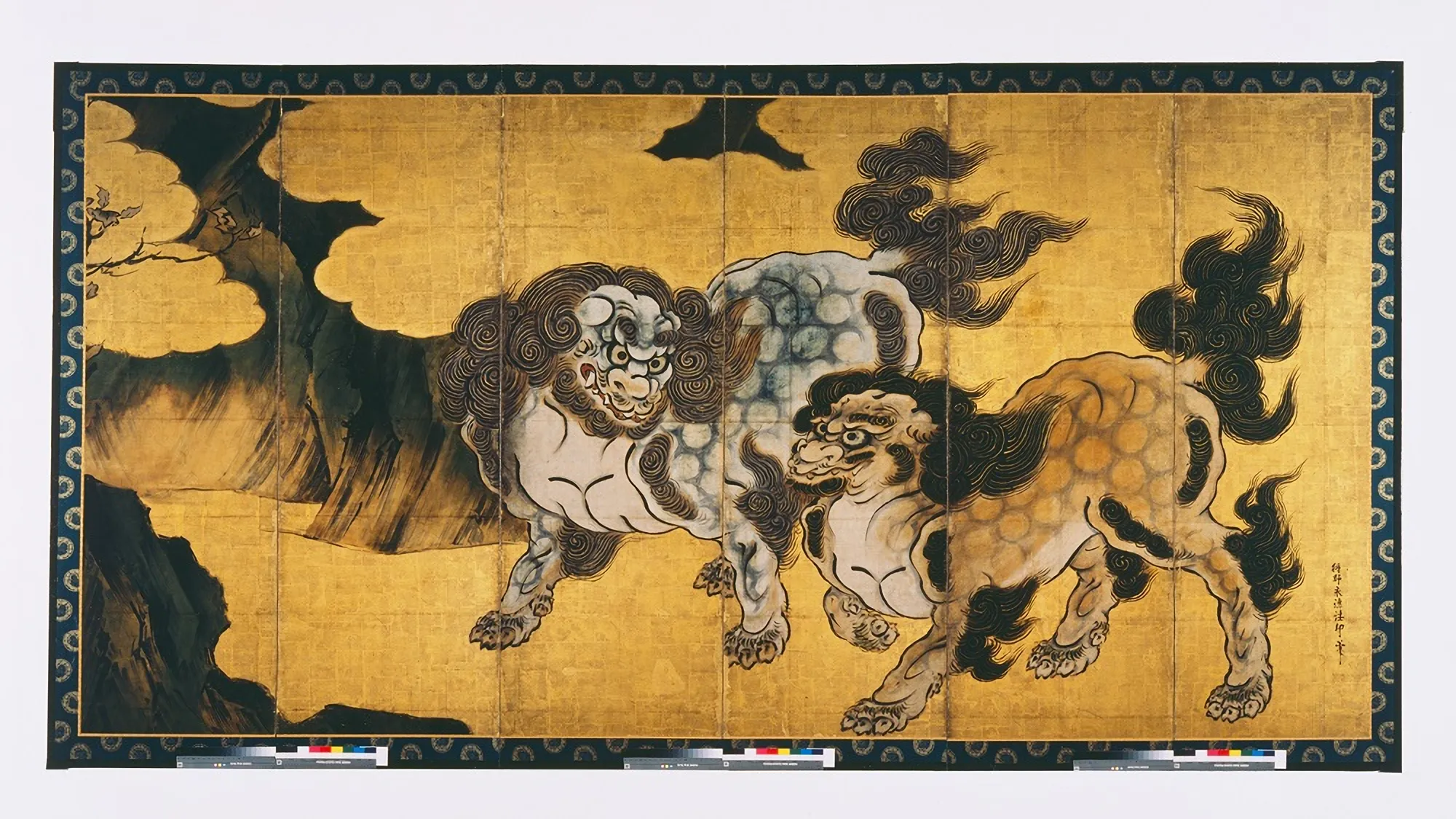
Nihonga is a uniquely Japanese form of painting created on washi paper or silk using natural materials such as mineral pigments (iwa-enogu), gofun (powdered shells), and sumi ink. Unlike oil or watercolor painting, nihonga follows distinct stages from preliminary sketching to line drawing, coloring, and finishing touches. Understanding how to handle these materials and follow the proper procedures is the quickest path to improvement.
For beginners, this field can feel daunting with thoughts like “the tools seem complicated” or “I don’t know where to start.” However, once you grasp the fundamental concepts, you can approach nihonga without difficulty.
This article provides essential foundational knowledge for those starting nihonga, clearly explaining the necessary tools, the painting process, and the distinctive characteristics that make nihonga unique.
Table of Contents
What is Nihonga? Essential Knowledge for Beginners
Nihonga is a comprehensive term for painting that employs traditional techniques and material systems developed in Japan. It possesses distinct materials and production processes from watercolor and oil painting, strongly reflecting differences in natural observation and aesthetic sensibilities.
While often categorized simply as “Japanese Painting” abroad, nihonga is not merely a painting style but an integrated system of expression combining materials, techniques, and philosophy. This section organizes the basic definition of nihonga, representative materials used, and common psychological barriers beginners face, providing clear foundational knowledge for entering the world of nihonga.
Defining Nihonga: Differences from Watercolor and Oil Painting
Nihonga refers to paintings created primarily using traditional materials such as mineral pigments (iwa-enogu), washi paper or silk, and nikawa (animal glue). Mineral pigments are made by crushing natural minerals and rocks into powder, while nikawa is a collagen-based adhesive made from animal hides. The clear relationship between the “support” (paper or silk), “pigment” (mineral colors), and “fixing agent” (nikawa) is a crucial characteristic distinguishing nihonga from other painting techniques.
In oil painting, colors blend together through oil content, and slow drying allows for highly serendipitous expression. In contrast, nihonga produces a matte yet deeply dimensional color through the scattering of light by mineral pigment particles. The fixing power of nikawa enables quick drying in nihonga, allowing colors to be systematically built up layer by layer, maintaining transparency even when layers are stacked. While watercolor uses water-soluble paints that dry quickly and allow easy correction, it’s not suited for thick application and transparency is easily lost, whereas nihonga maintains both transparency and depth even with repeated layering.
Therefore, nihonga is characterized by a creative approach that takes time to achieve high levels of completion. Nihonga artists begin by mixing their own pigments like mineral colors and gofun (white pigment made from shells) with nikawa, and corrections are possible by re-dissolving with water, making the process-oriented creative philosophy more practical than oil painting.
For international readers, it’s easier to understand nihonga not as a style but as a “technical system based on creative philosophy.”
What Are Mineral Pigments, Washi Paper, and Nikawa?
Three essential elements for understanding nihonga are mineral pigments, washi paper, and nikawa.
- Mineral pigments (iwa-enogu) are traditional nihonga paints made primarily by crushing natural minerals and rocks into powder. These pigments are sorted by particle size, with color development and light reflection varying according to grain diameter.
- Washi paper is uniquely Japanese paper made from plant fibers (inner bark) of kozo (paper mulberry), mitsumata (Oriental paperbush), and gampi, using traditional techniques (hand-making and nagashi-zuki method).
- Nikawa is a natural adhesive made by boiling the hides, bones, and tendons of animals such as cattle, deer, and rabbits in water, then extracting, concentrating, and drying the collagen (protein).
These materials are chemically stable due to their water-insoluble properties, and properly managed works have been preserved for hundreds of years. Preservation requires environmental control with temperatures of 15-20°C and humidity of 30-50%. Nihonga can be understood as a painting form that proceeds with an understanding of the inherent properties of the materials themselves.
Why It Feels “Difficult” and How Accessible It Actually Is
Nihonga tends to carry impressions of being “intimidating” or “for professionals” due to its specialized materials and tools. In reality, however, beginners can start without difficulty once they acquire basic tools. In recent years, beginner-friendly mineral pigment sets and workshops have become abundant, and opportunities to experience nihonga have increased even abroad.
The key is not to aim for advanced techniques from the start but to become familiar with handling the materials. The process of placing colors while adjusting water and nikawa amounts actually allows for slow, enjoyable creation, making it suitable for many people. Nihonga is not an “impenetrable tradition” but an expressive field anyone can enter by engaging with it carefully.
The Basic Process of Creating Nihonga
Nihonga creation doesn’t proceed spontaneously but follows clear, systematic stages. The flow involves establishing composition through preliminary sketches, organizing lines and planes, and finally layering colors to completion. This process management is what produces the characteristic transparency and depth of nihonga.
For those accustomed to Western painting, the numerous steps may seem excessive, but each stage is simple and logical. This section explains the three basic stages of nihonga creation in a way that’s easy for beginners to understand.
Creating Preliminary Sketches: Planning Composition with Pencil and Ink
Nihonga creation begins with making preliminary sketches. Using pencil, charcoal, or diluted ink, you determine the overall composition of the picture plane. At this stage, it’s important not to draw in excessive detail but to focus on motif placement, use of negative space, and visual flow.
In nihonga, the overall balance of the picture plane significantly affects the final quality, so ample time is devoted to preliminary sketches. Unlike Western drawing, the emphasis is less on creating volume through shading and more on constructing space through form and placement. While preliminary sketches ultimately disappear or become hidden, they are an extremely important foundation for nihonga.
Line Drawing and Underpainting: Organizing Lines and Planes
Once the preliminary sketch is established, the next step is kotsugaki (line drawing). This process defines the contour lines of motifs using ink or diluted pigments, determining the character of lines in nihonga. Since water will be used in later stages, waterproof ink or water-resistant materials designed for line drawing are typically used to prevent bleeding. Lines are drawn not as decoration but as structural support for forms.
Following this, underpainting begins. In underpainting, mineral pigments or suihi-enogu (water-based pigments) are thinly diluted and applied across the picture plane to establish base colors. At this stage, the goal isn’t to achieve final colors but to establish color direction and planar relationships. This separate consideration of lines and planes represents a structurally distinctive production method unique to nihonga.
Coloring and Finishing: Layering Mineral Pigments to Completion
Coloring is the most time-consuming stage in nihonga creation. Mineral pigments are dissolved with nikawa and thin layers are repeatedly applied to create color depth and transparency. The basic approach is not to apply thick colors at once but to gradually place colors while waiting for each layer to dry.
Mineral pigments with larger particles readily reflect light, and layering creates a distinctive luminosity. In the final stage, details are adjusted and colors are refined while checking overall balance to reach completion. This act of “layering” is the core element supporting the temporality and depth of nihonga.
Tools Beginners Should Acquire First
When starting nihonga, you don’t need to acquire all specialized tools from the beginning. By understanding basic materials and preparing the minimum necessary tools for the creative process, you can begin production without strain. Since material characteristics directly impact expression in nihonga, tool selection significantly influences skill development.
This section organizes basic materials beginners should acquire first, considerations for set purchases versus individual purchases, and how to prepare a working environment at home.
Minimum Necessary Materials: Brushes, Nikawa, Mineral Pigments, and Washi Paper
The minimum tools required for nihonga creation are brushes, nikawa, mineral pigments, and washi paper. Brushes suitable for nihonga have soft bristles, and one thick brush and one thin brush are sufficient to start. Nikawa is a natural adhesive for fixing pigments, typically dissolved in hot water from powder or solid form, but beginners can easily manage with bottled “liquid nikawa.”
Regarding paints, natural mineral pigments are expensive and difficult to handle, so beginners should start with “suihi-enogu” (board-shaped paints) or sets containing basic colors. For washi paper, unlike calligraphy paper, choosing paper treated with “dosa-biki” (sizing to prevent bleeding) or thick “mashi” (hemp paper) helps prevent failures. These tools represent the minimum unit for understanding the basic structure of nihonga.
Beginner Sets vs. Individual Purchases
For beginners, using nihonga starter sets is one approach. Sets include minimum necessary paints, brushes, and nikawa, allowing immediate start of creation. However, since contents are fixed, some included materials may go unused.
Individual purchasing allows tool selection matched to desired motifs and creative style, though the abundance of choices may initially be overwhelming. For international readers, accessibility is also an important criterion. A realistic approach is to first grasp the overall picture with a set, then individually purchase additional items as needed.
Working Environment and Precautions for Home Production
Nihonga can be created at home without a special studio. However, since nikawa is used, establishing a well-ventilated environment is advisable. A stable flat surface suffices for a work table, and spreading waterproof sheets or newspaper on a table works well.
Since mineral pigments have fine particles, careful cleaning after use is necessary. Additionally, humidity and direct sunlight affect washi paper and paints, so storage location requires attention. By establishing a manageable work environment, nihonga becomes a sustainable creative activity within daily life.
How to Learn Nihonga Independently
While nihonga often carries the impression of requiring specialized educational institutions, it’s now possible to master the basics through self-study. With increasing options like books, video materials, and online courses, accessing nihonga creation processes has become easier even from abroad.
The key is not to collect excessive information but to repeatedly experience basic processes. This section organizes how to utilize materials suitable for self-study, approachable initial motifs, and common stumbling points in self-study with their solutions.
Utilizing Beginner Nihonga Books and Videos
When learning nihonga independently, utilizing introductory books and video materials structured for beginners is effective. Introductory books systematically organize tool explanations and process flows, making it easier to grasp the overall creative picture. Videos offer the advantage of visually confirming aspects difficult to understand from text alone, such as nikawa dilution, brush handling, and pigment layering.
For international readers, selecting materials with subtitles or English explanations deepens understanding. Rather than using multiple materials in parallel, repeatedly referencing one material and trying the same processes multiple times is the quickest path to improvement.
Choosing Initial Motifs: Flowers, Fruits, and Simple Still Life
Motif selection when beginning self-study significantly impacts creative continuity. Initially, simple still life such as flowers, fruits, and vessels is recommended. These have relatively simple forms and limited color ranges, making them suitable subjects for learning nihonga-specific layering and use of negative space.
Attempting complex landscapes or figures can overly focus attention on composition and depiction, leaving material and process understanding shallow. Carefully observing familiar motifs and meticulously capturing form and color is important for building foundational nihonga skills.
Common Self-Study Stumbling Points and Solutions
Common stumbling points when learning nihonga independently include muddy colors, unclear nikawa proportions, and anxiety about completion quality. Most of these stem from rushing the process. With mineral pigments, the basic approach is layering thin applications rather than attempting to finish at once.
Additionally, maintaining an attitude of trial and error on practice washi paper without fearing failed works is important. Since self-study makes objective evaluation difficult, keeping production records and comparing with past works to confirm growth is also effective. Not rushing and enjoying the process is key to successful self-study.
Options for Formal Nihonga Instruction
While nihonga can be learned independently, “formal instruction” is an effective option for systematic understanding or mastering nuanced techniques. Within Japan, diverse learning venues exist including culture centers, painting schools, and private studios, with online courses also increasing recently.
Environments for learning without traveling are also developing for international readers. This section organizes characteristics of representative learning formats and presents perspectives for choosing learning methods that suit you.
Characteristics of Culture Centers, Painting Schools, and Studios
Culture centers suit people wanting to start nihonga as a hobby. They teach from basic tool explanations and simple production processes, allowing beginners to participate with confidence. Painting schools and specialized studios, meanwhile, provide more formal technical instruction, systematically deepening composition, line drawing, and coloring precision.
Instructors are often active nihonga artists, offering the appeal of directly learning creative attitudes and thinking. For international learners, short intensive courses and trial classes offered by specialized nihonga studios can serve as good entry points for understanding cultural background.
Differences Between Private Instruction and Group Lessons
Nihonga studios offer two formats: private instruction and group lessons. Private instruction provides advice tailored to individual progress and challenges, with specific technical corrections. It suits those wanting to deepen understanding quickly or work on specific themes.
Group lessons, meanwhile, expand learning by observing other students’ work and provide an environment conducive to continuation. For international readers, language support availability and small class size are also important criteria. Choosing based on purpose and learning style is essential.
Online Course Advantages and Disadvantages
Online courses offer the greatest advantage of learning nihonga without location constraints. Through video distribution and live instruction, production processes can be confirmed even from abroad. Particularly for basic processes and tool handling, video explanations aid understanding.
However, actual brush pressure and paint conditions cannot be directly confirmed, limiting detailed corrections. Additionally, material acquisition and environment setup must be self-managed. Online courses are most effective when utilized as supplementary learning tools for foundational understanding and review rather than as replacements for in-person instruction.
How to Choose Beginner-Friendly Classes and Courses
When learning nihonga through classes or courses, whether content and atmosphere suit you determines continuation. It’s important to comprehensively judge not just technique quality but instructor teaching approach, cost, and accessibility.
Beginners particularly risk frustration when choosing environments with excessive difficulty or misaligned purposes. This section organizes selection points from three perspectives: evaluating instructors, cost expectations, and sustainability.
How to Evaluate Instructor Background and Teaching Style
First confirm instructor background and teaching style when selecting a class. While achievements as a nihonga artist provide one indicator, more important is the attitude of “how to teach beginners.” Instructors who carefully explain material handling and process meaning rather than unilaterally conveying specialized terminology and advanced techniques suit beginners.
Rather than judging solely by exhibition history and awards, confirm through trial courses or observation whether the atmosphere encourages questions. For international readers, English support availability and understanding toward students from non-Japanese cultural backgrounds are also important criteria.
Monthly Tuition, Session Frequency, and Material Cost Guidelines
Beginner nihonga class costs vary by region and instruction format, but monthly tuition systems typically offer several sessions per month at reasonable rates. Additionally, material costs are often charged separately, with consumables like mineral pigments and washi paper representing ongoing expenses.
Some studios adopt systems where basic materials are purchased together initially. Importantly, pricing structures should be transparent. Confirming in advance what’s included in tuition and what additional costs will occur enables confident continued attendance.
Tips for Choosing Studios Emphasizing Sustainability
Since nihonga isn’t a field producing quick results, choosing studios emphasizing sustainability is important. Confirm whether commute time and class schedules match your lifestyle rhythm, and whether makeup sessions are available for absences.
Additionally, whether the atmosphere avoids excessive completion demands is a crucial point. Environments where beginners can learn through repeated failures reduce psychological burden regarding creation. For overseas residents, short intensive courses and hybrid online studios are also options. Environments enabling stress-free continued attendance represent the shortest route to improvement.
Conclusion
Nihonga is a painting form shaped by the integration of uniquely Japanese materials and techniques with natural observation and aesthetic sensibilities. While seemingly specialized and difficult at first glance, beginners can approach it without strain by understanding basic processes and tools.
Diverse learning methods including self-study, studios, and online courses are available, offering flexible selection according to purpose and lifestyle—another appeal of nihonga. For international readers, nihonga serves both as an entry point to cross-cultural understanding and as a creative experience encouraging slow, time-intensive engagement.
Learning nihonga means not just acquiring techniques but also encountering Japanese aesthetic sensibilities and craftsmanship philosophy.
