

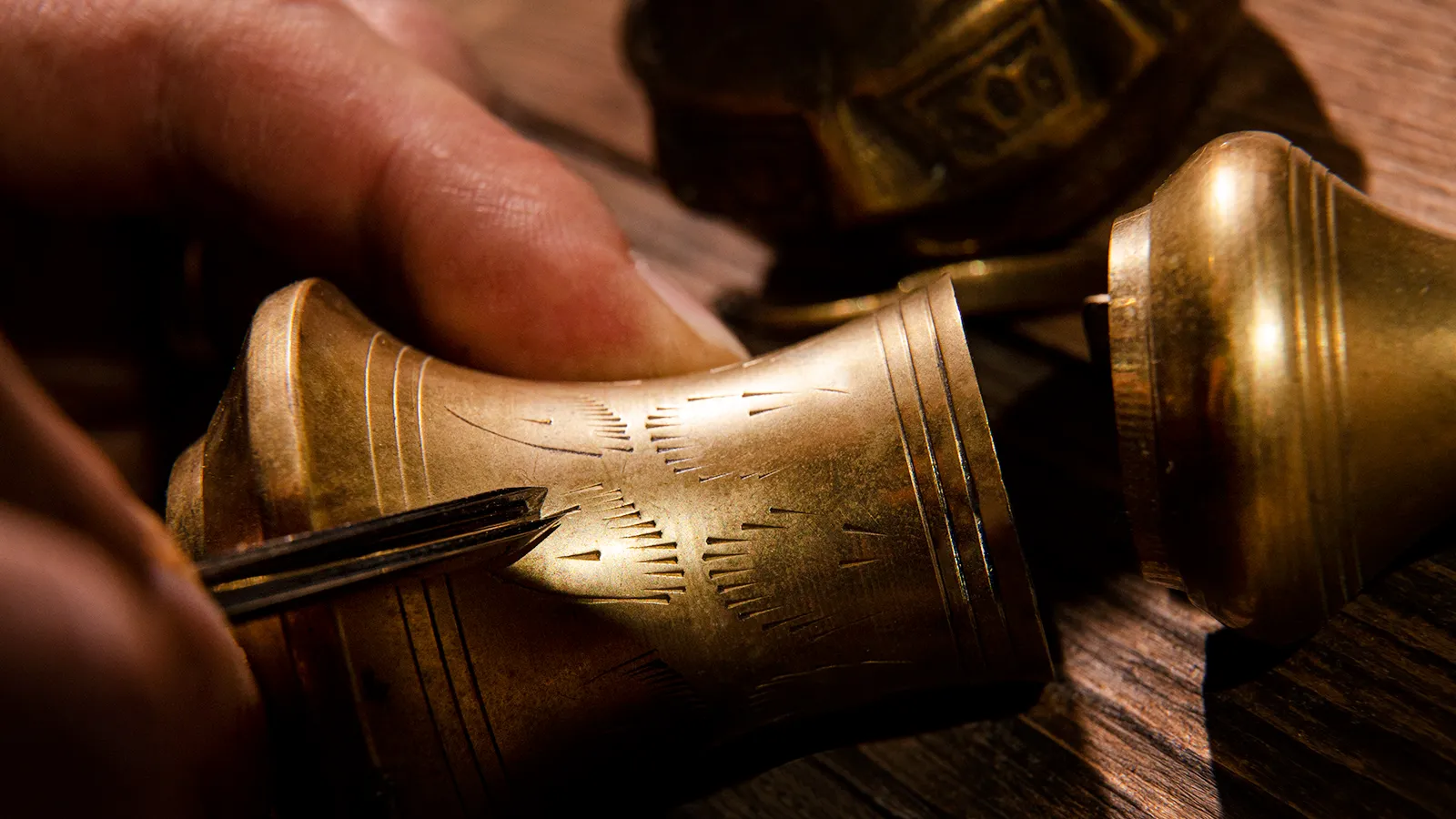
Japanese metalwork has nurtured diverse expressions ranging from vessels to sculpture and ornamental accessories, centered on various techniques such as hammering, casting, and engraving.
This article features 10 metalwork artists designated as Living National Treasures (holders of Important Intangible Cultural Properties), organizing their specialized techniques, artistic styles, and key evaluation points by field.
In this article, we carefully select 10 Living National Treasures representing Japanese metalwork and introduce their specialized techniques, artistic styles, and evaluation points in an organized manner.
Table of Contents
10 Living National Treasures of Metalwork | Masters Representing Japanese Metalwork
Living National Treasures in the field of Japanese metalwork are not only masters who have inherited advanced techniques such as casting and hammering, but also artists who have elevated metal expression to the realm of art.
While metal is often perceived as a hard and cold material, through shaping, surface treatment, and the calculated design of light reflection, it can express weight, tension, and even softness.
The metalwork field has not developed within a single lineage or style, but has expanded and evolved in various regions through different domains with varying purposes and cultural backgrounds, centered on technical fields such as casting, engraving, and hammering.
The main fields can be organized as follows:
- Metal Casting (Chūkin):Masahiko Katori / Komin Ozawa
- Metal Engraving (Chōkin):Ikkoku Kashima / Mamoru Nakagawa / Morihito Katsura / Akira Yamamoto
- Metal Hammering (Tankin):Hoseki Okuyama / Yukie Osumi
- Tea Ceremony Kettle Making (Chanoyu Kama):Tetsushi Nagano
- Gong Making (Dora):Iraku Uozumi III
Below, we will introduce the craft artists designated as Living National Treasures (holders of Important Intangible Cultural Properties) by these major fields.
Through the work of these 10 artists, we will examine how Japanese metalwork has developed in multiple directions.
Masahiko Katori (Metal Casting) | Sculptural Expression That Laid the Foundation for Modern Metal Craft Art
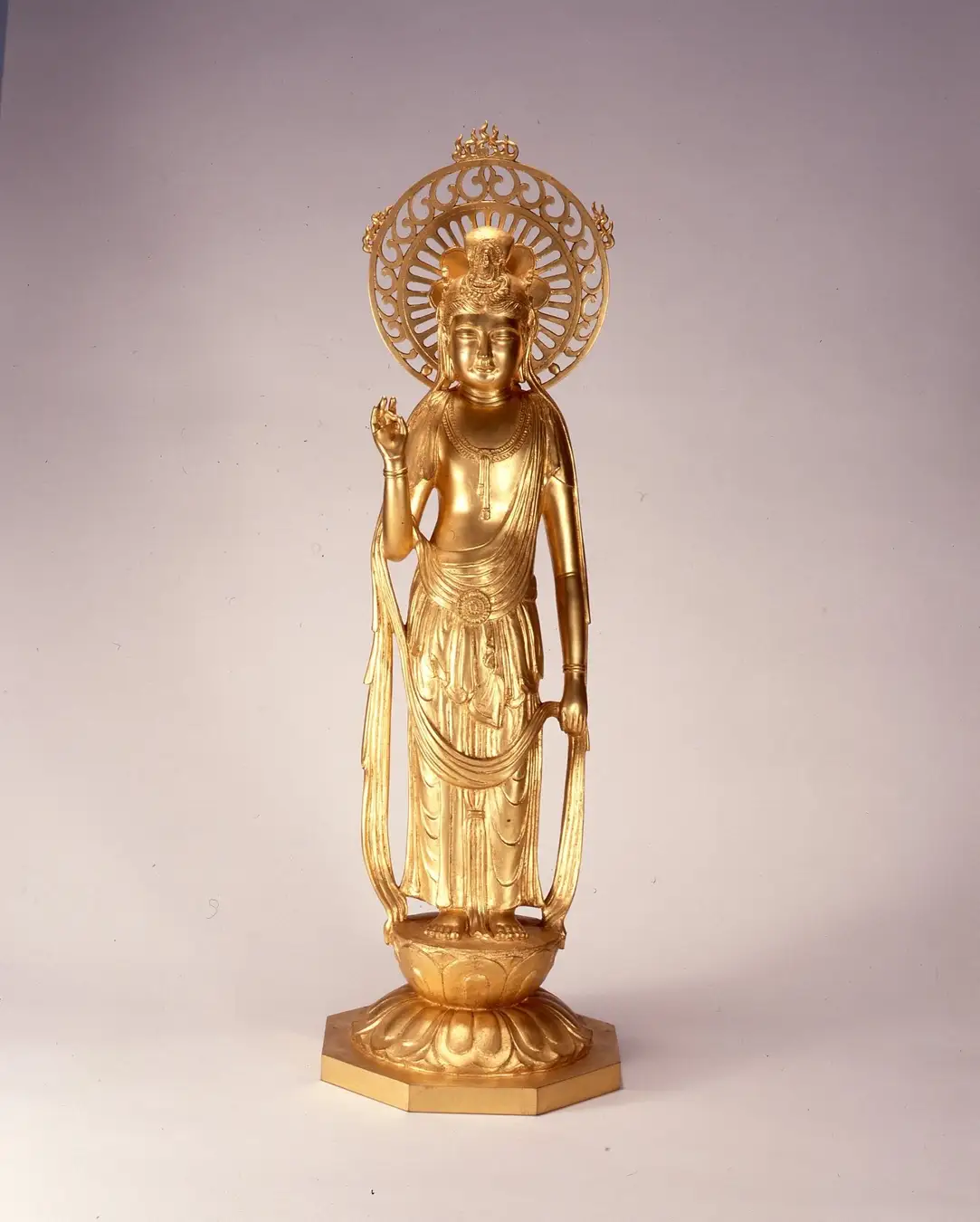
Casting is a technique of creating forms by pouring molten metal into molds, but Katori, drawing on his experience studying Western painting at the Taiheiyo Gakai Research Institute from 1916 to 1920, did not simply reproduce forms but pursued sculptural strength by calculating the sense of volume and shadow that metal possesses.
While based on realism, he heightened the overall tension of his works through the organization of forms and compositional strength, connecting metalwork to the context of modern art.
In terms of achievements, starting with receiving a bronze medal at the 1925 Paris International Exposition of Modern Decorative and Industrial Arts, he received special selection at the Imperial Art Academy Exhibition’s craft division for three consecutive years from 1930, earning the status of exhibition without screening.
Katori’s work expanded casting from “the realm of technique” to “the realm of sculptural expression,” becoming a major reference point for subsequent metalwork artists.
Ikkoku Kashima (Metal Engraving) | Precise Decorative Expression and Inheritance of Tradition Through Nunome-Zogan
Ikkoku Kashima was a master who perfected the advanced technique called “nunome-zogan” (textile pattern inlay) in metal engraving.
Nunome-zogan is an inlay technique that involves carving fine textile-pattern grooves on the surface of base metal and hammering different metals into them, a craft established through the precise combination of chisels and hammers.
The characteristic of Ikkoku Kashima’s works lies in the extremely precise expression of natural motifs such as insects, birds, and plants. While utilizing the colors of different metals such as gold, silver, and shakudo, he applied dignified decorations based on classical research to tea ceremony utensils such as water containers and incense burners.
Beyond mere decoration, he pursued expressions with depth and vitality through the subtle contrast of color and texture between different metals.
Ikkoku Kashima was designated as a holder (Living National Treasure) of Important Intangible Cultural Property “Metal Engraving” in 1979, and also contributed greatly to the inheritance of traditional techniques and preservation of cultural properties, including working on the preservation and repair of the National Treasure “Golden Tortoise Reliquary” at Toshodaiji Temple.
His work became a major reference point for subsequent metalwork artists, having “connected metal engraving from the realm of decorative technique to the context of contemporary art.”
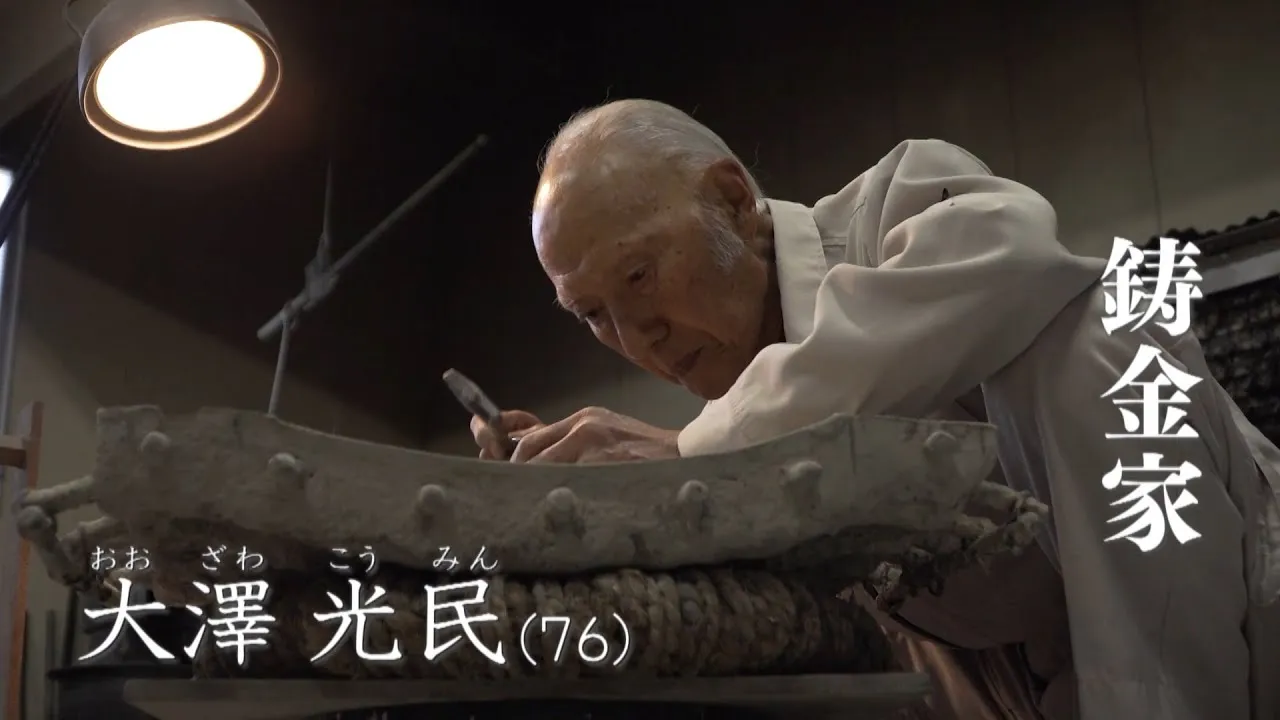
Komin Ozawa (Metal Casting) | The Pinnacle of Contemporary Casting Through Yakigata Casting and “Igurum”
Komin Ozawa is a caster who highly embodied the traditional technique “yakigata casting” cultivated in the Takaoka copperware production area, while updating casting expression through his original technique “igurum.” He was designated as a holder (Living National Treasure) of Important Intangible Cultural Property “Metal Casting” in 2005.
Ozawa’s representative work is “igurum.” This technique involves pre-placing high melting point metals such as copper wire or stainless steel wire inside the casting mold, then pouring molten alloy to integrate them. The characteristic lies in incorporating the form into the casting process itself rather than decorating through post-processing. Since the expression is established including slight deformations and fluctuations caused by heat and pressure, experienced judgment is essential for temperature control, material compatibility, and fixing methods.
Furthermore, Ozawa continued to adhere to yakigata casting even in casting sites where efficiency was advancing. Creating molds using soil, Japanese paper, and straw, and securing high breathability through firing to obtain delicate and smooth cast skin. His stance of connecting to contemporary forms while preserving traditional processes forms the core of his evaluation.
The red copper wire and white stainless steel wire running through the jet-black base metal are motifs symbolizing Ozawa’s artistic world, and also represent attempts to express fundamental natural themes such as “light” and “water” through casting. He can be considered a representative figure of contemporary casting in terms of simultaneously establishing tradition and innovation.

Yukie Osumi (Metal Hammering) | A Pioneer Who Paved the Way as a Female Metalwork Artist
Yukie Osumi is a significant figure who carved out a unique position as a female artist in the male-dominated world of Japanese metalwork.
Confronting head-on the technique of hammering that requires physical strength and concentration, she established dignified forms with tension while hammering metal sheets.
Osumi’s works do not boast strength, but create a quiet presence through the tension of surfaces and the organization of ridgelines.
By combining engraving and nunome-zogan (an advanced decorative technique of carving fine textile-like grooves and inlaying different metals) on the surface of vessels formed by hammering, she realized precise forms with accurately controlled metal texture and weight.
Her body of works, which shows deep material understanding, demonstrates a stance of drawing out the possibilities of the material itself rather than adding decoration indiscriminately.
The essence of Yukie Osumi lies in earning evaluation through the completeness of her sculptural forms themselves, rather than foregrounding her identity as a female artist.
After graduating from Tokyo University of the Arts in 1969, she studied under Living National Treasure-level masters such as Ikkoku Kashima, Shiro Sekiya, and Moriyuki Katsura, establishing unique expressions that fused multiple techniques.
Starting with the Prime Minister’s Prize at the Japan Traditional Crafts Exhibition in 1987, she received the Medal with Purple Ribbon in 2010 and was designated as a holder (Living National Treasure) of Important Intangible Cultural Property “Metal Hammering” in 2015.
The first female designation in the metalwork field was not merely a historical achievement, but proof that technique and artistry were evaluated beyond gender. Her stance and achievements serve as an important indicator for subsequent generations of metalwork artists.

Mamoru Nakagawa (Metal Engraving) | Master Who Elevated Traditional Techniques to Contemporary Forms
Mamoru Nakagawa is a craftsman who established his reputation through works that incorporated contemporary sculptural sensibilities while based on the technique of Kaga-zogan (a type of metal engraving).
While faithfully following traditional metal engraving techniques and processes, he did not fix them as past styles but adapted them to contemporary spaces and sensibilities.
His works display precise surface composition through inlay and simple forms that eliminate excessive decoration.
The advanced technique of “kasane-zogan” (layered inlay), which involves inlaying multiple layers of different metals into grooves carved with chisels on metal plates, creates strong sculptural tension through the contrast of metal thickness and color.
Nakagawa’s transition from starting as an industrial designer at Matsushita Electric Works to the path of Kaga-zogan at age 27 symbolizes this fusion.
The combination of design thinking and traditional techniques is a good example showing that preserving and updating tradition are not in conflict through Nakagawa’s work, and clearly established the path to making metalwork viable in the context of contemporary forms. In 2004, he was designated as the first Living National Treasure (Metal Engraving) born after World War II.
Morihito Katsura (Metal Engraving) | High Level of Perfection Residing in Elaborate Metal Engraving Techniques
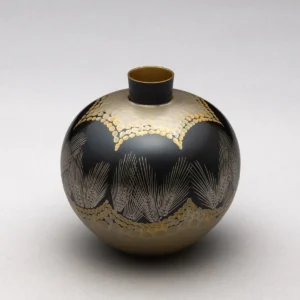
Metal engraving is a technique of carving patterns and lines on metal surfaces with chisels (tagane), requiring extremely high concentration and accuracy.
The characteristic is that while the height of skill comes to the forefront, it does not fall into excessive decorativeness and maintains overall harmonious perfection.
Through motifs such as animals, insects, plants, and geometric patterns, Katsura’s expression that breathes warmth and vitality into hard metal materials realizes a fusion of traditional technique inheritance and contemporary sensibility.
In 1992, he participated in the production of sacred treasures for the Ise Grand Shrine reconstruction, and was designated as a holder (Living National Treasure) of Important Intangible Cultural Property “Metal Engraving” in 2008.
Morihito Katsura’s work clearly demonstrates the high expressiveness of the metal engraving field, and as a reliable inheritor of engraving techniques continuing from the Edo period, represents Japanese metalwork culture.

Hoseki Okuyama (Metal Hammering) | Inheriting Classical Beauty to the Present Through Delicate Patterns Carved in Metal
Hoseki Okuyama is a metal hammerer who mastered two inlay techniques: uchikomi-zogan and kiribame-zogan. The inlay technique of carving fine patterns on metal plates and fitting different metals into them is one of the highest-level techniques in Japanese metal craft. Born Kizo Okuyama in Shinjo City, Yamagata Prefecture.
In 1952, he became an apprentice to Soho Kasahara in metal hammering, and later studied under Koki Tanaka from 1977 to master inlay techniques.
He became a regular member of the Japan Crafts Association in 1979, and received the Agency for Cultural Affairs Commissioner’s Prize at the Traditional Craft Metal Work Exhibition of Japan that same year.
He subsequently continued to receive high evaluations, including receiving the Takamatsunomiya Memorial Prize at the Japan Traditional Crafts Exhibition in 1991.
In 1995, at age 59, he was designated as a holder (Living National Treasure) of Important Intangible Cultural Property “Metal Hammering.”
What can be seen in Okuyama’s works is a fusion of deep respect for the classics and contemporary sensibility. Meticulously calculated patterns exude order and tranquility, reflecting the essence of beauty that transcends time in the eternal material of metal.
He received the Medal with Purple Ribbon in 1997 and the Order of the Rising Sun, Gold Rays with Rosette in 2007. He continues to devote himself to creative activities and training successors.
Akira Yamamoto (Metal Engraving) | Metal Forms Traversing Realism and Abstraction
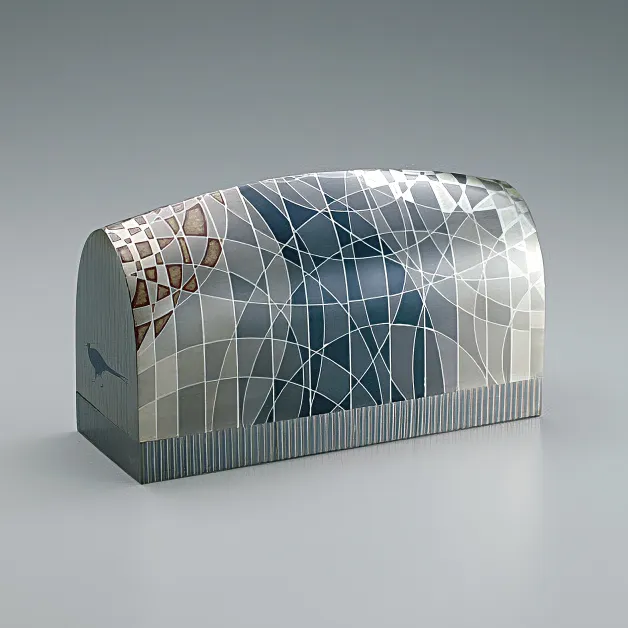
While using people, animals, and plants as motifs, he does not stop at mere reproduction but heightens symbolism through the organization and simplification of forms.
A major characteristic is that realistic elements and abstract composition are established simultaneously, taking advantage of the surface composition and sense of volume unique to metal engraving.
Since his first selection at the Japan Traditional Crafts Exhibition in 1985, he exhibited at the same exhibition for 17 consecutive years, receiving continuous high evaluation.
In 2014, he was designated as a holder (Living National Treasure) of Important Intangible Cultural Property “Metal Engraving,” and is known as one of Japan’s representative artists in contemporary metal engraving.
Tetsushi Nagano (Tea Ceremony Kettle Making) | Master Who Achieved the Revival of Traditional Techniques Using Wasen
Tetsushi Nagano is an artist who revived the production technique of tea ceremony kettles using “wasen,” ancient Japanese iron.
Born into a plasterer’s family in Nagoya, Nagano aspired to be a painter and moved to Tokyo, where he became fascinated by the beauty of iron and entered the path of kettle making in 1931.
Nagano’s tea ceremony kettles fuse connection with the classics and contemporary sculptural sensibility.
While preserving traditional forms, a strong contemporary aesthetic consciousness runs through them. He completely drew out the durability and beauty of kanemi (metal taste) through aging that are the greatest characteristics of wasen, expressing beauty that increases with time.
He received special selection at the Imperial Art Exhibition in 1933 and was designated as a holder of Important Intangible Cultural Property “Tea Ceremony Kettle Making” in 1963.
His achievement of restoring lost traditional techniques and elevating them to contemporary sculptural expression is evaluated at the highest position in the history of Japanese metalwork. The technique has been reliably transmitted to the second and third generations and continues to be inherited today.
Iraku Uozumi III (Gong Making) | Craftsman of Tones Who Imbued Deep Resonance in the Sound of Gold and Copper
Iraku Uozumi (Third Generation) is a craftsman who protected the tradition of gongs while creating new tones with contemporary sensibility through techniques of processing sahari, an alloy of copper and tin.
In 1953, he studied under his grandfather, the first Iraku Uozumi, and began training in sahari processing techniques.
The third generation continuously refined traditional sahari processing techniques from the start of training in 1953.
He became a regular member of the Japan Traditional Crafts Association in 1962, and subsequently advanced both creative activities and research.
At the Japan Traditional Crafts Exhibition in 1998, he received the Minister of Education Award for “Sahari Thousand-Line Pattern Water Container,” and his advanced technique and aesthetic sensibility were widely recognized.
In 2002, the third generation succeeded to the name Iraku Uozumi and was designated as a holder (Living National Treasure) of Important Intangible Cultural Property “Gong Making” in the same year.
What characterizes his gongs is the tone that imbues “deep resonance” in the metallic sound. Not just the beauty of acoustics, but the sculptural form of sound that brings tranquility and depth to the listener’s heart.
The gongs of the third generation embody the fusion of sound and color, tradition and modernity in metal craft.
Influence on and Evaluation of Contemporary Metalwork
The expressions and philosophies built by Living National Treasures of metalwork have become the very foundation of contemporary metalwork today.
Not limited to the inheritance of advanced techniques, their stance on how to perceive the material of metal and how to present it as sculptural language profoundly influences the production attitudes of current artists.
Here, we organize the positioning in contemporary metalwork from three perspectives: influence on subsequent artists, the relationship between craft and fine art, and international evaluation.
Technical and Philosophical Influence Given to Subsequent Artists
The influence that Living National Treasures of metalwork gave to subsequent artists extends to both technical and philosophical aspects.
In each technique of casting, hammering, and engraving, the systematization of process rationalization and improvement of expression precision has made it possible for subsequent generations to produce work premised on high standards.
At the same time, the stance of emphasizing what to express as sculpture rather than showing off skill is shared.
The attitude toward facing materials, judgment in paring down forms, and strictness toward perfection have been passed down through educational and production sites. These have played a role in raising the standards of contemporary metalwork overall, beyond individual artistic styles.
Metal Expression That Transcended the Boundaries Between Craft and Fine Art
The work of Living National Treasures has pioneered the path to establishing metalwork as artistic expression rather than keeping it within the framework of craft.
Three-dimensional forms and sculptural expressions that do not presuppose uses such as vessels or ornamental accessories have blurred the boundaries between craft and fine art, expanding evaluation criteria.
With the emphasis on sculptural tension and philosophical aspects that cannot be measured by utility or decorativeness alone, metalwork has come to be discussed as pure form.
This flow has become the soil for contemporary artists to expand their expression areas to installations and abstract forms, forming the foundation for metalwork to connect to the context of contemporary art.
Evaluation and Positioning in Overseas Museums and International Exhibitions
Japanese metalwork is also highly evaluated in overseas museums and international exhibitions.
The elaborate techniques and depth of material understanding are noted as unique Japanese cultural background, and it is not uncommon for it to be introduced in the context of sculpture and contemporary art while being craft.
In particular, forms that traverse realism and abstraction and expressions that foreground the presence of the material itself are elements that are easily understood internationally.
The accumulation of evaluation built by Living National Treasures has become the foundation of trust when contemporary metalwork is introduced overseas. Japanese metalwork can be said to be positioned as a field that, while rooted in regional culture, possesses universal sculptural language.
Conclusion
Living National Treasures of metalwork have not only inherited traditional techniques such as casting, hammering, and engraving at a high level, but have also greatly expanded the possibilities of sculptural expression through the material of metal.
Their work has established a perspective that does not confine craft to the realms of utility and decoration but connects it to sculpture and contemporary art, providing clear indicators to subsequent artists.
Furthermore, their evaluation is shared not only domestically but also in overseas museums and international exhibitions, becoming the foundation that supports the credibility and presence of Japanese metalwork.
The techniques and philosophies built by Living National Treasures will continue to support contemporary metalwork expression while remaining important guides that show what directions metalwork can proceed toward in the future.
