

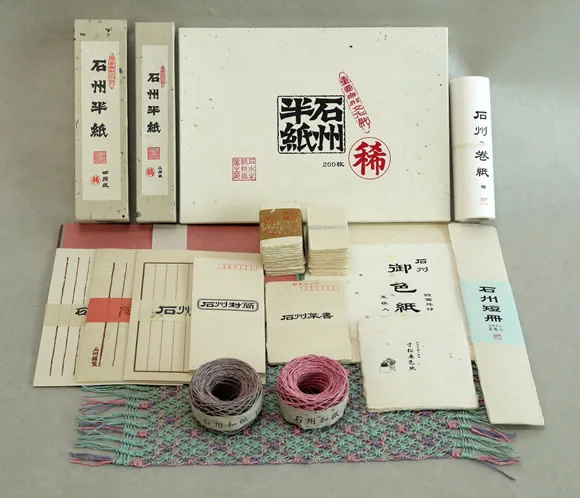
In an increasingly digital world, the physical materials businesses choose speak volumes about their brand identity. Enter Sekishu Washi Japanese paper, an exceptionally durable and culturally profound material hailing from Shimane Prefecture. Recognized globally as a UNESCO Intangible Cultural Heritage, this 1,300-year-old craft is renowned as the strongest among all Japanese handmade papers. Its secret lies in the meticulous processing of Kozo (mulberry) fibers, preserving the resilient inner bark to create a tear-resistant, long-lasting sheet. Today, forward-thinking international companies and interior designers are rediscovering Sekishu Washi not just as a historical artifact, but as a premium, sustainable material. Whether utilized for luxury corporate stationery, VIP business cards, important legal contracts, or architectural elements like lighting and room partitions, integrating this remarkable Japanese craft brings an element of “Quiet Luxury” and authentic heritage to modern global business and spatial design.
As digital transformation accelerates and information flows freely through the cloud, the deliberate choice to incorporate physical paper into business interactions carries profound weight. The tactile quality of a material, its cultural provenance, and the philosophy it embodies become powerful differentiators. Historical records from Japan’s Agency for Cultural Affairs document that during the Edo period, paper produced in the Iwami region of western Shimane Prefecture was prized by Osaka merchants as premium ledger paper — a testament to its enduring reputation for reliability.
That legacy lives on in Sekishu Washi Japanese paper. Known for its remarkable resistance to tearing even when wet, it is experiencing a renaissance across the fields of preservation, documentation, and high-end design. This guide explores how this world-class handmade paper transcends its identity as a traditional craft to become a practical, prestigious material supporting contemporary corporate branding on the global stage.
Three key points define its modern relevance:
- Unmatched Durability and Deep Historical Roots: Produced in Hamada City, Shimane Prefecture, Sekishu Washi Japanese paper — particularly Sekishu Banshi — employs a distinctive production method that intentionally retains the inner bark (Amakawa) of the Kozo (mulberry) plant. This meticulous handcraft process yields what is widely regarded as the strongest of all Japanese handmade papers, a quality recognized by its designation as a UNESCO Intangible Cultural Heritage.
- Transformative Value in Professional Contexts: Its combination of exceptional strength and refined aesthetic makes Sekishu Washi the material of choice for luxury Japanese stationery, including VIP business cards, significant contracts, and formal certificates. For international businesses, incorporating this paper communicates a level of discernment and cultural intelligence that resonates deeply with clients worldwide, elevating washi corporate branding to new heights.
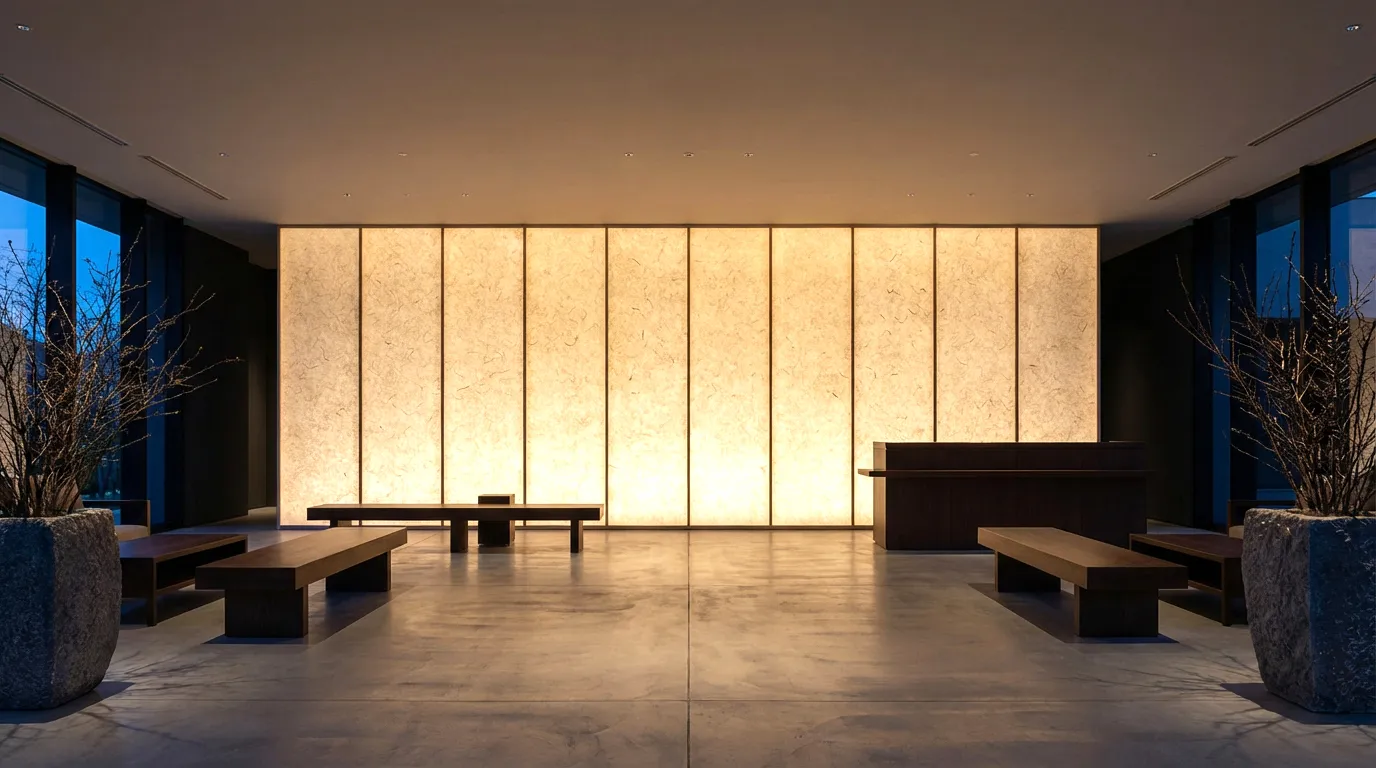
- Expanding Applications in Architecture and Spatial Design: The paper’s resistance to tearing and moisture, paired with its soft translucency and natural humidity-regulating properties, has attracted the attention of architects and interior designers. From upscale office partitions and luxury hotel wall coverings to bespoke lighting fixtures, Japanese paper for architecture is gaining significant traction in B2B markets globally.
As tactile and material values are being redefined for a new era, this guide presents the key integration points of the “Quiet Luxury” that Sekishu Washi offers to discerning professionals worldwide.
Table of Contents
What Is Sekishu Washi? The 1,300-Year Secret Behind Its Legendary Strength
Japan is home to numerous washi papermaking regions, yet Sekishu Washi Japanese paper stands apart for one defining characteristic: its extraordinary toughness. Documents from Japan’s Agency for Cultural Affairs specifically cite strength as the most outstanding feature of Sekishu Banshi. This resilience is rooted in two fundamental pillars — the unique treatment of raw materials and the precision-engineered handmade production process.
A UNESCO-Recognized Japanese Handmade Paper Tradition
The papermaking traditions centered in Misumicho, Hamada City, Shimane Prefecture have been transmitted across generations. The technique behind Sekishu Banshi — which uses exclusively locally sourced raw materials — was designated a National Important Intangible Cultural Property (holder group designation) in Japan on April 15, 1969.
Then, in 2014, the broader tradition of “Washi: Craftsmanship of Traditional Japanese Hand-made Paper” received international recognition as a UNESCO Intangible Cultural Heritage, cementing Sekishu Washi’s place on the world stage as a pinnacle of UNESCO Japanese handmade paper craftsmanship.
(Source: Hamada City Official Website — UNESCO Intangible Cultural Heritage Inscription)
The Amakawa Technique: Why Retaining the Inner Bark of Kozo Creates Superior Paper
The exceptional Kozo paper durability of Sekishu Banshi originates in a defining step: the deliberate retention of the Amakawa, the inner bark of the Kozo (paper mulberry) plant. In conventional papermaking traditions, fibers are rigorously sorted and refined to achieve uniformity and whiteness. Sekishu Banshi intentionally diverges from this norm, prioritizing strength above all else.
By keeping the Amakawa fibers intact and allowing them to interlock during the sheet-forming process, the resulting paper achieves a structural integrity that resists tearing even when saturated with water. This is the foundational principle behind the material’s extraordinary resilience — a quality that sets Sekishu Washi Japanese paper apart from virtually all other handmade papers in the world.
The Traditional Papermaking Process That Creates Strength and Refinement Together
Sekishu Banshi embodies the Kozo washi papermaking techniques transmitted through the Iwami region. Historical records confirm its prominence as a preferred ledger paper among merchants during Japan’s Edo period (1603–1868), underscoring centuries of proven performance in demanding, real-world applications.
The core of the handmade process involves Neri — a natural viscous agent extracted from the roots of the Tororo-aoi plant (sunset hibiscus) — which is combined with Kozo fibers and water. The papermaker then employs Nagashizuki, the Japanese “flow-casting” technique, where the fiber suspension is repeatedly poured over and across a bamboo screen frame (Suketa). This rhythmic, skilled motion causes the long Kozo fibers to interlace in multiple directions, creating a sheet of remarkable thinness and simultaneously extraordinary strength.
Luxury Japanese Stationery for the Digital Age: Why Premium Paper Still Wins
Digital text is perpetually editable and ultimately ephemeral. Paper endures. In formal business contexts — exchanging business cards, signing contracts, presenting certificates — the choice of material directly communicates an organization’s values and level of care. Sekishu Washi Japanese paper is increasingly the material of choice for discerning professionals who understand this dynamic.
VIP Business Cards and High-Stakes Contracts: Where Luxury Japanese Stationery Makes an Impact
Consider the moments that define a business relationship: a first meeting between executives, a signing ceremony with an overseas client. In these high-stakes interactions, the sensory experience of physical materials matters profoundly. Choosing handmade washi for such occasions adds a dimension of communication that no digital medium can replicate — the immediate, wordless message conveyed by texture, weight, and fiber that the recipient holds in their hands.
Critically, the value of Sekishu Washi lies not in conspicuous luxury but in verifiable provenance. The UNESCO Intangible Cultural Heritage designation, the designated holder group, and the 1,300-year production lineage provide concrete, credible context that organizations can articulate clearly to international partners and clients — making washi corporate branding both meaningful and substantiated.
Archival Quality for Documents That Must Last Generations
The long-term preservation of Sekishu Washi is a matter of practical paper science, not mere tradition. The actual archival lifespan of any paper depends significantly on storage conditions — temperature, humidity, light exposure, and environmental pollutants. The realistic approach for modern applications is therefore to select a paper with inherently superior archival properties and design appropriate storage conditions around it.
Sekishu Banshi’s well-documented strength and its established role in the cultural property preservation community provide a compelling, evidence-based rationale for its selection as an archival-grade material. For organizations that value permanence and the long-term integrity of their most important documents, it represents a principled and defensible choice in luxury Japanese stationery.
Japanese Paper for Architecture: The Growing B2B Market for Sekishu Washi in Spatial Design
The applications of Sekishu Washi extend far beyond the writing desk. Its resistance to tearing and moisture, combined with the evocative interplay of light through its fibrous surface, positions it as a compelling material for high-end architectural and interior design projects worldwide.
Humidity Regulation and Luminous Translucency: Designing Spaces with Japanese Paper
One established technique involves laminating washi between glass partitions, softening sightlines while allowing light to filter through beautifully — a hallmark application for modern corporate offices and luxury hospitality interiors seeking a refined, contemplative atmosphere. Applied to custom lighting fixtures, the intricate shadows cast by the paper’s fiber structure lend a warmth and character to a space that manufactured materials cannot achieve.
Washi is frequently cited for its humidity-regulating properties, a characteristic of natural cellulose fibers. It is important to note, however, that the measurable performance of an architectural installation depends on the complete system: substrate, construction method, finishing treatment, and room conditions. For any serious B2B interior application of Japanese paper for architecture, specification must encompass fire safety compliance, installation requirements, and long-term maintenance protocols — not aesthetic merit alone.
Sekishu Washi as a Sustainable Traditional Craft for Responsible Business Procurement
In contemporary B2B procurement, material choices are increasingly subject to scrutiny regarding their environmental and social impact. The supply chain of Sekishu Washi Japanese paper — rooted in locally sourced Kozo cultivation, traditional hand-processing, and a small community of dedicated master craftspeople — offers an exceptionally coherent and transparent sustainability narrative.
For organizations building environmental, social, and governance (ESG) credentials, or simply wishing to communicate authentic values to stakeholders, sustainable traditional crafts like Sekishu Washi provide exactly the kind of verifiable, traceable story that carries genuine weight. The key to credible communication is specificity: citing confirmed details of raw materials, production processes, regional origin, and the designated holder community is far more persuasive than vague claims of eco-friendliness or cultural heritage.
How to Integrate Sekishu Washi into Your Corporate Branding Strategy
When considering Sekishu Washi for professional or commercial use, the most important early decision is not what to make, but who to source it from. Supply chain authenticity directly determines both the quality of the final material and the credibility of the story your organization can tell around it.
Direct Sourcing from Certified Workshops and Artisan Cooperatives
It is worth understanding the scale and exclusivity of this craft: only four workshops are affiliated with the Sekishu Banshi Craftspeople Association. This scarcity underscores both the rarity of the material and the importance of establishing a direct, transparent sourcing relationship.
For procurement managers, brand strategists, and interior designers evaluating Sekishu Washi Japanese paper for professional applications, the most effective approach is to engage directly through the regional cooperative. Come prepared with a clear project brief covering intended use (business cards, contracts, interior surfaces), required specifications (weight, dimensions, print compatibility, lead time), and volume requirements. Requesting physical samples before committing to a full production run is strongly recommended and standard practice.
(Source: Sekishu Washi Cooperative Association)
Custom Orders and Collaborative Product Development
Beyond sourcing standard sheets, there is meaningful scope for collaborative development with Sekishu Washi artisans. Custom specifications — adjusting weight, dimensions, fiber texture, or surface finish — may be possible through direct consultation with individual workshops. Specialty treatments such as embedded watermarks (Sukashibori) or natural dyeing are technically feasible, though availability depends on each workshop’s specific equipment, process capabilities, and minimum order requirements.
The most powerful outcome of incorporating Sekishu Washi into a corporate branding program is not simply placing a company logo on premium paper. It is creating a situation where, at the moment of a business card exchange or a contract signing, your organization can answer the question “Why this paper?” with a compelling, authentic, and fully substantiated story. In that moment, the paper transforms from a passive carrier of information into an active expression of your organization’s values, taste, and judgment.
Sekishu Washi Japanese paper carries 1,300 years of craft history within each handmade sheet. Its relevance today goes beyond raw durability. As a fully traceable, explainable material — with documented origins, a living production process, and a community of dedicated master craftspeople — it offers modern organizations a rare opportunity to bring genuine depth and “Quiet Luxury” into their physical presence, wherever in the world they do business.
