




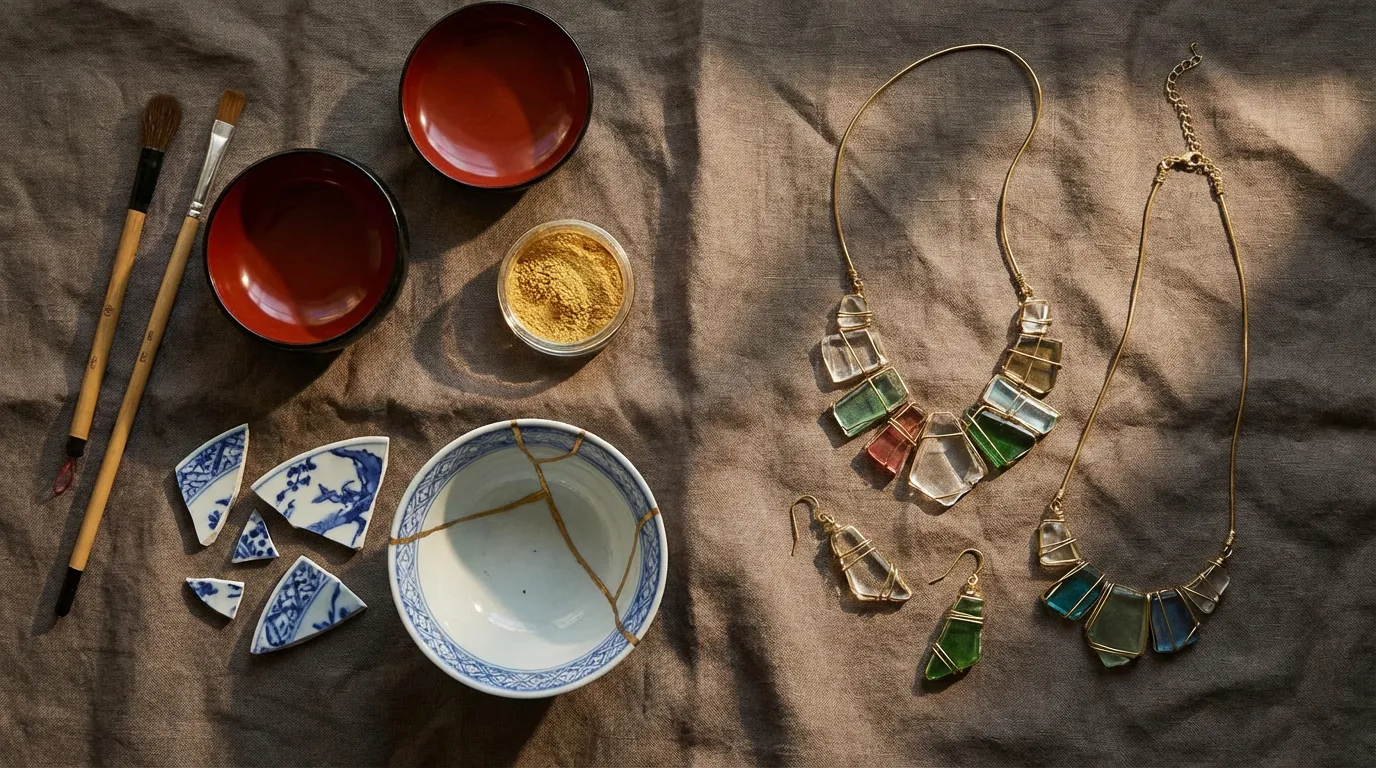
As the global design industry accelerates toward a circular economy, modern creators are finding profound inspiration in centuries-old philosophies. At the forefront of this movement is sustainable Japanese craft upcycling. Long before “zero waste” became a global mandate, Japanese artisans practiced the art of finding beauty in imperfection and extending the lifespan of materials. Through traditional techniques like Kintsugi (repairing broken pottery with gold) and Boro (patching and stitching worn textiles), the concept of waste is transformed into exquisite art. Today, this heritage is evolving into a sophisticated 2026 design strategy where offcuts, B-grade ceramics, and textile scraps are reborn as high-end jewelry and interior decor. For global designers and conscious consumers, embracing this Wabi-sabi approach offers a masterclass in ethical consumption and innovative, sustainable branding.
Across the global design and business landscape, the shift toward a Circular Economy as a foundational principle — transcending national borders and industry sectors — is accelerating at an unprecedented pace. Within this movement, the design philosophy deeply embedded in Japanese traditional crafts — a philosophy of repairing, extending lifespans, and honoring every stage of a material’s existence — is drawing extraordinary attention from the world’s top creative minds and luxury brands alike. These centuries-old practices are now recognized as the ultimate model for reconciling environmental responsibility with elevated aesthetics.
What was once described through the Japanese concept of Mottainai (a profound sense of regret over waste) has evolved far beyond simple recycling. It has matured into Upcycling — a sophisticated practice that bestows new value and new beauty upon what might otherwise be discarded. This article examines Kintsugi and Boro as the original masters of the upcycling philosophy, explores cutting-edge craft examples that transform offcuts and non-standard materials into premium products, and outlines the forward-thinking design strategies defining 2026.
The three most critical takeaways from this exploration are:
- The Original Circular Economy: Japanese traditional crafts — from Kintsugi (mending broken ceramics with gold lacquer) to Boro (layering and stitching worn cloth) — embody a world-class upcycling spirit that extends an object’s life and transforms damage into beauty.
- Premiumizing Offcuts and Imperfects: A growing number of zero-waste craft brands are earning international acclaim by transforming kiln-damaged ceramic shards, glass offcuts, and textile remnants from Nishijin weaving studios into high-end jewelry and interior pieces.
- Upcycling as a Business Strategy: Craft upcycling is far more than an ecological gesture. It simultaneously reduces disposal costs and attracts entirely new customer segments — ethically minded consumers and luxury buyers — making it one of the most powerful next-generation branding strategies available.
For craft entrepreneurs and designers seeking new revenue streams and creative inspiration, we offer a framework for redefining value — one that goes well beyond simple reuse.
Table of Contents
Why Sustainable Japanese Craft Upcycling Is Having Its Moment in 2026

Japan’s national pivot toward a circular economy — championed prominently by the Ministry of the Environment — has become a foundational prerequisite across every industry. The Ministry’s Circular Economy Portal frames this transition comprehensively, encompassing not just how things are disposed of, but how they are made and used in the first place.
As the era of mass production and mass consumption is critically reassessed, brands and designers worldwide are confronting the same urgent challenge: how to build a zero-waste philosophy into the very DNA of their design process. Japanese traditional crafts — with their deeply ingrained principles of repair, material circulation, and long-term use — are increasingly recognized globally as a living blueprint for addressing precisely this challenge.
The Natural Alignment Between Ethical Consumption and Traditional Craft
Within the rising tide of Ethical Consumption — choosing products that reflect care for people and planet — traditional crafts occupy an extraordinarily favorable position. They honor natural materials, celebrate the act of repair over replacement, and actively sustain regional skills and heritage. Of course, not every craft product automatically carries a low environmental footprint. That is precisely why transparent communication — about material sourcing, production methods, and waste reduction efforts — is essential for building genuine trust with today’s discerning audiences.
For sustainability-oriented professionals in their 30s to 50s, as well as socially conscious younger generations, traditional craft is no longer a relic of the past. It is being reinterpreted as one of the most forward-thinking and authentic choices available — a sophisticated response to modern values rather than an escape from them.
Japan’s Original Upcycling Masters: The Philosophy Behind Kintsugi and Boro
What captivates the world is not merely the environmental logic of material reuse. Japan has long possessed a profound cultural aesthetic — the Wabi-sabi sensibility — that refuses to conceal damage or imperfection, and instead transmutes them into new dimensions of beauty. This is the soul of sustainable Japanese craft upcycling.
The Kintsugi Philosophy: How Brokenness Becomes Beauty

Kintsugi (金継ぎ, literally “golden joinery”) is the Japanese art of repairing broken ceramics with Urushi lacquer and then tracing the mended seams with gold or silver powder. While Western restoration traditions typically strive to make damage invisible — returning an object to its original, unmarked state — Kintsugi takes the opposite approach. It honors the history of breakage as an intrinsic part of the object’s story, drawing new landscapes of beauty across the repaired surface.
In recent years, this philosophy of embracing imperfection has resonated powerfully within the global Sustainable Art and Slow Craft movements. For creators worldwide, Kintsugi has become an iconic symbol of a transformative principle: that repair itself is an act of creative value-making, not a compromise.
Boro Patchwork Textiles and Sakiori: The Art of Giving Fabric a Second Life

Boro (襤褸) is the tradition of layering and hand-stitching worn hemp and cotton cloth — often reinforced with Sashiko running stitches — to extend its life far beyond what any single piece of fabric could offer alone. Sakiori (裂織) takes a different approach: old cloth is torn into thin strips and woven back into new fabric as weft threads. Both practices emerged from conditions of severe material scarcity, born from necessity rather than aesthetic ambition.
Today, however, the extraordinary complexity of texture woven by countless hours of patient handwork has been entirely reframed — recognized internationally as a form of high art. Boro patchwork textiles are collected and exhibited in major museums worldwide, while their raw, layered visual language continues to inspire high fashion and contemporary interior design. The beauty of cloth that has accumulated time is now understood as a distinct and sophisticated value system in its own right.

Zero-Waste Craft in Action: How Offcuts and Imperfects Are Reborn as Premium Design
Contemporary craft entrepreneurs and designers are not merely paying homage to these ancient philosophies — they are actively translating them into innovative products for modern lifestyles. By treating material constraints as a creative starting point rather than a manufacturing problem, they are producing some of the most compelling design work emerging from Japan today.
Upcycled Japanese Ceramics and Glass: Turning Kiln Waste Into Fine Jewelry
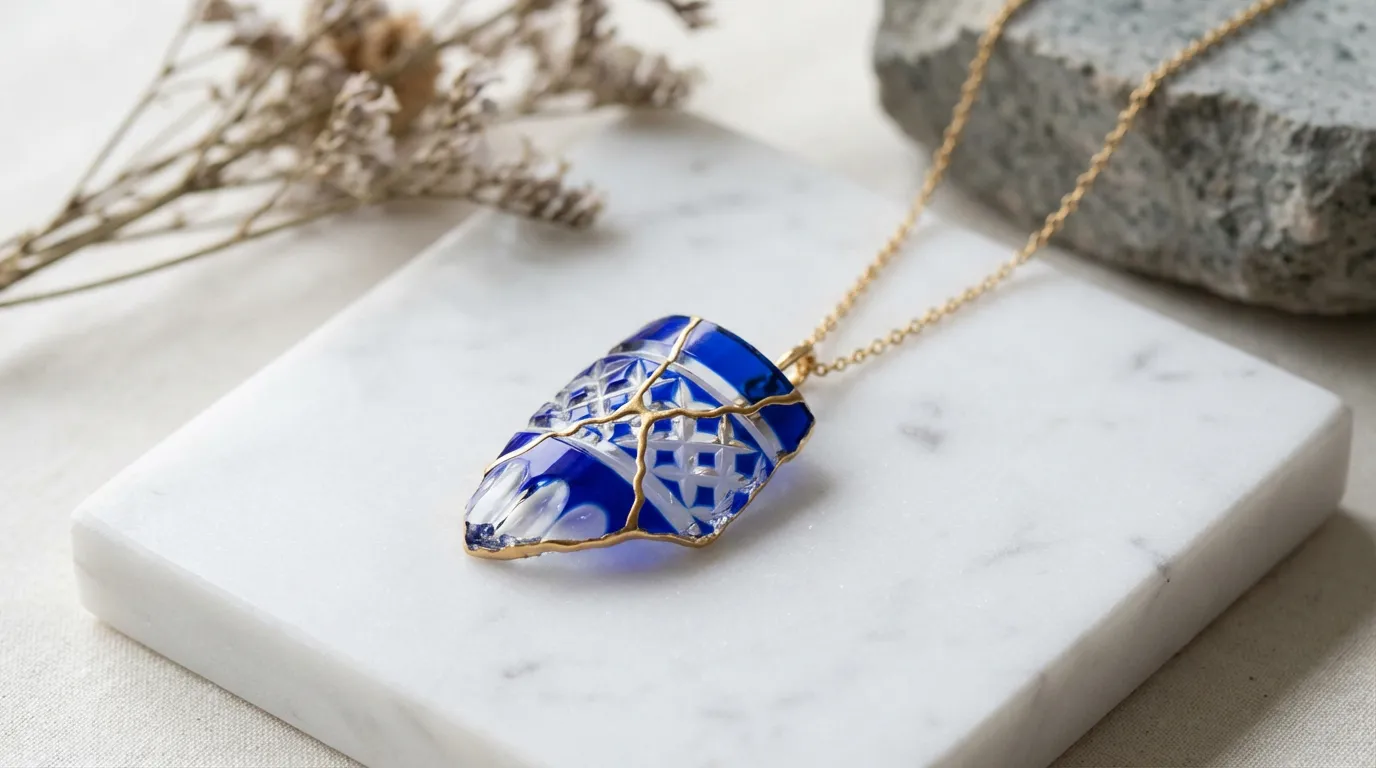
In Japan’s celebrated ceramic-producing regions — including Mino-yaki (Mino ware, one of Japan’s largest and most historically significant pottery traditions, produced in Gifu Prefecture) — a certain percentage of pieces inevitably emerge from the kiln with firing marks, warping, or surface variations that prevent them from meeting standard quality thresholds. Recently, a significant movement has emerged to carefully cut and shape these ceramic shards — along with the exquisitely crafted glass offcuts generated during the production of Edo Kiriko (a refined style of cut glass originating in Tokyo, renowned for its intricate geometric patterns) — and reimagine them as high-end jewelry pieces, incorporating Kintsugi-inspired visual language alongside 18-karat gold and sterling silver settings.
The key insight driving this category is not the rarity of the raw material, but rather the decision to treat each piece’s individual character — its unique coloration, irregular form, or natural chip — as a design signature rather than a defect. The result is a product category that speaks directly to consumers who prize one-of-a-kind objects and the meaningful stories behind them.
From Weaving Room Floor to High-End Interiors: Upcycled Japanese Textiles
The ateliers producing Japan’s most prestigious woven textiles — including Nishijin-ori (Nishijin weave, a centuries-old silk weaving tradition from Kyoto, celebrated globally for its extraordinary intricacy and use of metallic threads) — are similarly reimagining the role of offcuts in their creative and commercial process. Fabric remnants generated when cutting neckties, obi (formal kimono sashes), and other goods are being encased in acrylic resin and bonded with contrasting materials to create luminous art panels and luxury furniture components — a bold gesture that preserves the visual splendor of the textile while radically recontextualizing its purpose.
In the apparel sector, brands like “Ay” are building their entire identity around the upcycling of antique Meisen kimono fabric (a boldly patterned, machine-woven silk kimono style popular in early 20th-century Japan) into contemporary everyday garments. Meanwhile, Kyoto-based lifestyle brand “sAto” fuses traditional gold thread with reclaimed materials to create refined lifestyle objects. Upcycled Japanese textiles, in all their forms, are demonstrating remarkable breadth and creative ambition.
Design Strategies for Practitioners: Building a “Zero Waste” Creative Practice
Examining these cases together reveals a clear pattern: craft upcycling is not simply a gesture of environmental goodwill. It is a powerful business strategy capable of fundamentally reshaping how a brand manufactures, sells, and communicates — all at once. Reduced disposal costs, reimagined inventory, access to new audiences, and greater visibility for artisan skill can all be achieved simultaneously.
Storytelling as the Engine of B-Grade Premiumization
The starting point is a decisive act of reframing: refusing to treat surface variation, color inconsistency, or minor imperfection as evidence of failure, and instead presenting them as “the unique signature of fire, earth, and natural process.” Thoughtful naming, honest and detailed explanation of each piece’s individual characteristics, and transparent disclosure of the material journey — what was generated, why, and how it was elevated — combine to convert a “B-grade” item into a premium, sustainable one-of-a-kind object.
Crucially, this narrative works best when it prioritizes clarity and honesty over flowery language. Explaining precisely which stage of production generated a material, and exactly how it was elevated into something beautiful, builds the kind of deep, lasting trust that sophisticated customers — and professional buyers — actively seek.
Cross-Industry Collaboration: Building Circular Material Ecosystems

Upcycling does not need to be a solitary endeavor. Cross-sector circular ecosystems are gaining significant momentum — exemplified by the TSUMUGI Project, which transforms discarded paper resources into washi-method yarn threads, creating a new material supply chain built entirely on what would otherwise be waste. Similarly, UPCraft demonstrates how beachcombed materials can be connected to regional traditional craft traditions, creating a powerful intersection of environmental action and cultural preservation.
The essential question for any craft business is this: how can your studio’s waste output be structured and presented so that it becomes genuinely desirable raw material for outside creators? Establishing clear guidelines around safety, supply consistency, and quality — then actively co-promoting with collaborating brands — maximizes both PR impact and the opening of entirely new distribution channels.
The Future of Traditional Craft: Why Upcycling Is the Most Authentic Path Forward
Preserving tradition does not mean freezing it in amber. The highest form of cultural continuity is to safeguard the core — the sophisticated technical mastery and refined aesthetic sensibility passed down through generations — while fearlessly updating the context and purpose of the materials themselves. To take what was destined for disposal and reinterpret it through the lens of contemporary life is not a compromise of tradition. It is tradition’s most vital expression.
Sustainable Japanese craft upcycling is not a crisis management tool for a struggling industry. It is a profoundly creative act: one that simultaneously reconstructs design philosophy, production systems, and the stories that connect makers to the world. As conscious consumption continues to reshape global markets, traditional crafts armed with the principle of “designing nothing away” are poised to move hearts — and markets — across the world for generations to come.


