

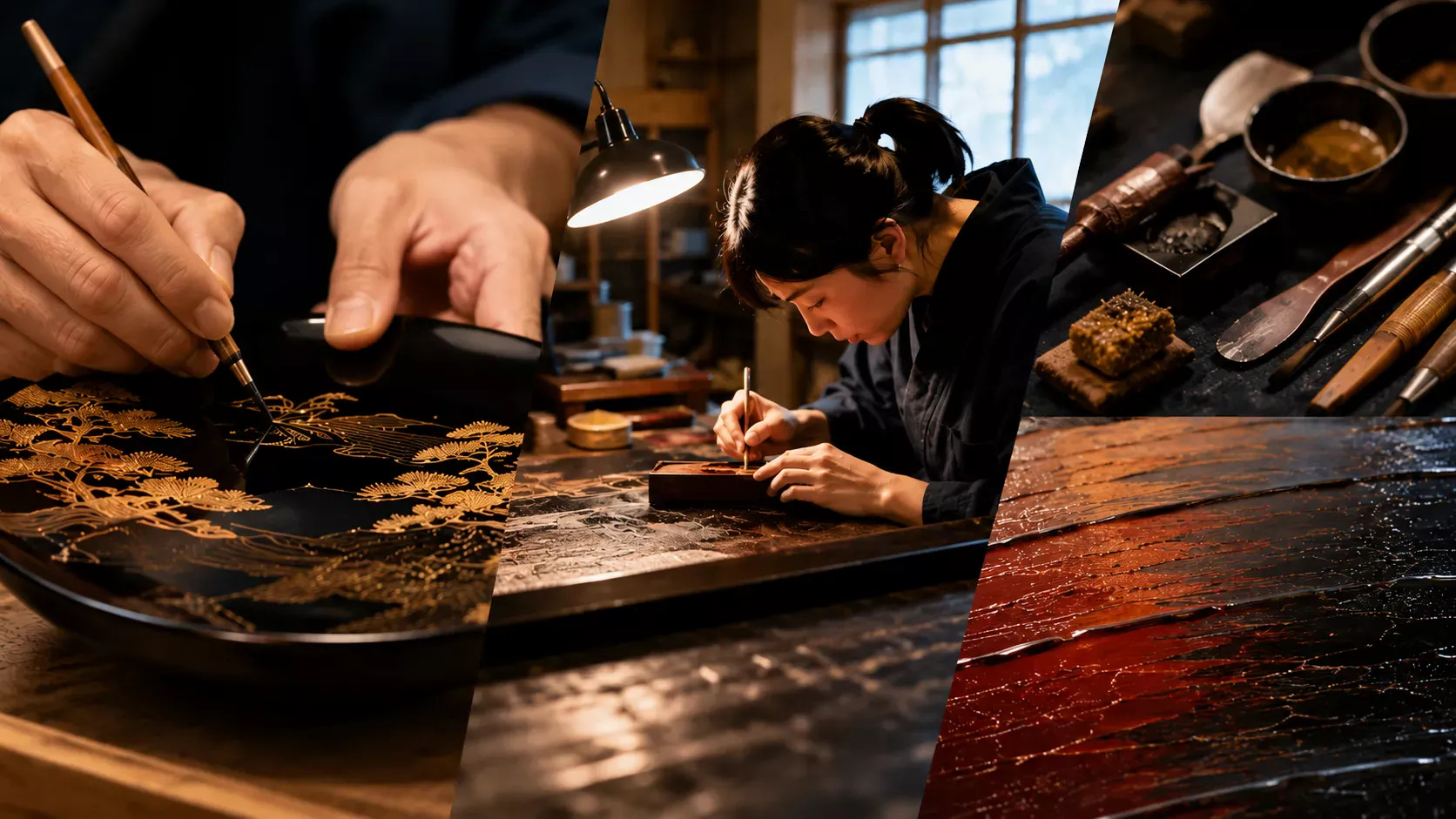
If you want to become a lacquer artist in Japan, the most reliable first step is to clarify which urushi technique you want to pursue, then compare the programs, graduation pathways, and regional contexts offered by public training institutions in Wajima and Kagawa.
This article draws on official sources to lay out the key facts — techniques, program length, costs, and eligibility — for the Wajima Urushi Art Training Institute in Ishikawa Prefecture and the Kagawa Lacquer Art Research Institute, so you can make an informed decision about where and what to study. Whether you are weighing your options between institutions, considering a career change into craft, or factoring in a move to a new region, we hope this guide is useful.
What this article covers
- Before asking “which institution?”, ask “which technique?” — that question should come first.
- Wajima and Kagawa both teach lacquer art, but the techniques they center on, and their relationships to regional craft production, are distinct.
- After graduation, the paths forward are not limited to going independent — workshop employment, regional craft activity, education, and portfolio careers are all real options.
Table of Contents
How to Become a Lacquer Artist: Start by Choosing Your Technique
There is no single path to becoming a lacquer artist. The first question to ask yourself is: which technique do you want at the core of your practice?
Decide What You Want to Learn Before Deciding Where
Urushi, the Japanese lacquer tradition, encompasses a wide range of techniques: soji, the preparation and construction of the base form; kyushitsu, the foundational process of applying and building up urushi coatings; maki-e (decoration using sprinkled gold or silver powder); chinkin (gold line engraving); kinma (carved polychrome lacquer); zonsei (painted lacquer decoration); choshitsu (carved lacquer); and raden (mother-of-pearl inlay), among others. Moving beyond “I want to learn urushi” to identify which process, which material quality, and which mode of expression draws you most will sharpen your choice of training institution considerably.
Put another way: choosing an institution purely by name or reputation risks arriving to find that the technique you most wanted to pursue is not available there in any depth. The institution is the means, not the end — the question of what to learn should lead.
Main Paths to Becoming a Lacquer Artist
Enrolling in a public training program is one route, but not the only one.
- Study systematically at a public training institution
- Enroll in a craft program at a vocational school or university
- Apprentice at a workshop
- Study directly under a working artist
- Begin with short courses or regional craft experience programs
- Arrive at urushi through a background in a related craft discipline
Which path suits you depends not only on your technical interests but on your age, life circumstances, working style, and how you want to build your relationship with a craft-producing region.


The Training Institution as a Means, Not an End
Editor’s note
Which technique genuinely draws you?
Urushi is a single word, but the range of practices it holds is vast. Are you drawn to the sculptural quality of kinma’s carved surfaces? The linear precision of chinkin? The painterly possibilities of maki-e?
That answer should precede your choice of institution — not the other way around. Selecting a program based on technique compatibility rather than institutional prestige or location is, I think, the judgment most likely to sustain you through years of demanding training.
What It Means to Study at the Wajima Urushi Art Training Institute
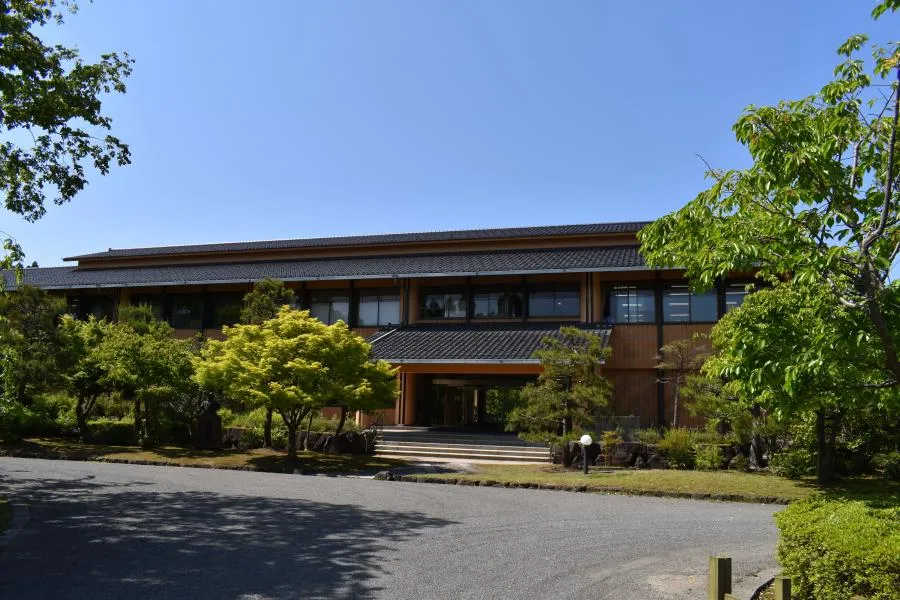
Studying in Wajima means immersing yourself in the regional context of Wajima lacquerware, with particular depth in chinkin and the full spectrum of urushi techniques that define this production area.
About the Wajima Urushi Art Training Institute
The Wajima Urushi Art Training Institute is a public institution established and operated by Ishikawa Prefecture with support from Japan’s Agency for Cultural Affairs, under the framework of the Law for the Protection of Cultural Properties. Its purpose is to train successors to holders of Important Intangible Cultural Property status — often referred to in English as Living National Treasures. The institute was founded in 1967 and has been part of the regional craft landscape for over half a century.
Two program tracks are available.
Standard Program (3 years) covers four techniques — base preparation (soji), urushi coating (kyushitsu), maki-e, and chinkin — with the goal of training successors to holders of Important Intangible Cultural Property designation. Applicants are required to have educational attainment equivalent to junior high school graduation and to demonstrate foundational skills in their chosen discipline. Examination fees, enrollment fees, tuition, and materials are all free of charge. Personal tools are the student’s own expense (approximately ¥200,000). Enrollment in each discipline (base preparation, urushi coating, maki-e, chinkin) is capped at five students (based on the 2026 admissions cycle).
(Source: 2026 Admissions: Standard Program | Ishikawa Prefecture)
Introductory Program (2 years) is designed for applicants without prior experience and focuses on building foundational skills. Applicants must hold a high school diploma or demonstrate equivalent knowledge and ability. Tuition and enrollment fees are free. Materials cost approximately ¥100,000 per year; personal tools are the student’s own expense (approximately ¥250,000). Enrollment is capped at ten students in the specialist track (based on the 2026 admissions cycle).
(Source: 2026 Admissions: Introductory Program | Ishikawa Prefecture)
What Studying in Wajima Offers: Chinkin, Kyushitsu, and the Regional Context of Wajima Lacquerware
Studying urushi in Wajima is not only a matter of acquiring technique — it means entering the human networks, distribution structures, and craft culture of Wajima lacquerware production. Graduates of the training institute are active in the region as artists and craftspeople, and the institute has played a sustained role in both technical transmission and regional workforce development.
Chinkin in particular is a defining decorative technique of Wajima lacquerware, and the ability to study it within its living regional context is one of the institute’s most significant features. The technique involves incising fine patterns into a lacquered surface with chisels and blades, then pressing gold leaf, powder, or paste into the lines — a process that demands precise control of the cutting tool and a thorough understanding of lacquer behavior.
Verify Current Operations Following the Noto Peninsula Earthquake
The January 2024 Noto Peninsula earthquake caused severe damage across Wajima city. Ishikawa Prefecture’s official website continues to publish admissions information and enrollment results for the 2026 intake, indicating that recruitment and selection activities are ongoing. However, conditions at the site and in the surrounding production area remain subject to change, and applicants should confirm the latest official information before applying. Studio visits are accepted on an ongoing basis, according to the institute’s published information.
(Source: Wajima Urushi Art Training Institute | Ishikawa Prefecture)
How to Check for 2027 Admissions Information
Applications for the 2026 intake have closed. For 2027 and subsequent years, check the Wajima Urushi Art Training Institute’s official website for the latest information. For specific questions, contact the institute directly or arrange a visit through the ongoing studio visit program.
What It Means to Study at the Kagawa Lacquer Art Research Institute
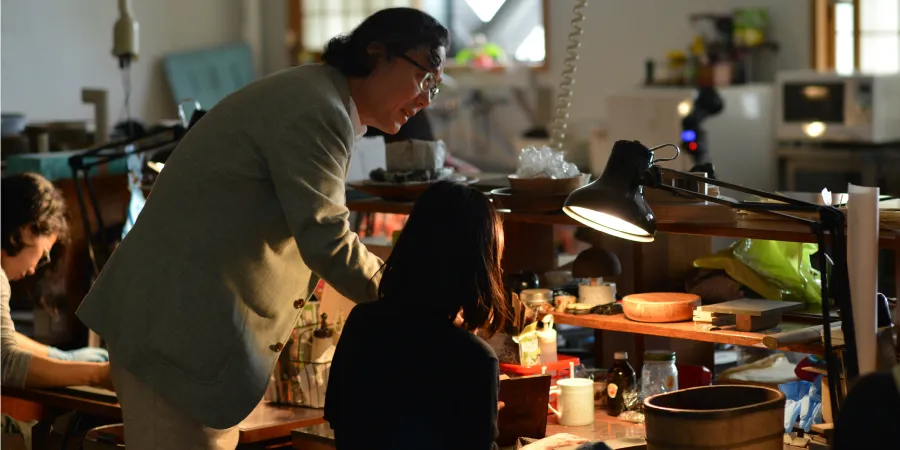
The Kagawa Lacquer Art Research Institute is one of the few places where kinma, zonsei, and choshitsu — the three techniques at the heart of Kagawa lacquer art — can be studied in depth, and it is a serious option for anyone drawn to this particular tradition.
About the Kagawa Lacquer Art Research Institute
The Kagawa Lacquer Art Research Institute is a public research and educational institution established by Kagawa Prefecture in November 1954. Its founding purpose was the preservation of the three Kagawa lacquer techniques — kinma, zonsei, and choshitsu — and the training of the next generation of practitioners.
The research program runs for three years with ten students per year. Applicants must be 35 years old or younger (based on 2025 admissions criteria), hold a high school diploma or above, or hold a junior high school diploma and demonstrate foundational skills in lacquer craft. Examination fees, tuition, and enrollment fees are all free of charge. Personal tools and related expenses (approximately ¥200,000) are the student’s own responsibility.
(Source: 2025 Admissions: Research Program | Kagawa Art Navi)
What Studying Kinma, Zonsei, and Kagawa Lacquer Art Means
The three techniques — kinma, zonsei, and choshitsu — are closely associated with Tamakaji Zokoku, a lacquer carver who worked in Sanuki (present-day Kagawa) during the late Edo period, and have been carried forward as the defining practices of Kagawa lacquer art. Kinma in particular involves building up layers of colored urushi, then carving into the surface with a blade to reveal the different color layers beneath, creating pattern through depth rather than surface application. This tradition developed under the patronage of the Takamatsu domain, and for anyone with a strong interest in this regional lineage, the Kagawa Lacquer Art Research Institute is one of the few places to study it seriously.
Graduate Record and Living National Treasure Designations
According to the institute’s official profile, over 480 students had completed the research program as of the institute’s 70th anniversary in November 2024.
Several graduates have been designated Living National Treasures — formally recognized as holders of Important Intangible Cultural Property. In 2013, Yoshito Yamashita (15th graduating class) received that designation in kinma. In 2020, Hayato Otani (who completed the research staff program in 1981) received the same designation in kinma. The fact that the institute has produced multiple Living National Treasure holders reflects its sustained role in the transmission and development of Kagawa lacquer art.
For the most current graduate figures and admissions information, refer to the Kagawa Lacquer Art Research Institute’s official website.
(Source: About the Kagawa Lacquer Art Research Institute | Kagawa Prefecture)
Comparing Training Institutions: Wajima, Kagawa, and Kyoto
Comparing institutions across technique, program length, cost, eligibility, and post-graduation pathways makes the decision considerably easier.
Comparison Table
※ Costs, enrollment figures, and eligibility requirements may change year to year. Always verify against the most current official admissions documentation.
| Criteria | Wajima Urushi Art Training Institute (Standard Program) |
Wajima Urushi Art Training Institute (Introductory Program) |
Kagawa Lacquer Art Research Institute | Kyoto Industrial Technology Research Institute Lacquerware Applied Course |
|---|---|---|---|---|
| Administering body | Ishikawa Prefecture (Agency for Cultural Affairs support) | Ishikawa Prefecture (Agency for Cultural Affairs support) | Kagawa Prefecture | Kyoto Industrial Technology Research Institute (local independent administrative agency) |
| Core techniques | Base preparation, kyushitsu, maki-e, chinkin | Base preparation, kyushitsu, maki-e, chinkin (foundational level) | Kinma, zonsei, choshitsu | Urushi fundamentals, maki-e, raden and other decorative techniques, kanshitsu |
| Program length | 3 years | 2 years | 3 years | 1 year (3 days/week) |
| Enrollment (reference) | Up to 5 per discipline (2026 admissions) |
Up to 10 (2026 admissions) |
10 students (2025 admissions) |
Approx. 6 students (2026 admissions) |
| Tuition and fees | Free | Free | Free | ¥260,000 (2025 figure; subject to change) |
| Personal tool and materials costs | Approx. ¥200,000 | Approx. ¥250,000 + ¥100,000/year in materials | Approx. ¥200,000 | Tools, regional study travel, and other out-of-pocket costs (approx. ¥50,000 / 2026 admissions information) |
| Eligibility (key points) | Junior high school graduate or equivalent; foundational technique required | High school graduate or equivalent | 35 or under; high school graduate or equivalent | Applicants intending to work in lacquerware or with relevant practical experience (confirm with official source) |
| Base location | Wajima, Ishikawa Prefecture (Noto region) | Wajima, Ishikawa Prefecture (Noto region) | Takamatsu, Kagawa Prefecture | Kyoto |
| Best suited for | Those seeking depth in chinkin and the Wajima lacquerware regional context | Those starting from no prior experience and building toward a full foundation | Those with a strong interest in kinma and the three Kagawa lacquer techniques | Those seeking to enter Kyoto lacquerware practice, with relevant craft or production experience |
(Source: 2026 Admissions – Standard Program | Ishikawa Prefecture)
(Source: 2026 Admissions – Introductory Program | Ishikawa Prefecture)
(Source: Kagawa Lacquer Art Research Institute | Kagawa Prefecture)
(Source: 2026 Lacquerware Applied Course | Kyoto Industrial Technology Research Institute)
Choosing by Technique
When the choice feels uncertain, returning to technique is usually the most useful anchor.
If chinkin or the broader context of Wajima lacquerware production is what draws you, the Wajima Institute is the natural starting point. The Introductory Program offers an entry route for those without prior experience.
If your interest centers on kinma, zonsei, or the other techniques in the Kagawa tradition, the Kagawa Lacquer Art Research Institute is one of the principal options — offering the chance to work within a lineage that includes active artists and a documented regional history.
For those wanting a concentrated one-year program, the Lacquerware Applied Course at the Kyoto Industrial Technology Research Institute is worth considering. For broader craft education in a university or vocational school setting, those programs are worth exploring separately.
If there is already a specific artist or workshop you want to work with, direct apprenticeship is also a practical route.
A Brief Guide to Key Techniques: Kinma, Chinkin, Maki-e, and More
Understanding the characteristics of the main urushi techniques provides a useful reference point when thinking through your options. The following is a working guide to help you reason backward from the kind of work you want to make to the training that fits it.
Kinma
Kinma is a technique in which layers of colored urushi are built up on the surface, then incised with a blade to expose the different color strata below, creating pattern through carved depth rather than applied decoration. It is the best-known of the Kagawa lacquer techniques and can be studied in depth at the Kagawa Lacquer Art Research Institute. The work demands precise carving and a thorough understanding of how the successive lacquer layers interact.

Chinkin
Chinkin involves incising fine patterns into a lacquered surface using chisels and blades, then pressing gold leaf, powder, or paste into the carved lines. It is one of the signature decorative techniques of Wajima lacquerware and occupies a central place in the curriculum at the Wajima Urushi Art Training Institute. Precision of line and control of pressure are what determine the finished result — qualities that develop through sustained practice over years.

Maki-e
Maki-e is the technique of drawing a design in urushi on the surface, then sprinkling gold or silver powder onto the wet lacquer to fix the pattern. It developed from the Heian period onward and has given rise to several distinct variants — togidashi maki-e (polished inlay), hira maki-e (flat surface), and taka maki-e (raised relief), among others. Maki-e is covered in the curriculum at the Wajima Institute and is also taught widely in university and vocational school craft programs.

Kyushitsu, Kanshitsu, Raden, and Others
Urushi practice extends well beyond maki-e, chinkin, and kinma. The following techniques are also closely tied to specific artist practices and regional traditions.
A working glossary of urushi techniques
Kyushitsu: The process of coating and building up urushi on a base material — the foundational step underlying all lacquer work.
Kanshitsu: A technique using lacquer-saturated cloth or powder as the structural base itself, producing forms that are light and relatively free in shape.
Raden: The inlaying of thin shell fragments into lacquered surfaces to create pattern — the iridescent quality of the shell produces an effect that shifts with the light.
Zonsei: A technique in which color is applied over a lacquered ground to create decorative pattern. One of the three defining techniques of Kagawa lacquer art.
Choshitsu: Deeply built-up layers of colored urushi that are then carved in relief. Also one of the three Kagawa techniques.

What to Prepare Before Applying: A Practical Checklist
Before submitting an application, it helps to think through not only your technique interests but also the practical side: living costs, your working environment during training, and a rough sense of what you want to do after you finish.
Pre-Application Checklist
- Have you identified one or two techniques you want to focus on?
- Have you reviewed the most current official admissions documentation (costs, enrollment caps, eligibility, deadlines)?
- Do you have a realistic plan for where you will live and how you will support yourself during training?
- Even where tuition is free, have you estimated personal tool costs and living expenses?
- Have you checked for open studio visits, information sessions, or open days?
- Do you know whether a portfolio or photographs of your work are required?
- Do you have a working sense of what you want to do after the program — independent practice, workshop employment, education, a portfolio career?
- If you need to coordinate with family or an existing job, have you begun that process?
- Are you genuinely prepared to live in the region for the duration of the program?
- Have you looked into more than one institution or workshop as a comparison?
Questions Worth Asking at Open Days and Studio Visits
Official websites do not always convey the information that matters most. Open days and studio visits are good occasions to ask directly. Some questions worth raising:
- How far can a student progress in a given technique over the course of the program?
- What have graduates gone on to do — specifically?
- What is the actual out-of-pocket cost for materials and tools in practice?
- Is there any support with housing or other aspects of settling in?
- Are there opportunities to exhibit work or enter open competitions during the program?
- Have applicants with no prior craft training been accepted before?
- For non-Japanese nationals: what are the language requirements and visa conditions?
After the Program: Career Paths for Lacquer Artists
Completing a training program is a beginning, not an endpoint. Going independent is one option among several — workshop employment, regional craft involvement, education, and portfolio careers are all paths that graduates take.
Going Independent
Some graduates establish an independent practice, combining studio production, exhibitions, open competitions, gallery sales, online presence, and commissioned work. But technical training and the practical work of sustaining a career as an artist are different things — building visibility, developing distribution, managing finances, and securing a working studio all require separate preparation. A training certificate does not guarantee a living, and the groundwork for independence is most effectively laid during the program itself, not after.
Joining a Workshop or Staying in the Region
Some graduates join workshops in the production regions — both Wajima and Takamatsu have workshops that have employed program alumni. Working in a production environment allows continued skill development, and many artists move gradually from workshop practice toward independent work over time.
Education, Workshops, and Community Engagement
There are also paths that involve transmitting the craft — teaching at craft schools or community programs, running workshops, or working with local government on craft promotion projects.
Maintaining a Practice Alongside Other Work
Not everyone who completes a program goes immediately into full-time craft work. Combining lacquer practice with other employment — particularly in the early years — is a real and legitimate option. Balancing production, exhibition, and income is genuinely difficult, especially at the start, and sustaining the work over time is the actual challenge. Maintaining a parallel income is not a retreat from the craft.
On the Language of “Successor Shortage”
The phrase “successor shortage” is common in discussions of traditional craft, but it is worth treating carefully. Choosing to study lacquer art is not equivalent to filling a workforce gap. Each person’s decision — which technique to pursue, which region to commit to, and how to continue — carries its own weight. The shortage is real as a structural issue, but “the craft needs people, so you should learn it” is not the same as a clear path to sustainable work. Both things are true at once.
Frequently Asked Questions
The questions below address some of the most common points of uncertainty before making a decision: starting without prior experience, costs, career change, and applying as a non-Japanese national.
- Q1. Can I pursue lacquer art without any prior experience?
- Yes, it is possible. The Wajima Urushi Art Training Institute’s Introductory Program (2 years) is specifically structured for applicants without prior experience. Check the current official admissions documentation for the precise eligibility conditions.
- Q2. Do I need a fine arts degree or arts school background to apply?
- Eligibility varies by institution, but a fine arts or arts school background is not required. The Kagawa Lacquer Art Research Institute (2025 admissions criteria) accepts applicants who hold a high school diploma or above, or who hold a junior high school diploma and can demonstrate foundational skills in lacquer craft. Contact each institution directly for details specific to your situation.
- Q3. How do I choose between Wajima and Kagawa?
- This is not a question of one being better than the other — it comes down to which tradition and which techniques you want to work in. If chinkin and the Wajima lacquerware production context are your focus, start with the Wajima Institute. If your interest is in kinma, zonsei, or the other Kagawa techniques, the Kagawa Lacquer Art Research Institute is the natural reference point.
- Q4. What about living costs and housing during the program?
- Even where tuition is free, living expenses, housing, and personal tool costs are entirely the student’s responsibility. If the program requires relocating to another region, securing housing is one of the most important practical steps before applying. Confirm the actual situation through official sources and at any open day or studio visit.
- Q5. Can I go independent immediately after completing the program?
- Some graduates do, but completing a program does not in itself produce the conditions for a sustainable independent practice. Graduates take a range of paths — workshop employment, regional craft work, education, portfolio careers — and the practical requirements of maintaining a career as an artist (visibility, distribution, finances, studio space) are separate from the technical training. Preparation for independence runs in parallel with the program, not after it.
- Q6. Can I apply as a non-Japanese national?
- Eligibility for non-Japanese applicants, including visa requirements and Japanese language proficiency expectations, varies by institution. Since training is conducted in Japanese, language ability will also be a practical consideration. Contact the relevant institution directly for the specifics of your situation.
- Q7. Is the Wajima Institute still accepting applications after the 2024 earthquake?
- Ishikawa Prefecture’s official website has published admissions information and enrollment results for the 2026 intake, indicating that the application and selection process is continuing. Conditions at the site and in the surrounding production area remain subject to change, so check the official website for the most current information, and contact the institute directly if you have questions.
- Q8. Can I try urushi in a short course before committing to a full program?
- Yes. Short-form experience programs are available through regional craft organizations and workshops in various production areas. Getting hands-on time with urushi and a specific technique before committing to a multi-year program is a reasonable step. That said, a short experience course and a professional training program are different in their aims. If a short course deepens your interest, that is a reasonable moment to begin contacting training institutions and workshops.
Connecting with Lacquer Artists, Workshops, and Educational Institutions
The broader ecosystem supporting urushi practice — workshops, educational institutions, local governments, and companies — is relevant not only for aspiring artists but for anyone engaging with the craft seriously.
Listing and Coverage Inquiries for Artists and Workshops
Kogei Japonica covers lacquer artists, workshops, and production regions. If you are a graduate building a public presence, a workshop looking to reach new audiences, or a craft organization seeking media engagement, we are open to inquiries about coverage and listing.
Regional Promotion for Educational Institutions and Local Government
For educational institutions and local government offices looking to bring training programs and emerging craft talent to domestic and international audiences, we can discuss options including editorial coverage, interviews, and English-language content production.
Lacquer Art for Commercial and Hospitality Contexts
For hotels, restaurants, offices, or companies seeking to commission lacquer work, source pieces for hospitality environments, or develop collaborative projects with artists, Kogei Japonica can facilitate introductions to artists and workshops.
English-Language Content and International Outreach
For artists, production regions, and government bodies seeking to reach English-speaking audiences, we produce English articles, artist profiles, and regional craft features.
Inquiries and consultation

Summary
The first question in becoming a lacquer artist is not “where should I study?” but “what do I want to make, and why?”
The Wajima Urushi Art Training Institute is a public institution established by Ishikawa Prefecture with Agency for Cultural Affairs support, with the stated purpose of training successors to holders of Important Intangible Cultural Property status. Its curriculum centers on four techniques — base preparation, kyushitsu, maki-e, and chinkin — across a three-year Standard Program and a two-year Introductory Program. Enrollment in the Standard Program is capped at five students per discipline; the Introductory Program accepts up to ten (both figures from the 2026 admissions cycle). Tuition and fees are free; personal tool costs are the student’s own responsibility.
The Kagawa Lacquer Art Research Institute was established by Kagawa Prefecture in 1954 and offers a three-year research program centered on the three Kagawa techniques — kinma, zonsei, and choshitsu. As of the institute’s 70th anniversary in November 2024, over 480 students had completed the program. Two graduates have been designated Living National Treasures in kinma: Yoshito Yamashita in 2013, and Hayato Otani in 2020. Tuition and fees are free; personal tool costs are the student’s own responsibility.
Neither program is a guarantee of a sustainable practice. What they offer is a structured technical environment. The work of building a career — building an audience, finding distribution, managing finances, maintaining a studio — is something graduates construct for themselves. “The craft needs successors” is a real structural condition; it is not the same as a clear route to a livelihood. The more durable foundation is a genuine pull toward a specific technique, a particular way of working with this material. That is what will sustain a long period of demanding training, whatever institution or path you choose.
The right starting point is the official website and a studio visit. Information is updated annually — always verify against the most current official sources before acting on anything in this article.
