



Anyone shopping for Japanese sake ware is likely to wonder what distinguishes an ochoko from a guinomi, whether a katakuchi is a cup you drink from or a vessel you pour from, and which material suits chilled sake. You may know the names and still find the differences surprisingly hard to explain.
An ochoko generally refers to a small sake cup, and a guinomi to a larger one. But there is no strict standard of capacity or shape dividing the two, and the names and uses overlap.
Sake ware includes not only cups you drink from — ochoko, guinomi and the shallow sakazuki — but also vessels you pour from, such as the tokkuri (flask) and katakuchi (lipped pourer), and vessels that warm and pour, such as the chirori and tanpo.
This article compares seven types of sake ware — ochoko, guinomi, sakazuki, masu, tokkuri, katakuchi, and chirori/tanpo — by shape, typical capacity and use. It then explains the differences between five materials — earthenware and porcelain, lacquer, tin (suzu), glass and wood — and how to choose for home, gifts, and restaurants and inns.
Table of Contents
Ochoko and guinomi: the real difference is not only size
An ochoko is generally taken to be small and a guinomi somewhat larger, but they cannot be told apart clearly by capacity alone. When choosing, it matters to check not only the name but the mouth diameter, the depth, the thickness of the rim, and how much you pour at a time.
What is an ochoko?

An ochoko generally refers to a small cup for modest servings of sake. It is commonly paired with a tokkuri and used in settings ranging from casual drinking at home to restaurant service.
Its shape is not uniform. Beyond cups that flare outward at the mouth, there are cylindrical forms, low shallow vessels and designs that narrow towards the rim. Material and method of making are just as varied, from mass-produced ceramics to one-off pieces by potters, glass artists, lacquer artists and metalworkers.
The Japan Sake and Shochu Makers Association presents the ochoko as a representative vessel readily associated with sake, and describes it as a cup for enjoying the kind of sake you can drink in a mouthful. This, though, is a general description, not a public standard defining the ochoko by capacity.
(Source: Enjoying Sake Through Sake Ware | Japan Sake and Shochu Makers Association)
Nor can the two simply be split into “ochoko for everyday use, guinomi for artist pieces.” Even a small cup can embody the maker’s judgement in its rim, its foot ring, its glaze and its painted decoration.
What is a guinomi?

The guinomi is often treated as a sake cup a size larger than the ochoko. Because it accommodates a slightly larger pour, it can suit drinking at your own pace, or appreciating the interior surface, the movement of the glaze, the colour of the glass or the character of the metal.
The Japan Sake and Shochu Makers Association describes the guinomi as a size larger than the ochoko, its wider mouth also letting you enjoy the aroma. Not every guinomi has a wide mouth, however, and no unified standard separating the names can be confirmed.
(Source: Enjoying Sake Through Sake Ware | Japan Sake and Shochu Makers Association)
The word “guinomi” may suggest a cup for drinking with gusto, but today it is also chosen for appreciating aroma and mouthfeel, or for enjoying a small work of craft in the hand.
Yet “savouring sake slowly” is not the sole formal definition of a guinomi either. In explaining the difference from the ochoko, it is most accurate to understand that size and use give useful clues, but the boundary remains fluid.
Defining ochoko and guinomi
- Ochoko: generally a small sake cup for drinking a little at a time. Shape and material vary widely.
- Guinomi: generally a larger sake cup than the ochoko. Many have a relatively open form that can enhance the aroma and reveal more of the vessel’s interior.
- In common: there is no strict standard of capacity or shape dividing the two, and the naming can differ by artist, workshop and retailer.
How should you use a sakazuki and a katakuchi?
A sakazuki is a vessel for drinking sake; a katakuchi is generally a vessel for pouring it. The shallow, flat sakazuki and the lipped katakuchi differ in shape and in role, though some contemporary pieces cross between uses.
The role of the sakazuki and where it is used

The sakazuki is a shallow, flat sake cup. It is used on ceremonial occasions, including the san-san-kudo sake-sharing ritual at Japanese weddings, New Year celebrations and other formal gatherings, and pieces finished in lacquer or makie (lacquer decoration in metal powder) can be found.
The sakazuki is not, however, a vessel only for ceremony. The Japan Sake and Shochu Makers Association, while noting it as a vessel seen at weddings and the New Year, also presents it as suitable for everyday use.
(Source: Enjoying Sake Through Sake Ware | Japan Sake and Shochu Makers Association)
A shallow sakazuki shows a wide surface of sake, making it easy to appreciate the colour of the sake and the inside of the cup, but it can spill more readily than a deeper vessel. When buying, consider not only the appearance but how comfortably and securely it can be supported with the fingers, and how much it holds at a time.
Contemporary artists, too, are making new sakazuki in earthenware and porcelain, glass, lacquer and metal. Together, these ceremonial traditions and contemporary interpretations show the breadth of sake ware today.
The role of the katakuchi and how to use it

A katakuchi is a bowl- or cylinder-shaped vessel with a pouring lip on one side. As sake ware, it is generally used to pour sake into guinomi or ochoko.
A katakuchi with a wide opening makes it easy to see the colour of the sake and how much remains, and some are easier to wash inside than a tokkuri. Depending on the shape of the lip, though, it can drip, so at purchase it is worth checking whether the lip pours cleanly without dripping and whether the vessel is comfortable to hold.
Although primarily a pouring vessel, some contemporary katakuchi are designed to be drunk from directly or used as serving bowls. Think of it as a pouring vessel in principle, but check the maker’s or manufacturer’s description for the specific use.
Nor is it a rule that “a katakuchi is smaller than a tokkuri.” They range from a small katakuchi for one person to a large one for pouring among several, and which holds more, katakuchi or tokkuri, differs by product.
Seven types of sake ware compared by shape, capacity and use
Sake ware is easier to organise when divided into vessels for drinking, vessels for pouring, and vessels that warm and pour. Because tin ware is a material and kiriko a glass-decorating technique, we consider these separately from the seven categories of vessel form.
| Sake ware | Primary function | Typical form | Typical capacity | Common settings | What to consider |
|---|---|---|---|---|---|
| Ochoko | Drinking | Small, with varied shapes | Tends toward small servings | Casual drinking at home; restaurant service | Mouth diameter, rim, actual capacity |
| Guinomi | Drinking | Tends to be larger than an ochoko | Varies by product | Drinking at your own pace | Weight, ease of holding, capacity |
| Sakazuki | Drinking | Often shallow and flat | Tends toward small servings | Everyday, celebrations, ceremony | Stability, tendency to spill |
| Masu | Drinking, presentation | Mainly a square wooden box | Depends on product size | Masu sake, holding an overflowing glass, presentation | Material, coating, drying, aroma |
| Tokkuri | Pouring | Often a narrow mouth with a swelling body | Single-serve to shared sizes | Chilled, room-temperature, warmed sake | Ease of washing, heat resistance, drying inside |
| Katakuchi | Pouring | A pouring lip on one side | Single-serve to shared sizes | Chilled, room-temperature, pouring at the table | Dripping, centre of gravity, storage |
| Chirori / tanpo | Warming, pouring | Cylindrical with a handle, and other forms | Varies by product | Warmed sake | Material, warming method, heat of the handle |
The capacity column gives general tendencies, not an official basis for the names. Ochoko and guinomi, or katakuchi and tokkuri, cannot be divided uniformly by capacity alone.
When buying online, check the full capacity and the practical serving volume when the vessel is filled to around 80 per cent, rather than relying on maximum capacity alone, along with the diameter, height and weight. Because size is hard to judge from a photograph of the vessel alone, a photograph of it held in the hand and a dimensional drawing are also worth consulting.
The chirori and tanpo are vessels for warming and pouring sake. There is a range of products, mainly in metal, but compatibility with direct heat, a hot-water bath or a microwave varies by product. Rather than judging the heating method from the name alone, check the instructions.
Choosing by material: earthenware and porcelain, lacquer, tin, glass and wood
No material is inherently superior. Choose according to thermal conductivity, weight, appearance, the feel of the rim against the lips and the care each vessel requires. Even within one material, the feel in use changes with thickness, shape and surface finish.
| Material | Main features | Uses it tends to suit | Points to check |
|---|---|---|---|
| Earthenware | Shows the texture of the clay and the character of the glaze | Room-temperature, warmed sake, enjoying artist-made pieces | Water absorption, initial sealing, heat resistance |
| Porcelain | A smooth, pale body and a fine rim | Chilled, room-temperature, everyday use | Thinness of the rim, chipping, microwave suitability |
| Lacquerware | Lightweight, with a soft, warm feel | Room-temperature, warmed sake, celebrations | Soaking, drying, dishwasher suitability |
| Tin | Highly thermally conductive; quickly reflects the sake’s temperature | Chilled, warmed sake | Heating method, deformation, care |
| Glass | Makes the colour and clarity of the sake easy to see | Chilled sake, summer dining | Heat resistance, condensation, dishwasher suitability |
| Wood | Light, with the feel and scent of wood | Room-temperature, masu sake, table presentation | Wood type, coating, drying, scent transfer |
Earthenware and porcelain sake ware

Earthenware and porcelain are the most varied of the materials for sake ware. Earthenware sake ware makes the most of the texture of the clay and the character of the glaze; porcelain, of a smooth, pale body and a thin, fine rim.
Mouthfeel depends on more than whether the vessel is earthenware or porcelain. The thickness of the rim, its angle, its curve, its polish and the way the glaze is applied all affect the flow of the sake and the feel of the vessel against the lips.
Some earthenware absorbs water, and some artists and workshops recommend an initial sealing treatment before first use, traditionally used to reduce water absorption. Others need no sealing. Give priority to the maker’s instructions, including microwave and dishwasher suitability.
Lacquer sake ware

Lacquer sake ware is typically lightweight and has a soft, warm feel. A sakazuki or ochoko of lacquer over a wooden base conducts temperature differently from glass or metal.
Lacquered sakazuki have been used for celebrations and ceremonial occasions, making the most of black or vermilion colour and decoration such as makie. But use and origin differ by region, era and piece, and there is no need to think of lacquerware as ceremonial only.
For lacquerware, long soaking, strong detergent, dishwashers and excessive drying in direct sunlight can all be unsuitable. As some recent products are intended for everyday use, do not judge by generalities alone; check the individual instructions.
Tin sake ware

Tin sake ware has the lustre particular to metal and is highly thermally conductive, so the vessel quickly takes on the temperature of the sake. Pour in cold sake and the vessel cools easily too; with warmed sake, the warmth passes readily to the hand.
Nousaku describes its 100% tin products as high in thermal conductivity, so that the entire vessel cools quickly after brief chilling.
(Source: Summer Sake Ware and Plates Feature | Nousaku)
On the other hand, a tin vessel does not necessarily make every sake taste mellower. The assessment changes with the kind of sake, the material of the vessel, the time in use and the drinker’s own perception. Tin is better appreciated for the overall sensory experience it creates — including the sense of temperature, the weight and the mouthfeel — than for any universal claim about flavour.
Tin products differ in purity, alloy and surface finish. Because soft products can deform under strong force, follow the manufacturer’s or artist’s instructions, including heating method and care.
Glass sake ware

Glass sake ware makes the sake’s clarity, colour and serving volume easy to see. Glass is particularly well suited to presenting chilled sake, and it also reveals characteristics such as the cloudiness of nigori sake and colour changes caused by ageing.
Kiriko is a technique of cutting the surface of glass to form a pattern. Edo kiriko and Satsuma kiriko are well known, and beyond geometric patterns there are pieces expressing plants and figurative designs. Kiriko is used not only for sake ware but for bowls, plates and flower vessels.
Ordinary glass and heat-resistant glass are different. When putting in warmed sake, using a microwave, or applying a sudden change of temperature, always check the heat-resistance labelling and the instructions.
Wooden sake ware

Wooden sake ware includes the masu, turned-wood sake cups, carved katakuchi, and sakazuki of lacquer over a wooden base. Wooden sake ware extends well beyond magewappa bentwood.
Wooden ware is light, and lets you enjoy the feel and scent of wood. With delicately scented sake, on the other hand, the scent of wood can come through strongly. Choose according to whether you want to focus on the aroma of the sake itself, or to enjoy an experience that includes the scent of wood.
Water absorption and care differ with the wood type, the coating and the finish. As some products are unsuited to long soaking or a dishwasher, wash and dry them after use by the method the maker advises.
Editor’s note: sake ware remains a living field of craft
Say “sake ware” and some may picture an antique, or an old sakazuki in the family cupboard. But sake ware is not a closed historical category; it is an active field of contemporary practice, in which artists are still questioning material and form.
A good sake vessel is not decided by name or region alone. Its quality is felt in the rim against the lips, its weight in the hand, its appearance when filled and whether it invites repeated use after washing. Sake ware is a craft work and, at the same time, an object experienced directly through the hand and lips.
An easy-to-use vessel is not necessarily the only good sake vessel. Nor, on the other hand, can every difficulty of use be justified as artistry. The important questions are what the maker intended and how thoroughly the act of use was considered. In that tension lies the interest of looking at contemporary sake ware.

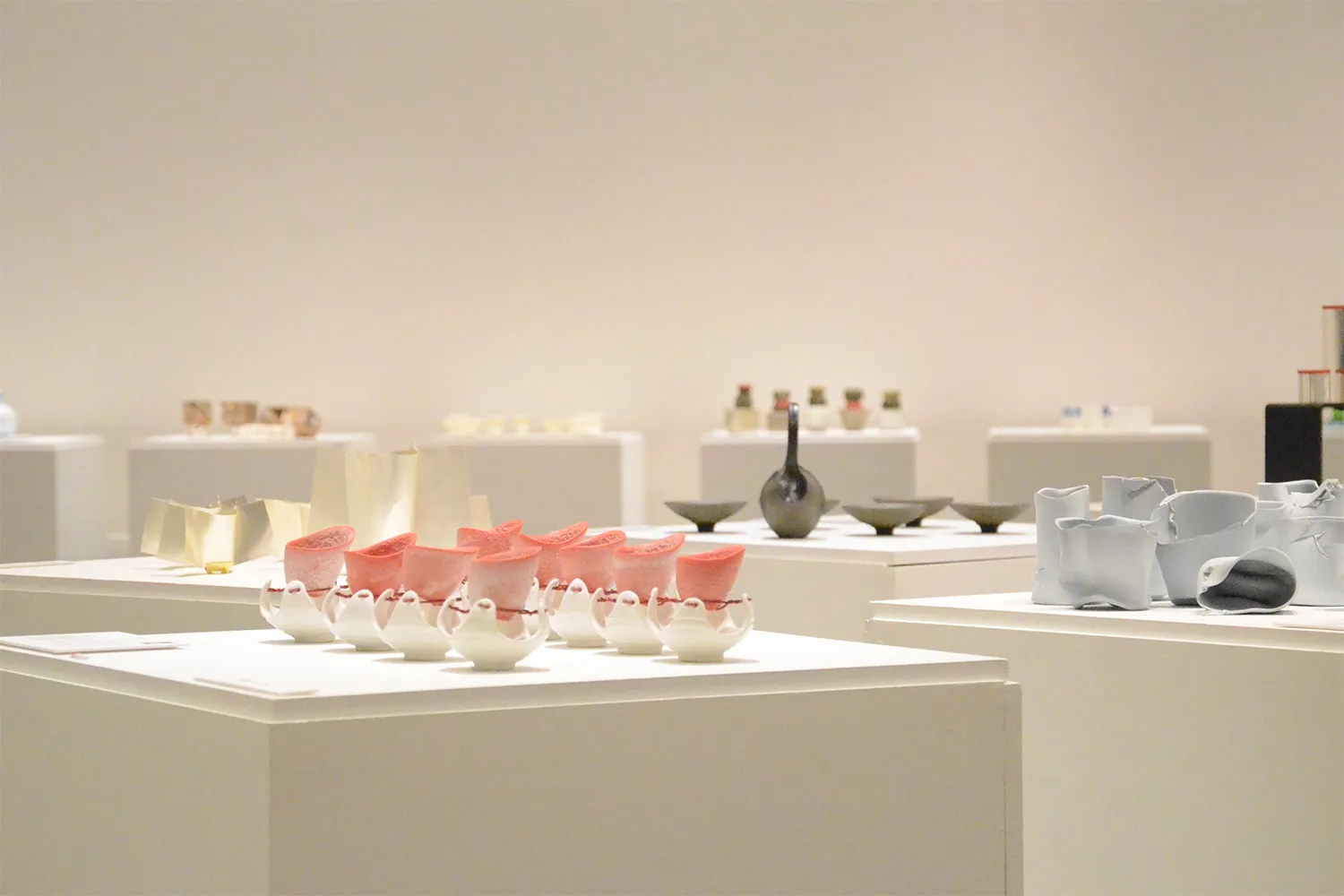
The theme of the 2026 Itami International Craft Exhibition, held by the Itami City Museum of Art, is “sake ware and sakazuki stands.” The entry deadline for domestic applications is 6 August 2026; works submitted by shipping are to be delivered on the morning of 19 August, and works brought in person are accepted from 10:00 a.m. to 5:00 p.m. on 20 August.
The grand prize is one award of 500,000 yen. Additional awards include a Second Grand Prize, the Itami Prize and Awards of Excellence. The jurors include Yamanaka Genbei, tin master and head of Seikadō, along with specialists in glass, lacquer, sculpture, craft history and sake brewing.
(Source: 2026 Itami International Craft Exhibition, Call for Works | Itami City Museum of Art)
The Itami International Craft Exhibition began in 1998 and reaches its 27th edition in 2026. Since 2001 it has been held alternately on the themes of “jewellery” and “sake ware and sakazuki stands,” presenting the varied expression of contemporary artists.
(Source: Itami International Craft Exhibition | Itami City Museum of Art)
In December 2024, Japan’s “traditional sake-brewing” was inscribed on the UNESCO Representative List of the Intangible Cultural Heritage.
(Source: UNESCO Intangible Cultural Heritage Inscription of “Traditional Sake-Brewing” | Agency for Cultural Affairs)
On 29 November 2024, the National Tax Agency designated “Itami” as a geographical indication for refined sake.
(Source: Geographical Indication “Itami” Production Standards | National Tax Agency)
As sake-brewing gains renewed recognition, the vessels through which sake is served and experienced continue to evolve as well. Organising the names of sake ware is not mere terminology; it is a way into a living field of craft that continues to evolve.
How to choose the right sake ware for your drinking style
In choosing sake ware, consider where and how it will be used, the serving temperature, the size of each pour, the material and the care required. For gifts or commercial use, you also need to consider the box, the delivery time, replacement if broken, and repeat ordering.
Checklist
- Is it for home use, a gift, or a restaurant or inn?
- Will it be used for chilled, room-temperature or warmed sake?
- Will it be used by one person or several?
- How much do you want to pour at a time?
- Do you prefer a thin rim or a thick one?
- Can it be hand-washed, or is a dishwasher needed?
- Is heating by microwave or hot-water bath needed?
- Does it fit the height and depth of your storage space?
- Are you comfortable with the natural variation found in artist-made pieces?
- For a gift, are a box, a noshi ceremonial wrapper, or a name inscription needed?
- Can you buy more of the same shape later?
When buying artist-made sake ware for the first time, there is no need to assemble a whole set from the start. One approach is to use a single cup first and check its capacity, mouthfeel, weight and ease of washing.
Start with your usual way of drinking sake. A small ochoko may suit modest servings of chilled sake, a guinomi with a generous mouth diameter may suit enjoying aroma and the inside of the cup, and a katakuchi may suit pouring among several while watching the colour of the sake.
For a gift, an expensive vessel is not necessarily the one that pleases. Check whether the recipient drinks sake, whether they prefer chilled or warmed sake, and whether they would find a vessel that needs hand-washing a burden.
Points for restaurants and inns selecting sake ware
When a restaurant or inn chooses sake ware, it needs to consider not only beauty at the table but serving, clearing, washing, drying, storage, and replacement if broken.
Glass and tin can work particularly well in venues where chilled sake is central to the menu. Where warmed sake is central, ceramic and porcelain tokkuri, chirori and ochoko are candidates. But rather than assigning a single material rigidly to a particular style of sake, judge from the serving temperature, the amount per cup, and the time taken to finish drinking.
- The sake served and its temperature band
- The amount served per cup
- Number of seats and quantity needed
- Harmony with the food, the tray and the table
- Weight and ease of handling for staff
- Whether the katakuchi or tokkuri resists dripping
- Whether stacking or space-saving storage is possible
- Whether it is suited to a commercial dishwasher
- Whether it can be dried inside after washing
- Availability of replacement stock in case of breakage
- Whether the same or a similar item can be reordered
- The artist’s or workshop’s production capacity and lead time
Artist-made ware, while the variation of each piece can be part of its appeal, cannot always be remade completely identically. Before ordering, decide whether that natural variation will form part of the venue’s character, or whether a greater degree of consistency is required.
For restaurants, inns and corporate buyers
Kogei Japonica supports restaurants, ryokan, hotels and corporate clients with the selection of craft, including sake ware, research into artists and workshops, and bespoke production. Taking account of the sake served, the quantity needed, the washing environment and the delivery time, we can help develop an approach suited to day-to-day operations.
Frequently asked questions (FAQ)
- Q1. What is the difference between an ochoko and a guinomi?
- Generally, an ochoko is taken to be small and a guinomi somewhat larger. But there is no strict standard of capacity or shape dividing the two, and the naming can overlap.
- Q2. How do you use a sakazuki and an ochoko differently?
- The sakazuki is often shallow and flat and is used on ceremonial occasions such as weddings and New Year celebrations, but it can also be used as everyday sake ware. The ochoko generally tends to be smaller and deeper.
- Q3. Is a katakuchi a vessel for drinking?
- A katakuchi is generally a vessel for pouring sake into cups. But as some contemporary pieces are intended to double as drinking vessels or serving bowls, check the maker’s description.
- Q4. Which sake ware suits chilled sake?
- Glass, tin and ceramic or porcelain are candidates. Consider visual clarity, thermal conductivity, mouthfeel, condensation and serving size. No single material is the only right answer.
- Q5. What are the features of tin sake ware?
- It is highly thermally conductive, so the vessel quickly takes on the temperature of the sake. Choose it not for a uniform effect on flavour but as a drinking experience that includes the sense of temperature, the weight and the mouthfeel.
- Q6. Can sake ware be used in a microwave or dishwasher?
- It differs by product. Metal, gold or silver decoration, lacquerware, wooden ware and glass without heat-resistance labelling may not be suitable for microwave or dishwasher use. Always check the individual instructions.
- Q7. What should you watch for when giving sake ware as a gift?
- Check whether the recipient drinks sake, the temperature band they prefer, and their care environment. Confirm the box, noshi, name inscription, delivery time and whether overseas shipping is possible, well ahead of time.
- Q8. What should restaurants and inns base their choice of sake ware on?
- Check the amount served, the temperature, ease of washing, storage, dripping, replacement stock against breakage, reordering and delivery time. It is important to choose with the whole operation, from table to washing area, in mind.
Glossary
- Ochoko
- Generally, a small sake cup for drinking a little sake at a time. Shape and material vary.
- Guinomi
- Generally, a larger sake cup than the ochoko. There is no strict capacity standard between it and the ochoko.
- Sakazuki
- A sake cup, often shallow and flat. Used not only for ceremony but day to day.
- Masu
- A square container originally used for measuring. Today it is also used for serving sake and holding a glass.
- Katakuchi
- A vessel with a pouring lip on one side. As sake ware, generally used as a pourer.
- Tokkuri
- A pouring vessel, often with a narrow neck and a swelling body. Used for chilled, room-temperature and warmed sake.
- Chirori / tanpo
- Vessels for warming and pouring sake. Name, shape and heating method differ by product and region.
- Tin ware (錫器)
- A general term for vessels made wholly or primarily from tin. It comes in several vessel forms, including ochoko, guinomi, katakuchi and chirori.
- Kiriko
- Both the technique of cutting decorative patterns into glass and the glassware produced by it. Used for sake ware, bowls, plates, vases and other glass objects.
Summary
Ochoko and guinomi differ in their typical size and style of use, but no strict standard of capacity or shape separates them. Rather than judging by name alone, it is important to check the mouth diameter, the depth, the rim, the capacity, the material and the care.
Vessel type should also be distinguished from material and decorative technique. Ochoko, guinomi, sakazuki, masu, tokkuri, katakuchi and chirori/tanpo describe vessel forms and functions; tin is a material, while kiriko is a glass-cutting technique.
Sake ware is not merely a container for holding sake. It is where the maker’s decisions about form meet the drinker’s hand, lips and everyday rituals — a practical object that must also be handled, washed and stored.
As the continuation of open competitions such as the Itami International Craft Exhibition shows, sake ware is not a craft that only preserves past forms. It keeps being renewed as contemporary artists question material and gesture, and users respond to it in daily life.
To start, consider which sake you usually drink, at what temperature, and how. A vessel chosen around your actual drinking habits is more likely to remain in regular use than one chosen on name or reputation alone.