


Milan Design Week 2026 is poised to witness a paradigm shift as global architects and designers move away from superficial decoration toward the profound “Quiet Luxury” of tactile materials. At the heart of this movement is Japanese craftsmanship. During Fuorisalone 2026, esteemed Japanese heritage brands—including Kawashima Selkon Textiles, Tatsumura Textile, and Karimoku Furniture—will unveil how centuries-old traditional crafts can be seamlessly integrated into modern B2B architectural and interior design. From the intricate, three-dimensional weaving structures of Nishijin-ori to millimeter-precise woodcraft, Japanese material intelligence offers ultimate spatial solutions for high-end residential and commercial projects. Discover the highly anticipated Japanese craftsmanship Milan Design Week 2026 preview, and explore how these timeless, heritage techniques are redefining global luxury interiors and spatial architecture.
Every spring, Milan sets the global agenda for design and interiors. At Milan Design Week 2026 (Salone del Mobile.Milano), taking place from April 20–26, the undisputed protagonist is Japanese traditional craftsmanship. As the industry pivots from the era of superficial decoration toward the deeper ethos of Quiet Luxury—a values shift defined by restraint, authenticity, and intrinsic richness—architects and designers worldwide are turning to the extraordinary Material Intelligence of Japanese artisans as the ultimate expression of refined beauty.
In this preview, we explore the most anticipated Japanese craft brands preparing to transform the Fuorisalone (Fuorisalone) districts of Milan with spatial installations that will stop the world’s leading creative professionals in their tracks.
- Milan Design Week 2026, held April 20–26, is generating unprecedented global interest in Japanese traditional crafts, particularly for their mastery of textile and material beauty.
- Kawashima Selkon Textiles presents “Woven Strata,” while Tatsumura Textile makes its Fuorisalone debut with the luxury interiors brand “CASA TATSUMURA,” each demonstrating the spatial power of heritage weaving traditions.
- As the world’s top architects and designers seek authentic, story-rich materials, Japanese craft is rapidly becoming the defining force in the global B2B contract market—from high-end hotels to luxury residential projects.
Table of Contents
Milan Design Week 2026: Why “Material Intelligence” Is the Global Design Moment
Running from April 20 to 26, 2026, Milan Design Week encompasses both the Salone del Mobile.Milano—the world’s largest furniture and design fair—and the Fuorisalone, a city-wide series of exhibitions, installations, and events that transforms Milan into an open-air design laboratory. The hashtag #Fuorisalone2026 is already generating significant buzz, with teasers from exhibitors capturing the attention of creatives across the globe.
The defining creative trend emerging for 2026 is an unmistakable shift from visual spectacle to Tactile Essence—a move from surface-level impact to profound, sensory depth. In a world saturated with overdesigned objects, luxury is being redefined around Quiet Luxury Materials: surfaces and forms that communicate richness through restraint, not excess.
Japanese craft is uniquely positioned to answer this call. The ability to enter a room and silently transform its atmosphere—to make visitors pause and feel—is something only centuries of refined artisanal practice can produce. At Fuorisalone 2026, Japanese materials are not being presented as exotic curiosities. They are being positioned as spatial solutions: the essential building blocks of the next generation of architectural interiors. The world’s leading professionals are responding with genuine, commercial-scale demand.
Japanese Craft Highlight #1: Kawashima Selkon’s “Woven Strata” — Where Textile Becomes Architecture
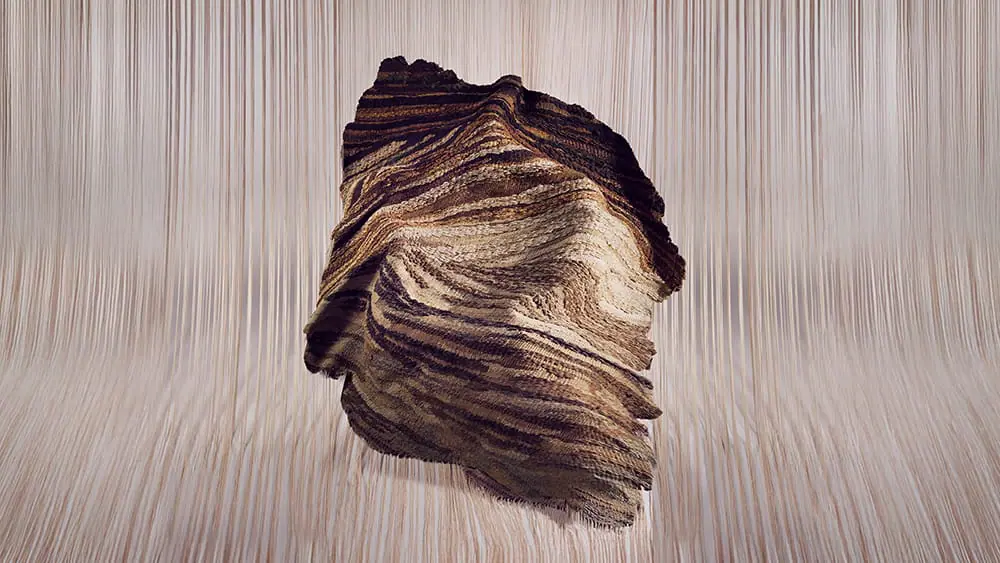
Among the most eagerly anticipated installations at Fuorisalone 2026 is the presentation by Kawashima Selkon Textiles (川島織物セルコン)—a Kyoto-based textile manufacturer with over 180 years of heritage. This marks their fifth appearance at Milan Design Week, and the theme they have chosen, “Woven Strata,” speaks directly to the global conversation around material depth and spatial intelligence.
For this exhibition, Kawashima Selkon has appointed renowned lighting designer Izumi Okayasu as Art Director—a strategic pairing that frames the installation as an exploration of how traditional Japanese textiles interact with light at the limits of possibility. (Source: Kawashima Selkon Press Release)
The intricate intersection of warp and weft threads—the structural DNA of Japanese weaving—transcends the conventional idea of fabric. In Kawashima Selkon’s hands, textile becomes a spatial medium: partitioning rooms, filtering and diffusing light, and functioning as architectural wall art in its own right. Their mastery of Nishijin-ori—Kyoto’s historic court weaving tradition, characterized by its extraordinary structural complexity and dimensional texture—poses a radical challenge to global architects: How do you redefine fabric as a building material? The “Woven Strata” installation offers a compelling, experiential answer.
Japanese Craft Highlight #2: Tatsumura Textile’s Global Debut — CASA TATSUMURA Brings Imperial Heritage to Luxury Interiors
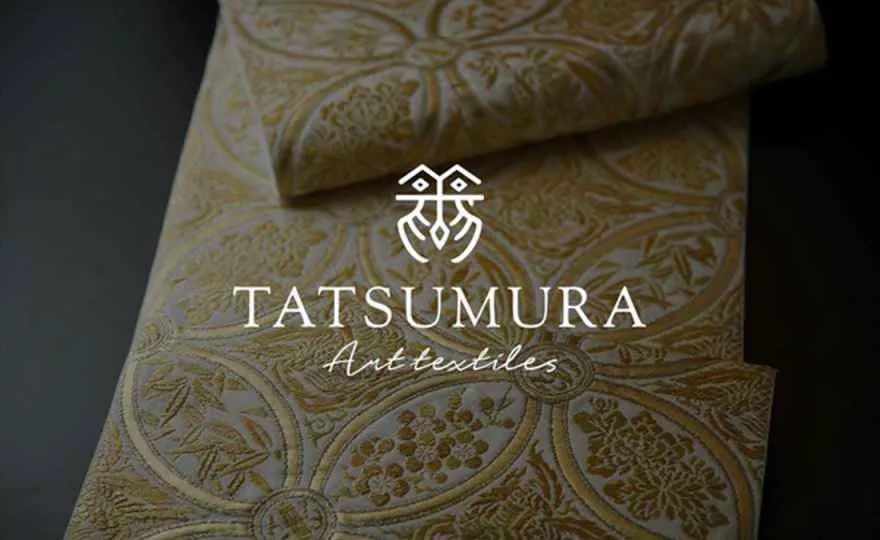
The second major milestone for Japanese traditional crafts at Fuorisalone 2026 is the international debut of Tatsumura Textile (龍村美術織物)—widely regarded as the pinnacle of Japanese art weaving. In collaboration with Takashimaya, one of Japan’s most prestigious department store groups, Tatsumura will launch a landmark luxury interiors brand: CASA TATSUMURA. (Source: Takashimaya & Tatsumura Textile Press Release)
Tatsumura Textile holds a singular place in cultural history. The brand is renowned for its meticulous reconstruction of Shosoin patterns—the imperial textile designs preserved in Nara’s 8th-century Shosoin Repository, a UNESCO-recognized treasure house of ancient Japanese and Silk Road culture. Their ability to bring these irreplaceable historical designs back to life through master weaving technique is extraordinary.
The CASA TATSUMURA concept translates this extraordinary artistic and cultural heritage into a contemporary context: applying museum-grade art fabrics to high-end upholstery, statement cushions, and architectural wall panels for luxury residential and hospitality environments. The result is not loud or ostentatious—it is the opposite. It is an experience of Quiet Luxury Japanese materials at their most absolute: deeply resonant, historically layered, and unmistakably authentic. For global collectors, gallerists, and luxury hospitality brands seeking to embed genuine cultural narrative into their spaces, CASA TATSUMURA represents a historic first opportunity.
Wood and Stainless Steel: Japanese Precision Craftsmanship as the Ultimate Spatial Solution
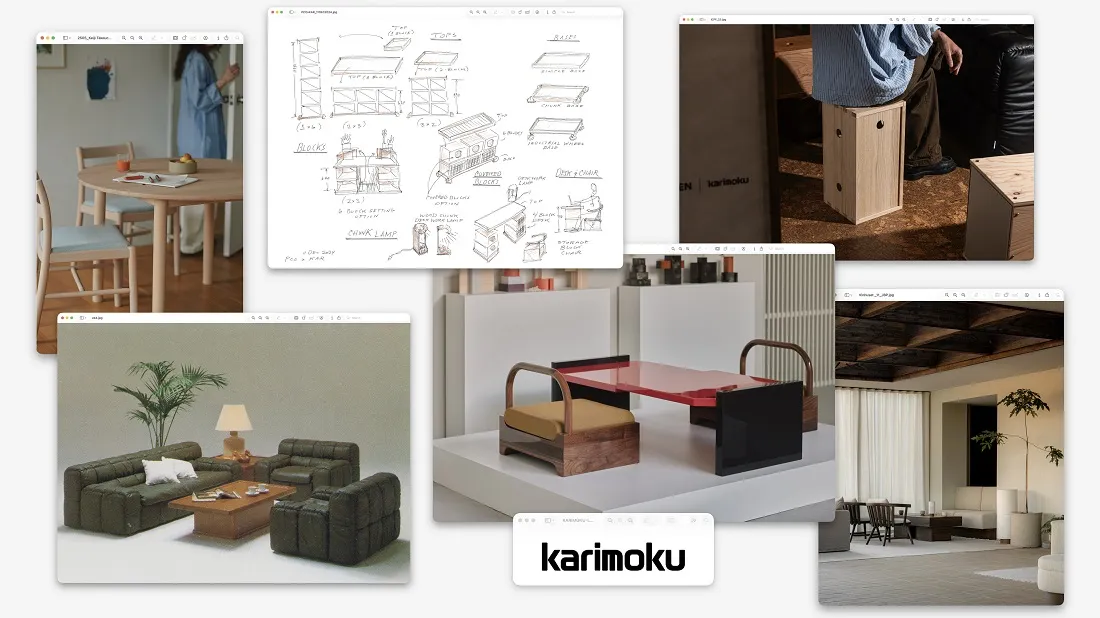
Japanese craftsmanship at Milan 2026 extends well beyond textiles. Karimoku Furniture (カリモク家具)—Japan’s benchmark manufacturer of precision wooden furniture—returns to Milan with its largest-ever exhibition footprint. Through their ongoing architectural collaboration project, Karimoku Case, the brand presents a seamlessly unified vision of space and furniture: environments where the boundary between furnishing and architecture dissolves. The millimeter-level precision and deeply tactile surface quality of Japanese woodworking continue to astonish even the most experienced international designers. (Source: Karimoku Furniture Official Website)
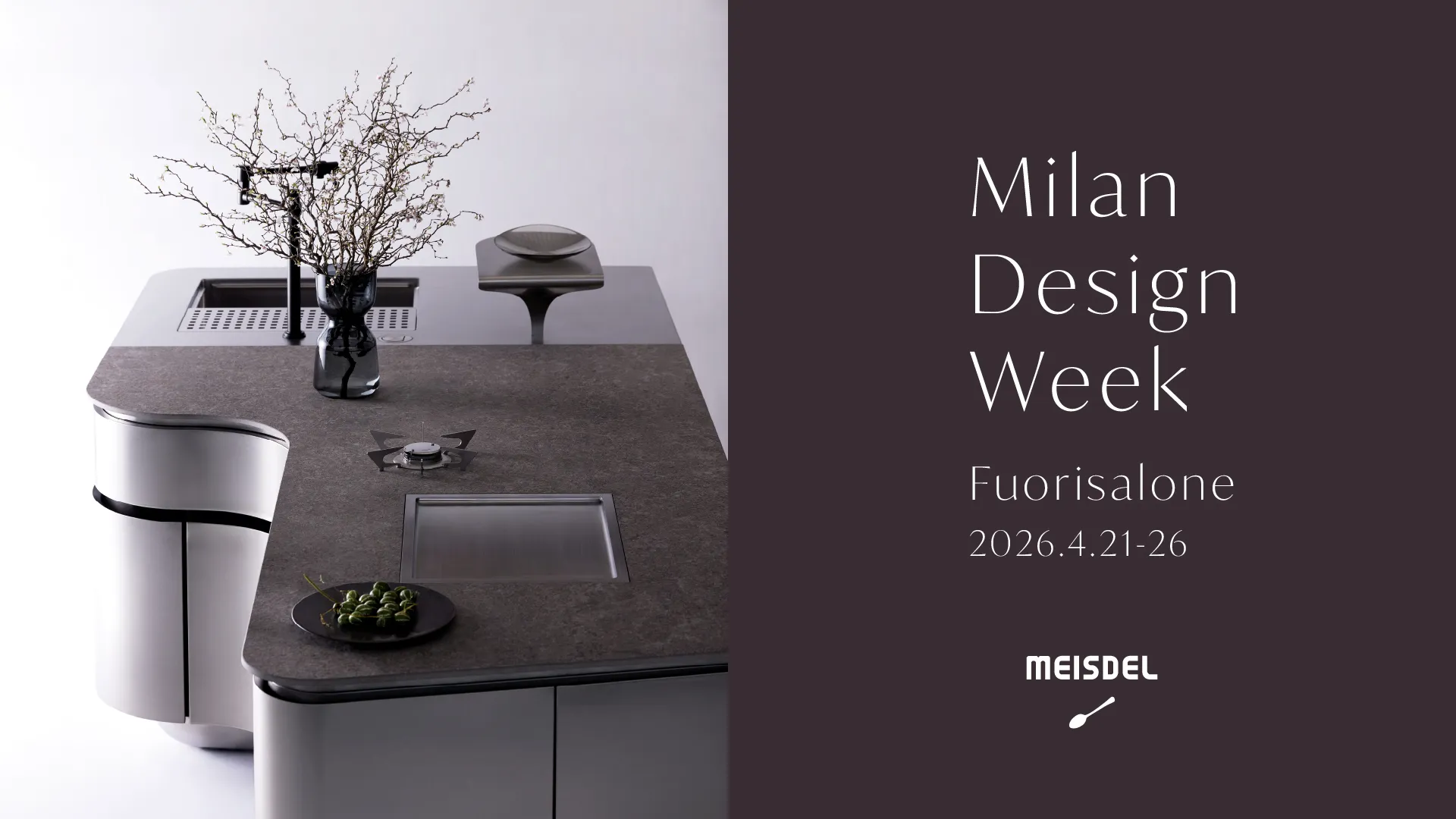
Equally significant is the Fuorisalone debut of MEISDEL—the luxury bespoke kitchen brand from Japanese professional kitchen equipment manufacturer Tanico. MEISDEL brings a compelling fusion of Japanese industrial precision and artisanal surface finishing to the global stage, introducing a category of stainless-steel kitchen architecture where rigorous manufacturing standards meet the refined aesthetic sensibility of master craftspeople. (Source: MEISDEL Official Website)
Wood and stainless steel—two entirely distinct materials—yet both tell the same story: Japanese craftsmanship as the definitive spatial solution. Whether organic warmth or cool industrial precision, Japanese material intelligence offers international architects a vocabulary for spaces that are as exacting as they are emotionally resonant.
Why Japanese Traditional Crafts Are Powering the Global B2B Architectural Market
The surge of Japanese craftsmanship at Milan Design Week 2026 signals something larger than a seasonal trend. It marks the moment Japanese traditional crafts fully transition from celebrated art objects into commercial-grade architectural materials—driving the global B2B contract market across luxury hotels, high-end residential developments, and premium commercial interiors.
Today’s top architects and interior designers are seeking materials that are simultaneously sustainable, narratively rich, and capable of elevating a space with something that cannot be replicated or mass-produced. Kawashima Selkon’s light-manipulating textiles. Tatsumura’s historically significant art fabrics. Karimoku’s architecturally precise woodwork. MEISDEL’s fusion of industrial and handcrafted excellence. Each of these brands offers a Material Intelligence that answers the profession’s most demanding requirements with complete authority.
Kogei Japonica serves as the global hub connecting Japan’s most exceptional craft makers and manufacturers with the international architects, designers, and developers who are ready to integrate these materials into their most ambitious projects. From material and maker selection to full project direction, we facilitate the creative partnerships that bring Japan’s living heritage into the world’s most significant spaces.
If the future of spatial design that Milan 2026 is revealing resonates with your vision—and you are ready to explore how Japanese traditional craftsmanship can define your next architectural or interior project—we invite you to connect with us.

Frequently Asked Questions About Japanese Craftsmanship at Milan Design Week 2026
- Q1: When is Milan Design Week 2026 and what are the key highlights to watch?
Milan Design Week 2026 runs from April 20–26 in Milan, Italy. The defining highlight this year is the global rise of Japanese Material Intelligence—an emphasis on tactile, sensory-rich materials from Japan’s heritage craft traditions as the antithesis of mass-produced design. Key exhibitions include Kawashima Selkon’s “Woven Strata,” Tatsumura Textile’s CASA TATSUMURA debut, and Karimoku Furniture’s landmark Karimoku Case presentation. - Q2: How can Japanese traditional crafts be integrated into contemporary architectural interiors?
The most effective approach is to embrace material contrast. Pairing Japanese heritage materials—such as urushi (traditional Japanese lacquer, known for its extraordinarily smooth, luminous depth), or the precise geometric textures of Japanese woodwork—with contemporary materials like concrete or glass creates a space that holds both modernity and warmth in productive tension. The key is allowing the craft material to speak: its quality communicates without ornamentation. - Q3: What are the business advantages of using Japanese B2B architectural materials in hotel or luxury residential projects?
The primary advantage is the creation of an irreplaceable brand narrative. Embedding materials that carry centuries of authenticated craftsmanship into a built environment gives that space a depth of cultural significance that no manufactured product can replicate. For luxury hospitality and residential developers, this translates directly into differentiation, prestige, and long-term asset value. - Q4: Can Kogei Japonica support international architectural projects that wish to commission Japanese craftspeople or manufacturers?
Yes. Kogei Japonica operates as a dedicated platform connecting Japan’s leading craft makers and manufacturers with international architects, designers, and developers. We support the full process—from identifying the right materials and makers for a project’s concept, to coordinating production and creative direction for international delivery. Please contact us to discuss your project.
