



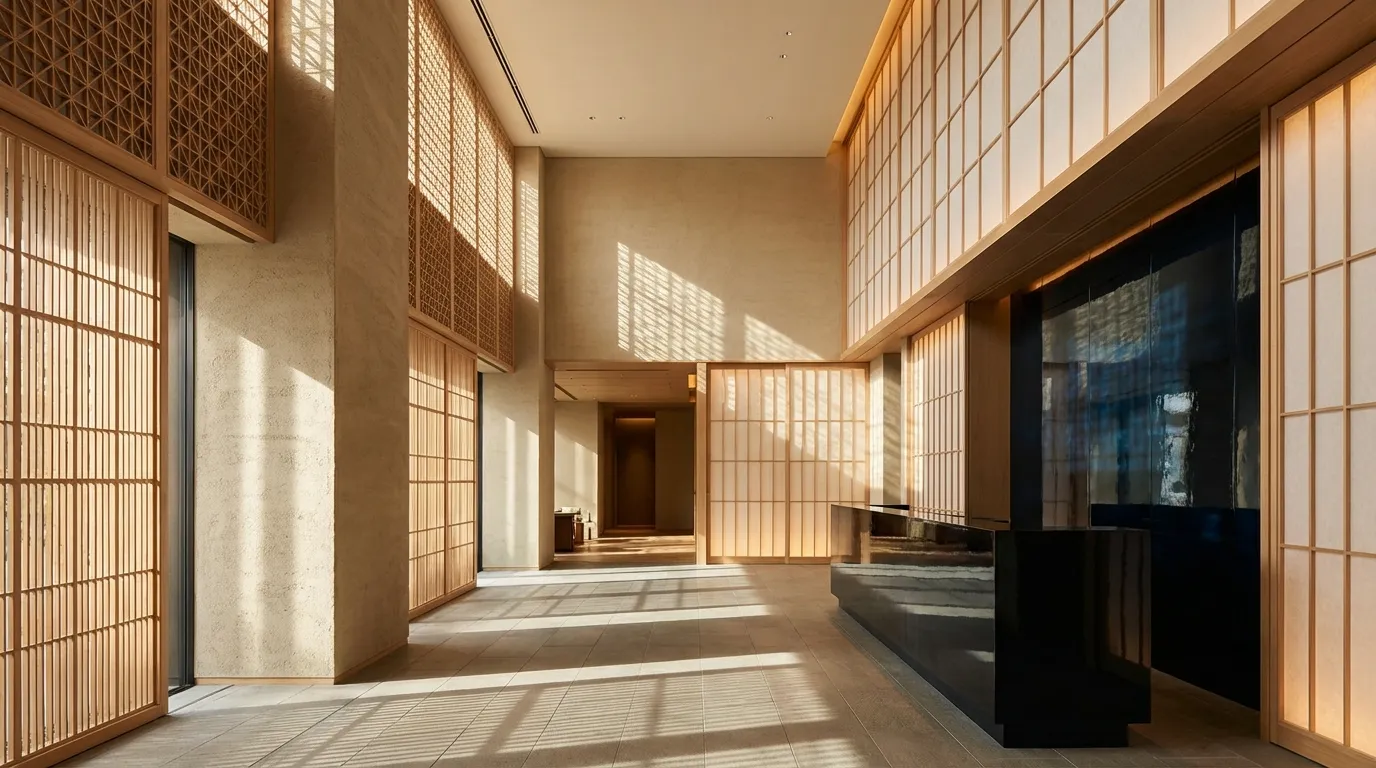
As inbound tourism demand grows, luxury hotels and high-end commercial spaces increasingly emphasize local culture and experiences.
For architects and interior designers, integrating Japanese craft traditions (Kogei)—which embody regional history and aesthetics—can serve as a strong point of differentiation.
This article outlines the practical knowledge needed to incorporate crafts not merely as decoration, but as integrated architectural materials. It also addresses how to navigate practical constraints, such as fireproofing and lead times, often encountered during the procurement process.
- In modern luxury hospitality and commercial design, the trend has moved beyond superficial Japanese-style decor toward integrating regional culture and artisanal work to create a true “sense of place.”
- To introduce Japanese crafts into the built environment, they must be specified from the initial design phase as architectural materials for walls, fittings, and lighting, requiring compliance with practical specifications like fireproofing, durability, and lead times.
- Kogei Japonica offers comprehensive support for design professionals, from material proposals based on application, to matching clients with workshops equipped for large-scale projects, and providing custom direction to meet regulatory requirements such as flame retardancy.
Table of Contents
Why Are Japanese Crafts in Demand for Hotels and Commercial Spaces Now?

The global hospitality industry is increasingly incorporating local craftsmanship into spatial design.
Integrating artisanal work into a space is gaining attention as a powerful way to establish a property’s unique identity.
Creating a “Sense of Place” Beyond Mere “Japanese Style”
Today’s discerning guests seek accommodations that offer a “sense of place” reflecting the local climate and historical context, rather than relying on superficial Japanese aesthetics.
For example, applying Sakan earthen plastering using local soil for lobby walls or installing fittings made from regional timber infuses the space with a narrative of why it stands in that specific location.
Integrating crafts helps elevate a hotel from a mere accommodation to a destination in its own right.
Evolving from Art Pieces to Architectural Materials
Recently, rather than decorating a finished room with crafts as standalone art pieces, a prominent approach is to integrate them as architectural materials from the early design stages.
Applying traditional techniques to large wall surfaces or light-filtering screens creates distinct materiality and layered textures.
Craft materials have become a compelling element in designing spaces that appeal to all five senses, offering tactile qualities and dynamic light reflection alongside visual beauty.
A Material Guide to Japanese Crafts for Architecture and Interiors
When incorporating crafts into a project, understanding which materials suit specific applications is the first step toward a smooth design process. Here, we categorize representative materials and techniques by their use.
Dividing Space and Diffusing Light: Kumiko / Shoji / Washi
For areas that gently partition space and beautifully transmit light, traditional fitting techniques using wood and paper are often the most suitable choices.

Kumiko, a geometric woodwork assembled without nails, offers a sense of openness while moderately blocking lines of sight, casting rich shadows across floors and walls when combined with lighting.
Shoji screens and Washi paper act as natural diffusers that softly scatter light, enabling modern architectural expressions as lounge partitions or guest room screens.
Overwhelming Texture for Walls and Floors: Sakan / Urushi / Ceramic Panels
Techniques capable of expansive surface finishing are ideal for eye-catching entrance walls or floors and counters requiring a sense of solid weight.
Sakan plastering, where trowel marks create rich expressions, produces diverse textures depending on the mix of earth and lime.
While Urushi lacquer is strongly associated with tableware, specialized undercoating treatments allow its application to large art panels or walls, where its deep gloss creates a highly refined atmosphere.
Ceramic panels, possessing the raw strength of earth, also project a commanding presence when applied continuously across a wall.
Custom Lighting and Built-in Fixtures: Bamboo Crafts / Woodworking and Sashimono
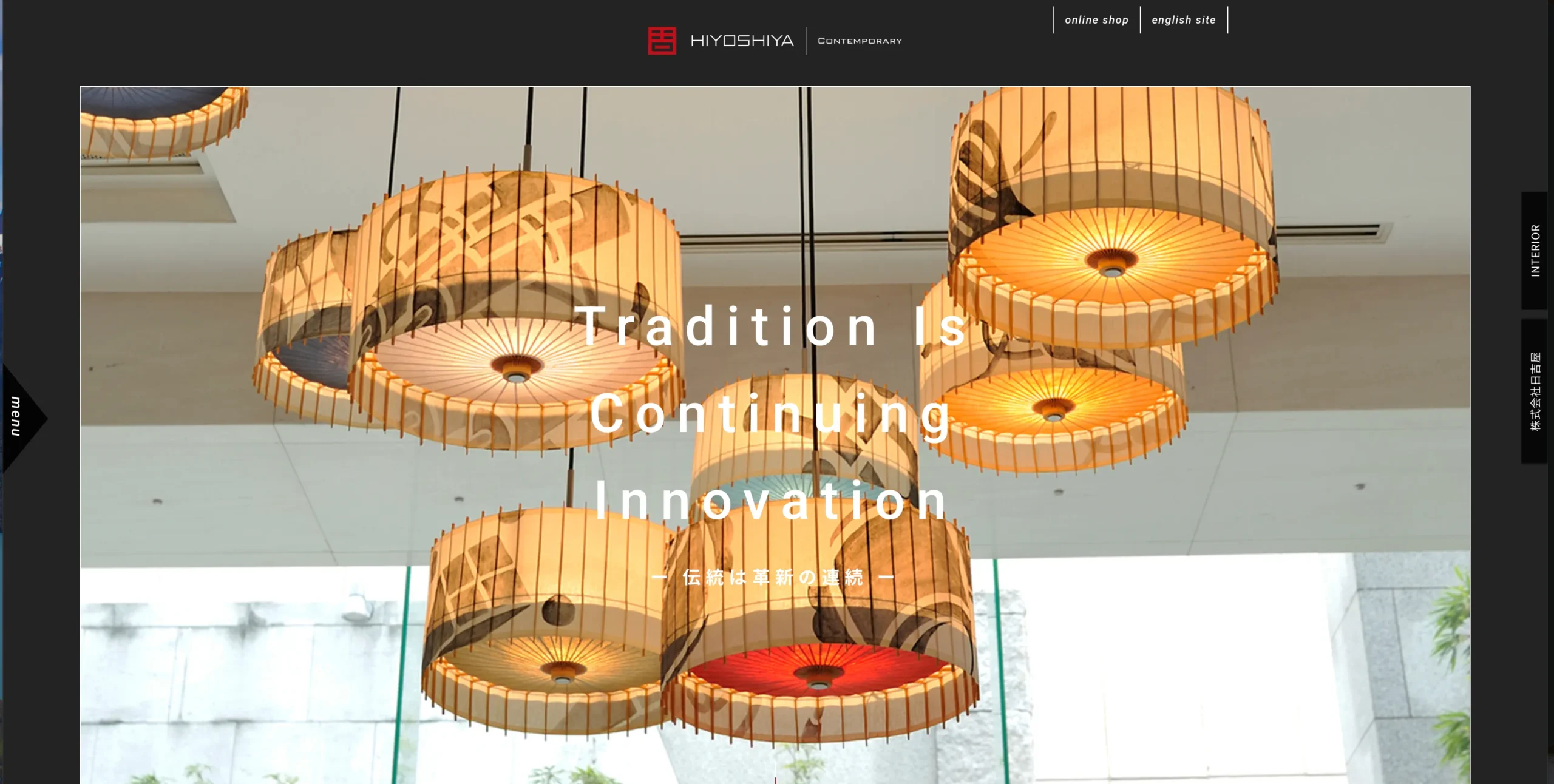

Bamboo crafts utilize the material’s flexibility to add rhythm to a room as large pendant lights or three-dimensional objects. Woodworking and Sashimono (wood joinery) yield highly precise cabinets and desks with a warm tactile feel.
There is also a growing movement to adapt these traditional techniques into modern interior products; for instance, lighting designs applying the framework of Kyo-wagasa (traditional Kyoto umbrellas) are now being developed for hotels and restaurants.
Four Practical Considerations When Using Craft as an Architectural Material
When utilizing crafts in B2B projects, designers often face a gap between artisanal art and commercial architecture. To ensure smooth project progression, we outline four practical conditions to verify before placing an order.
1. Fireproofing Compliance and On-site Construction Coordination
A major hurdle in hospitality and commercial facilities is compliance with flame-retardant and fireproofing regulations based on the Fire Service Act and Building Standards Act.
When specifying natural materials like Washi or wood in areas subject to interior finish restrictions, designers must confirm compliance with local building codes and fire safety performance for each project.
Furthermore, clearly defining the division of labor between the artisan’s workshop production and the on-site installation by general contractors during the design drawing phase is crucial to prevent future disputes.
2. Scaling for Architectural Dimensions and Custom Orders
Because many craft traditions developed around objects scaled to the human hand, requesting wall panels spanning several meters can exceed the physical capacity of an artisan’s workshop or standard shipping routes.
It is essential to confirm whether custom sizing is feasible for the space, and when scaling up, structural reinforcement against warping or cracking must be carefully evaluated based on the specific material, dimensions, and installation environment.
3. Lead Time Management and Continuous Supply Systems
Projects incorporating crafts across numerous guest rooms require schedule management with ample buffer time.
Since some processes are dictated by weather conditions—such as the curing of Urushi lacquer—adjusting the schedule by working backward from the overall construction timeline is critical.
Additionally, a key practical consideration is identifying workshops equipped to produce spare parts for potential post-opening damage, or those that can guarantee a continuous supply of the same material and quality for future renovations.
4. Understanding Maintenance and Material Aging
In commercial spaces subject to heavy public use, ease of maintenance is just as important as design aesthetics.
For tabletops requiring frequent wet cleaning or highly trafficked walls, protective specifications suited to the material’s daily use must be carefully evaluated.
Conversely, designers must often educate clients and operators about the concept of aging—where solid wood or metals like brass and copper gain depth over time—framing this natural evolution as the maturation of the space, rather than deterioration, so it can be integrated into operational policies.
Learning from Pioneering Case Studies: How Hotels Transform Crafts into Spatial Experiences
Here we introduce pioneering examples that actively integrate craft traditions as architectural materials to elevate a property’s appeal.
The Kahala Hotel & Resort Yokohama × Kumiko
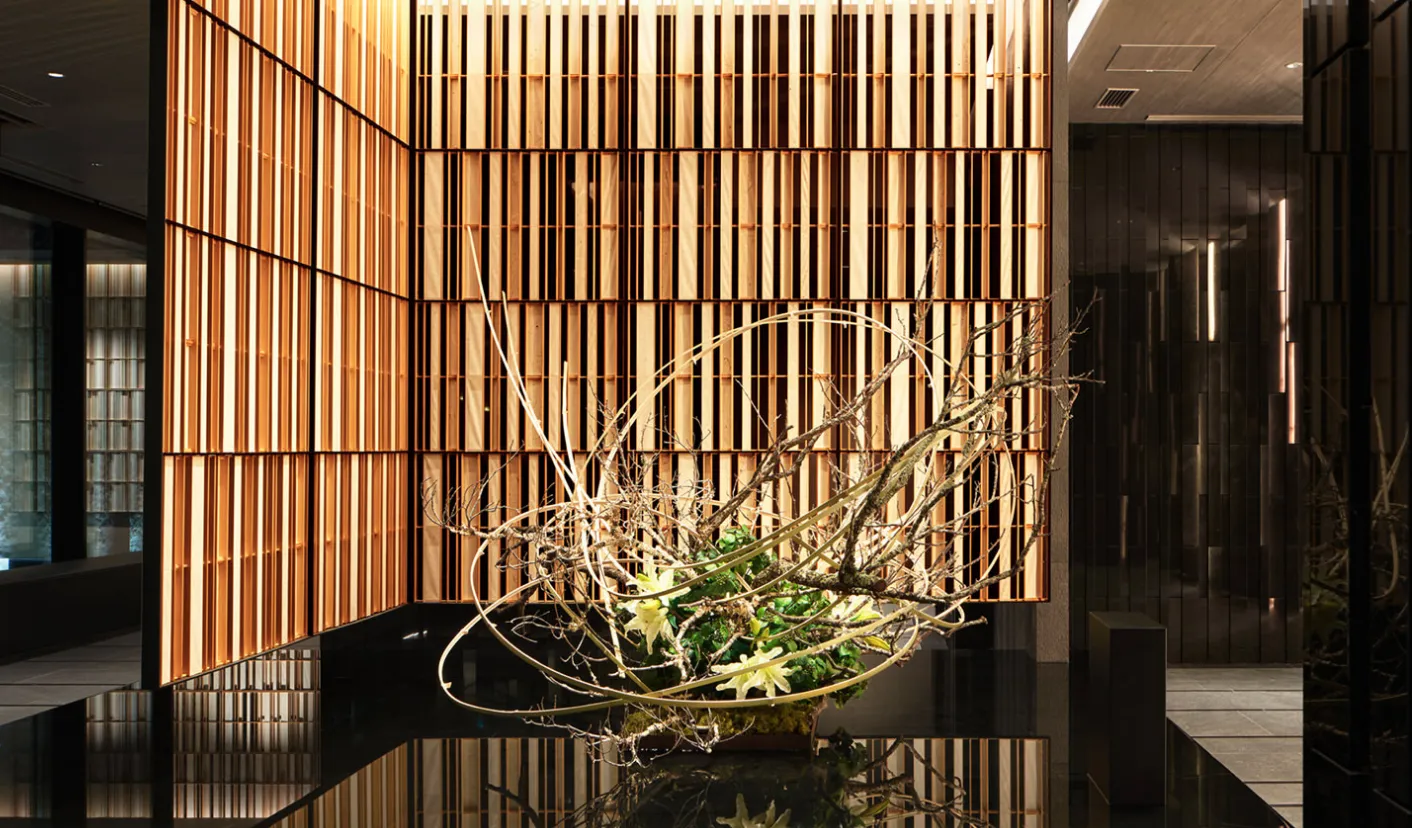

Rather than merely hanging them as wall decor, embedding these crafts into the partition screens and the walls themselves creates a space where water features seamlessly merge with the woodwork. This is a prime example of regional techniques intersecting with a high-end dining experience.
Hamacho Hotel Tokyo × Collaborative Platform (Tokyo Craft Room)
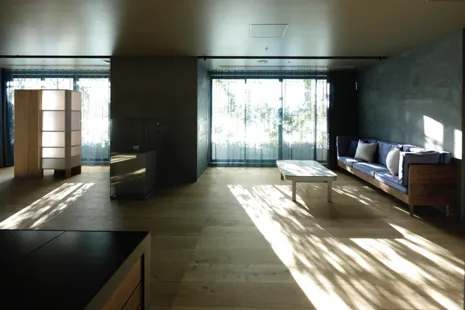

By allowing guests to interact with and use bespoke furniture and items created by master artisans within the privacy of their room, this initiative ties the craftsmanship directly to the stay itself.
It is a clear example of how integrating crafts can embody a facility’s core concept.
Contact Kogei Japonica for Bespoke Orders and B2B Matching
Utilizing craft traditions as architectural materials requires not only aesthetic sensibility but also multifaceted project management regarding regulations, dimensions, lead times, and maintenance.
Comprehensive Support from Material Selection to On-Site Delivery
Kogei Japonica maintains a specialized team to streamline project coordination.
A dedicated director capable of reading architectural drawings steps in to facilitate communication between architects and artisans. We navigate practical challenges alongside you, providing support from custom material selection and regulatory compliance all the way through to on-site delivery.
[For Architects and Designers] Free Consultations for Custom Orders and Spatial Integration
If you are considering incorporating crafts into an ongoing project or seeking artisans who match your vision, please feel free to reach out.
We will provide B2B matching tailored to your exact requirements and offer detailed estimates for custom commissions.