




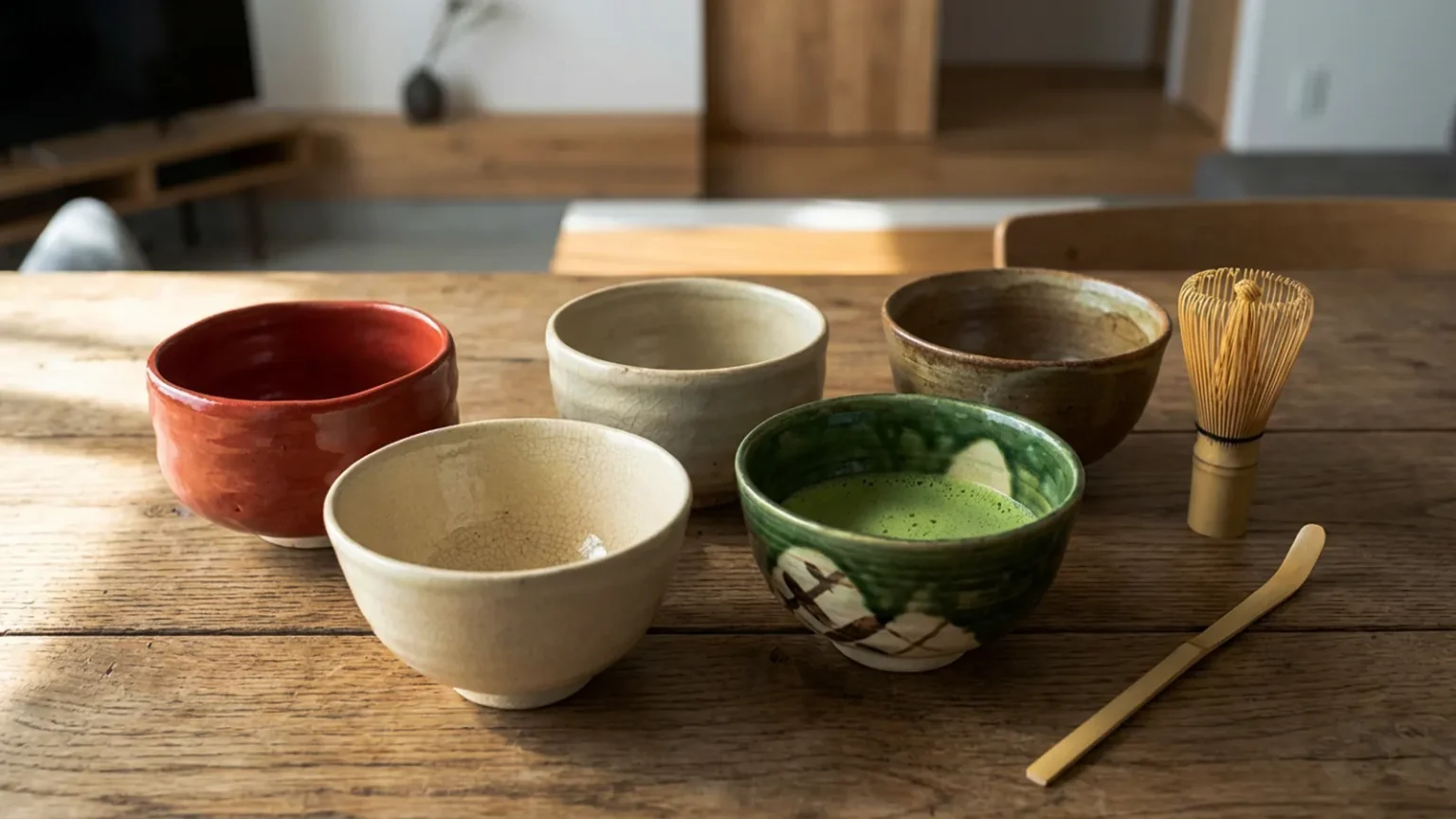
When you decide to start learning the tea ceremony or simply want to enjoy matcha at home, one of the first questions that comes up is: Which matcha bowl should I buy? With so many regions, styles, and price points, choosing your first bowl can feel overwhelming.
However, prioritizing practical usability makes the process much easier.
This article outlines the basics of selecting your first bowl for tea ceremony beginners and international fans of Japanese culture.
- For your first matcha bowl, prioritizing practical elements—like a rounded interior for easy whisking and a shape that fits comfortably in your hands—will help you avoid common mistakes, rather than focusing on famous makers or regional prestige.
- When selecting by region, choose based on how you plan to use it. Options include Raku ware, a central lineage in the history of tea ceramics; Hagi ware, known for its beautiful aging process; and Mino ware, which offers many practical choices for daily use.
- By starting with a standard shape suitable for year-round use, performing proper care such as medome (sealing the clay) as directed by the maker, and repairing breakages with kintsugi, you can enjoy your bowl for years to come.
Table of Contents
【Conclusion】 Choose Your First Matcha Bowl for Usability Over Prestige
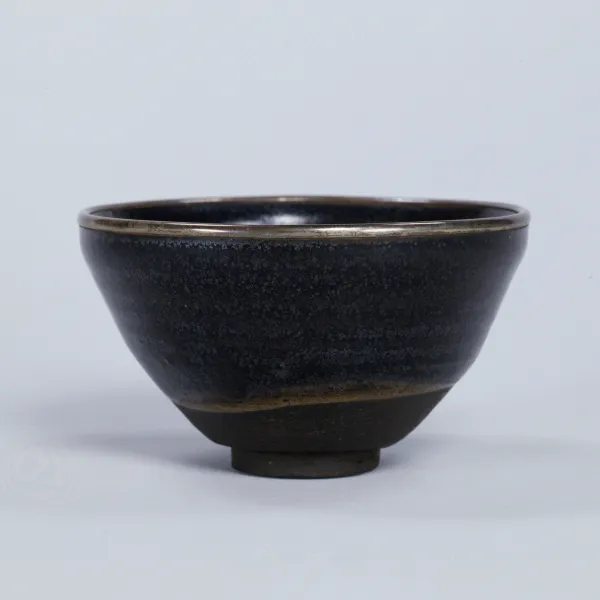
However, as the exhibition commentary at the Tokyo National Museum states, “the tea bowl is the most important utensil in the tea ceremony”—fundamentally, it is a practical tool for preparing and drinking delicious matcha.

Therefore, when choosing your first bowl, prioritize ease of whisking and holding over the fame of the production region or the artist.
This is especially true today, as demand grows for casual daily use, such as table-style tea ceremonies at the dining table, rather than just formal practice kneeling on tatami mats.
If you plan to incorporate matcha into your daily routine, it is important to choose something you can use without hesitation and that fits naturally in your hands.
Anatomy of a Tea Bowl: Mikomi and Kodai
There are two basic terms you should know when selecting a bowl. The first is “mikomi,” which refers to the interior bottom of the bowl.
This is a crucial area where the bamboo whisk (chasen) touches when making matcha, and its width directly impacts how easy it is to whisk the tea.
The second is the “kodai,” the circular foot or base on the underside of the bowl. The way the foot is carved and the texture of the clay clearly reflect the individual character of the maker.
When choosing a bowl, be sure to turn it over and closely observe the clay surface around the base as well.
How to Choose Wisely | 4 Criteria Beginners Should Check
When faced with matcha bowls in a store or online shop, it is easy to get distracted by their visual design and colors.
However, to avoid regretting your purchase later because the bowl is difficult to use, there are several practical points to check.
Here are four criteria beginners should confirm right before making a purchase.
Size and Weight: The Ideal Fit for Your Hands
Because a tea bowl is held by wrapping both hands around it, a size that fits comfortably in your palms is important.
Hand sizes vary from person to person, so there are no strict numerical rules. Generally, however, the ideal bowl sits well when held with both hands and has a weight that does not place excessive strain on your wrist when lifted with one hand.
Look for a moderate weight that feels neither too light nor too heavy for you.
Ease of Whisking: A Rounded Interior
To whip matcha into a creamy foam, you need to whisk the chasen briskly back and forth.
Therefore, it is essential that the mikomi is wide enough and the shape allows the tips of the whisk to move smoothly without hitting the inner walls.
A bowl with a gentle curve and a moderately flat bottom is much easier for beginners to whisk in than one with steep, V-shaped sides.
Seasonal Shapes: Flat Bowls and Cylindrical Bowls
Matcha bowls come in different shapes depending on the season. Examples include shallow, wide-mouthed flat bowls (hira-jawan) meant for summer to allow the tea to cool quickly, and deep cylindrical bowls (tsutsu-jawan) meant for winter to retain heat.
However, for your first bowl, a standard rounded shape is the safest choice, as it can be used comfortably year-round regardless of the season.
Budgeting: Recommended Price Ranges for Beginners
Prices vary widely, ranging from affordable entry-level bowls costing a few thousand yen to artist-made pieces priced at tens of thousands of yen or more.
Inexpensive bowls are uniform and easy to handle, but they may lack the tactile warmth of the clay.
On the other hand, while expensive pieces possess the appeal of being one-of-a-kind, the fear of breaking them can make them difficult to use daily.
Because the options from entry-level to artist works are so diverse, it is common to start within a comfortable price range that suits your specific needs.
【Comparison Table】 Differences by Region and What to Look For
Japan is home to numerous ceramic production regions. Historically, tea practitioners discussed the evaluation of tea ceramics using ranking phrases like “First Raku, second Hagi, third Karatsu.”
Here, we compare the characteristics and beginner-friendliness of these representative regions to provide hints for finding your perfect bowl.
Raku ware
Hand-formed warmth; closely associated with the tea ceremony tradition
△ (Soft clay requires careful handling)
Hagi ware
Soft tones; colors change with use (Nanabake)
〇 (Enjoyable to watch the bowl develop over time)
Mino ware
Rich designs like Shino and Oribe; excellent for daily use< ◎ (Wide variety, relatively easy to maintain)
Karatsu ware
Strong clay character; rustic, warm texture
〇 (Durable and fits naturally into daily life)
Raku Ware: The Symbol of the Tea Ceremony Favored by Sen no Rikyu

Formed by hand-kneading the clay directly without the use of a potter’s wheel, Raku ware is characterized by a distinctive softness and lightness that feels remarkable in the hands. Founded under the guidance of the tea master Sen no Rikyu, these bowls strongly reflect the spirit of wabi-cha.
They are somewhat delicate and require careful handling, but they are a compelling option for those wanting to touch the authentic history of the tea ceremony.
Hagi Ware: Soft Clay Textures and the “Seven Transformations”

Produced in Yamaguchi Prefecture, Hagi ware is known for its plump, soft clay texture and pale color tones. Its greatest feature is that as it is used, tea gradually penetrates the fine crackle glaze (kannyu) on the surface, slowly altering the bowl’s color.
This process is called “Hagi’s seven transformations” (Hagi no Nanabake), allowing the user to experience the joy of watching the bowl’s character deepen over time.


Mino and Karatsu Wares: Daily Use and the Warmth of Clay
If you prioritize design variety and ease of handling, Mino ware from Gifu Prefecture is a highly accessible choice. It features diverse styles such as Shino and Oribe, and it pairs very well with table-style tea ceremonies in Western-style rooms.

Meanwhile, Karatsu ware from Saga Prefecture appeals with the inherent strength and rustic flavor of its clay. With a solid construction that evokes the “beauty of use,” it blends seamlessly into everyday life.
Care and Repair for Long-Term Use
Once you acquire a favorite matcha bowl, you naturally want to use it carefully for a long time. Unlike porcelain, pottery (earthenware) often absorbs water, and taking a little time to maintain it can keep it in better condition. Additionally, Japanese ceramic culture is rooted in a sustainable mindset that turns even damage into a form of beauty.
Pre- and Post-Use Care: Medome and Drying

For some earthenware, a process called “medome” (sealing), which involves boiling the piece in the water used to wash rice, may be recommended before its first use.
This fills the fine pores on the clay’s surface with starch, preventing stains from seeping in.
However, this process may be unnecessary depending on the specific piece or the presence of glaze, so always check the instruction manual or the maker’s directions provided at purchase. For post-use care, while prioritizing the maker’s recommendations, the basic rule is to wash the bowl gently according to how soiled it is and allow it to dry completely through to the core in a well-ventilated area.
When a Bowl Breaks, Kintsugi Offers Another Path
Even if your precious tea bowl chips or breaks, there is no need to give up on it immediately.
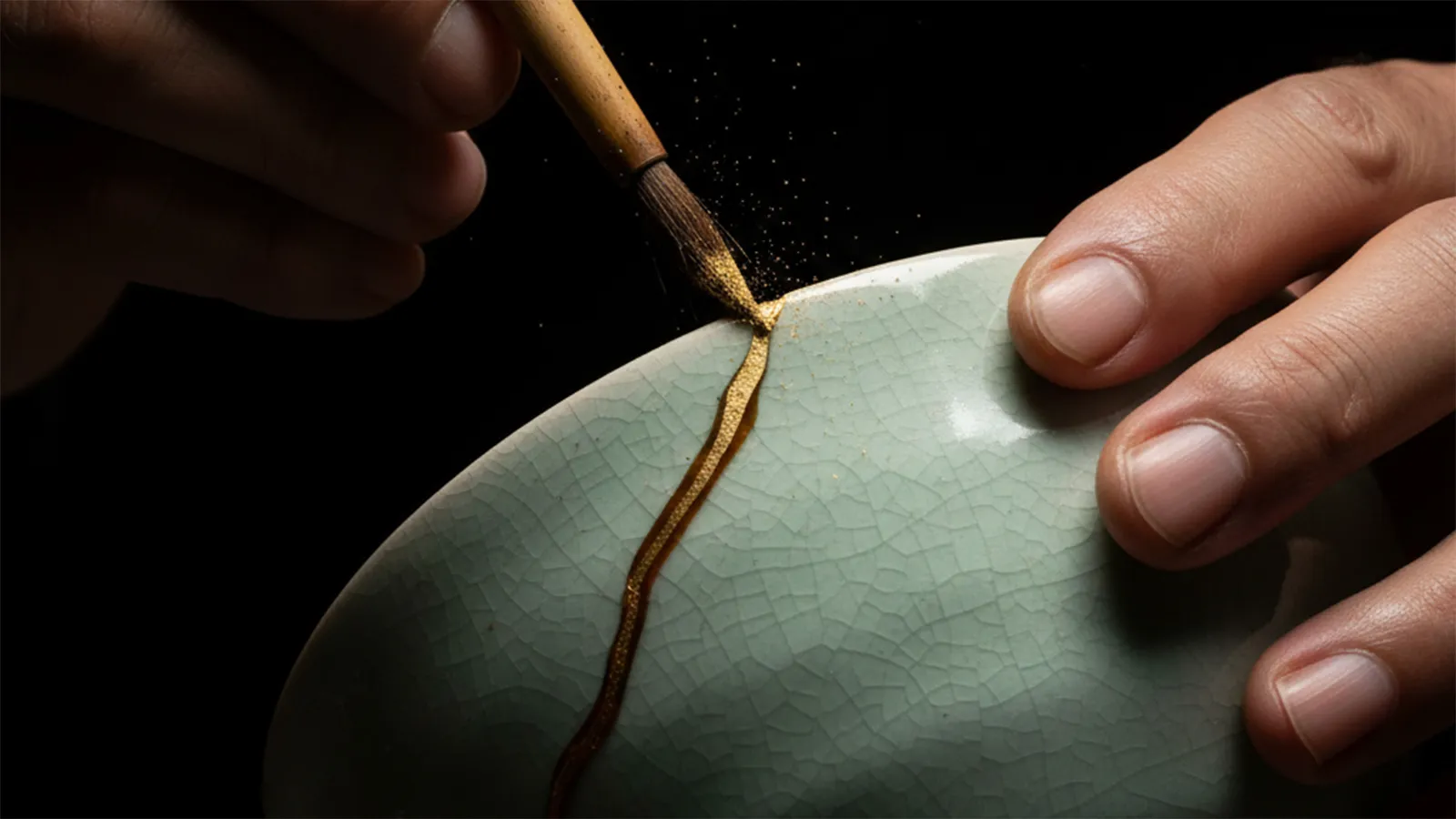
Japan has a traditional repair technique called “kintsugi,” where broken ceramics are bonded with lacquer and decorated with gold or silver powder.
The new patterns created by kintsugi are referred to as “keshiki” (landscapes). Rather than hiding the damage, this practice embodies the wabi-sabi spirit of appreciating the history the object has lived. In recent years, this has been increasingly discussed overseas in the context of finding beauty in the “perfectly imperfect,” demonstrating how repair allows a piece to be used for years to come.

Frequently Asked Questions
Here, we answer common questions from those looking for a matcha bowl and beginners who want to make drinking matcha a daily habit.
Q. What is the difference between a matcha bowl and a regular rice bowl?

The biggest differences are the width of the interior (mikomi) and the volume. Rice bowls are small and deep to make it easy to hold the bowl and eat the rice, whereas matcha bowls require enough space to vigorously whisk the tea with a chasen.
As a result, matcha bowls are a size larger and are crafted with extra room at the bottom for the whisk.
They are also designed to elevate the experience of drinking tea itself, from the tactile sensation when wrapped in the hands to the way they highlight the vibrant color of the matcha.
Q. Which regional pottery is easiest to handle when used overseas?
Mino ware is often a practical starting point for everyday use overseas because many pieces are relatively durable, easy to handle, and less sensitive to changes in climate or water quality. It also offers a wide variety of designs that tend to match modern interiors well.
If you want to enjoy the aging process of the clay, Hagi ware is another good option; however, due to its high water absorbency, you must be careful to dry it thoroughly after each use.


