

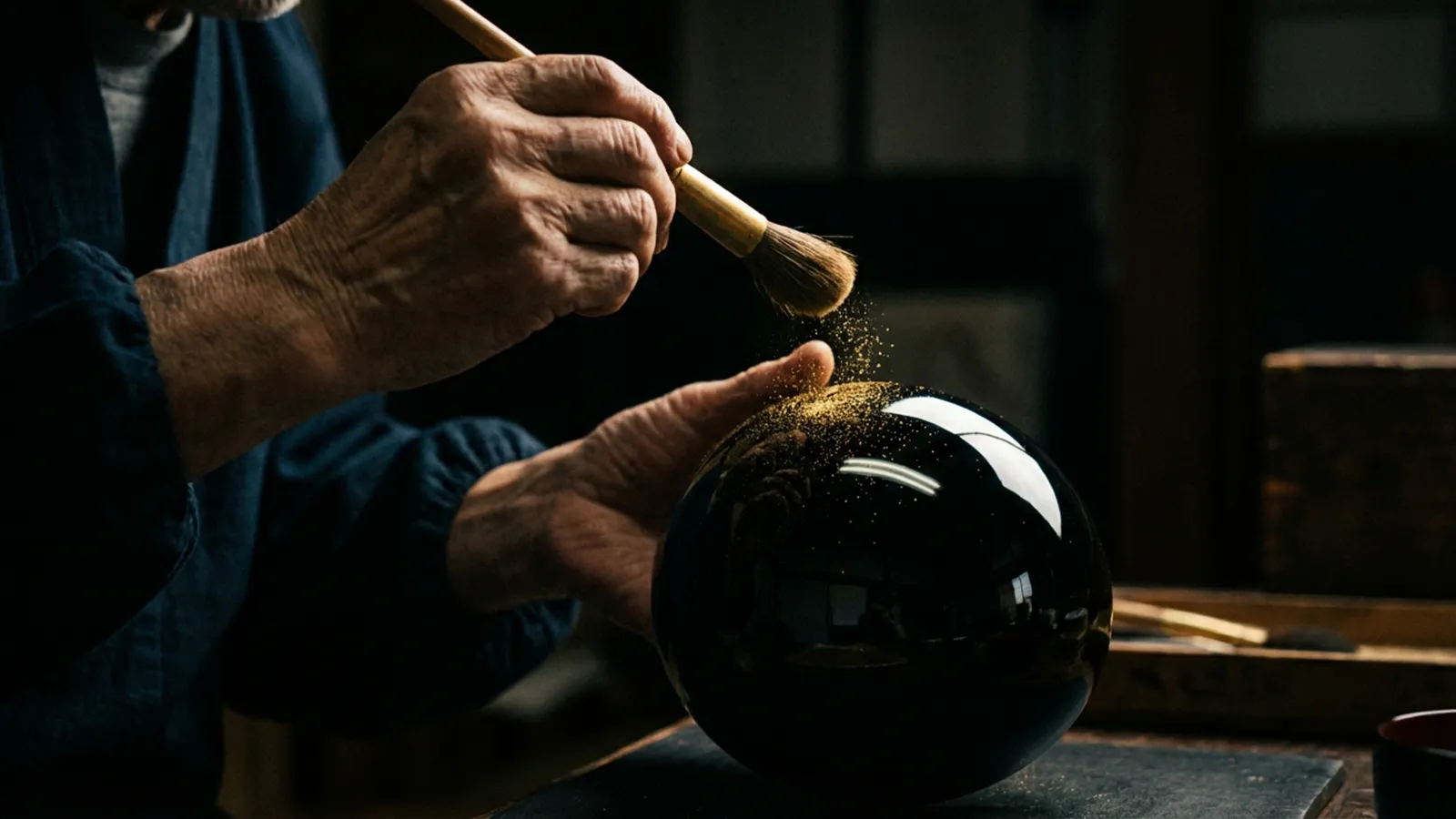
In the elite world of fine art collecting, few mediums command the reverence of traditional Japanese Urushi (lacquer) art. At the absolute pinnacle of this centuries-old craft are the “Living National Treasures”—master artisans officially designated by the Japanese government for preserving the nation’s most vital intangible cultural heritage. This comprehensive 2026 guide explores the top 10 Japanese Urushi Living National Treasures, deciphering their superlative techniques. From the luminous gold dust of Makie and the precise carvings of Chinkin to the deep, unadorned perfection of Kyushitsu, these masters elevate functional lacquerware into transcendent, museum-grade art pieces. For global gallery owners, spatial designers, and collectors seeking the ultimate expression of “Quiet Luxury,” understanding these legendary artists—and the resilient recovery of iconic regions like Wajima—is essential for acquiring authentic Japanese heritage masterpieces.
- Authority & Investment Value: “Living National Treasures” (Ningen Kokuho) is the popular term for Japan’s officially designated holders of Important Intangible Cultural Properties—a national recognition granted by the Agency for Cultural Affairs under the Law for the Protection of Cultural Properties. The high-end Japanese crafts these masters create transcend mere decorative objects, commanding international attention as Quiet Luxury art pieces with significant collector and investment appeal.
- A Diverse Range of Superlative Techniques: Japanese Urushi art encompasses a rich spectrum of disciplines: Makie (gold and silver powder lacquer painting), Chinkin (engraved lacquer inlaid with gold leaf), Kyushitsu (the pursuit of pure, unadorned lacquer application), and Kinma (colored lacquer inlaid into carved designs). Each tradition has its own lineage of masters who have devoted their lives to achieving its ultimate expression.
- The State of Urushi Art in 2026: This guide profiles ten masters of Japanese lacquerware art—including the internationally acclaimed Kazumi Murose (Makie)—while also examining the ongoing recovery of Wajima-nuri lacquerware following the 2024 Noto Peninsula earthquake, and the broader challenge of preserving natural urushi lacquer for future generations.
Table of Contents
Introduction: The Spiritual Dimension of Japanese Urushi Art and the Mission of Living National Treasures
In international auction houses and top-tier galleries, the term “Living National Treasure” (Ningen Kokuho) carries exceptional weight when establishing the provenance and authenticity of Japanese craft works. It is not merely an honorary title. Formally, it refers to the “Holders of Important Intangible Cultural Properties,” a designation granted by Japan’s Agency for Cultural Affairs under the Law for the Protection of Cultural Properties. This rigorous national certification is awarded to individuals who embody, at the highest possible level, an intangible technique (waza) of outstanding historical and artistic significance.
Within the institutional framework, the designation of an Important Intangible Cultural Property and the certification of its holder operate as a unified system. “Living National Treasure” is a widely used popular term; its official standing falls under the category of holder certification. For Japanese art collectors and gallerists, this distinction is a foundational reference point.
From the Founding Masters to the Global Rise of Urushi Art
Historically, Japanese lacquerware was closely associated with practical, everyday utility. Yet from the modern era onward, legendary figures of the Urushi world—such as Gonroku Matsuda, a titan of Japanese lacquer art, and Shogyo Ohba, who pushed flat Makie (hira-makie) to its ultimate refinement—elevated the tradition to an entirely new plane. Their uncompromising, painstakingly detailed craftsmanship extended the expressive possibilities of lacquer far beyond functional beauty, transforming it into what the global art world now recognizes as Urushi Art—a discipline capable of overwhelming the senses and commanding extraordinary critical and commercial esteem.

Today, works by contemporary Living National Treasures are handled in the market as art pieces that transcend the category of craft. Pricing varies considerably based on exhibition history, provenance, technical complexity, scale, and design. For those evaluating acquisition or investment, verifying the individual work’s provenance and transaction terms is an essential practical step.
The Art of Adornment: Japanese Urushi Living National Treasures in Makie and Chinkin Lacquer
The most visually captivating dimension of Japanese Urushi art lies in its decorative techniques. Working with calculated precision—mastering how light refracts, how gold shimmers against lacquer black, and how relief creates an illusion of depth—the following four masters represent the absolute pinnacle of decorative lacquer artistry.
Makie Gold Lacquer Technique: The Luminous World of Kazumi Murose and Koichi Nakano
Makie—literally “sprinkled picture”—is the art of painting a design in lacquer on a surface, then dusting it with fine particles of gold, silver, or other metallic powders before the lacquer fully cures. The result is a luminous image embedded within the lacquer itself, its brilliance shifting with every angle of light. This is one of the most celebrated and technically demanding of all Makie gold lacquer techniques in the world of high-end Japanese crafts.
Leading this field with international distinction is ① Kazumi Murose, officially recognized as a holder of the Important Intangible Cultural Property “Makie.” Drawing on deep classical knowledge while infusing his designs with a refined contemporary sensibility, Murose’s work is defined by its sophisticated restraint—an aesthetic that resonates powerfully with global collectors attuned to the principles of Quiet Luxury.
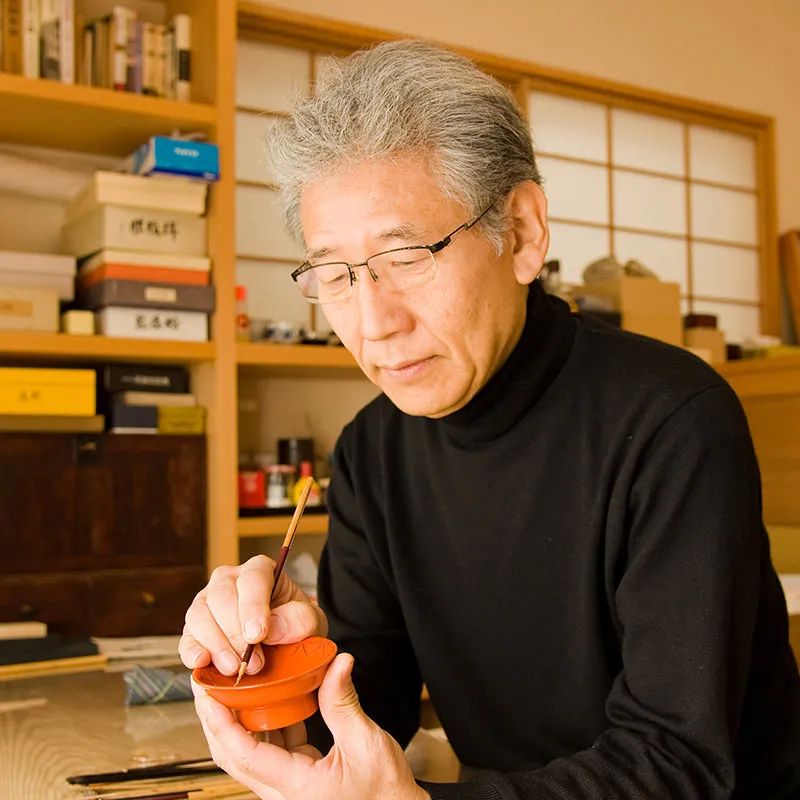
Equally celebrated is ② Koichi Nakano, also recognized as a holder of the Important Intangible Cultural Property “Makie.” Nakano has mastered the full breadth of classical Makie techniques, channeling them into depictions of flora and fauna that pulse with vitality and a spirit of joyful exploration. His work balances scholarly rigor with an exuberant creative energy that makes it immediately compelling to new and seasoned Japanese art collectors alike.
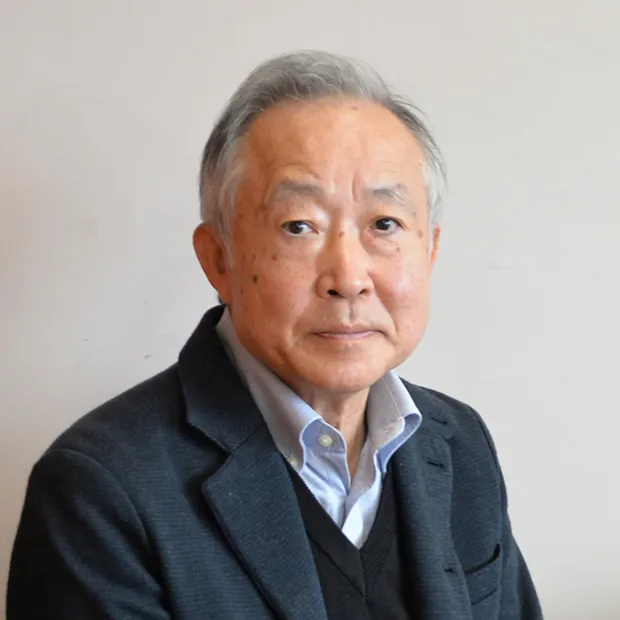
The Makie tradition encompasses several distinct sub-techniques: Togidashi-makie (burnished sprinkled picture, where layers of lacquer are applied over the design and then polished down to reveal the image flush with the surface), Hira-makie (flat sprinkled picture), and Taka-makie (raised sprinkled picture, built up in relief). The ultimate quality of a work is determined by the artist’s conceptual vision and their exacting command of every stage—from the ground preparation and intermediate polishing to the precision of the final application.
Chinkin Lacquer Carving: The Dynamic Life Force of Fumio Mae and Kazuo Yamagishi
Chinkin—one of the most structurally demanding of all Japanese lacquerware techniques—involves engraving a design directly into a hardened lacquer surface using specialized chisels. The engraved grooves are then packed with lacquer and inlaid with gold leaf or gold powder, which adheres permanently. The precise depth and angle of each incision controls the weight and tone of every line, requiring a mastery that fuses the disciplines of painting and sculpture.
③ Fumio Mae is recognized as a holder of the Important Intangible Cultural Property “Chinkin,” and stands as one of the defining voices of Chinkin lacquer carving in the Wajima tradition. Deploying both stippled (ten-bori) and linear (sen-bori) engraving methods, Mae renders wind-swept grasses, flowering branches, and the vital rhythms of the natural world with a dynamism that is simultaneously delicate and powerfully alive.
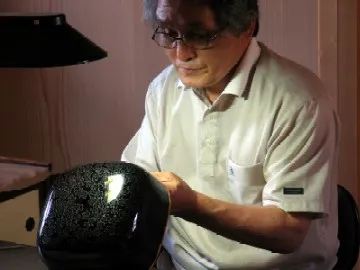
④ Kazuo Yamagishi is also confirmed in official records as a holder of the Important Intangible Cultural Property “Chinkin.” Through his extraordinarily refined chisel work, Yamagishi inscribes vivid flashes of gold into the depths of lacquer black—a visual intensity that has earned him a devoted following among collectors across the globe.
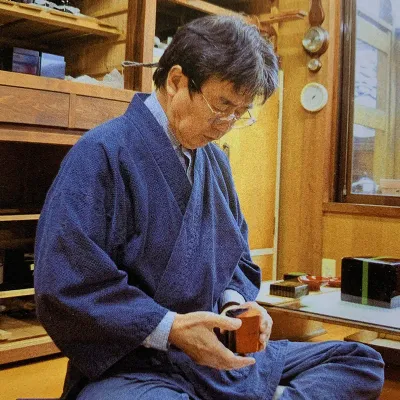
Pure Form and Absolute Depth: Japanese Urushi Living National Treasures in Kyushitsu and Kinma
In deliberate contrast to the visual drama of gold-adorned lacquerwork, a separate lineage of Japanese lacquerware artists pursues a different and equally demanding ideal: the absolute perfection of lacquer itself—its depth, its body, and the pure sculptural beauty of the forms it sheathes. The following six masters exemplify this commitment to material truth over decorative spectacle.
Kyushitsu—The Abyss of Black and Vermilion: Kunie Komori, Kiichiro Masumura, Isao Onishi, and Akira Hayashi
Kyushitsu (literally “applying lacquer”) is the discipline of building lacquer to its ultimate surface quality through repeated cycles of application and polishing—without the addition of any gold or silver decoration. It is the foundational domain of Japanese Urushi art, demanding a comprehensive mastery that spans the selection of the substrate, the construction of the ground layers, and the precise management of every coat through to the final finish. To reach the summit of Kyushitsu is to understand lacquer itself at the deepest level.
⑤ Kunie Komori is recognized as a holder of the Important Intangible Cultural Property “Kyushitsu.” He is distinguished by his mastery of substrate construction—particularly Magewa (bent-wood construction, in which thin strips of wood are steamed and bent into elegant curved forms) and Rantai (bamboo basketry base, in which woven bamboo provides the structural core for a lacquered vessel). Komori’s finished works carry a quality of luminous austerity—an uncompromising formal clarity that resonates with collectors who prize disciplined refinement above all else.
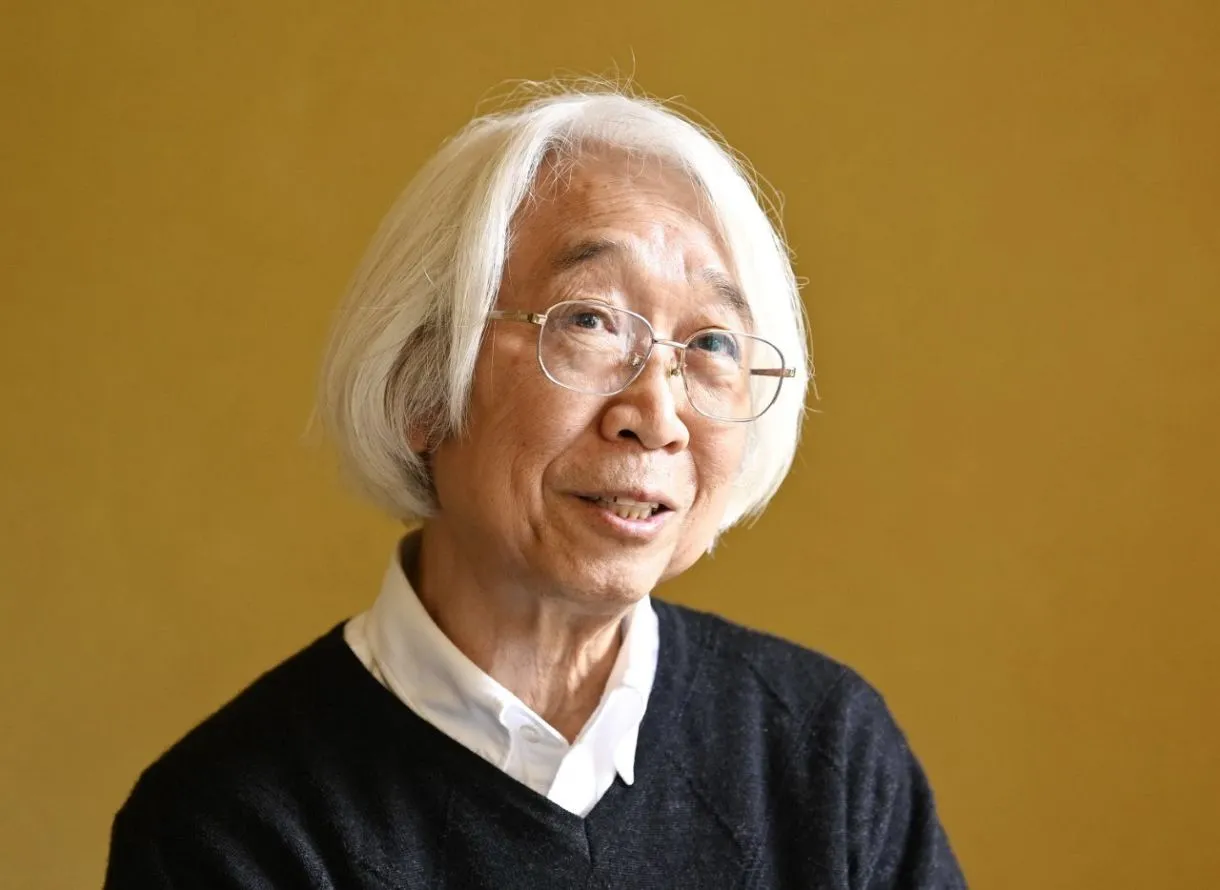
⑥ Kiichiro Masumura is also a confirmed holder of the Important Intangible Cultural Property “Kyushitsu.” Masumura has brought the ancient technique of Kanshitsu—dry lacquer, in which cloth is impregnated with raw lacquer and built up into a self-supporting form without a wooden core—into a distinctly contemporary formal language. His works achieve a remarkable synthesis: the profound, absorbing depth of vermilion and black lacquer surfaces united with forms of taut, graceful sculptural tension.
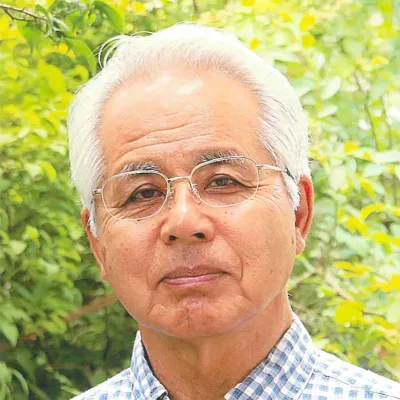
⑦ Isao Onishi is documented in official municipal records as a Living National Treasure and holder of the Important Intangible Cultural Property “Kyushitsu.” His practice is defined by a relentless pursuit of the innermost depths of lacquer application—a weighty, substantial aesthetic that commands the viewer’s full attention.

⑧ Akira Hayashi was newly designated as a holder of the Important Intangible Cultural Property “Kyushitsu” on October 10, 2025. Working with harinuki—a traditional technique in which Japanese washi paper is layered and lacquered to create lightweight, precisely formed vessels—Hayashi achieves a compelling dialogue between lacquer’s characteristic deep luster and a refined, contemporary formal sensibility. He represents the next generation of Kyushitsu leadership within Japanese Urushi art.
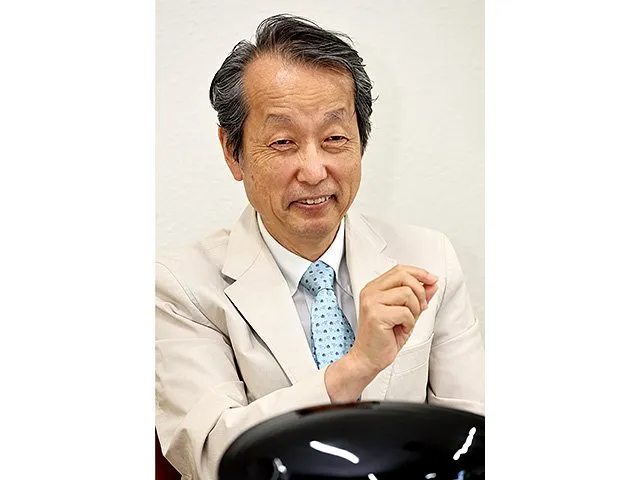
Kinma—Kagawa’s Jewel-Like Colored Lacquer Inlay: Yoshito Yamashita and Hayato Otani
Kinma is a lacquer decoration technique historically associated with Kagawa Prefecture in western Japan, though its roots trace to Southeast Asian traditions. The process involves carving a fine pattern into a hardened lacquer surface, filling the incised lines with colored lacquer in multiple hues, and then polishing the entire surface flat to reveal the inlaid design flush with the ground. The Japan Kogei Association identifies Kinma as a distinct decorative technique within Japanese lacquer art, with Yoshito Yamashita and Hayato Otani recognized as its current Living National Treasure holders.
⑨ Yoshito Yamashita is introduced in official sources as a holder of the Important Intangible Cultural Property “Kinma.” By layering multiple colors of lacquer within the carved recesses and polishing each to perfect integration, Yamashita builds up compositions of extraordinary chromatic depth—works that read less like lacquerware and more like luminous paintings suspended within a physical object.
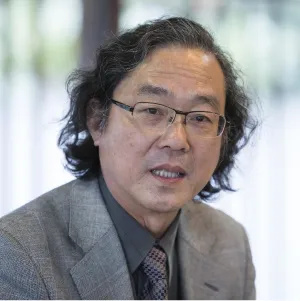
⑩ Hayato Otani is also confirmed as a holder of the Important Intangible Cultural Property “Kinma.” Where Yamashita pursues chromatic richness, Otani foregrounds the expressive potential of line itself—building compositions from intricate networks of engraved marks that open into a graphically bold, distinctly contemporary vision of Kinma. His work stands as compelling evidence that Japan’s oldest lacquer traditions remain vital and generative for twenty-first-century art.
The State of Japanese Urushi Art in 2026: Where the Tradition Stands and Where It Is Headed
The ten Living National Treasures profiled in this guide have each arrived at the summit of their respective disciplines through decades of total devotion to their craft. Yet the aesthetic intelligence and technical DNA they embody is not meant to remain sealed behind museum glass. The future of Japanese Urushi art depends, as it always has, on transmission—on the living passage of knowledge and skill from one generation to the next.
Two Years After the Noto Earthquake: The Recovery of Wajima-Nuri Lacquerware and the Role of Living National Treasures
As of 2026, the reconstruction of the Noto Peninsula lacquer-producing region following the January 2024 earthquake continues to draw sustained attention from within Japan and from the international community. Wajima-nuri lacquerware—arguably the most internationally recognized of Japan’s regional lacquer traditions—is at the center of these efforts, with ongoing recovery initiatives supported by local authorities, cultural organizations, and civic institutions.
Wajima-nuri is distinguished by a highly specialized division-of-labor model, in which dozens of separate craftspeople—each a specialist in one or two stages of the process—collaborate to produce a single finished piece. This communal structure, which has evolved over centuries, is both its greatest strength and its greatest vulnerability in the face of a sudden, large-scale disaster. The continued presence of master artisans, including Living National Treasures, is widely regarded as essential to preserving technical knowledge and providing leadership for the next generation of Wajima-nuri practitioners. Their role in the region’s cultural recovery is expected to remain a prominent subject of public discourse in the years ahead.
Toward a Sustainable Future: The Challenge of Natural Urushi Supply and Intergenerational Transmission
Japanese Urushi art rests entirely on its raw material. The sustainable sourcing of natural urushi lacquer—tapped from the sap of the Toxicodendron vernicifluum tree—is a pressing, multi-stakeholder challenge involving artisan communities, regional governments, academic research institutions, and the national cultural property system. Within the framework of Japan’s designation system, the conditions that support the transmission of waza—including reliable access to authentic natural materials—are treated as integral to the designation itself, not as a peripheral concern.
As of 2026, active debate continues around the cultivation, harvesting, and intergenerational transfer of knowledge surrounding domestic urushi production. Some Living National Treasures are directly involved in educational initiatives that address materials knowledge alongside technical training. The situation varies significantly by region, and any assessment must account for these local differences rather than treating the issue as uniform across the country.
Conclusion: The Enduring Rewards of Living with Japanese Urushi Art
Acquiring a major work by a Japanese Urushi Living National Treasure requires access to specialist markets and, in some cases, significant resources. But the world of high-end Japanese crafts offers meaningful points of entry for collectors at every level of engagement. Fine lacquerware produced by master craftspeople within established regional traditions—Wajima, Kyoto, Kagawa—represents an accessible and deeply rewarding starting point. Unlike many luxury objects, a quality lacquer piece is not static: it responds to use and care, its surface deepening and gaining in luster over years of careful handling. In this sense, lacquerware is perhaps the purest embodiment of Quiet Luxury—beauty that is not announced, but accumulated.
Experiencing Authentic Japanese Urushi Art: A Guide to Exhibitions and Museums
For collectors and connoisseurs, encountering these works in person—under the specific conditions of light and space in which they were intended to be seen—is irreplaceable. Major public institutions including the National Crafts Museum (Kanazawa) and leading municipal art museums across Japan periodically present works by Living National Treasures alongside historical masterpieces, offering exceptional opportunities for comparative study. The annual Japan Traditional Crafts Exhibition (Nihon Dentō Kōgeiten), held in Tokyo and touring to regional venues, is particularly valuable: it presents works across the full range of Urushi techniques side by side, making the distinctions between Makie, Chinkin, Kyushitsu, and Kinma directly visible in a way that no reproduction can replicate. For those considering acquisition, direct engagement with these works—studying the grain of the ground, the particle size of the gold, the depth of the engraved line—is not merely recommended. It is essential.
