
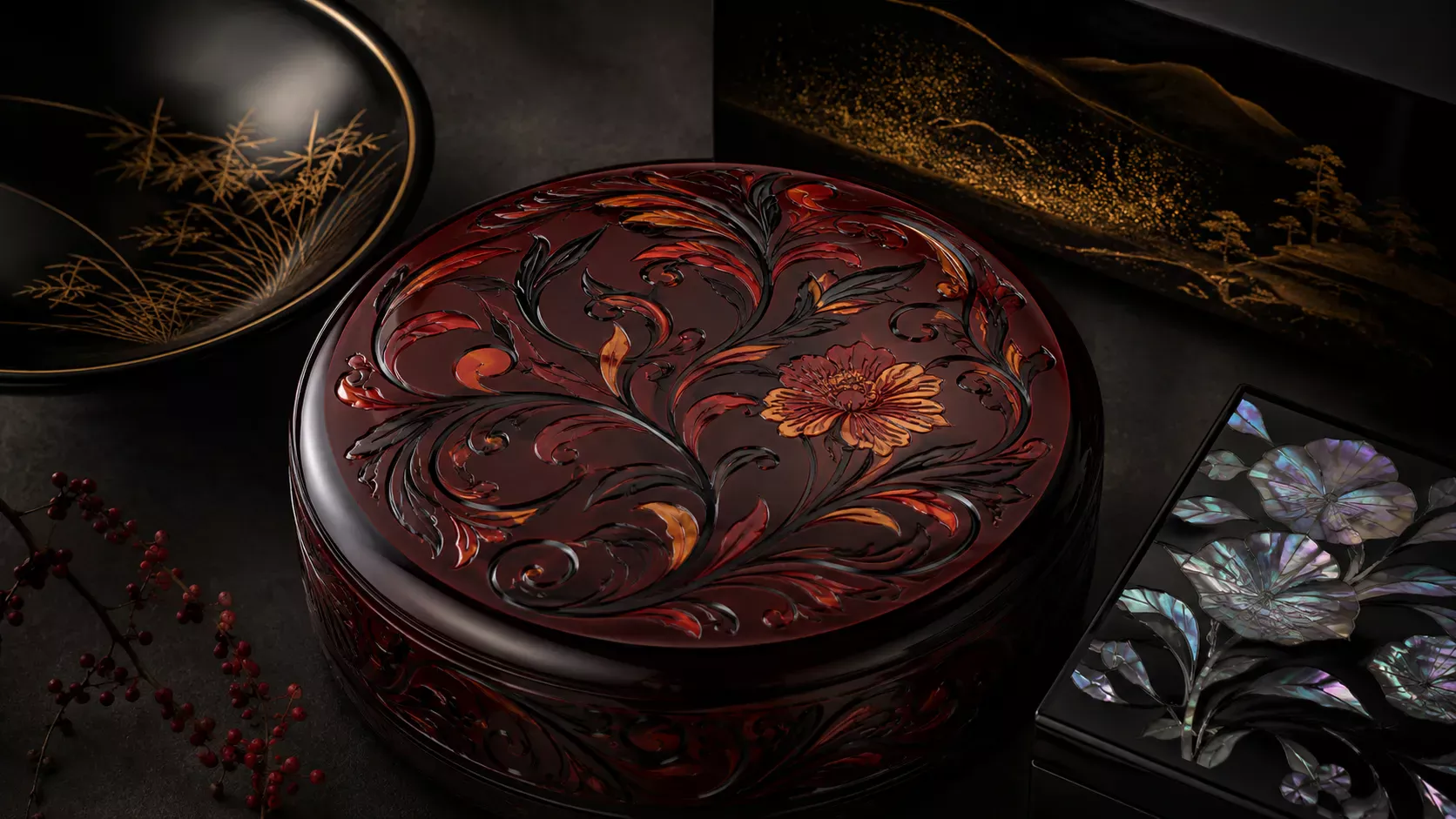
If you have come across the characters 蒟醤 and had no idea how to read them, you are not alone. Pronounced “kinma,” it refers to a carved-and-filled lacquer decoration technique closely associated with the lacquer tradition of Kagawa Prefecture. Yet even among people with a general interest in Japanese craft, clear answers to basic questions are hard to find. What distinguishes kinma from chinkin? Why Kagawa? What is actually happening in the making process?
This article works through those questions in order: the definition and process of kinma, the role of its specialized carving knife (the kinma-ken), how it compares to other lacquer techniques, the lineage running from 19th-century master Tamakaji Zokoku to the Living National Treasures of today, its use as a tea utensil, and how to explain the technique to an international audience.
Table of Contents
What is kinma? The Kagawa lacquer technique of carving, filling, and polishing flat
Kinma is a lacquer decoration technique in which a pattern is carved into a lacquered surface, filled with colored lacquer, and then polished flat to reveal the inlaid design.
How to Read 蒟醤 — and What “Kinma” Means
The characters 蒟醤 are read “kinma” — a combination that almost no one reads correctly on first encounter. That difficulty is, in a small way, part of why kinma has remained less widely known than its technical depth warrants.
The word derives from the Thai “kin maak”: “kin” meaning to chew, “maak” referring to the fruit of the areca palm. In Thailand and Myanmar, it was customary to wrap areca nut and lime paste in the leaf of a betel plant and chew the preparation; the containers used to hold this mixture, decorated with incised line patterns, came to be called “kinma” as well. When the technique reached Japan, the Chinese characters 蒟醤 were adopted to represent the sound, and the name took hold.
As a technique, kinma is thought to have originated in southern China — the Sichuan and Yunnan regions — before traveling through Thailand and Myanmar. It is generally held to have arrived in Japan toward the end of the Muromachi period.
The Agency for Cultural Affairs designates kinma as an Important Intangible Cultural Property; the designation was recorded on April 13, 1985.
(Source: Kinma | Japan’s Cultural Heritage Online)
[Technique definition]
Name: Kinma (蒟醤)
English: Kinma / carved-and-filled lacquer technique
Category: Lacquer decoration technique
Primary region: Takamatsu City, Kagawa Prefecture, and surrounding areas
Process: Patterns are carved into a built-up lacquer surface using a specialized knife called the kinma-ken; the recesses are filled with colored lacquer; the surface is polished flat and finished
Designation: Important Intangible Cultural Property “Kinma” (designated April 13, 1985)
Related designation: Kagawa lacquerware — Traditional Craft Product designated by the Minister of Economy, Trade and Industry (designated February 26, 1976)
Primary sources: Japan’s Cultural Heritage Online, Kagawa Prefecture official website, official Kagawa lacquer art resources
The kinma process, step by step
The stages of kinma, in sequence, are as follows.
- Preparing the substrate: The base material — wood, bamboo, kanshitsu (dry lacquer), or another substrate — is prepared with an undercoat
- Lacquering: Lacquer is applied to the substrate in repeated layers, typically a dozen or more coats
- Carving: The pattern is carved into the lacquered surface using the kinma-ken, a tool specific to this technique
- Filling with colored lacquer: Colored lacquer is pressed into the carved recesses. Because each color requires its own carving and filling pass, this stage is repeated as many times as there are colors in the design
- Polishing flat (togidashi): Once all colors have been filled, the entire surface is leveled using polishing charcoal, removing excess lacquer and bringing the inlaid design flush with the surface
- Final polishing: The surface is buffed to a smooth finish
The key structural feature here is the repetition: carve and fill, color by color. This seemingly straightforward cycle is what produces the decisive difference between kinma and chinkin — a distinction covered in detail below.
The kinma-ken: the specialized carving knife
The kinma-ken is the carving knife used specifically for kinma. Also called simply “ken,” it has a different form from standard carving tools. There are broadly two types — one for line carving, one for dot carving — and a practitioner works between them depending on the passage being executed.
Why does kinma require its own tool? Because carving into a lacquer surface is not simply a matter of drawing lines. The blade’s geometry and angle directly determine the volume of colored lacquer the recess will hold, the cross-sectional profile of the fill, and the sharpness of the finished pattern. The kinma-ken is not an accessory to the technique; it is where the character of the final work is decided.
The combination of line and dot carving has also given rise to a range of derived approaches: “reciprocal carving” (oufuku-bori), “lotus carving” (renga-bori), and “cloth-weave carving” (nunome-bori), among others. The development of kinma as a technique is, in a real sense, a history of what its tools made possible.
How does kinma differ from chinkin, maki-e, raden, and zonsei?
Kinma fills carved recesses with colored lacquer. Chinkin fills carved recesses with gold powder. Maki-e draws or paints a pattern in lacquer and dusts it with metallic powder. The materials and the order of operations are fundamentally different across all three — and placing them side by side makes those differences easier to hold.
The comparison table
Distinguishing lacquer techniques by name alone is difficult to retain. Laying out the process, materials, tools, and visual outcome together brings the distinctions into focus.
| Technique | Core process | Materials | Primary region | Visual character |
|---|---|---|---|---|
| Kinma (蒟醤) | Carve → fill with colored lacquer → polish flat | Lacquer, colored lacquer | Kagawa | Color-filled carved lines flush with the surface; fine, flat patterning |
| Chinkin (沈金) | Carve entire pattern → press in gold powder or gold leaf | Lacquer, gold powder, gold leaf | Ishikawa (Wajima) | Gold lines and dots that appear to sink into black lacquer; luminous, reductive |
| Maki-e (蒔絵) | Draw or paint with lacquer → dust with metallic powder → set | Lacquer, gold powder, silver powder | Kyoto, Ishikawa, and others | Gold and silver rising from the surface; painterly richness |
| Raden (螺鈿) | Cut shell → inlay into lacquer surface | Lacquer, abalone and other shells | Ishikawa, Nara, and others | Iridescent color that shifts with the angle of light |
| Zonsei (存清) | Draw pattern in colored lacquer → carve lines with ken → apply gold powder or leaf | Lacquer, colored lacquer, gold | Kagawa and others | Painterly color with gold-edged contours |
| Choshitsu (彫漆) | Build up dozens to over one hundred lacquer layers → carve down through them | Lacquer, colored lacquer | Kagawa, Kyoto, and others | Layers revealed in cross-section; three-dimensional carved relief |
※ Regions and applications listed are representative. Practice varies by individual artist and location.
Kinma and chinkin
The most common point of confusion is between kinma and chinkin. Both involve carving into a lacquer surface, but the structural difference is significant. In chinkin, the entire pattern is carved first, and gold powder is pressed into all the recesses in a single pass. In kinma, the carving and filling alternate by color: one color at a time, carved and filled repeatedly, with the full surface polished flat only at the end.
The sequence is different, and so is the material: chinkin uses gold (or gold leaf); kinma uses colored lacquer. Chinkin produces gold that appears to recede into black lacquer — a subtractive visual quality. Kinma works with combinations of colored lacquer to build up a design — an approach closer in spirit to painting than to metalwork.
Kinma and maki-e / raden
Maki-e begins by drawing or painting a design onto the surface in lacquer; metallic powder is dusted onto the wet lacquer, and the result is fixed. The process has no carving step. It builds from the surface up rather than into it.


Raden uses shell — not metal or lacquer — as its inlay material. Pieces of abalone or other shell are cut and set into the lacquer surface. The material itself and the way it catches light are entirely distinct from kinma’s carved-and-filled construction. Placing these techniques alongside one another makes clear how different the paths to the finished surface actually are.

Why is kinma considered central to Kagawa lacquer art?
Within Kagawa lacquer art, kinma, zonsei, and choshitsu are referred to as “the three techniques of Kagawa” — the practices that have historically defined the region’s lacquer culture.
The three techniques and kinma’s place among them
Kagawa lacquerware is built around these three core techniques, with the addition of Goto-nuri and Zokoku-nuri bringing the total to five recognized forms — collectively designated as a Traditional Craft Product by the Minister of Economy, Trade and Industry on February 26, 1976.
(Source: Kagawa Traditional Crafts | Kagawa Prefecture)
Kinma draws particular attention within this group because of how technically self-contained it is. A specialized tool, a broad range of color expression, and the complexity of the carve-fill repetition — these three factors together mean that acquiring kinma takes years, and that depth of practice has produced a correspondingly substantial technical tradition.
Tamakaji Zokoku and the lineage of Kagawa lacquer art
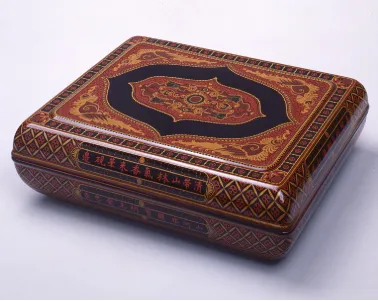
Tamakaji Zokoku (1806–1869) was a lacquer craftsman of the late Edo period, born in Takamatsu. He learned lacquering and carving from his father, a scabbard lacquerer, and spent formative years in Kyoto and Osaka, where he studied alongside lacquerers, carvers, and painters of various kinds. Encounters with Chinese carved lacquer — preserved in temple collections such as Higashi Honganji — and with Southeast Asian rantai kinma (kinma on a woven bamboo substrate) are considered the turning points that shaped the direction of his later work.
What sets Zokoku apart is not that he copied these imported works but that he absorbed them and reconstructed them on his own terms, replacing Chinese and Southeast Asian motifs with Japanese design sensibilities and establishing the results as his own techniques. At a time when maki-e dominated Japanese lacquer art, he developed kinma, zonsei, and choshitsu as a distinct set of practices drawing on Chinese and Southeast Asian sources but arriving somewhere new. He entered the service of the lord of the Takamatsu domain, Matsudaira Yorihiro, who granted him the surname “Tamakaji” and the right to carry a sword — a significant mark of status for a craftsman. He is said to have produced more than 300 works across service to three successive domain lords.
Living National Treasures and kinma today
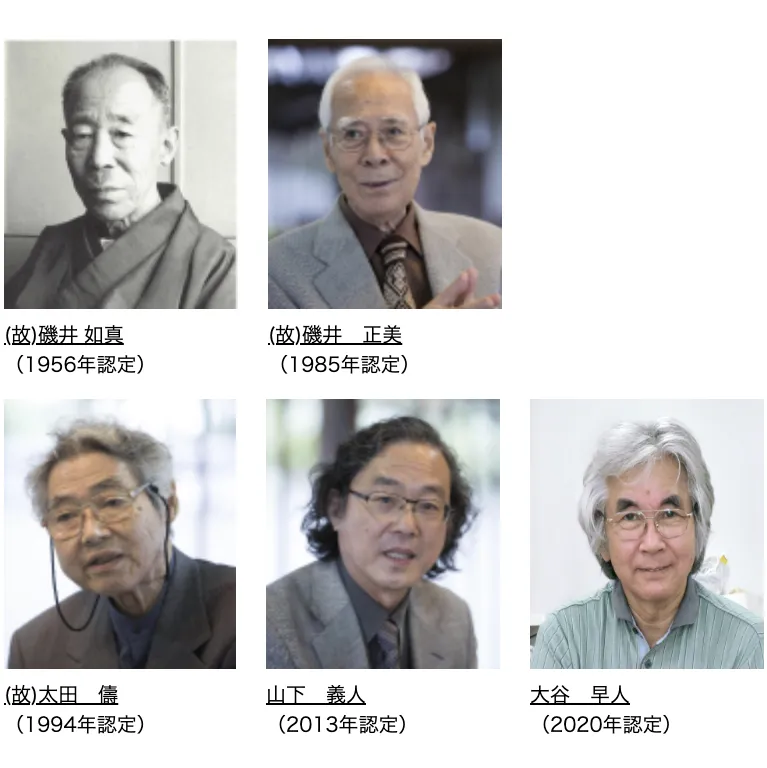
Five practitioners of kinma have been designated Living National Treasures (Ningen Kokuhō, 人間国宝) — an honorary title conferred by the Japanese government on individuals recognized as holders of Important Intangible Cultural Properties: Isoi Joshin, Isoi Masami, Ota Hitoshi, Yamashita Yoshito, and Otani Hayato.
Living National Treasure status applies only during the holder’s lifetime; the designation is not inherited or transferred. The number of people who have received the designation and the number of current holders are therefore two different figures. For current status, please check the latest information from the Agency for Cultural Affairs or the relevant official bodies.
Across Kagawa lacquer art as a whole, including Otomaru Kodo in choshitsu, six practitioners have received the designation to date.
That a single technique has produced five Living National Treasures reflects the depth of kinma’s technical tradition within Kagawa. Equally important is the fact that each of these practitioners brought their own technical innovation to the form — not simply maintaining what they inherited. Isoi Joshin developed dot-carving kinma; Isoi Masami introduced layered substrates and reciprocal carving; Ota Hitoshi extended the technique’s painterly range through cloth-weave carving. Yamashita Yoshito contributed to training the next generation through both the Kagawa Prefectural Lacquer Art Research Institute and the Wajima Lacquer Art Training Center in Ishikawa. Technique, in kinma, has been renewed as it has been passed on.
The Kagawa Prefectural Lacquer Art Research Institute was established in November 1954 as Japan’s first public research institution dedicated specifically to lacquer art. More than 450 graduates have since gone on to work as lacquer artists and technical practitioners, contributing to the continuity of Kagawa’s lacquer tradition.
Kinma as a tea utensil: what to look for
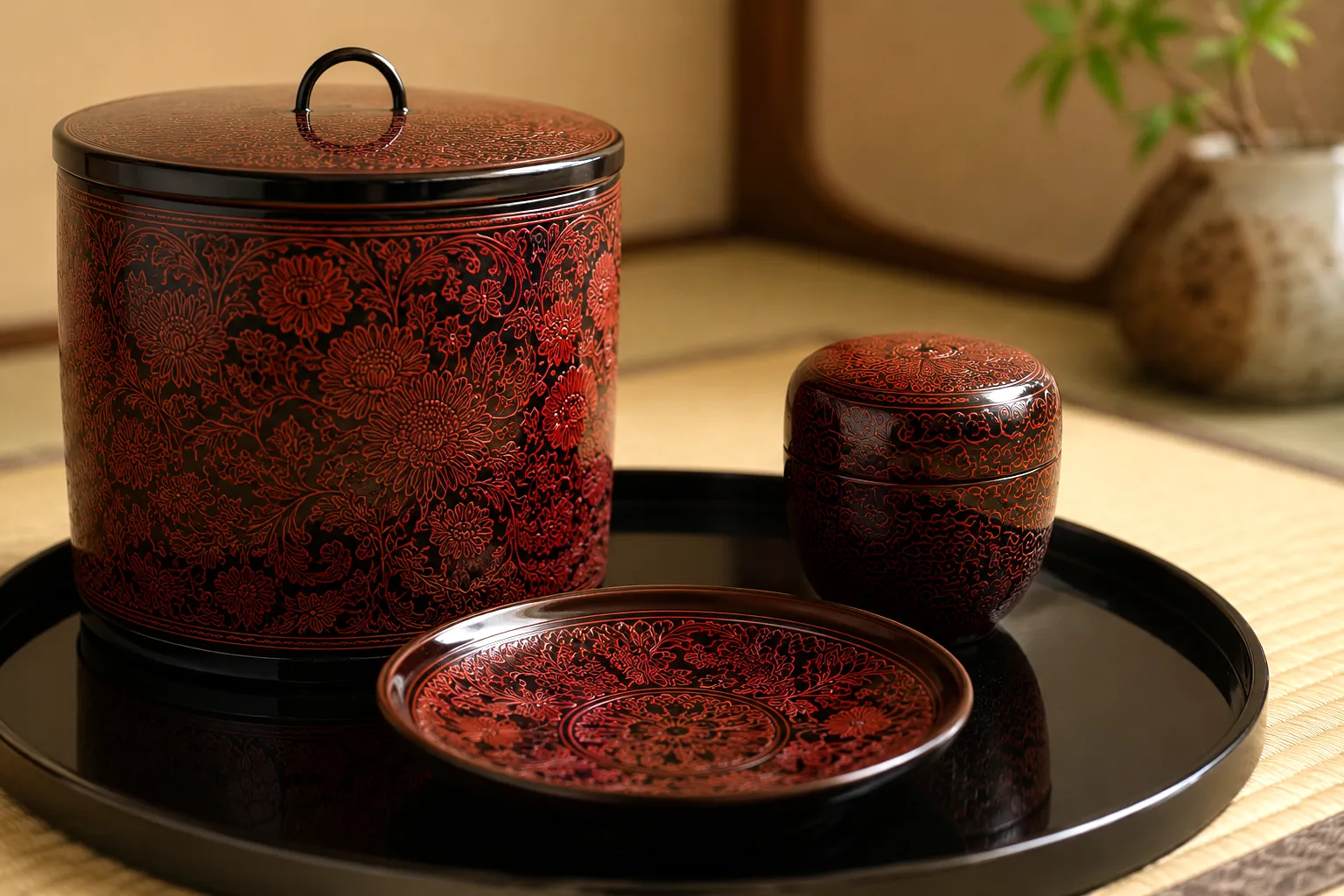
Kinma appears in tea utensils — water jars (mizusashi), tea caddies (natsume), trays, and incense containers (kogo) — and is appreciated not only as technique but through the form of the vessel, its seasonal register, and how it sits within a given tea setting.
Forms and uses: mizusashi, natsume, trays, and more
The deep connection between Kagawa lacquer art and chadō, the Japanese practice of tea, has roots in the Matsudaira domain lords’ active engagement with tea and their commissioning of lacquer works as utensils and furnishings. Within that culture, the fine line patterning and color combinations of kinma found a natural alignment with the aesthetic of the tea room.
The main categories of kinma tea utensils include the mizusashi (the vessel used to hold water in a tea gathering), the natsume (the container for powdered matcha), the tray, and the kogo (the container for incense). These pieces function as practical objects and as works to be looked at carefully. For specific works, maker names, and acquisition information, please consult official exhibition catalogues and the galleries and artists involved directly.
What to look for when viewing kinma tea utensils
When looking at a kinma tea utensil, the first things to consider are the density of the pattern and the choice of colored lacquers. Whether the carving is done in lines or dots makes a substantial difference to the overall impression: dot carving enables gradation and tonal variation, producing depth that reads almost pictorially.
Next is the relationship between vessel form and pattern. In chadō, the choice of utensil shifts with the season, the register of the gathering, and the form of service being performed. Understanding what occasion and season a kinma piece was made for sharpens the reading of the work considerably.
Finally, try viewing the piece under different light sources and angles. The polished surface changes — the pattern’s sharpness comes and goes. This is something photographs cannot convey, and it is one of the qualities of kinma that is only available in person.
Describing kinma tea utensils to an international audience
When explaining kinma tea utensils to readers outside Japan, translating them as “tea ceremony utensils” risks framing them as ritual objects belonging to a closed cultural practice. A more accurate description positions them as “functional art objects used in chadō, the Japanese practice of tea” — objects that are used, appreciated visually, chosen for their seasonal relevance, and selected for the specific setting in which they appear. Holding those four contexts together — use, appreciation, seasonality, setting-specificity — makes the objects considerably more legible to collectors and interior designers than the ceremony framing alone does.
What to check when viewing or acquiring kinma
When approaching kinma work — whether for viewing, purchase, or consultation — the key points to verify are maker information, technique labeling, condition, provenance, and display environment.
Seeing kinma: museums, open exhibitions, galleries
For viewing kinma works directly, the Kagawa Prefectural Museum (Takamatsu) and the Takamatsu City Museum of Art are the primary institutional resources. The Kagawa Prefectural Museum holds Tamakaji Zokoku’s Saisho-kinma Ryoshi Suzuribako — a writing box with polychrome kinma decoration — which is one of the defining works for understanding the origins of Kagawa lacquer art. For current display status, check each institution’s official website.
In the public exhibition context, the Japan Traditional Crafts Exhibition, organized by the Japan Kogei Association, is the principal annual venue for new kinma work. Dates and exhibition details are available on the Japan Kogei Association’s official website.

Five things to check when considering a purchase
[Checklist for selecting a kinma work]
- Is the maker’s name and regional origin clearly stated?
- Is the technique explicitly identified as kinma (蒟醤)?
- Is the substrate material (wood, rantai, etc.) identifiable?
- Is the acquisition channel reliable — a specialist gallery, public exhibition, or direct from the maker?
- Are conservation and handling requirements documented (protection from direct sunlight, low humidity, etc.)?
Pricing varies considerably by maker, work, and point of sale. Work from primary sources; consult specialist galleries or the maker’s official channels directly for current information.
Notes for institutions, hotels, and commercial spaces
Introducing kinma works into a hotel lobby, tea room, or client-facing space involves a set of practical considerations beyond object selection: display environment (lighting, humidity, direct sunlight), caption text, insurance coverage, staff briefing, and the availability of English-language explanations. These are the preparations that allow a work’s value to be communicated rather than simply assumed.
A space that can articulate the technique, region, and maker’s background situates the work in a cultural context rather than using it as decoration. For those interested in incorporating kinma or other lacquer works into tea settings, spatial contexts, corporate gifts, or international communications, we are available to discuss work selection and connections to artists and studios according to the specific situation.
How to explain kinma in English
In English, “kinma” should not be left untranslated and unexplained. The working description “carved-and-filled lacquer technique strongly associated with Kagawa lacquer art” conveys both the process and the regional context.
How to use “kinma,” “Japanese lacquer,” and “Kagawa lacquer art”
In English, “Japanese lacquer” functions as a broad category term. Kinma is one technique within it, and simply labeling it that way loses most of what matters. A more useful sequence runs as follows.
- Japanese lacquer (urushi) — introduced as the general category
- Kagawa lacquer art — positioned as the regional technical tradition within which kinma developed
- Kinma (carved-and-filled lacquer) — defined by its process
“Carved-and-filled” is a phrase that travels well: it is accurate, process-based, and accessible in design, collection, and interior contexts without requiring further specialist knowledge to parse. Note that English has a historical usage of “japan” and “japanning” to refer to Japanese-style lacquerware and lacquer-effect finishes — but this is not current usage for general audiences, and in editorial contexts “Japanese lacquer,” “urushi lacquer,” and “Kagawa lacquer art” are the appropriate choices.
Japanese terms and their English equivalents
| Japanese | Romanization | English / notes |
|---|---|---|
| 蒟醤 | kinma | carved-and-filled lacquer; a technique strongly associated with Kagawa lacquer art |
| 漆 | urushi | Japanese lacquer; “japan” has historical usage related to lacquerware but is not current in general contexts |
| 色漆 | iro-urushi | colored lacquer |
| 蒟醤剣 | kinma-ken | specialized carving knife used for kinma |
| 研ぎ出し | togidashi | the step in which the surface is polished flat, removing excess lacquer and bringing the inlaid design flush with the surface |
| 人間国宝 | Ningen Kokuhō | Living National Treasure; an honorary title conferred by the Japanese government, held only during the recipient’s lifetime |
| 籃胎 | rantai | woven bamboo substrate used in traditional kinma works |
| 玉楮象谷 | Tamakaji Zokoku | 19th-century lacquer master who established Kagawa lacquer art (1806–1869) |
Descriptions to avoid
When writing about kinma for an international audience, the most common pitfalls are over-mystification and cultural closure. Phrases like “ancient secret,” “mystical Japanese tradition,” and “samurai-era craftsmanship” fix kinma as a relic of the past. The actual picture — Living National Treasures actively developing new technical approaches into the present — calls for a different frame: “contemporary applied art,” “collectible craft with a deep technical lineage,” or “a living tradition of Kagawa” are more accurate and more useful.
Frequently asked questions about kinma
Questions about how to read the word, how kinma differs from chinkin, its relationship to Kagawa lacquer art, how to appreciate and acquire it, and how to describe it in English — answered directly.
- Q1. How do you read 蒟醤?
- “Kinma.” The characters combine 蒟 from 蒟蒻 (konjac) and 醤 from 醤油 (soy sauce) — a pairing that almost no one reads correctly on first encounter.
- Q2. What kind of technique is kinma?
- A lacquer decoration technique in which patterns are carved into a built-up lacquer surface using the specialized kinma-ken, filled with colored lacquer, and polished flat to reveal the design. It is central to Kagawa lacquer art and carries designation as an Important Intangible Cultural Property (April 13, 1985).
- Q3. What is the difference between kinma and chinkin?
- Both involve carving into a lacquered surface, but kinma repeats the carve-and-fill sequence color by color, polishing the entire surface flat at the end. Chinkin carves all the lines first, then fills them in a single pass with gold powder or gold leaf. Kinma uses colored lacquer; chinkin uses gold.
- Q4. How does kinma differ from maki-e and raden?
- Maki-e involves drawing or painting a pattern in lacquer and dusting it with metallic powder — there is no carving step. Raden uses cut shell inlaid into the lacquer surface. Neither shares kinma’s carved-and-filled-and-polished-flat construction.
- Q5. Why is kinma so closely associated with Kagawa?
- Tamakaji Zokoku established the technique in Kagawa during the early 19th century, and the region has been its primary center ever since. The Kagawa Prefectural Lacquer Art Research Institute, founded in 1954, has provided institutional continuity for the technique, and the region has produced five Living National Treasures in kinma to date.
- Q6. What is the kinma-ken?
- The specialized carving knife used in kinma. It comes in two main types — for line carving and dot carving — and the geometry and angle of the blade determine the cross-section of the carved recess, directly affecting how much colored lacquer it holds and how sharply the finished pattern reads.
- Q7. Where can I see kinma works?
- The Kagawa Prefectural Museum and the Takamatsu City Museum of Art are the principal public venues. The Japan Traditional Crafts Exhibition, organized by the Japan Kogei Association, is the main annual exhibition context for new work. Check each organization’s official website for current schedules and display information.
- Q8. How do you explain kinma in English?
- “Carved-and-filled lacquer technique strongly associated with Kagawa lacquer art” is the description that conveys the process most accurately. “Kinma” can be used as a direct term alongside it. Living National Treasure status is explained as “Living National Treasure (Ningen Kokuhō), an honorary title conferred by the Japanese government, held only during the recipient’s lifetime.”
Closing: kinma as an entry point into Kagawa lacquer art
Kinma is more than one branch of lacquer art. It is a self-contained technical system — carve, fill, polish flat — that sits at the center of Kagawa lacquer practice and continues to be carried forward through current making and transmission.
Writing this article brought the kinma-ken back into focus for me. When explaining a technique, the natural tendency is to start with process or history. But the moment kinma’s technical character becomes most concrete is the moment you learn that it has its own specialized knife — and that the knife comes in two distinct types, for line work and dot work, and that those two types have given rise to derived approaches like reciprocal carving, cloth-weave carving, and lotus carving. The tool is where the technique’s range lives.
The other thing worth sitting with is what it means that five people have been designated Living National Treasures in kinma. I find it more useful to read that figure not as a cultural achievement to be admired in the abstract but as five separate instances of technical innovation: Isoi Joshin’s dot-carving approach, Isoi Masami’s layered substrates and reciprocal carving, Ota Hitoshi’s expansion of painterly range through cloth-weave carving. Otani Hayato’s rantai kinma is located within that sequence of renewal. Reading the lineage as a series of specific technical developments makes where kinma stands today considerably more legible.
Consultations on tea utensils, spatial contexts, and international communication
For those looking to apply kinma and other lacquer works in tea settings, spatial installations, corporate gifts, or international communications, we are available to discuss work selection and connections to artists and studios according to the specific situation and context.
Please feel free to get in touch.