

Have you come across the term “Samurai Core” on social media? In recent years, TikTok and Pinterest feeds have been filling with still silhouettes of sword-bearing figures and close-up footage of metal blades catching the light — a quiet but steady accumulation of a particular visual mood.
This article maps what the Samurai Core trend actually refers to, then traces a path from its center — the visual language of the Katana Aesthetic — into the craft traditions behind the Japanese sword and the tamahagane steel that gives it its character.
Beneath what is, for now, a phenomenon of popular culture, there is a material tradition with almost no parallel elsewhere in the world. This piece is written with designers, architects, and international collectors in mind — as a grounding reference for anyone who wants to understand what lies behind the image.
Table of Contents
What Is Samurai Core? A Samurai Aesthetic Shaped by Social Media
Samurai Core is not a historical term or an academic concept. It is a contemporary aesthetic trend that has spread across TikTok, Pinterest, and Instagram, driven by the platforms themselves.
On social media, Samurai Core describes a recognizable visual tendency — a collective style built around the imagery of the samurai, the sword, stillness, and shadow. Its vocabulary includes a palette of black, deep navy, and charcoal; the silhouette of a blade or scabbard; kimono and hakama elements absorbed into contemporary styling; and compositions with generous negative space that evoke the Japanese concept of ma — the intentional interval. Taken together, these elements create the mood now associated with Samurai Core.
It is worth being clear about what this trend is not: an attempt to faithfully reconstruct historical warrior culture. What has taken shape is something more mediated — an image of the samurai refracted through film, anime, and games, then recombined through the mood-board logic of social media and AI-generated visuals into its own self-sustaining aesthetic. That is the form Samurai Core has actually taken.
Why Samurai Core Has Taken Hold
@takashi.film 📍Sekigahara -関ヶ原- Gifu, 岐阜 SAMURAI EXPERIENCE IN SEKIGAHARA ⚔️🇯🇵 Step into the world of the Battle of Sekigahara — the decisive clash that shaped samurai history. This experience includes: 📍 Wear traditional samurai armor and jinbaori (battle surcoat) 📍 Walk the battlefield at dawn: morning mist, historic sites, war stories 📍 Tea ceremony in the warrior tradition / Koto (traditional Asian string instrument) experience 📍 Kendo practice / sword posture and movement 📍 Stay at “Oyakata Sekigahara,” a traditional Japanese house built by master craftsman Yamamoto Sōsuke — known as a “modern ninja” @oyakata_sekigahara 📍 Three Cups Ceremony: a warrior-style ceremonial toast shared in the Sengoku period 📍 Smoke Signal: lighting a battlefield-style signal fire 📍 Samurai’s Meal: tasting Sengoku-era style dishes Sekigahara is easy to reach — about an hour from Kyoto by train or car, and about 45–50 minutes from Nagoya on JR. For details and booking, check out @samurai_experience_sekigahara 体験内容: 📍 甲冑・陣羽織の着装 📍 古戦場の夜明けや朝靄の風景と史跡巡り 📍 茶道体験・琴体験 📍 剣道体験 📍 「御屋形 関ヶ原」への宿泊体験 (”現代の忍者”と呼ばれた伝説の枝打ち師・山本總助氏が建てた日本家屋) @oyakata_sekigahara 📍 三献の儀 📍 狼煙上げ 📍 戦国飯の喫食 #samurai #sekigahara #japanexperience_2025 #samuraiexperience #warriorculture ♬ Original audio – TakashiFilm Japan🇯🇵
Several cultural and technological conditions have come together to make this possible.
The first is how well the aesthetic translates to short-form video. Drawing a sword, returning it to the scabbard, a close-up of polished metal, a sleeve moving in slow motion — these are motifs that register strongly in a matter of seconds. They fit naturally into the “cinematic edit” and “dark aesthetic” video genres that perform well on TikTok and Instagram Reels, giving the trend genuine visual momentum.
The proliferation of AI image generation tools has also played a role. Combining terms like “samurai,” “katana,” and “dark aesthetic” now produces convincing visuals almost instantly, and that ease of production has sharply increased the volume of content building on this trend.
There is also a cultural dimension: a growing identification, particularly in English-language online spaces, with the archetype of the ronin — the unattached, self-reliant figure — as an expression of contemporary individualism. The samurai and ronin images map onto that sensibility in ways that have proven broadly resonant.
The relationship between Samurai Core and the Katana Aesthetic
If Samurai Core names the broader world — the mood, the lifestyle, the character type — then the Katana Aesthetic names its formal and visual core.
Samurai Core encompasses fashion, interiors, lifestyle signifiers, and a certain kind of persona. The Katana Aesthetic focuses more specifically on the object itself and its visual grammar: the curvature of the blade (sori), the gradients of the tempering line (hamon), the craftsmanship of the hand guard (tsuba), the contrast between black lacquer and bare metal. In design and product contexts, the Katana Aesthetic tends to be the more precise reference term — the language designers reach for when describing edge profiles, surface treatments, or the visual tension between refined and raw.
Why the sword sits at the center of Samurai Core
Samurai culture has many iconic objects — armor, castles, gardens. The sword occupies the center not because of its historical function but because of its visual density as an object.
Within a single form, the sword concentrates a sweeping organic curve (sori), a luminous line at the blade’s edge (hamon), and a combination of entirely different materials — scabbard, hand guard, hilt — each with its own surface character. Even without any knowledge of its original function, the sword stands on its own as both a craft object and a work of art. It is that completeness as an object, rather than its identity as a weapon, that makes it the natural symbol of the Samurai Core aesthetic.
The elements of the Katana Aesthetic — blade, hamon, sori, tsuba
A working vocabulary for the Katana Aesthetic, with terms as they appear in English-language contexts.
Blade
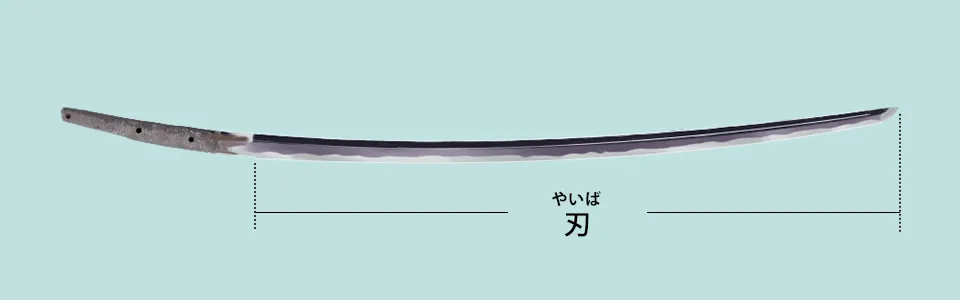
The forged steel surface carries both a metallic sheen and a subtle grain pattern known as jigane — a texture produced by the layered folding of the steel during forging. That non-uniform surface is what distinguishes a nihonto blade from an industrially produced object, and it is where the quality of the underlying material becomes directly visible.
Hamon
The hamon is a pale, mist-like line that appears along the cutting edge as a result of differential hardening — a quenching process that creates a hard edge while leaving the body of the blade more resilient. Along the boundary between edge and body, forms emerge: undulating waves, clove-flower shapes (choji), overlapping arcs (gunome). Every swordsmith produces a distinct pattern. In discussions of the Katana Aesthetic, the hamon is consistently the most cited example of visible craft beauty in the blade.
Sori
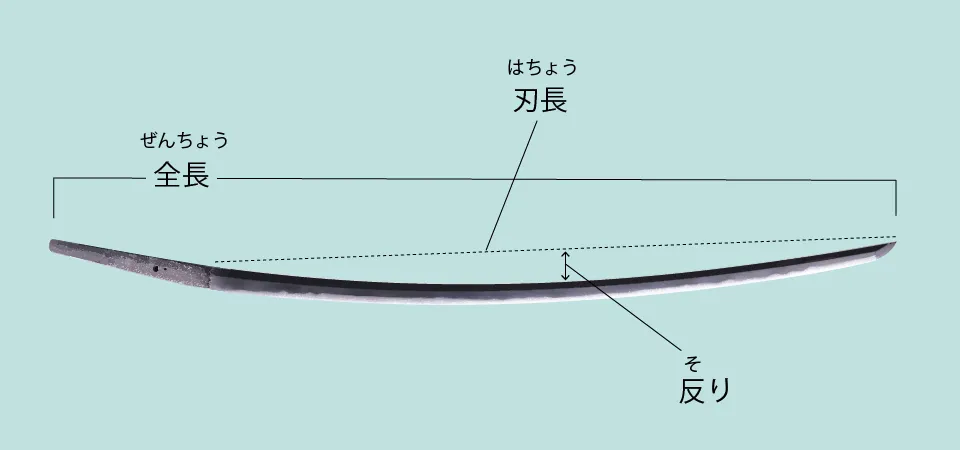
The sori is the gentle longitudinal curve of the blade. It originated from functional requirements, but as a form it carries a particular tension — something between elegance and restraint — that is difficult to achieve by other means.
Tsuba
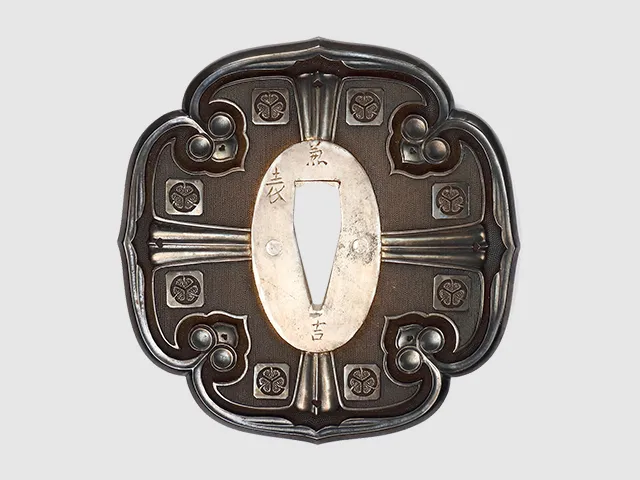
The tsuba is the circular or oval guard positioned between hilt and blade. Worked in iron, copper, brass, gold, and silver — through openwork carving, inlay (zogan), and chasing — it stands as an independent craft object in its own right.
Together, these elements form the visual grammar of the sword as an object.
The blade is only part of it — soken kinko and the sword as composite craft
If you approach the Katana Aesthetic with attention only to the blade, you are seeing less than half of what is there.
The koshirae — the complete ensemble of fittings that surrounds and houses the blade — brings together the work of metalworkers, lacquerers, woodworkers, and leatherworkers. The tsuba, hilt, menuki (small decorative mounts set into the hilt wrap), kozuka (utility knife handle), kogai (skewer fitting), and scabbard are each the product of distinct specialist skills. The collective term for this body of metalwork is soken kinko — the art of sword fitting metalwork.
The menuki alone — small ornamental fittings a few centimeters across — may carry dragons, phoenixes, or flowering plants worked in detail that requires close examination to fully read. Scabbards are finished in lacquer, sometimes with togidashi maki-e (polished sprinkled-picture lacquerwork) of considerable complexity. A single sword in full koshirae draws on nearly every major tradition of Japanese decorative craft. For anyone using the Katana Aesthetic as a design reference, the soken kinko tradition is a deeper and more precise source than the blade alone.
What is a nihonto? A grounding in the sword as craft object
It is worth stepping back from the sword as symbol for a moment.
In Japan, swords are subject to a registration system established under the Firearms and Swords Control Law, under which swords recognized as works of art are issued registration certificates. Registered swords may legally circulate, be collected, and be passed down as objects of art and craft.
The production of new swords with recognized artistic value also requires meeting specific legal criteria. A weapon that originated as an instrument of war has, over a long historical arc, been reclassified as an object of art and craft — and has continued, to the present day, as a subject of connoisseurship, scholarship, and conservation. That legal and institutional framework is part of what makes nihonto a culturally distinctive category.
(See: Firearms and Swords Control Law | Agency for Cultural Affairs, Japan)
Three frameworks for appreciating a nihonto — jigane, hamon, sugata
Sword appreciation in Japan works with a set of established criteria.
Jigane
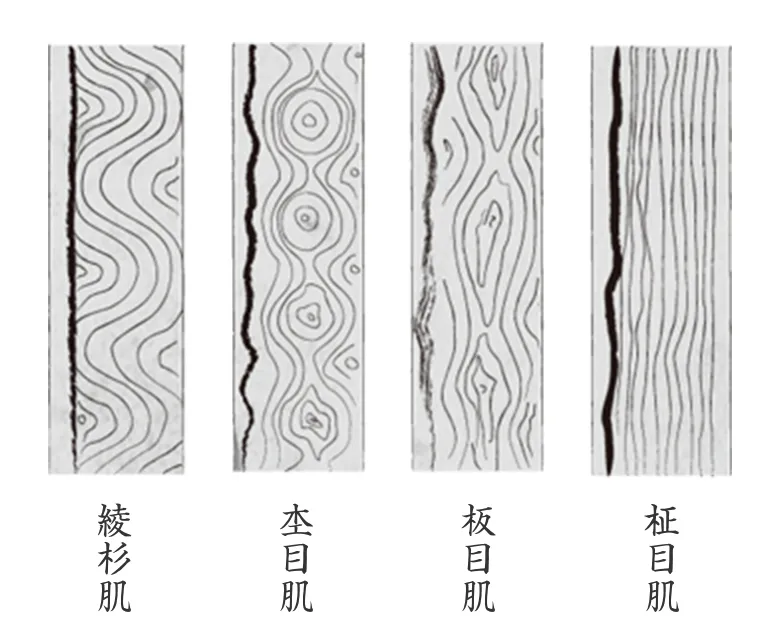
The jigane is the grain pattern that appears on the surface of the blade as a result of repeated folding during forging. The pattern takes several forms — itame (wood-plank grain), mokume (burl grain), masame (straight grain) — and directly reflects both the swordsmith’s technique and the quality of the raw material. On a blade made from tamahagane, the jigane is an immediate record of the steel itself.
Hamon
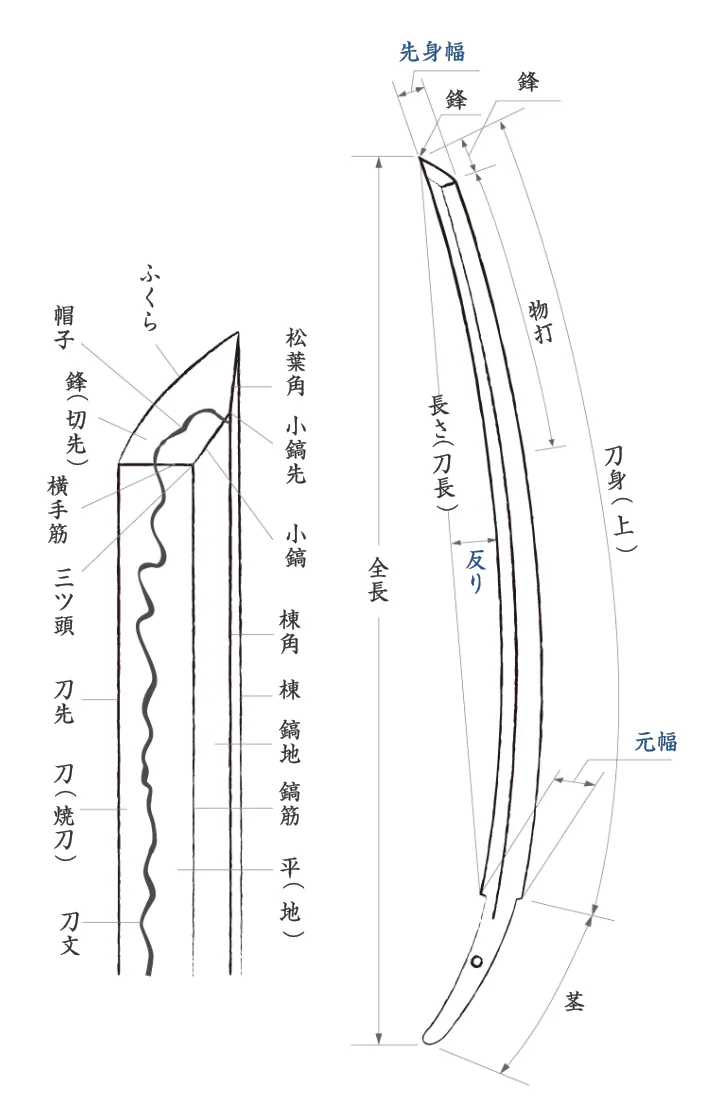
The hamon is the product of a single, unrepeatable quenching step — a combination of controlled intention and irreducible contingency. In the context of sword appreciation, connoisseurs examine not only the overall pattern but fine interior activities described as nie (crystalline granules) and nioi (a misty transition zone). No two blades from the same swordsmith produce an identical hamon.
Sugata
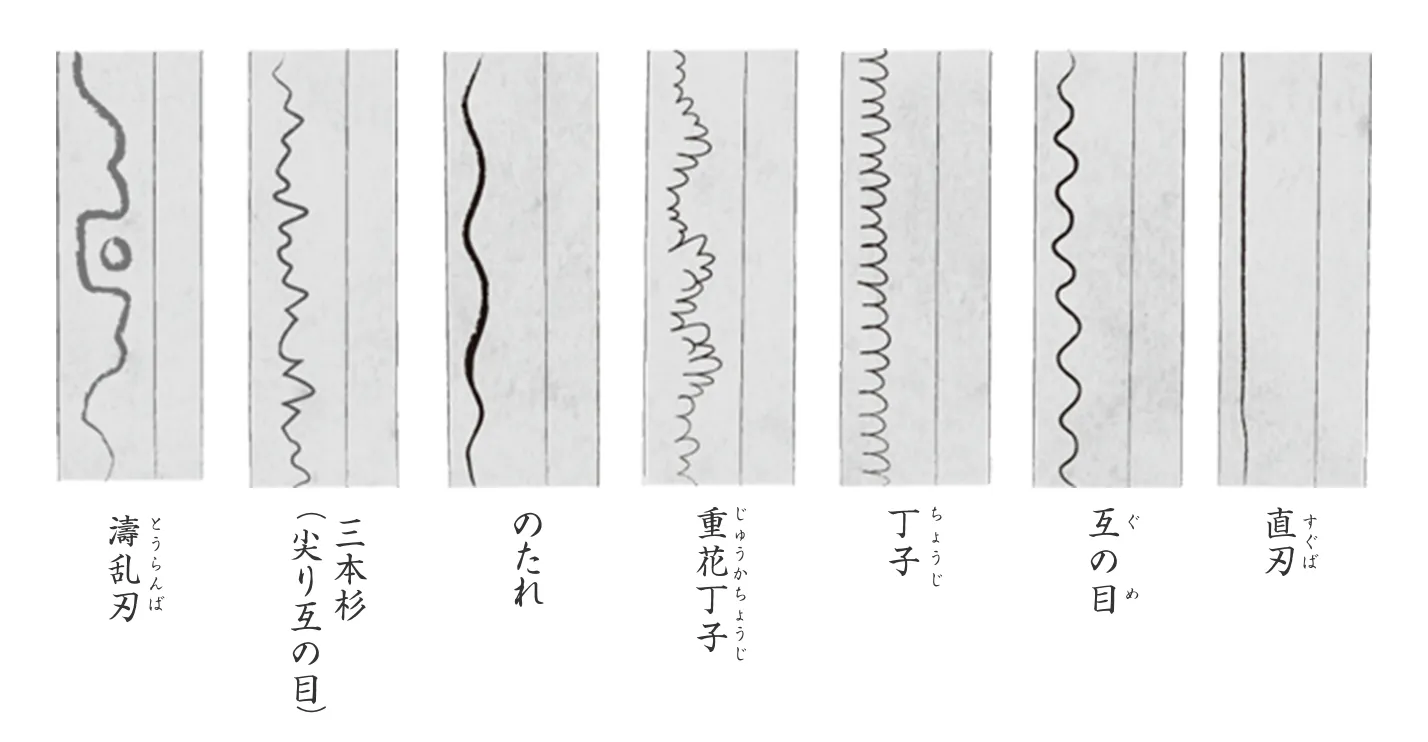
Sugata refers to the overall proportions of the sword — its length, the degree of curvature, the shape of the tip (kissaki). Stylistic conventions shifted considerably across historical periods, and the characteristic sugata of Heian, Kamakura, Nanbokucho, Momoyama, and Edo-period blades each differ in recognizable ways. Reading the sugata is one of the primary ways of situating a blade in its historical moment.
All of these criteria can be engaged directly through sword exhibitions at public institutions. Museums holding national treasures and important cultural properties designated nihonto are found at a number of locations across Japan, and they serve as primary sources for both research and appreciation.
(See: Where to See Swords: Current Nihonto Exhibitions at Museums in Japan | Touken World)
Nihonto as art and craft — an institution that keeps it alive
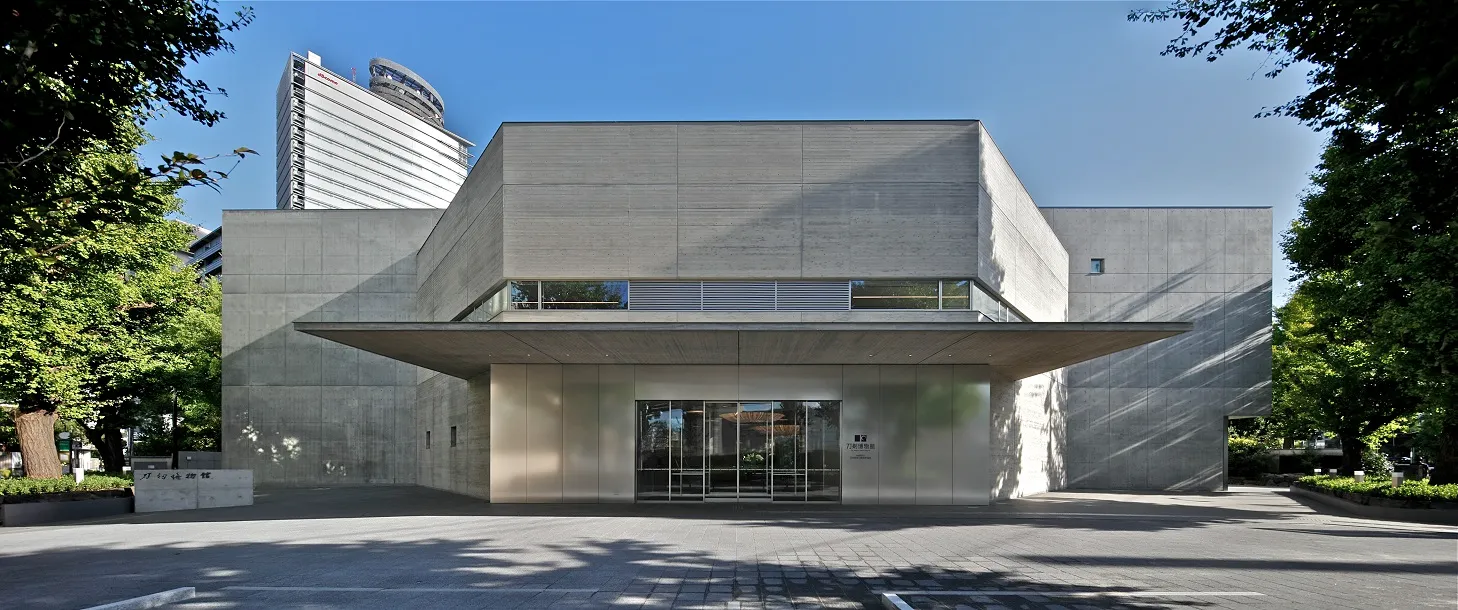
One of the central institutions sustaining nihonto in contemporary Japan is the Society for the Preservation of Japanese Art Swords (NBTHK).
The NBTHK oversees sword authentication and registration, supports scholarly research and public education, and provides institutional backing for the training of active swordsmiths. In Tokyo’s Ryogoku district, the organization operates the Sword Museum, which presents major historical blades through permanent and changing exhibitions and serves as a reference institution for researchers and collectors from Japan and abroad.
(See: About the NBTHK | Society for the Preservation of Japanese Art Swords)
The production of tamahagane through tatara ironmaking has been designated a Selected Conservation Technique by the Japanese government — a formal recognition of its importance to the preservation of cultural heritage. This framework is part of what has allowed nihonto to continue as a living craft tradition through an era when the sword’s original purpose has long passed.
(See: Tamahagane Production (Tatara Ironmaking) | Cultural Heritage Online, Agency for Cultural Affairs)
What is tamahagane? The material culture behind the Japanese sword
Behind the visuals of Samurai Core, there is a material. The qualities that make a nihonto what it is — the character of its jigane, the form of its hamon, the curve of its sori — are inseparable from the properties of tamahagane, the steel from which it is made.
Tamahagane is produced through tatara ironmaking, a Japanese smelting process with no direct equivalent in modern industrial metallurgy. It remains, in practice, almost exclusively a Japanese production — and it remains the steel from which nihonto are made.
How tamahagane is produced — the basics of tatara ironmaking
The raw materials for tatara ironmaking are iron sand (satetsu) and charcoal.
Charcoal is loaded in large quantities into the furnace — the tatara — and iron sand is added in stages while air is forced through the charge by a large bellows called a fuigo. Temperatures inside the furnace reach around 1,400°C, and after an operation that runs continuously for several days and nights, a mass of iron accumulates at the base. This mass is called the kera. From it, the portions with an appropriate carbon content are selected out; these are tamahagane.
Where modern steelmaking is designed to produce large volumes of chemically uniform steel with precision efficiency, a single tatara operation yields a kera in which carbon content varies considerably from one section to the next. Swordsmiths work with that variation deliberately — combining harder portions with more resilient ones to build the structural complexity that the finished blade requires.
What makes tamahagane distinct
Industrial steel is a chemically managed, homogeneous material. Tamahagane is not — its carbon content varies, and it is that heterogeneity that produces the complex surface pattern known as jigane.
When tamahagane is worked through repeated folding and forging (tanren), impurities are driven out and the carbon distribution becomes more even. It is only after this process that the steel acquires the surface character necessary for the hamon to develop with clarity and definition. The number of folds and the specific forging method vary by swordsmith, and both have direct consequences for the jigane and hamon of the finished blade.
Tamahagane is a material well suited to producing a particular kind of beauty — but it is also a material that produces a beauty achievable in no other way. The inseparability of material and aesthetic outcome is what makes the nihonto one of the more distinctive objects in the history of craft.
Why NBTHK Tatara and Okuizumo still matter
Tamahagane production is not a historical practice. Today, the NBTHK operates an active tatara ironmaking facility — known as NBTHK Tatara — in Nita District, Okuizumo, Shimane Prefecture, conducting operations each winter season.
Operations run in cycles of several days, a few times each year. The tamahagane produced is distributed to working swordsmiths through the NBTHK, making the facility the principal supply source for active nihonto production in Japan today.
(See: Tamahagane Distribution | Society for the Preservation of Japanese Art Swords (NBTHK))
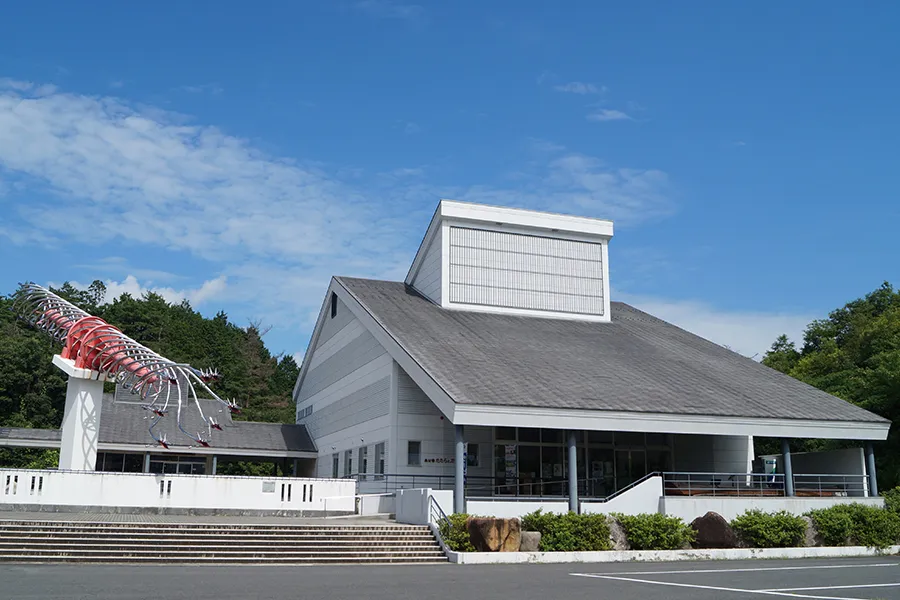
Okuizumo is also home to the Okuizumo Tatara and Sword Museum, which presents the history and process of tatara ironmaking in a landscape where physical traces of the tradition remain visible. It is a place where the relationship between tamahagane and nihonto can be studied in direct material context.
(See: Okuizumo Tatara and Sword Museum | Okuizumo Tourism Guide)
Reading Samurai Core as craft, not just aesthetic
Used with some intention, Samurai Core can function as a genuine cultural entry point.
For designers and architects drawing on this aesthetic, the question is whether engagement stops at visual reference — “something that reads like a sword” — or extends to asking why the sword has the form it has, why it is made from the material it is made from, and why its surface looks the way it does. The difference between those two positions is the difference between surface borrowing and informed reference.
From samurai iconography to the logic of materials
At this stage, Samurai Core remains largely a practice of consuming images. The visual pull of the sword and the samurai figure is strong, but relatively few of the people drawn to it have followed that pull to its source.
Following it leads, in sequence, to tatara ironmaking as a distinctly Japanese approach to steel production, to tamahagane as a material whose heterogeneity is the basis of its visual character, and to the chain of skills — swordsmith, polisher (togishi), scabbard maker (sayashi), metalwork specialist (kinko) — that has sustained nihonto as a living craft tradition.
Moving from the sword as a recognizable image to the sword as an expression of material thinking — that is the path by which Samurai Core as a cultural phenomenon connects to the substance of Japanese craft. Kogei Japonica’s aim is to provide the tools for making that journey.
Related reading — nihonto, metalwork, jigane, material culture
This article has approached nihonto and tamahagane from the entry point of Samurai Core, as an overview. Readers who want to go further into any of the individual topics will find more detailed treatment in the related articles below.



The Samurai Core trend, taken seriously, has the potential to carry genuine interest in Japanese craft culture to audiences around the world. We hope this piece helps move that conversation past the surface — into the materials, the processes, and the hands that have kept this tradition going.
