

Close Menu
Kogei JaponicaKogei Japonica
  • Media Top
  • New Articles
    • Popular Articles
    • PR Articles
  • Themes
    • Traditional Craft Events
    • Interview
    • Trends & Memes
    • Ranking
    • Living National Treasure
    • Traditional Crafts
    • Traditional Techniques
    • Traditional Japanese Games
    • Investment・Business
  • Glossary
  • For Companies
  • For Artisans

Newsletter

We regularly deliver the latest content updates straight to you.

Kogei JaponicaKogei Japonica
  • Media Top
  • New Articles
    • Popular Articles
    • PR Articles
  • Themes
    • Craft Events
    • Interview
    • Trends & Memes
    • Ranking
    • Living National Treasure
    • Traditional Crafts
    • Traditional Techniques
    • Traditional Japanese Games
    • Investment・Business
  • Glossary
For Companies For Artisans
JA
JA
Kogei JaponicaKogei Japonica
Home»PR»Kyoto Craft Materials: Urushi and Natural Dye Talk

Kyoto Craft Materials: Urushi and Natural Dye Talk

2026-03-156 Mins Read PR Traditional Craft Events 7 Views
Share Facebook Twitter Pinterest LinkedIn Telegram
Follow
Google News X (Twitter) Instagram Pinterest TikTok YouTube
Kyoto Craft Materials: Urushi and Natural Dye Talk

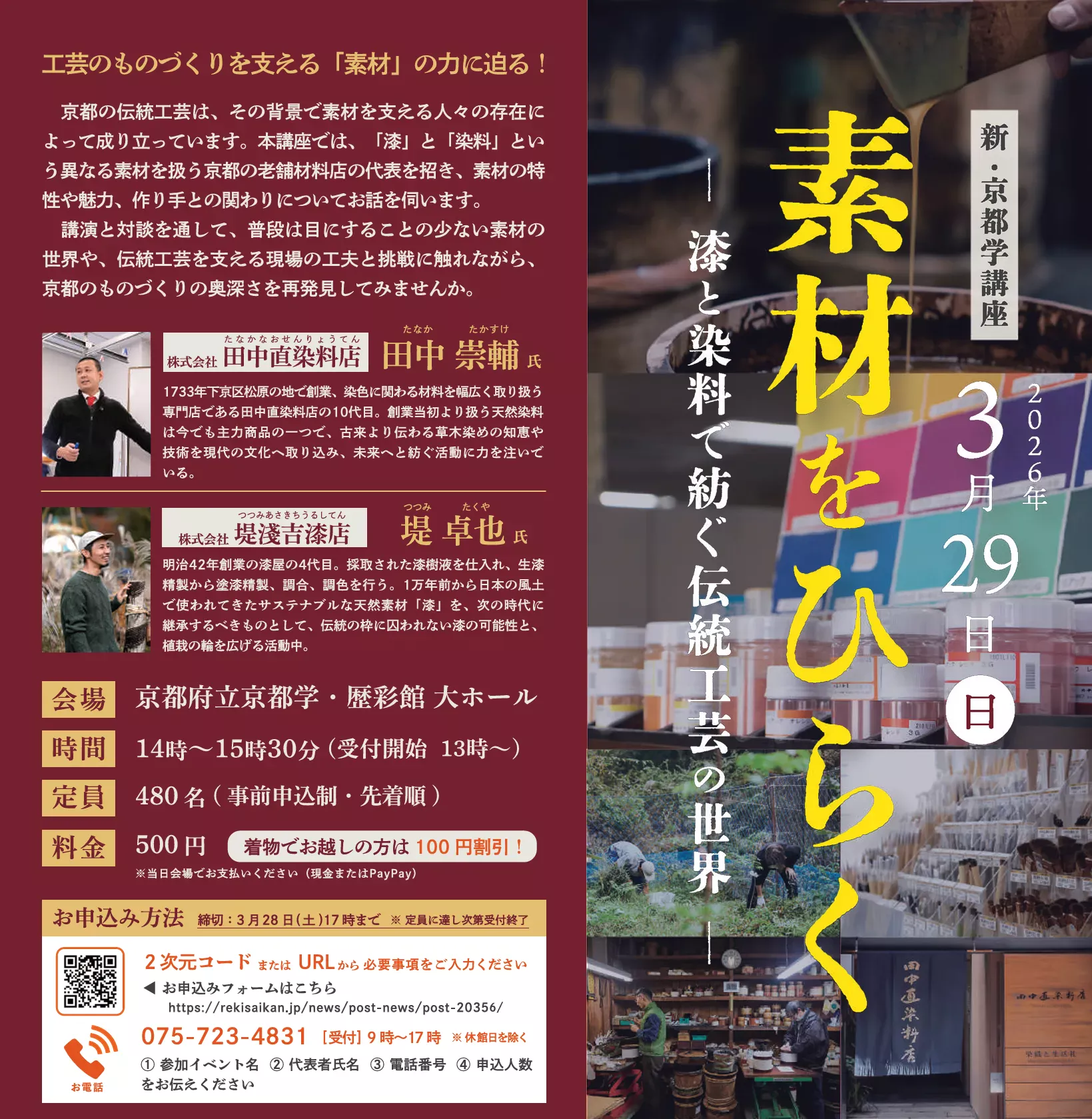
Japan’s aesthetic tradition is carried not only by the hands of artisans, but by the materials those hands reach for. On March 29, 2026, Kyoto Rekisaikan (the Kyoto Prefectural Library and Archives) will host a public lecture event: “Opening Up Materials — A World of Traditional Craft Woven from Lacquer and Dye.” The talk puts craft materials at the center, featuring the heads of two long-established Kyoto material suppliers. Below, the Kogei Japonica editorial team outlines what to expect.

  • A new lens on craft: the material suppliers
    The heads of two Kyoto dye and lacquer houses — rarely in the public eye — share their practical knowledge and the realities of the workshop floor.
  • Craft materials and sustainability
    The conversation spans urushi, a natural material with a history going back roughly 10,000 years, and the next-generation efforts — including lacquer tree planting initiatives — being made to carry it forward.
  • Kimono discount for attendees
    The event takes place on Sunday, March 29, 2026, at Kyoto Rekisaikan. Guests who arrive in kimono receive a ¥100 discount on the ¥500 admission fee.

Table of Contents

  • Why Craft Materials Are Worth a Closer Look
  • Two Long-Established Suppliers, Two Deep Material Traditions
    • Tanaka Nao and Natural Dye — Founded 1733
    • Tsutsumi Urushi and Japanese Lacquer — Established 1909
  • What the Talk Will Cover: The View From the Supply Side
  • Event Details and How to Register
    • Date, Venue, and Access
    • Registration and Kimono Discount
  • From the Editors

Why Craft Materials Are Worth a Closer Look

When people think of Kyoto’s traditional crafts, the finished works tend to come to mind first — Nishijin textiles, Kyoto lacquerware, and the like. But the beauty of those objects does not rest on the artisan’s skill alone. It depends equally on the people who supply the materials that make that skill possible.

Kyoto has long been a place where makers of all kinds converge: professional craftspeople, independent artists, and students learning their trades. Underpinning that ecosystem are the material suppliers — businesses that have kept quality raw materials in steady supply across generations. Looking at craft through the lens of its materials, rather than its finished forms, brings into focus a set of knowledge and practical ingenuity that rarely makes it into public view.

This lecture offers exactly that vantage point: a chance to understand craft through the perspective of the specialists who support it at the level of materials.

Two Long-Established Suppliers, Two Deep Material Traditions

The event brings together the heads of two Kyoto material houses, each working with a distinct traditional material. Both will speak about their histories and the current state of their respective fields.

Tanaka Nao and Natural Dye — Founded 1733
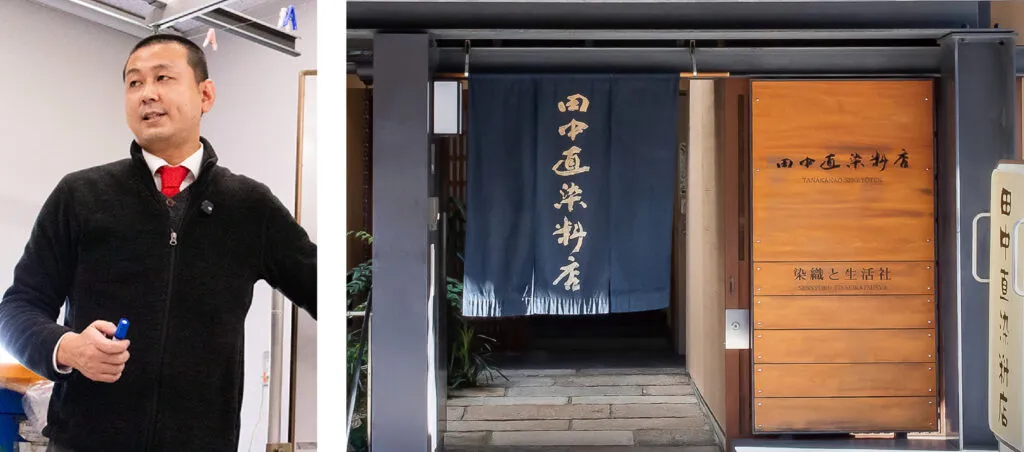
Tanaka Nao, a Kyoto natural dye specialist founded in 1733
Tanaka Nao Co., Ltd.
The first speaker is Takasuke Tanaka, the tenth-generation head of Tanaka Nao, a dye materials specialist that has operated in Shimogyo Ward, Kyoto, since 1733. Natural dyes remain one of the company’s core offerings, as they have been since its founding.

Kusaki-zome — botanical dyeing using plant-based sources — is far more than a method for adding color to fiber. It is a coherent system of knowledge rooted in the properties of plant materials. Takasuke Tanaka has been active in bringing these traditional practices into dialogue with contemporary culture and everyday life, and this lecture is an opportunity to hear directly about that work.

Tsutsumi Urushi and Japanese Lacquer — Established 1909
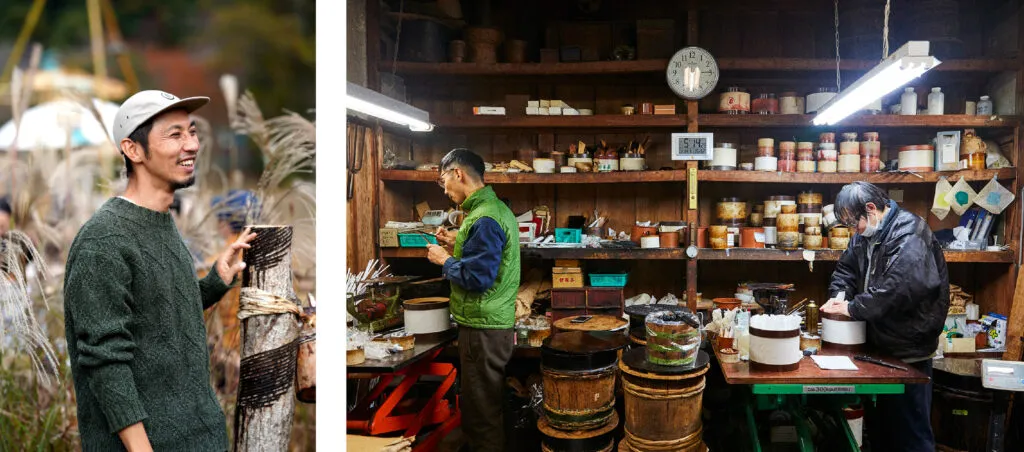
Tsutsumi Urushi, a Kyoto lacquer supplier established in 1909
Tsutsumi Urushi Co., Ltd.
The second speaker is Takuya Tsutsumi, the fourth-generation head of Tsutsumi Urushi, a lacquer supplier founded in 1909. The company handles the full processing chain in-house: sourcing raw lacquer sap, refining ki-urushi (unprocessed lacquer), and preparing lacquer for specific uses.

Urushi — Japan’s native lacquer, derived from the sap of the urushi tree — has a history of use going back roughly 10,000 years. It is a natural material of exceptional durability, and one that is drawing renewed interest for its sustainability profile. Takuya Tsutsumi approaches urushi not only as a traditional craft material but as something with applications well beyond its conventional contexts. He has also been involved in efforts to expand the cultivation of urushi trees, working toward a more stable domestic supply.

What the Talk Will Cover: The View From the Supply Side

What makes this lecture distinct is its perspective. The speakers are not artists or makers in the conventional sense — they are the people who keep makers supplied. That position gives them a particular view of the craft world and the practical adjustments that often go unnoticed in the finished work.

The conversation will address how material suppliers respond to shifting demand and changes in natural material yields while maintaining consistent quality. It will also cover the ongoing dialogue between suppliers and the craftspeople they serve, and how material needs are identified and met. For anyone with a serious interest in how craft actually functions in practice, the supplier’s perspective is one that rarely gets this kind of direct attention.

Event Details and How to Register

The event is ticketed and operates on a first-come, first-served basis. Registration closes the day before the event, so early sign-up is recommended.

Date, Venue, and Access

  • Date and Time: Sunday, March 29, 2026, 2:00–3:30 PM (doors open at 1:00 PM)
  • Venue: Kyoto Rekisaikan (Kyoto Prefectural Library and Archives), Main Hall
  • Access: Approximately 4 minutes’ walk south of Kitayama Station on the Kyoto Municipal Subway, or approximately 5 minutes’ walk north of the “Prefectural University (Kitaoji-dori)” stop on the Kyoto City Bus
  • Parking: Coin parking is available on site

Registration and Kimono Discount

  • Capacity: 480 seats (advance registration required, first-come, first-served)
  • Admission: ¥500, payable on the day by cash or PayPay
  • Kimono discount: Guests who arrive in kimono receive ¥100 off the admission fee
  • Registration deadline: Saturday, March 28, 2026, at 5:00 PM (or when capacity is reached)
  • How to register: Via the online registration form on the Kyoto Rekisaikan event page, or by phone at 075-723-4831 (available 9:00 AM–5:00 PM)
  • Kyoto Rekisaikan Event Page

From the Editors

Looking beyond the finished object to the materials behind it opens up another way of understanding craft. This lecture offers a chance to hear directly from two people whose work supports that process.

Whether you are a craft enthusiast, a designer with an interest in traditional materials, or simply curious about how Japan’s material culture is sustained, this talk should be well worth your time. Late March in Kyoto is also a pleasant season to visit. The Kogei Japonica editorial team will be following the session closely.

Follow Follow
Share. Facebook Twitter Pinterest LinkedIn Telegram
Previous ArticleSustainable Japanese Craft Upcycling: Kintsugi & Boro
Kogei Japonica Editorial Team
  • Website
  • X (Twitter)

We are a group of experts dedicated to showcasing the beauty of Japanese traditional crafts to the world. Our exploration of Japan's craft culture spans a wide range, from works by Living National Treasures and renowned artists to the preservation of traditional techniques and the latest trends in craftsmanship. Through "Kogei Japonica," we introduce a new world of crafts where tradition and innovation merge, serving as a bridge to connect the future of Japanese traditional culture with the global community.

Related Posts

Japanese Craftsmanship at Milan Design Week 2026 Preview

2026-03-02

Kyoto Crafts Exhibition DIALOGUE 2026: What Is It? Explaining the Schedule and How It Differs from Other Exhibitions

2026-01-30

Otaru Snow Light Path (Otaru Yuki Akari no Michi): A Winter Event to Experience the Ephemeral Art Created by Snow and Fire

2026-01-05

About Kogei Japonica

Kogei Japonica is a co-creation platform built around Japanese traditional crafts. We publish ongoing articles on artists, works, cultural context, and collaborative case studies. You can also explore the links below.

  • Read the latest articles on Kogei Japonica
  • For business and project inquiries
  • Register as a craft artist

Newsletter

We regularly deliver the latest content updates straight to you.

PR

Kyoto Craft Materials: Urushi and Natural Dye Talk

2026-03-15

Sustainable Japanese Craft Upcycling: Kintsugi & Boro

Sustainable Japanese Traditional Crafts: Koshu Inden’s Vegan Era

Top 10 Japanese Urushi Living National Treasures in 2026

Japanese Craftsmanship at Milan Design Week 2026 Preview

Traditional Japanese Kintsugi Repair: Authentic DIY Guide

Japanese Pottery Glazes & Firing: The Science of Ceramics

Hidehira-nuri Japanese Lacquerware: Modern Table Styling

Sekishu Washi Japanese Paper: Ultimate Durability & Design

Top 10 Best Traditional Japanese Crafts for Gifts in 2026

Kogei Japonica

An Information Platform Showcasing Japanese Traditional Crafts, Culture, and Artistry to the World

Kogei Japonica Media is a cultural information platform dedicated to sharing the beauty and depth of Japan’s traditional crafts and culture with audiences in Japan and around the world. Featuring Living National Treasures, renowned master artisans, and emerging craft creators, the platform introduces their works, explores traditional techniques, and delves into the histories of craft-producing regions. It also covers exhibitions, events, interviews, and contemporary trends, offering diverse perspectives on the enduring value and evolving future of Japanese craftsmanship.

Through this media, Kogei Japonica Media serves as a bridge connecting Japan’s traditional crafts with the world, supporting both the preservation and innovation of cultural heritage for future generations.

Menu
  • Home
  • Companies
  • Artisans
  • Experiences
  • News
  • Media
  • For Companies
  • For Artisans
  • Advertising Plans
  • Terms of Service
  • Privacy Policy
  • Company
  • Newsletter
  • Contact Us
Community
  • LINE
  • Instagram
  • X
  • YouTube
  • Pinterest
  • TikTok
© 2026 ARTerrace inc. All Rights Reserved.

Unauthorized reproduction or use of the contents of this site is strictly prohibited.
This site is protected by reCAPTCHA and the Google Privacy Policy and Terms of Service apply.

  • LINE
  • Instagram
  • X
  • YouTube
  • Pinterest
  • TikTok

After entering a keyword, press Enter to search.