

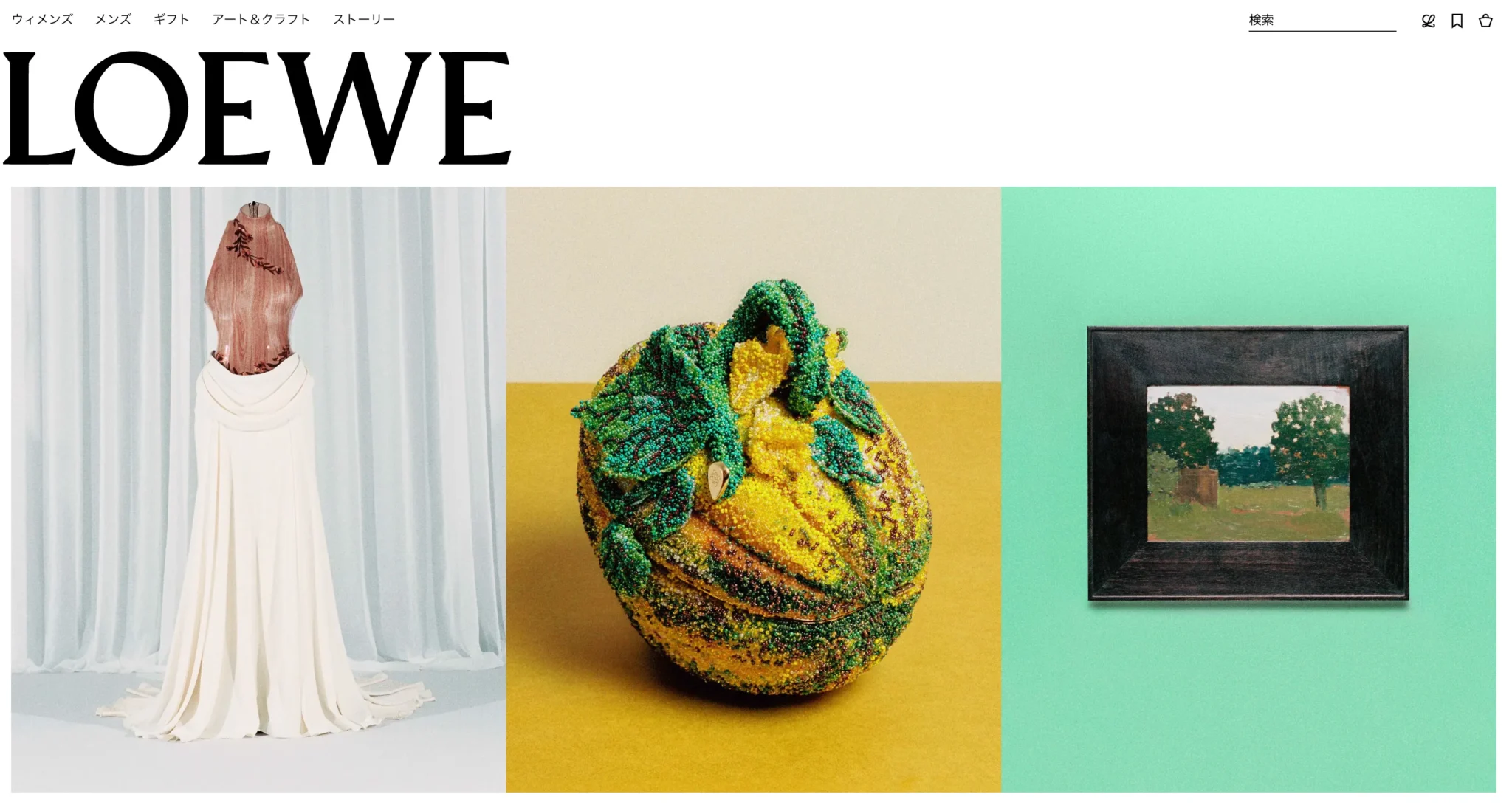
In recent years, a notable trend has emerged within the digital strategies of global high-end fashion brands. Beyond their main e-commerce platforms designed solely for transactions, these houses are heavily investing in dedicated cultural websites and editorial microsites—collectively referred to in this article as “cultural platforms”—to deeply communicate their aesthetic identity and history.
Stepping away from price competition and feature-based comparisons, these brands seek to build lasting relationships with customers through the inherent “culture” they embody. This objective shares much in common with the challenges currently faced by Japanese Kogei (traditional craft) businesses.
This article unpacks the methods of designing a brand universe using cutting-edge examples from the luxury apparel industry, detailing concrete approaches to evolve a corporate website from a mere product catalog into an experiential space where visitors become followers before they even consider a purchase.
- High-end fashion brands build cultural platforms not to sell products, but to visualize their philosophy and discerning eye, constructing a cultural positioning insulated from price competition.
- The user experience (UX) shared by successful examples like LOEWE, Prada, and Dior avoids direct routes to e-commerce, instead utilizing designs focused on “aesthetic identity” that position exhibitions, archives, and dialogues as the entry points.
- One effective option for traditional craft businesses to apply this to their own websites is a transition to a “digital gallery” utilizing a minimum five-page framework centered on materials, techniques, and makers. This contributes to medium-to-long-term relationship building and clearly communicates specialized expertise.
Table of Contents
What are “Cultural Brand Sites” and Why are They Necessary Now?
Brand communication in digital spaces has transitioned from the mere transmission of information to the provision of immersive experiences.
Here, we define the cultural platform and explore why many luxury brands are increasingly focusing on this digital arena.
The Decisive Difference from E-Commerce
The primary objective of a standard e-commerce site is to facilitate smooth transactions. Consequently, the user interface (UI) is designed to make product prices, sizes, and the “add to cart” button the most prominent elements.
Conversely, a cultural platform functions not as a place to sell, but as a space to experience a brand universe.
It intentionally places purchasing pathways in the background, pushing forward artworks that inspired the brand, videos of artisan handwork, or the underlying brand philosophy.
The major difference lies in its structure, which is built to appeal to user emotions, generating deep resonance and intellectual engagement.
The Underlying Emphasis on Cultural Value
Driving this movement is a current trend within the luxury market that places heavy emphasis on “cultural relevance.”
Many consumers, especially younger luxury audiences, are increasingly drawn to brands that signal cultural relevance as well as exclusivity. They want to know what meaning a brand holds for society and the arts.
Because of this, a growing number of brands are reinforcing their positioning not simply as manufacturers, but as entities that protect and nurture culture. The cultural platform serves as an indispensable digital space to visualize this “cultural authority”—such as a company’s aesthetic judgment and history—and to construct its overarching editorial language.
(Reference: What are the “5 Transformational Trends” Occurring in the Global Luxury Market? | Travel Voice)
Learning from Advanced Cases: Art and UX Strategies of Fashion Brands
How exactly do top global brands design their cultural platforms?
We can extract actionable insights from three advanced case studies to see how they express “culture” digitally and what kind of user experience they provide.
LOEWE “Crafted World”: Exhibitions and Digital Immersion
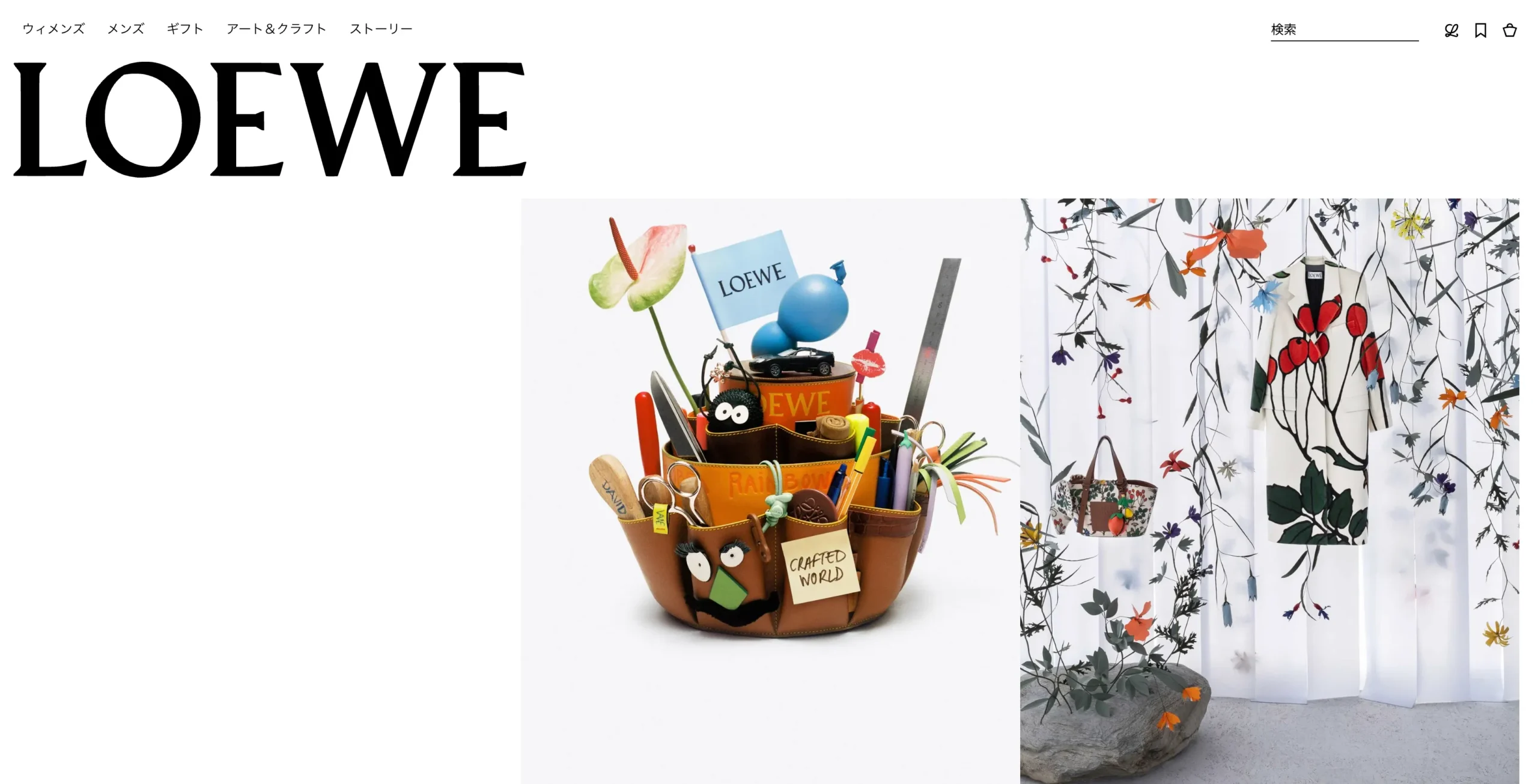
The dedicated page for the exhibition goes beyond mere event announcements. It utilizes full-screen placements of spatial designs created in collaboration with architecture studio OMA, alongside video content that conveys the tangible dedication of the artisans. Through simple scrolling, users are treated to an immersive experience that allows them to touch the history of the brand’s archives and the tactile reality of its Spanish workshops. It stands as a symbolic example of focusing on the “maker’s story” rather than pushing products.
(Source: LOEWE Official Dedicated Page)
Prada “Prada Frames”: The Digital Archive as a Knowledge Hub
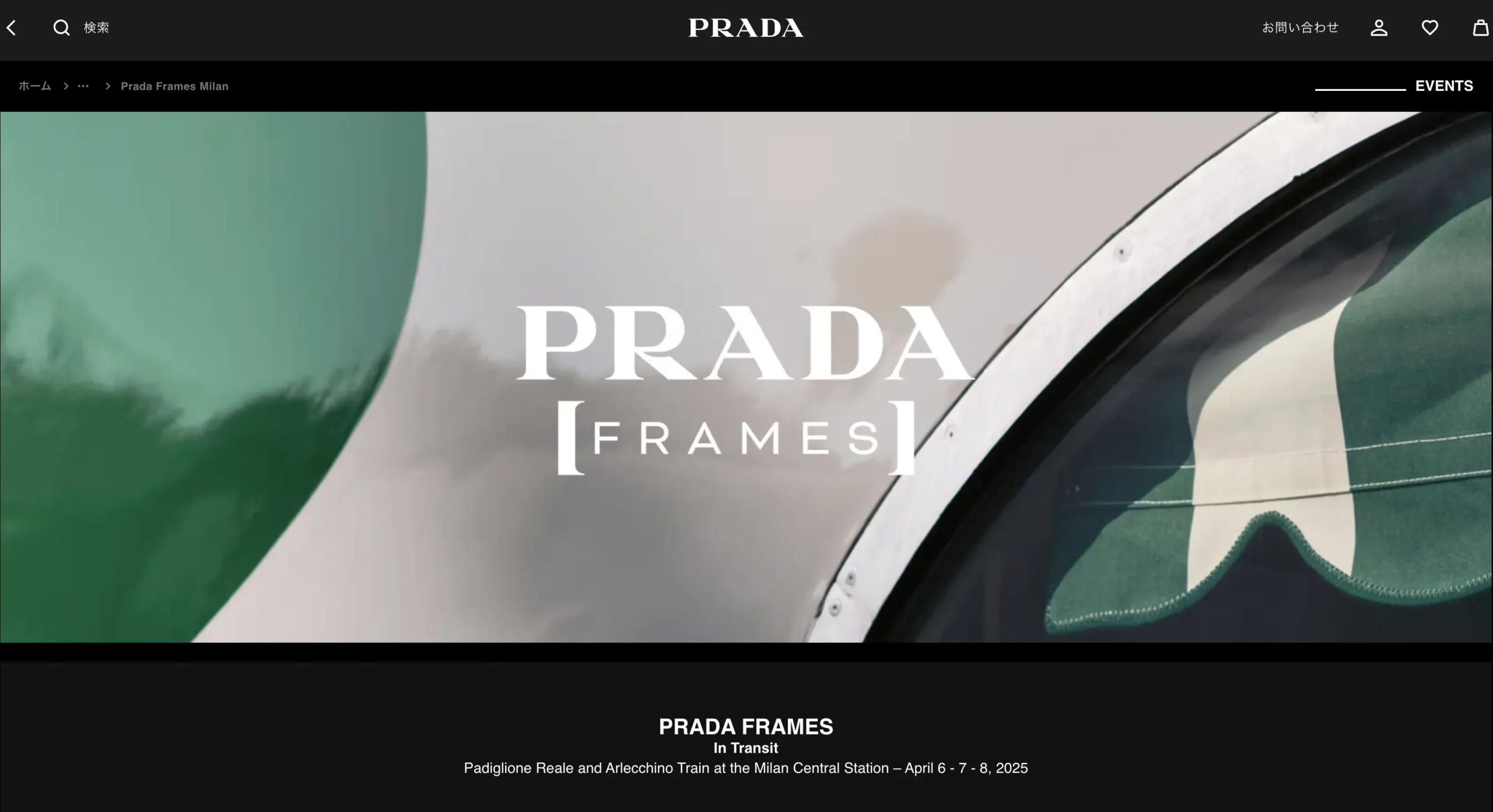
On the archive page for this project, which marked its fourth edition in 2025, programs intersecting architecture, infrastructure, and social issues take center stage. Within a minimal UI devoid of excessive ornamentation, records of past lectures and dialogues are organized alongside beautiful typography.
By showing absolutely no products and functioning instead as a “hub of knowledge and culture,” the site contributes significantly to the construction of an intellectual brand identity.
(Source: Prada Frames Milan Archive)
Dior “Dior Lady Art”: An Expressive Space That Turns Products into Canvases
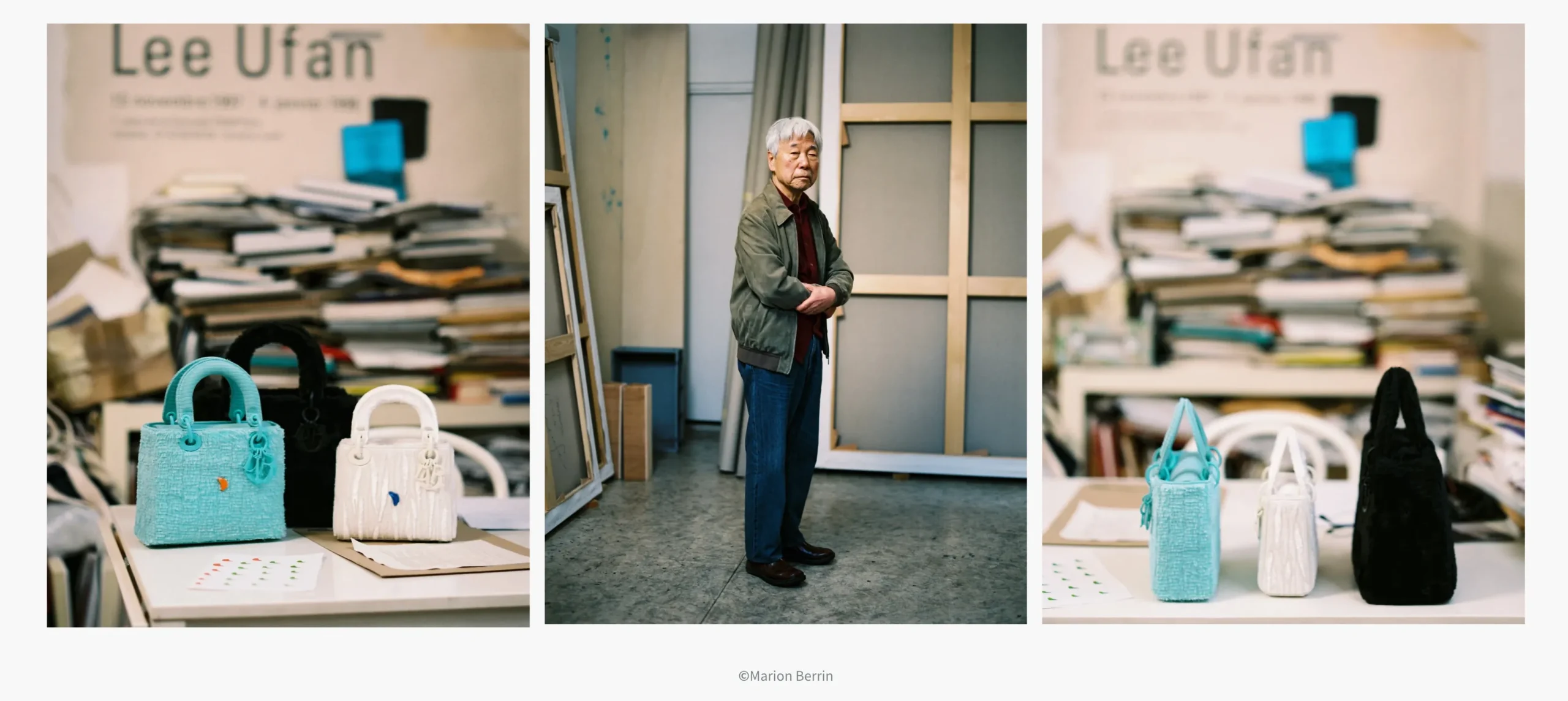
On the dedicated site for the 10th edition, the philosophies, production processes, and sources of inspiration for the ten participating artists—including Lee Ufan—are discussed in detail.
Rather than highlighting the functionality or price of the bags, this method redefines the products as “artworks,” presenting them in a sophisticated layout akin to gallery captions. It is a highly effective and realistic implementation strategy for Kogei businesses aiming to elevate their own wares into the realm of fine art.
(Source: Dior Lady Art 10th Edition Dedicated Page)
Three Principles of Excellent UX and Aesthetic Identity Unraveled from Cultural Sites
By abstracting these advanced case studies, we can identify web design rules applicable across industries. We explain the three principles for building an excellent UX and distinct brand universe.
1. The Elimination of Transactions and a Focus on Storytelling
The prerequisite for creating immersion is reducing visual “noise.”
Buttons prompting transactions, such as “Add to Cart,” should be placed discreetly, while ample white space is prioritized to allow users to focus entirely on reading and viewing the content.
By incorporating a “delayed pathway design” that guides users to products or next actions in a natural flow only after they have absorbed a story or historical background, brands can foster a much deeper comprehension of their identity.
2. Structuring an “Archive” to Encourage Deeper Browsing
Cultural value increases through “accumulation.” Rather than concluding with one-off news or campaign pages, it is highly effective to structure past exhibitions, artist collaborations, and historical materials as a permanent archive.
Implementing a UI that allows users to intuitively explore by following tags or chronological eras at their own pace encourages deeper browsing within the site. Simultaneously, this signals the comprehensiveness and expertise of the site to search engines, positioning it favorably for AI search summaries.
3. Visual Expression of Materials and Textures
Within the flat constraints of a screen, the key to determining the quality of UX is how well the “tactile feel” and “warmth” of the craft are conveyed.
This goes beyond standard photographs of finished products. It requires macro photography of raw materials, short videos incorporating the distinct sounds of the production process, or micro-interactions where images move subtly in tandem with scrolling. Brands must pursue sensory expressions that communicate the weight and surface texture of the object, bridging the digital divide.
The Implementation Framework for “Site Artification” that Kogei Businesses Should Learn
We now reach the core argument of this article. We present concrete methods for Japanese traditional craft businesses to adapt the sophisticated UX designs practiced by the fashion industry into their own websites, effectively transitioning them into digital galleries.
Shifting the Top Page from a “Product List” to an “Entrance to the Brand Universe”
A challenge faced by many craft websites is the tendency to line the top page with best-selling products and new arrivals. This adherence to basic e-commerce conventions easily pushes the user toward price comparisons.
The first view of the top page is not the place to showcase product volume. It is far more effective to prominently display the brand’s perspective, aesthetics, and visuals of the landscapes and materials that serve as its inspiration—redesigning the page as an entrance that welcomes the user into the brand’s cultural sphere.
Globalizing Technical Terms and Redefining Context
Japanese Kogei possesses highly advanced techniques worthy of global recognition. It is essential to approach specialized terms like Urushi (lacquer), Kintsugi, and Makie not merely as “manufacturing methods,” but to discuss the philosophy behind them.
For example, Kintsugi should be redefined within an art context—not just as a repair technique, but as an aesthetic that affirms damage as part of an object’s history—and published with bilingual Japanese and English text. Consequently, when overseas gallerists or art directors search for these terms, the studio’s specialized expertise and cultural context are clearly and accurately communicated.
Diversification of Inquiry Pathways
Explicitly offering options beyond “purchase” expands business possibilities. Websites should design segmented inquiry entry points: not only direct B2C sales, but also “spatial installation consultations” for architects and interior designers, “collaboration requests” from artists, and “interview requests” from the media.
Through this, the site transforms from a mere point of sale into a hub that generates new projects, potentially leading to the creation of vital touchpoints in both B2B and B2C spheres.
Recommended Site Structure: A Five-Page Framework You Can Start Immediately
Finally, we offer a practical guide that is easily applied to daily business operations.
To refine the cultural positioning of a corporate website, we recommend beginning by reviewing the following minimum structure.
The Five-Page Framework
When overhauling a website, there is no need to aim for a complex architecture from the start. Begin by carefully constructing the following five pages.
- Top: An entrance that immerses the user in the brand universe. High-quality visuals alongside copy that strikes at the core of the brand.
- About (Philosophy and History): Not a simple company overview, but a page that articulates the purpose—the core reason for continuing the craft.
- Material & Technique: A page that visually communicates the texture of the materials, such as ceramics or woodwork, alongside the artisan’s philosophy.
- Archive / Projects: A page that presents past custom orders and exhibition records in a curated gallery format, rather than a standard product catalog.
- Inquiry: Contact pathways organized by objective, including purchases, collaborations, and spatial installations.
A Common Pitfall: Superficial Luxury Without Strategic Clarity
When attempting to elevate a site, a crucial failure to avoid is making only the superficial design appear luxurious.
Situations where photographs are stylish but users cannot figure out where to send inquiries, or where there is a stark disconnect between the brand’s stated philosophy and the actual products on display, must be avoided.
The construction of an aesthetic identity is not about alienating the user; it is a means to help them understand the deeper layers of the brand. It is essential to balance beautiful white space with user-friendly navigation that prevents the visitor from getting lost.
The intrinsic value of Kogei can never be measured solely by features or price tags.
The time embedded in craft, the presence of the maker’s hand, and the distinct aesthetic language of each piece are exactly what give Kogei its enduring cultural value. Constructing a digital platform that reflects this is a necessary investment in broadening your reach to a global audience of future collectors and collaborators.
A good starting point is simply checking whether your current top page adequately communicates your underlying philosophy.
