




Many people who want to visit a craft workshop in Japan find themselves hesitating — unsure how to make a booking, whether photography is permitted, or whether it is appropriate to make a purchase. The more serious your interest, the more you may worry about getting things wrong.
Craft tourism means more than looking at finished objects. It means traveling to workshops and production regions to deepen your understanding of materials, techniques, makers, and local culture. That said, a workshop is first and foremost a working production environment — a place where artisans and makers spend their days with their hands, their materials, and the pressures of orders and deadlines. What makes a visit worthwhile is not whether you treat it as a consumable tourist experience. It is whether you can approach the workshop as a production site and a place of craft heritage that is briefly opening its doors to you.
Japan National Tourism Organization (JNTO) highlights traditional craft experiences and workshops available during a stay in Japan — ceramics, dyeing, gold leaf, daruma, taiko drumming, and more — as entry points into regional culture. Even so, the actual booking requirements, photography rules, purchasing procedures, and language support vary from workshop to workshop, facility to facility, and organizer to organizer. Always verify through official sources before your visit.
(Source: Traditional Craft Experiences and Workshops | JNTO)
This article explains what craft tourism actually involves, and what to confirm before visiting a workshop so that you don’t inadvertently create problems for the makers or the production region — drawing throughout on the editorial perspective of Kogei Japonica. By the end, you should have a clear picture of what to verify before you go, what you’ll take with you afterward, and how your visit can contribute to the community rather than simply pass through it.
Table of Contents
What Does It Actually Mean to Visit a Workshop?
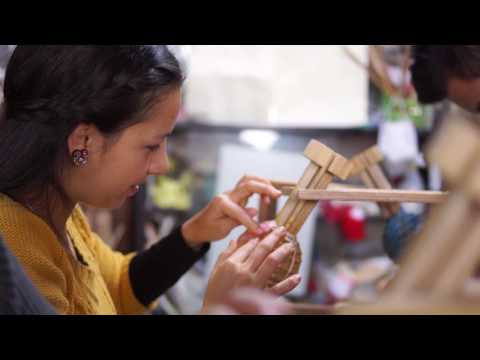
The essence of a workshop visit is not touring an attraction — it is being allowed into an active production environment. A kobo (craft workshop) is a place where artisans and makers are actively at work: handling materials, navigating orders, meeting deadlines, running a craft practice. The baseline assumptions are entirely different from those of a museum, gallery, or visitor center set up for public access.
In ceramics, that means soil, glaze, kilns, and the management of firing. In lacquerware, it means tracking how the urushi lacquer dries, humidity levels, layering and polishing schedules. In woven textiles, it means yarn, dyes, looms, pattern design, and a division of labor across multiple people. Inside a workshop, the steps that are invisible in a finished piece accumulate into everything.
Japan’s Ministry of Economy, Trade and Industry (METI) defines nationally designated traditional crafts as objects primarily used in daily life, made substantially by hand, produced using traditional techniques and materials, and originating from a defined production region. As of October 27, 2025, 244 craft categories hold this national designation.
(Source: Traditional Crafts | Ministry of Economy, Trade and Industry)
Behind any single craft object, in other words, stands not just one maker but a network: the people supplying materials, maintaining tools, dividing up production steps, handling sales and repairs, and sustaining the regional cooperatives and businesses that hold the production ecosystem together. Visiting a workshop through craft tourism means being briefly admitted, from the outside, to observe how that system operates.
Something that becomes clear every time the Kogei Japonica team visits a production region is that a small but consistent gap in expectations tends to open up between visitors and the workshops receiving them. For visitors, the purpose of the trip tends to be experience and memory. For the workshop, the reality is that a portion of limited production time has been set aside to accommodate them. Holding that asymmetry in mind is, by itself, enough to change how you show up.
Glossary
Kobo: The working studio or workshop where artisans and makers actually produce their craft. To be understood separately from shops or galleries whose primary function is sales or display.
Sanchi: A craft production region — a geographic area where a particular craft tradition has historically concentrated, developing its own supply chains, techniques, division of labor, and distribution networks.
Certified traditional craft artisan (dento kogei-shi): A designation awarded to practitioners with at least 12 years of hands-on production experience in a traditional craft region, who have passed practical, written, and interview examinations. Holders are expected to contribute to training the next generation and supporting the vitality of their production region.
(Source: About Certified Traditional Craft Artisans | Japan Traditional Crafts Association)


Studio Tour, Workshop Experience, Direct Sales — What Are You Actually Looking For?
“Workshop tour,” “hands-on experience program,” and “direct sales from the studio” may look similar on the surface, but they carry different booking requirements and different behavioral expectations. Understanding the difference will help you choose the right kind of visit for what you want to get out of the trip.
Do you want to try something with your hands for a short time while traveling? Do you want to watch an actual production process? Do you want to purchase work? Are you visiting as part of a corporate or municipal study tour? Different purposes mean different contact points, different questions to ask, and different preparation needed.
| Type of Visit | Primary Purpose | Booking | Photography | Language Support | Key Points |
|---|---|---|---|---|---|
| Studio tour / production observation | Understanding how the craft is actually made | Advance booking usually required | Confirm for production processes, tools, and unfinished work | May be available through regional associations or municipal tourism offices | You are entering a working space, not a visitor attraction |
| Hands-on experience program | Participating in part of the production process | Advance booking required in most cases | Designated photography times or areas may be set | Multi-language support may be available depending on the provider | The quality standard for participant work differs from artisan work |
| Direct studio sales / shop visit | Purchasing work | May not require booking during opening hours | Confirm even for product photography | Varies considerably by shop and region | Photographing the production area and artisans directly requires separate confirmation |
| Museum, craft hall, craft center | Learning about techniques and history in a structured way | Check each facility’s opening hours | Follow facility rules | Exhibition materials and guidance may be available in multiple languages | Direct access to the maker is not guaranteed |
| B2B study visit | Exploring regional partnership, product development, spatial design, or international communications | Advance coordination required | Clarify commercial use and scope of photography in advance | Interpreters and specialist terminology preparation needed | Purpose, budget, deliverables, and any fees should be established before arriving |
Craft experience programs tend to be well organized for new visitors and serve as accessible first entries into craft. That said, if what you actually want is to observe a full production process, an experience program alone may not show you what you’re looking for. Clarifying in advance what you want to understand — not just what you want to do — also reduces the burden on the workshop side.
For those researching Japan’s crafts from overseas, JNTO’s “Local Crafts” resources provide an official entry point to regional craft traditions. Keep in mind that information about a craft region and information about what can actually be visited, booked, or experienced are not the same thing. Always verify accessibility, purchasing options, and experience availability through official sources — the workshop, the facility, the municipal tourism office, or the DMO.
(Source: Local Crafts | JNTO)
How to Book a Visit — and Who to Contact First

The right booking contact differs by production region. Regional craft cooperatives, municipal tourism associations, destination management organizations (DMOs), craft centers, or the workshop’s own official channels may each be the appropriate starting point. None of these is automatically the “correct” answer — what matters is verifying through official channels rather than relying on informal word of mouth.
In many production regions, a regional cooperative or local tourism association or DMO plays the role of first point of contact for external inquiries — partly because individual workshops often do not have the capacity to manage all incoming requests on their own. For smaller studios and independent makers, direct contact with the maker may be the only channel that exists.
When making a booking inquiry, giving the workshop enough information to make a decision helps: the dates and times you have in mind, group size, purpose of the visit, language needs, whether you plan to photograph anything, whether you intend to purchase, and whether the visit involves any press, commercial, or media use. For visitors coming from overseas or traveling in groups, confirming interpretation, safety briefings, payment methods, and transportation logistics in advance will make the process smoother for everyone.
Editor’s Note
Every time we visit a production region for editorial work, we’re reminded that stories of “we just showed up and they were happy to see us” do not necessarily generalize to the next visitor. Whether a workshop can receive a visit depends on whether the artisan’s hands are free at that moment, what they’re working on that day, where they are in a production cycle, and what condition their materials are in.
What we keep coming back to is the importance of not assuming things will work out on arrival. Sending a brief message in advance is a small effort — and for the workshop, it makes a real difference.
Inside the Workshop: What Is Appropriate and What to Avoid

Inside a workshop, there are unwritten rules around photography, purchasing, conversation, and touching tools and materials. The most reliable way to know what those rules are is to ask — once before you arrive, and once when you get there.
Photography policies vary considerably between workshops and production regions. Even finished work may not be allowed to be photographed in some cases. Production processes in progress, artisans, tools, stencils and patterns, client commissions, and unreleased work all require more careful confirmation. The reasons are not only about protecting proprietary techniques — they also include the basic consideration of not disrupting someone in the middle of concentrated work.
The same principle applies to purchasing. Work displayed and sold in a workshop shop is generally available for purchase, but work in progress, display pieces, client orders, and reference works are typically not. If you want to commission a custom piece or place a special order, confirm pricing, lead time, payment method, international shipping options, and what happens in the event of damage.
Inside the workshop, the basic rule is not to touch tools or materials without being invited to. Something that appears simply placed to one side may be in the middle of drying, curing, adjustment, or pre-inspection. What feels like a small gesture to a visitor can have real consequences on the production side.
Pre-Visit Checklist: Seven Things to Confirm
- Is a booking required? If so, confirm which channel to use — regional cooperative, the workshop directly, a tourism office, or a DMO.
- Is language support available? Check for interpretation, multilingual materials, or English-language assistance.
- What are the photography rules? Confirm separately for production processes, artisans, finished work, and the shop floor.
- Can you purchase on the day? Confirm direct purchase, custom orders, international shipping, and accepted payment methods.
- How long should you expect to stay? Confirm available time slots, the expected duration, and how late arrivals are handled.
- Are there any dress code or equipment requirements? Check whether work clothes are needed, whether there are any safety guidelines, and what to do with shoes or bags.
- What is the cancellation and change policy? Confirm cancellation fees, the notice period required, and emergency contact details.
This checklist is a practical working tool — go through it once you have a specific destination in mind. You don’t need to have every answer before you reach out. The act of trying to confirm these things is itself enough to shift how the workshop receives you.
What Does Your Visit Actually Give Back to the Region and the Makers?

Depending on how you approach it, a workshop visit can contribute meaningfully to a regional economy and to the continuity of craft skills. But more visitors does not automatically mean more benefit to the production region. What matters is thinking about both the burden placed on the workshop and the value that remains in the community after you leave.
Japan’s Ministry of Land, Infrastructure, Transport and Tourism (MLIT) has published an Industrial Tourism Guideline addressing how factories and production sites can be positioned as tourism assets. While it does not reflect current policy in detail, the framework it sets out — that multiple stakeholders carry distinct roles, including the production site, tourism operators, and the local community — applies directly to craft workshop visits.
(Source: Industrial Tourism Guideline | Ministry of Land, Infrastructure, Transport and Tourism)
Japan Tourism Agency has also stated that sustainable tourism requires a positive cycle in which both local communities and travelers benefit from the use and conservation of regional assets — including nature, culture, and livelihoods. A craft production region falls squarely within that last category.
(Source: Promoting Sustainable Tourism | Japan Tourism Agency)
Japan Tourism Agency has also developed a Japan Sustainable Tourism Standard for Destinations (JSTS-D), aligned with international standards, as a framework for regions and DMOs to self-assess their sustainable tourism practices, identify strengths and gaps, and establish priorities. For municipalities and DMOs designing craft tourism programs, this means focusing not only on visitor numbers but on how regional culture and livelihoods are protected and how tourism activity is integrated into them over time.
(Source: Japan Sustainable Tourism Standard for Destinations (JSTS-D) | Japan Tourism Agency)
Glossary
Industrial tourism (sangyo kanko): An approach to tourism that positions factories, workshops, and other production environments as resources for public learning and engagement, with observation and direct exchange as the primary activities.
Sustainable tourism (jizoku kano na kanko): An approach to tourism that aims for a state in which both local residents and travelers benefit from tourism activity, while the natural, cultural, and livelihood resources of the region are conserved rather than depleted.
For municipalities, DMOs, accommodation providers, galleries, and brands planning workshop-based programs, the work does not stop at generating visitors. It also means thinking through how to reduce the burden on the workshop, how to structure appropriate compensation, and how the visit connects to purchasing, ongoing communication, and the broader sustainability of the production community.
| Planning Item | What to Establish |
|---|---|
| Purpose | Whether this is a tourism experience, education, a study visit, product development, PR, or sales promotion. |
| Target audience | General travelers, international VIP guests, architecture or design professionals, media, buyers, or others. |
| Group size and frequency | Maximum group size per visit, number of sessions per year, and capacity for group accommodation. |
| Language support | Interpretation, English-language materials, specialist terminology, and cultural context explanations. |
| Photography and usage rights | Documentation, social media, advertising, media publication, and commercial use parameters. |
| Compensation and fees | Fees for workshop explanations, hands-on instruction, consultation, photography cooperation, and work loans. |
| Sales pathway | On-site sales, commissions, e-commerce, gallery connections, and international shipping. |
| Continuity | Whether this is a one-time program or part of a sustained regional initiative. |
Using craft tourism as part of regional promotion requires more than treating the workshop as a venue to be shown. What can the workshop share publicly, and what cannot be shared? What does the visitor learn, and how can that be returned to the community? Only when a program is designed around these questions can craft tourism become connection rather than consumption.



Frequently Asked Questions
- Q. Can I visit a workshop without a reservation?
- A. This varies considerably between production regions and individual workshops. Advance booking is a common requirement, so we recommend verifying through official sources — the regional cooperative, the workshop itself, a municipal office, or a tourism association — before visiting.
- Q. Is photography permitted inside a workshop?
- A. Only where permission has been given. Even finished work may not be allowed to be photographed in some cases. Production processes, artisans, tools, unfinished pieces, and client commissions all require explicit confirmation.
- Q. Can I buy directly from the artisan at their workshop?
- A. In some cases, yes — but it depends on the workshop. Conditions differ for shop sales, displayed pieces, custom commissions, and international shipping. Confirm pricing, lead times, payment methods, and any applicable terms individually.
- Q. Can I visit if I don’t speak Japanese?
- A. Where a regional craft cooperative, municipal tourism association, or craft center is acting as the contact point, interpretation or multilingual materials may be available. For independent workshops, it is worth checking language support in advance.
- Q. What is the difference between a “workshop tour” and a tourist “craft experience”?
- A. A workshop tour centers on observing an actual production process. A craft experience program is structured for participants to try part of the process themselves. The purpose of your visit should guide which you book.
- Q. Can children participate in craft experiences?
- A. Some programs accommodate children, but age restrictions and safety requirements need to be confirmed. Programs involving fire, sharp tools, chemicals, urushi lacquer, dust, or heated kilns may limit or restrict children’s participation.
- Q. I’m not sure whether my visit is actually doing anything useful for the region.
- A. The visit itself matters less than the accumulated consideration you bring to booking, photography, purchasing, and how you share what you’ve found afterward. Buying work, sharing official information accurately, returning for a second visit, and spending time in nearby museums and shops are all forms of contribution to the region.
- Q. We’re a municipality, DMO, or accommodation provider thinking about setting up a workshop visit program. Where do we start?
- A. Begin by establishing your purpose, target audience, group size, language support requirements, photography parameters, compensation structure, sales pathway, and whether this is a one-time program or a long-term regional initiative. The starting assumption should not be that workshops are free venues available for observation — the program needs to be designed around fair compensation for the workshop’s expertise and an honest accounting of the burden it creates.
Going Further
Preparation for a workshop visit begins the moment you decide where you’re going. Every production region and every workshop brings its own set of things to confirm. Use the checklist in this article once you have a specific destination in mind and work through it point by point.
If you are a municipality, DMO, or accommodation provider working on craft-based communication or visitor programming; a company or international design professional considering collaboration with a maker or workshop; or an organization looking to develop a partnership with a production region — the Kogei Japonica editorial team is available for consultation. Our aim is not to publish information that treats craft as a tourism resource to be consumed, but to maintain the appropriate distance and respect between production regions and the people who visit them.
Kogei Japonica is a collaborative platform connecting traditional craft practitioners, companies, galleries, public institutions, researchers, collectors, and audiences. We welcome inquiries about listing or registration for craft makers, workshops, and traditional craft businesses; corporate collaboration; international communications; and editorial or PR coverage.


Visiting a workshop is not a special event requiring exceptional permission to access something off-limits. It is an extension of ordinary courtesy — the kind you would extend when briefly stepping into anyone’s workplace. With a small amount of preparation and a modest degree of care, that visit can be something more than consumption for the production region and something more than sightseeing for you. Our aim, as a platform, is to keep creating the conditions for that kind of connection.


