




From June through autumn 2026, a wide range of craft exhibitions will open across Japan — regional juried shows, textile exhibitions, ceramics retrospectives, contemporary handicraft, and a touring exhibition that brings craft techniques into contact with one of the world’s most recognized character IPs. This guide covers what is coming and organizes it so you can find what fits your interests and schedule.
We have selected nine exhibitions and events opening from June 2026 onward, covering dates, venues, genre, admission, and what to look for. This is not a simple listings page — we have included editorial notes on technique, material context, and how different reader types might approach each show.
What this guide covers
- Japanese craft exhibitions and events scheduled from June 2026 onward
- What to look for in ceramics, textiles, regional craft, contemporary handicraft, and craft-meets-IP exhibitions
- Recommendations by reader type: first-timers, craft enthusiasts, collectors, corporate researchers, and international visitors
- What to confirm before you go: dates, admission, reservations, sales, and photography policies
Table of Contents
What Japanese Craft Exhibitions Are Opening from June 2026?
From June 2026 onward, the exhibition calendar covers a wide range: regional juried shows, textile exhibitions, ceramics shows, contemporary handicraft, craft-meets-IP touring exhibitions, and university-based educational displays. Starting with the nearest openings and working forward makes it easier to plan — several of the later exhibitions are worth adding to your schedule early.
Focus on Exhibitions You Can Still Visit
This guide is structured around upcoming exhibitions — shows that have not yet opened, or touring exhibitions whose next venue has not yet begun.
For regional craft, the 60th Seibu Traditional Crafts Exhibition touring stops in Kyushu and Okinawa are worth noting. For textiles, the 60th Japan Traditional Crafts Dyeing and Weaving Exhibition at its Fukuoka venue. For ceramics and vessels, the Lucie Rie exhibition in Tokyo. For families, younger visitors, and international readers looking for a clear entry point, the Pokémon × Craft Exhibition’s Hiroshima venue rounds out the touring run.
Juried Shows, Museum Exhibitions, and Touring Exhibitions — How They Differ
Craft exhibitions come in several forms: juried public competitions, museum retrospectives, touring shows, university educational displays, and events that may include sales. Juried shows give you a picture of active artists and where a region or discipline currently stands. Museum exhibitions offer organized historical and material context. Touring shows reveal how a body of work reads in different regional settings.
The same label — “craft exhibition” — covers very different experiences depending on the venue and format. If you are considering purchasing work, always confirm sales conditions, ordering arrangements, shipping, and payment methods with the venue or official sources before visiting.
Exhibition and Event Listings: June 2026 Onward
The following table covers upcoming craft exhibitions and events, organized by dates, venue, genre, admission, purchase availability, and recommended reader type. It includes domestic juried shows, museum exhibitions, university displays, and a touring exhibition connecting craft with a global character IP.
Exhibition Comparison Table
| Exhibition / Event | Dates | Venue | Genre | Admission | Sales / Purchase | Best suited for |
|---|---|---|---|---|---|---|
| 60th Seibu Traditional Crafts Exhibition | Kumamoto: Thu 4 Jun – Tue 9 Jun 2026 / Okinawa: Tue 30 Jun – Sun 5 Jul 2026 | Touring venues in Kumamoto and Okinawa | Regional craft, ceramics, dyeing and weaving, urushi lacquer, metalwork, woodwork and bamboo, dolls, miscellaneous craft | Free | Confirm at venue | Those interested in craft from Kyushu, Yamaguchi, and Okinawa |
| 35th Anniversary Exhibition — Nikkokai Association of Craft Arts | Tue 16 Jun – Sun 21 Jun 2026 | Tokyo Metropolitan Art Museum, Lobby Floor, Gallery 4 | Ceramics, dyeing and weaving, urushi lacquer, cloisonné, metalwork, glass, dolls, leather, embroidery, and more | Confirm on official website | Viewing focused | Those wanting a broad view of contemporary craft arts |
| Lucie Rie: Vessels of Elegance — Bridging East and West | Sat 4 Jul – Sun 13 Sep 2026 | Tokyo Metropolitan Teien Art Museum (Main Building + Annex) | Ceramics, vessels, contemporary craft | General ¥1,400 / University students ¥1,120 / High school students and over-65s ¥700 / Junior high school and under free | Viewing focused | Those interested in ceramics, vessels, and design |
| Pokémon × Craft Exhibition: Discovering Beauty and Technique — Hiroshima | Fri 10 Jul – Wed 23 Sep 2026 (Public Holiday) | Hiroshima Prefectural Art Museum | Craft, ceramics, metalwork, urushi lacquer, woodwork, dyeing and weaving, IP expression | Confirm on official website | Merchandise and lottery sales: confirm on official website | Craft first-timers, families, younger visitors, international readers |
| 60th Japan Traditional Crafts Dyeing and Weaving Exhibition — Fukuoka | Wed 15 Jul – Mon 20 Jul 2026 | Fukuoka Mitsukoshi, 9th Floor, Mitsukoshi Gallery | Dyeing and weaving, textiles | Confirm on official website | Viewing focused | Textile, kimono, and fabric enthusiasts |
| Craft Comprehensive Studio 2026: “Craft Deepened” | Fri 17 Jul – Tue 21 Jul 2026 | Tokyo University of the Arts Museum, Chinretsucan Galleries 1 and 2 | Craft, educational display, contemporary craft | Free | Viewing focused | Those interested in craft education, emerging expression, and material research |
| 73rd Japan Traditional Crafts Exhibition | Tokyo: Wed 2 Sep – Tue 15 Sep 2026 | Nihonbashi Mitsukoshi Main Store, 7th Floor, Event Space | Ceramics, dyeing and weaving, urushi lacquer, metalwork, woodwork and bamboo, dolls, miscellaneous craft | Tokyo venue: free | Viewing focused | Those wanting to see the Japan Crafts Association’s flagship juried exhibition |
| Ezaki Kazuo, Kamoda Shoji, and Mori Togaku 1969–71: Intersections of Changing Ceramics | Sun 6 Sep – Sun 29 Nov 2026 | Mashiko Museum of Ceramic Art | Ceramics, contemporary ceramics, artist research | Confirm on official website | Viewing focused | Those interested in ceramic history, contemporary ceramics, and artist research |
| Open Call — 5th Contemporary Handicraft Exhibition | Wed 7 Oct – Wed 14 Oct 2026 | Tokyo Metropolitan Art Museum, 2nd Floor, Gallery 4 | Contemporary handicraft, open-call exhibition | Confirm on official website | Viewing focused | Those interested in handicraft, contemporary craft, and juried open-call shows |
A Note on Using This Table
This table is based on official information available at the time of editing. Dates, admission, closed days, and sales conditions are subject to change at the organizer’s or venue’s discretion. Always check the latest information on each official website before visiting.
Purchase availability and conditions — ordering, shipping, payment methods — vary by exhibition and by individual work. Even at events where sales may occur, not all works are necessarily available for purchase. If you are considering buying, confirm with the official website or venue staff.
For Regional Craft — Which Exhibitions Should You Prioritize?
Regional juried shows and touring exhibitions are one of the most direct ways to understand Japanese craft outside the Tokyo-centered mainstream — you can see who is working in a given area, what materials and techniques are in use, and how local production cultures shape what gets made.
60th Seibu Traditional Crafts Exhibition
Dates: Kumamoto venue: Thu 4 Jun – Tue 9 Jun 2026 / Okinawa venue: Tue 30 Jun – Sun 5 Jul 2026
Genre: Ceramics, dyeing and weaving, urushi lacquer, metalwork, woodwork and bamboo, dolls, miscellaneous craft
Admission: Free
The 60th Seibu Traditional Crafts Exhibition presents work carrying forward the traditional craft techniques of Kyushu, Yamaguchi, and Okinawa, placed in the context of contemporary life. For anyone wanting to understand regional craft outside the Tokyo circuit, this is a chance to encounter artists and techniques that do not always surface in centralized coverage.
When looking at the work, paying attention not only to the distinctions between ceramics, textiles, urushi, and metalwork sections but also to the relationship between local materials and the living cultures of each region will deepen your understanding.
(Source: 60th Seibu Traditional Crafts Exhibition | Japan Crafts Association)
73rd Japan Traditional Crafts Exhibition
Tokyo venue: Wed 2 Sep – Tue 15 Sep 2026
Venue: Nihonbashi Mitsukoshi Main Store, 7th Floor, Event Space
Admission: Free at the Tokyo venue
The Japan Traditional Crafts Exhibition is the Japan Crafts Association’s flagship annual juried show. It brings together work across ceramics, dyeing and weaving, urushi lacquer, metalwork, woodwork and bamboo, dolls, and miscellaneous craft — multiple disciplines in a single venue.
For readers who want to develop a picture of where Japanese craft currently stands before going deeper into individual genres, this is a practical starting point. As a juried exhibition, it shows not only technical continuity but also how expression in each field is developing in the present.
(Source: 73rd Japan Traditional Crafts Exhibition | Japan Crafts Association)
For Materials and Technique in Depth — Which Exhibitions Are Worth Your Time?
Approaching a craft exhibition with materials and technique in mind changes what you take away from it. Ceramics, dyeing and weaving, metalwork, urushi lacquer, glass, leather, and embroidery each have distinct processes and visual logic.
35th Anniversary Exhibition — Nikkokai Association of Craft Arts

Dates: Tue 16 Jun – Sun 21 Jun 2026
Venue: Tokyo Metropolitan Art Museum, Lobby Floor, Gallery 4
Content: Ceramics, dyeing and weaving, urushi lacquer, cloisonné, metalwork, glass, dolls, leather, embroidery, and more
The Nikkokai exhibition offers a broad cross-section of craft arts in a single show. With ceramics, dyeing and weaving, urushi lacquer, cloisonné, metalwork, glass, dolls, leather, and embroidery all represented, it is particularly suited to readers who want to move across genres rather than focus on a single discipline.
When looking at the work, it is worth paying attention to how the material itself shapes the direction of expression in each section. When the material changes, so do the weight, the surface quality, the reflective properties, and the time involved in making.
(Source: 35th Anniversary Exhibition — Nikkokai Association of Craft Arts | Nikkokai)
60th Japan Traditional Crafts Dyeing and Weaving Exhibition — Fukuoka
Term: Dyeing and weaving (sensoku)
Dyeing and weaving (sensoku) is the collective term for a craft field that encompasses both the techniques of dyeing yarn and fabric and the techniques of weaving yarn into cloth. It includes diverse approaches such as yuzen resist dyeing, stencil dyeing, pongee silk, kasuri (ikat), and tapestry weaving — each with its own material, structural, and process-based expression, distinct from color and pattern alone.
Dates: Wed 15 Jul – Mon 20 Jul 2026
Venue: Fukuoka Mitsukoshi, 9th Floor, Mitsukoshi Gallery
The 60th Japan Traditional Crafts Dyeing and Weaving Exhibition is the Japan Crafts Association’s textile section show. For readers wanting to engage with textiles in depth, it offers the chance to see yarn, cloth, dyes, pattern, and weave structure together in a single setting.
When looking at textile work, attending to the structure of dyeing and weaving processes, the quality of the yarn, and the way cloth holds and moves — not simply as beautiful fabric — deepens what you take away. The work is worth approaching as an accumulation of material and technique, not only as visually appealing cloth.
(Source: 60th Japan Traditional Crafts Dyeing and Weaving Exhibition | Japan Crafts Association)
For Ceramics and Vessels — Which Exhibitions Stand Out?
Ceramics is a field where clay as material, forming, glazing, firing, functional use, and sculptural possibility all intersect. Looking at color, thickness, weight distribution, and surface quality — beyond the vessel’s utility — opens up what the work is doing.
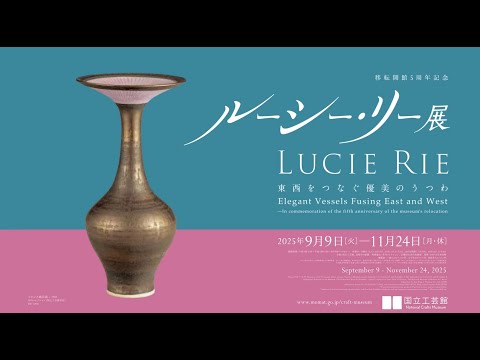
Lucie Rie: Vessels of Elegance — Bridging East and West
Term: Ceramics (togei)
Ceramics is a craft field in which clay is formed, dried, glazed, and fired to produce vessels or sculptural work. Alongside a vessel’s function, form, glaze, firing, tactile surface, and relationship to the surrounding space are all important things to look at.
Dates: Sat 4 Jul – Sun 13 Sep 2026
Venue: Tokyo Metropolitan Teien Art Museum (Main Building + Annex)
Closed: Every Monday. Open 20 July; closed 21 July
Opening hours: 10:00–18:00 (last entry 30 minutes before closing)
Admission: General ¥1,400 / University students ¥1,120 / High school students and over-65s ¥700 / Junior high school and under free
Note: Timed-entry reservations are required for this exhibition. Purchase tickets before visiting.
Lucie Rie is one of the defining ceramicists of the twentieth century. According to the Tokyo Metropolitan Teien Art Museum’s official information, the exhibition presents Rie’s work alongside related artists, tracing the people and contexts she encountered and introducing the sources of her formal approach and the convictions expressed in the work.
Readers interested in ceramics and vessels will find it useful to pay attention to the tension of the forms, the behavior of the glaze, color, the thinness of the rims, and the relationship between function and sculptural possibility. This is not a Japanese traditional craft exhibition, but it is an important show for anyone thinking across craft, ceramics, and design.
(Source: Lucie Rie: Vessels of Elegance — Bridging East and West | Tokyo Metropolitan Teien Art Museum)
Ezaki Kazuo, Kamoda Shoji, and Mori Togaku 1969–71: Intersections of Changing Ceramics
Dates: Sun 6 Sep – Sun 29 Nov 2026
Venue: Mashiko Museum of Ceramic Art
The Mashiko Museum of Ceramic Art’s annual schedule lists this exhibition revisiting a three-person show that took place between 1969 and 1971, reconsidering how these three artists intersected and what the ceramics expression of that moment looked like.
This is an exhibition for readers who want to understand ceramics through the cross-influences between artists, the historical context, and shifts in form — rather than through production region or vessel type alone. Anyone with an interest in contemporary ceramics history or artist research will want to check the dates early.
(Source: Annual Schedule | Mashiko Museum of Ceramic Art)
For Craft and IP, Education, and Contemporary Handicraft
Craft connects not only with traditional technique but with character IPs, educational research, and contemporary handicraft. These are important entry points for reaching younger audiences and international readers.
Pokémon × Craft Exhibition: Discovering Beauty and Technique — Hiroshima
![[Official] Pokémon × Craft Exhibition: Discovering Beauty and Technique | 2026 Final Domestic Tour](https://i.ytimg.com/vi/r8v6Kh-u5Mc/hqdefault.jpg)
Dates: Fri 10 Jul – Wed 23 Sep 2026 (Public Holiday)
Venue: Hiroshima Prefectural Art Museum
Overview: Leading Japanese craft artists present Pokémon characters and their world through diverse techniques and materials.
The Pokémon × Craft Exhibition uses a familiar character as an entry point while giving visitors direct contact with craft techniques in ceramics, metalwork, urushi lacquer, woodwork, and dyeing and weaving. According to the Hiroshima Prefectural Art Museum’s official information, this is the first time the exhibition has come to the Chugoku and Shikoku regions, with approximately 100 works on display.
What makes this exhibition worth attending is not simply that Pokémon appear — it is the chance to see how each craft technique transforms a character into a specific material and form. For first-timers, families, younger visitors, and international readers, it is an effective entry point into craft.
(Source: Pokémon × Craft Exhibition: Discovering Beauty and Technique | Hiroshima Prefectural Art Museum)
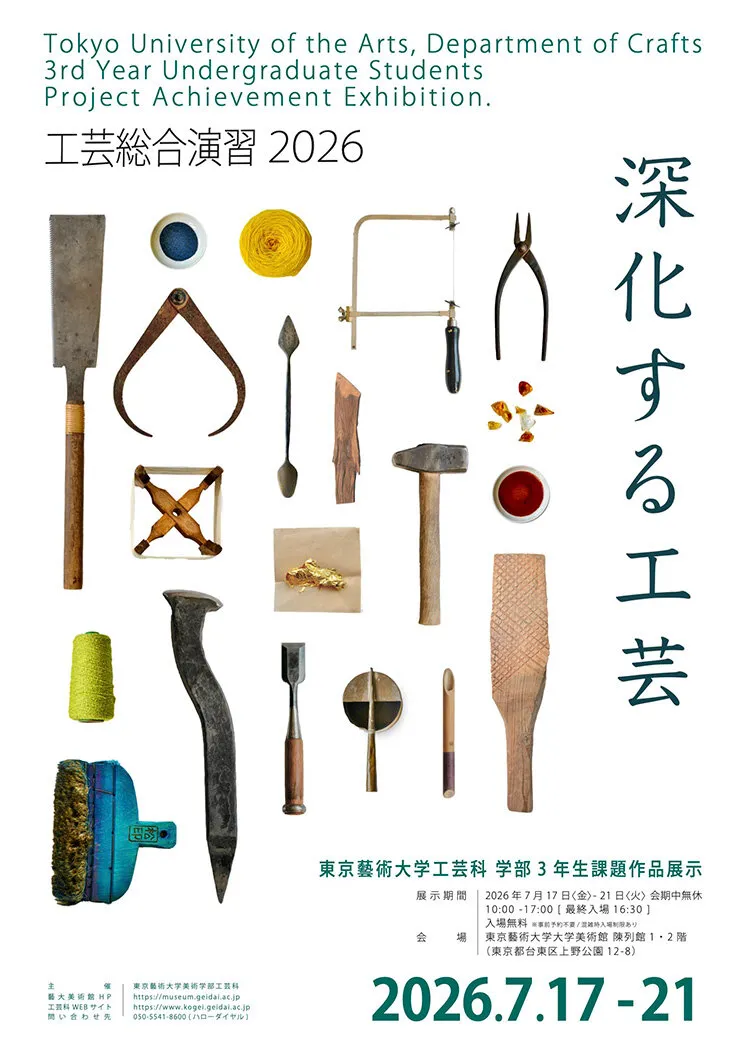
Craft Comprehensive Studio 2026: “Craft Deepened”

Dates: Fri 17 Jul – Tue 21 Jul 2026
Venue: Tokyo University of the Arts Museum, Chinretsucan Galleries 1 and 2
Admission: Free
“Craft Deepened,” the 2026 edition of the Craft Comprehensive Studio at the Tokyo University of the Arts Museum, is a display for anyone interested in craft education and where emerging expression currently stands. According to official information, the exhibition runs without a closed day and admission is free throughout.
It is suited to readers who want to see craft not only as the transmission of skill and tradition but as a site of education, research, experiment, and expression. It gives a picture of how younger makers are engaging with materials and where contemporary craft expression is being explored.
(Source: Craft Comprehensive Studio 2026: “Craft Deepened” | Tokyo University of the Arts Museum)
Open Call — 5th Contemporary Handicraft Exhibition

Dates: Wed 7 Oct – Wed 14 Oct 2026
Venue: Tokyo Metropolitan Art Museum, 2nd Floor, Gallery 4
Organizer: Contemporary Handicraft Artists Association
The 5th Contemporary Handicraft Exhibition is an open-call juried show organized by the Contemporary Handicraft Artists Association. Official information confirms the Tokyo Metropolitan Art Museum as the venue.
Contemporary handicraft occupies its own territory — distinct from traditional craft and fine art craft — while raising important questions about handwork and materials, decorative possibility, and the relationship with everyday life. It is suited to readers interested in where craft, handmade work, and the wider possibilities of contemporary making intersect.
(Source: Open Call — 5th Contemporary Handicraft Exhibition | Contemporary Handicraft Artists Association)
Choosing by Genre — A Quick Reference
Organizing the exhibitions by genre makes it easier to decide which ones belong on your schedule. Textiles, ceramics, regional craft, contemporary handicraft, craft and character IP, and craft education each have different things to offer.
| Genre | Recommended exhibitions | What to look for |
|---|---|---|
| Regional craft | Seibu Traditional Crafts Exhibition, Japan Traditional Crafts Exhibition | Regional artists, juried show structure, the spread of production areas |
| Dyeing and weaving | Japan Traditional Crafts Dyeing and Weaving Exhibition — Fukuoka | Yarn, dyes, pattern, and weave structure |
| Ceramics | Lucie Rie Exhibition, Mashiko Museum of Ceramic Art exhibition | Form, glaze, color, the relationship between function and sculptural possibility |
| Craft arts | Nikkokai Exhibition | Differences in material across ceramics, textiles, urushi, metalwork, and glass |
| Craft and character IP | Pokémon × Craft Exhibition | How each craft technique transforms a character into material and form |
| Craft education | Craft Comprehensive Studio 2026: “Craft Deepened” | Younger makers’ material research, experimentation, and direction of expression |
| Contemporary handicraft | 5th Contemporary Handicraft Exhibition | Handwork, materials, and the range of contemporary craft expression |
Choosing by Reader Type
What to prioritize depends on where you are coming from — a first visit to a craft exhibition, deep specialist interest, or professional research. The following is a guide to help you match the show to your situation.
| Reader type | Recommended exhibitions | What to focus on |
|---|---|---|
| First-timers | Pokémon × Craft Exhibition, Lucie Rie Exhibition, Japan Traditional Crafts Exhibition | Shows with a clear entry point or multiple genres visible in a single visit make it easier to build understanding |
| Craft enthusiasts / technique-focused visitors | Nikkokai Exhibition, Japan Traditional Crafts Dyeing and Weaving Exhibition, Seibu Traditional Crafts Exhibition | Focus on materials, technique, and process — look at structure, not just surface |
| Ceramics and vessel enthusiasts | Lucie Rie Exhibition, Mashiko Museum of Ceramic Art exhibition | Form, glaze, color, the tension and presence of the vessel |
| Families and younger visitors | Pokémon × Craft Exhibition | A familiar theme as a way into craft technique |
| Corporate and B2B researchers | Japan Traditional Crafts Exhibition, Nikkokai Exhibition, Pokémon × Craft Exhibition, Lucie Rie Exhibition | Useful for research into corporate gifts, hospitality spatial design, regional culture promotion, and IP collaboration |
| International visitors and overseas craft followers | Pokémon × Craft Exhibition, Lucie Rie Exhibition, Japan Traditional Crafts Exhibition | Look for shows with internationally legible entry points, artist contexts, and material and cultural context |
What to Check Before You Go
Dates, closed days, admission, reservation requirements, and sales conditions vary considerably between exhibitions. Confirming the official information before visiting is the first step toward a productive visit.
Pre-Visit Checklist
- Have you confirmed the dates, final day, and any closed days on the official website?
- Have you checked the last entry time?
- Have you confirmed whether advance reservations or timed-entry tickets are required?
- Have you checked the photography policy?
- Have you checked whether works are available for purchase, on order, or through lottery?
- If you are considering a purchase, have you confirmed payment methods and shipping arrangements?
- Have you checked for related talks, workshops, or scheduled appearances by artists?
- Have you confirmed whether exhibition catalogues are available for sale?
Some events may involve sales, but purchase conditions, ordering, shipping, and payment vary by exhibition and by individual work. If you are considering a purchase, confirm with the official website or venue staff before visiting.
How to Read the Current Craft Scene
Looking across the exhibitions opening from June 2026 onward, craft is clearly not a field that can be described only through the preservation of tradition. Regional juried shows map the present state of artists and production areas. Ceramics exhibitions trace the deepening of material and form. Craft and IP exhibitions open new entry points for younger and international audiences.
An Exhibition as a Place Where Relationships Form
Craft exhibitions are not only occasions for viewing. They are also points of contact — where artists, workshops, galleries, collectors, corporate professionals, and regional cultural institutions meet through the shared language of craft.
A juried show gives you a picture of who is working in a region or discipline right now. A museum exhibition lets you organize historical, material, and formal context. A university show reveals how younger makers are thinking about materials and where expression is being tested. This relational dimension of a craft exhibition is something that does not translate easily to online experience.
On Not Consuming Craft Only as Aesthetic or Tourism
Editor’s note
When visiting a craft exhibition, we think it is worth not stopping at “beautiful” or “very Japanese” as a response to work. What sequence of steps and how much time did it take for clay, thread, urushi, metal, wood, glass, leather, or another material to become this form? In what context is the work being shown, and who is it being made for? Attending to those questions turns an exhibition visit from a leisure outing into a way of reading what craft is doing now.
Regional juried shows, university exhibitions, and open-call contemporary handicraft shows are also a reminder that craft does not only happen around a small group of recognized names or in major cities. The geographic spread of craft and the trial-and-error of younger makers are both worth paying attention to if you are thinking about where craft is going.
Frequently Asked Questions
Answers to common questions about the upcoming craft exhibitions — for those planning their first visit or wanting to confirm practical details.
- Which upcoming craft exhibitions are a good starting point for first-timers?
- The Pokémon × Craft Exhibition, the Japan Traditional Crafts Exhibition, and the Lucie Rie Exhibition are accessible entry points. Starting with a show whose framing — character, comprehensive juried show, or ceramics and vessels — matches an existing interest tends to make the experience easier to build on.
- Which exhibition is best for seeing textiles?
- The 60th Japan Traditional Crafts Dyeing and Weaving Exhibition at the Fukuoka venue. It allows for a focused look at dyeing, weaving, yarn, cloth, and pattern structure in a specialist context.
- Which exhibitions should I see if I am interested in ceramics and vessels?
- The Lucie Rie Exhibition and the Mashiko Museum of Ceramic Art exhibition are both worth considering. They offer vessel form, glaze, color, artist context, and contemporary ceramics history from different angles.
- Which exhibitions are best for understanding regional craft?
- The 60th Seibu Traditional Crafts Exhibition and the 73rd Japan Traditional Crafts Exhibition are the natural candidates. Both allow you to see the artists, materials, techniques, and tendencies of specific regions and disciplines.
- Are there exhibitions suitable for families and children?
- The Pokémon × Craft Exhibition uses familiar characters as a way into craft technique, making it accessible for families and younger visitors. Confirm ticketing conditions and likely crowd levels on the official website before visiting.
- Which exhibitions are useful for corporate gift or spatial design research?
- The Japan Traditional Crafts Exhibition, the Nikkokai Exhibition, the Lucie Rie Exhibition, and the Pokémon × Craft Exhibition can all be useful reference points. Seeing materials, finishes, display approaches, and visitor responses in person provides context that feeds into corporate gift development, hospitality spatial design, regional cultural promotion, and IP collaboration planning.
- Where should I check exhibition dates and admission fees?
- Always use the organizer’s, museum’s, department store’s, or craft association’s official website. Dates, closed days, last entry times, timed-entry reservation requirements, and sales conditions are all subject to change.
Exhibition and Event Coverage Inquiries
Kogei Japonica accepts inquiries about coverage, PR placement, and English-language communication for craft exhibitions, regional events, artist activities, and production area promotion.
Organizers, galleries, local governments, regional development offices, workshops, and artists who want to reach a wider audience are welcome to contact the Kogei Japonica editorial team. In addition to Japanese-language editorial coverage, we can discuss introductions to international audiences, corporate-focused proposals, and the development of context for craft work in spatial design and gift applications.


This article is based on official information confirmed at the time of publication. Dates, admission, closed days, sales conditions, and exhibition content are subject to change. Always check the latest information on each official website before visiting.


