




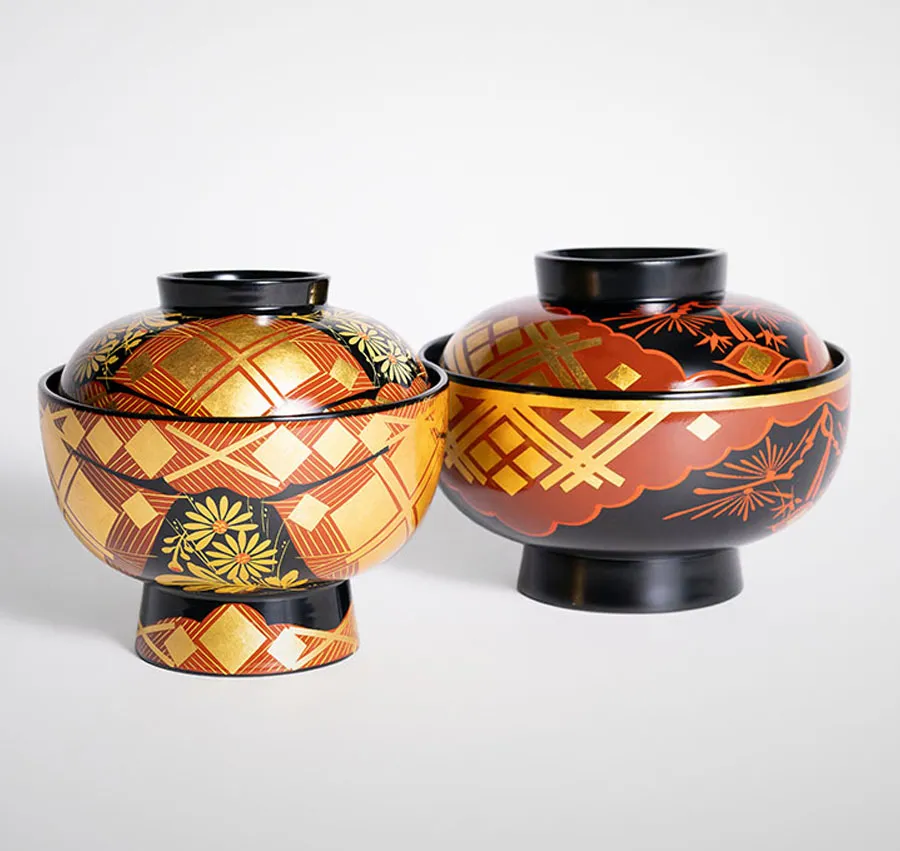
Traditional Japanese crafts are often perceived as delicate museum pieces, but true luxury lies in daily use. Originating from the historical “Golden Land” of Hiraizumi in Iwate Prefecture, Hidehira-nuri Japanese lacquerware represents the pinnacle of this functional art. Distinctive for its robust Urushi (lacquer) base, vivid red and black canvases, and opulent gold leaf diamond motifs (Yusoku Hishi-mon), this heritage craft was born from the wealth of the 12th-century Oshu Fujiwara clan. Today, Hidehira-nuri is stepping out of the traditional Japanese dining context and into modern, global tablescapes. By seamlessly mixing these durable, handcrafted masterpieces with contemporary glassware and western ceramics, you can elevate your home entertaining. Discover the history, meticulous craftsmanship, and practical styling tips to integrate this profound piece of Japanese heritage into your modern dining experience.
Japan’s finest traditional crafts are too often admired from a distance — preserved behind museum glass, untouched and underappreciated. Yet a vessel only reveals its true beauty and warmth when held in human hands, filled with nourishment, and placed at a living table. Hidehira-nuri lacquerware from Iwate Prefecture is exactly this kind of living art: magnificent enough for the most discerning VIP dinner, yet crafted with the durability to become an heirloom of daily use.
In this guide, we explore the deep roots of Hidehira-nuri in Hiraizumi’s UNESCO World Heritage gold culture, examine the meticulous craftsmanship behind every piece, and offer actionable modern table styling advice for integrating this luxury Urushi tableware into contemporary, globally-inspired dining settings.
- History & Character: Rooted in the golden court culture of the Oshu Fujiwara clan in Hiraizumi, Iwate Prefecture, Hidehira-nuri (Hidehira-nuri Japanese lacquerware) is defined by its bold red and black Urushi ground adorned with the aristocratic Yusoku Hishi-mon (court diamond motif) rendered in lavish gold leaf.
- Modern Table Styling: Far beyond traditional Japanese cuisine, these pieces create a striking luxury accent when mixed with matte western ceramics, crystal glassware, and polished silver cutlery — a sophisticated mixed materials tablescape for international entertaining.
- Care & Longevity: Hidehira-nuri is engineered for everyday use. Clean with a soft sponge, mild dish soap, and lukewarm water, then immediately dry with a soft cloth to preserve the lacquer’s deep lustre. Microwave and dishwasher use must be strictly avoided.
For the design-conscious professional and the culturally curious host alike, this guide demonstrates how the finest Iwate traditional crafts can enrich your living space — one extraordinary table setting at a time.
Table of Contents
What Is Hidehira-nuri? The Gold Leaf Legacy of Iwate’s Premier Japanese Lacquerware
The name Hidehira-nuri — literally “Hidehira lacquerware” — honors Fujiwara no Hidehira, the third and most powerful lord of the Oshu Fujiwara clan, who ruled northeastern Japan from his capital at Hiraizumi during the late Heian period (late 12th century). Hiraizumi at its zenith was described as a “land of gold,” a cultural and political rival to Kyoto itself, and the aesthetic ambitions of that era are embedded in every layer of these vessels.
The Origins of Hidehira-wan and the Aristocratic Yusoku Hishi-mon Motif

According to tradition, Hidehira summoned master lacquer craftsmen from Kyoto to Hiraizumi, instructing them to create vessels using the region’s abundant local lacquer and gold. The result was the Hidehira-wan (Hidehira bowl) — a form that has been refined but never fundamentally altered across nearly nine centuries. Its defining visual language consists of two interlocking elements: sweeping, cloud-like motifs known as Genji-gumo (Genji clouds), painted in translucent color lacquer, overlaid with large, bold diamond shapes — the Yusoku Hishi-mon — executed in gold leaf. This diamond pattern derives from the formal textile designs of the Heian imperial court (yusoku refers to traditional court customs and decorum), lending the pieces both an aristocratic pedigree and a graphic power that reads with remarkable clarity to modern eyes. The gold leaf blazing against lacquer black or cinnabar red simultaneously communicates the grandeur of a golden age and the austere resilience demanded by the harsh winters of Iwate.
The Foundation of Durability: Iwate Urushi and Master Woodworking
The visual splendour of Hidehira-nuri is inseparable from its structural integrity. Iwate Prefecture has long been one of Japan’s most important sources of premium-grade Urushi (lacquer), with the Joboji region producing some of the country’s finest raw lacquer sap — accounting for a significant share of Japan’s domestic Urushi harvest. This exceptional raw material, tapped from lacquer trees and carefully processed, forms the invisible backbone of every authentic piece. Craftsmen begin by turning forms from dense, resilient domestic hardwoods — typically zelkova (keyaki) or horse chestnut (tochi) — chosen for their stability and grain. Multiple ground layers of Urushi are then built up and meticulously sanded between each application, creating a foundation of remarkable toughness. This is why Hidehira-nuri can genuinely be described as both a ceremonial art object and a robust daily-use vessel — a duality that makes it uniquely suited to contemporary luxury interiors and serious home entertaining.
The Artisan’s Process: How Hidehira-nuri Achieves Its Extraordinary Presence

The commanding presence of Hidehira-nuri Japanese lacquerware is not the result of a single dramatic gesture but of dozens of patient, interconnected stages of handwork. Understanding the making process is essential to appreciating the object’s value — and to communicating that value to guests and collectors unfamiliar with the Iwate traditional crafts tradition.
Building an Invisible Foundation: Ground Preparation and Urushi Layering
The most labor-intensive phase of creating Hidehira-nuri is the one that ultimately disappears: the ground preparation. After the wooden form is turned on a lathe, craftsmen begin a lengthy cycle of applying raw Urushi lacquer, allowing it to cure in a carefully humidity-controlled environment, then hand-sanding with progressively finer abrasives. This process — repeated many times before any decorative layer is applied — is what gives luxury Urushi tableware its legendary durability and the smooth, almost liquid depth of its surface. Each subsequent layer of topcoat lacquer adds not only protection but optical complexity: the final surface achieves a richness that no synthetic coating can replicate, a depth that seems to contain light rather than merely reflect it.
Gold Leaf Application and the Art of Haku-e Decoration

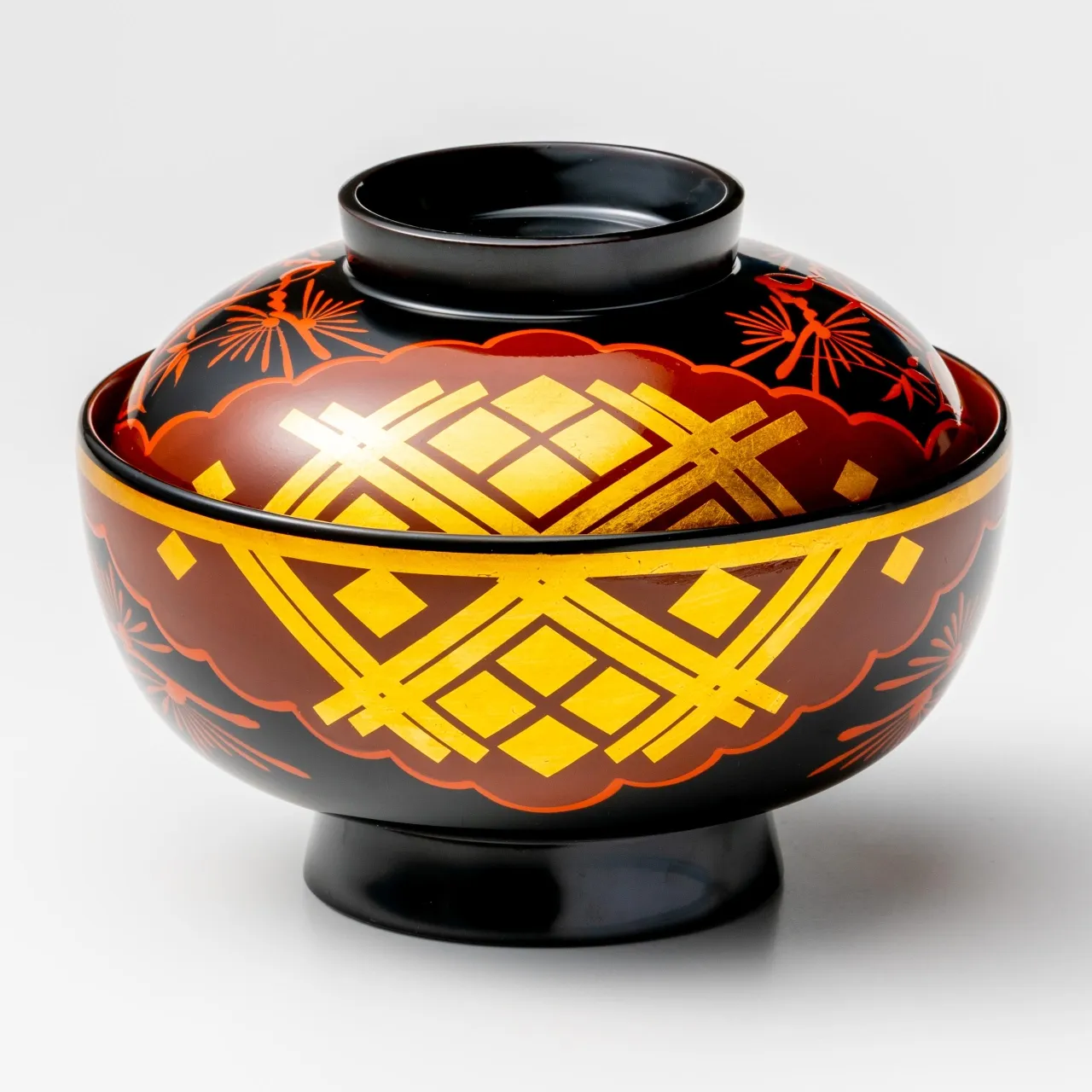
The decorative summit of the craft is the haku-e — literally “foil painting” — in which sheets of pure gold leaf are precisely cut and applied to form the Yusoku Hishi-mon diamond motifs, while translucent color lacquers are brushed over the ground to render the billowing Genji cloud shapes. The interplay between the liquid warmth of gold leaf and the restrained depth of Urushi color creates an effect that industrial reproduction simply cannot capture. Even two bowls produced by the same craftsman from the same batch of materials will differ in the exact quality of the foil’s surface and the character of the brushwork — this irreducible individuality is the signature of genuinely handmade luxury.
Modern Japanese Table Styling with Hidehira-nuri: A Practical Guide to Elevated Tablescapes
While Hidehira-nuri has historically been associated with formal Japanese meal settings — rice, miso soup, traditional multi-course kaiseki — its graphic boldness and jewel-like color palette translate with surprising ease into modern, internationally-inspired table design. The following styling strategies will help you build mixed materials tablescapes that feel genuinely luxurious without being culturally prescriptive.
Mixed Materials Tablescape: Pairing Hidehira-nuri with Glassware and Western Ceramics
The single most effective technique for modernizing Hidehira-nuri in a contemporary table setting is the deliberate use of mixed materials. Place a cinnabar red Hidehira bowl atop a large matte dark-toned western dinner plate — stoneware or matte porcelain work particularly well — and the lacquer’s deep gloss immediately activates against the surrounding flat texture, creating a compelling visual tension. Introduce cut crystal glassware or thin-walled wine glasses alongside sharp silver cutlery, and the black-and-gold geometry of the lacquerware snaps into focus, becoming the undisputed focal point of the composition.
A useful editorial principle for this type of modern Japanese table styling: restrict the palette to four material voices — matte black (ceramics), transparent (glass), gold (lacquer leaf), and cinnabar red (Urushi). This constraint prevents the table from reading as a themed costume and keeps it firmly within the language of contemporary luxury design — one that photographs beautifully and communicates clearly across cultural contexts.
Hosting International Guests: Hidehira-nuri as a Cultural Conversation Piece
For hosts welcoming international visitors with an interest in Japanese culture and design, Hidehira-nuri lacquerware offers something no amount of floristry or tableware sourced from luxury retailers can replicate: a genuine narrative. Briefly introducing the Hiraizumi gold leaf crafts tradition — the story of a 12th-century northern lord who built a golden civilization and chose to embed that ambition in everyday vessels — provides guests with an intellectual and emotional frame that transforms a dinner into a cultural experience.
Practically, consider filling the bowls with European-style amuse-bouches, seasonal petit fours, or a curated selection of artisanal condiments. Releasing the pieces from their conventional role as soup vessels and repositioning them as vehicles for any carefully considered food creates an accessible entry point for guests who may be encountering Japanese lacquer for the first time. The bowls’ message is universal: that beauty and daily life are not in opposition.
Integrating Hidehira-nuri into Your Home: Recommended Pieces and Styling Ideas
When beginning a Hidehira-nuri collection, establishing your intended use frequency and storage context before purchasing will anchor your selections and prevent costly mismatches between aspiration and reality. Below are the most versatile forms and how to deploy them within a modern lifestyle.
The Mitsu-wan Three-Bowl Set: A Versatile Centerpiece for Any Table

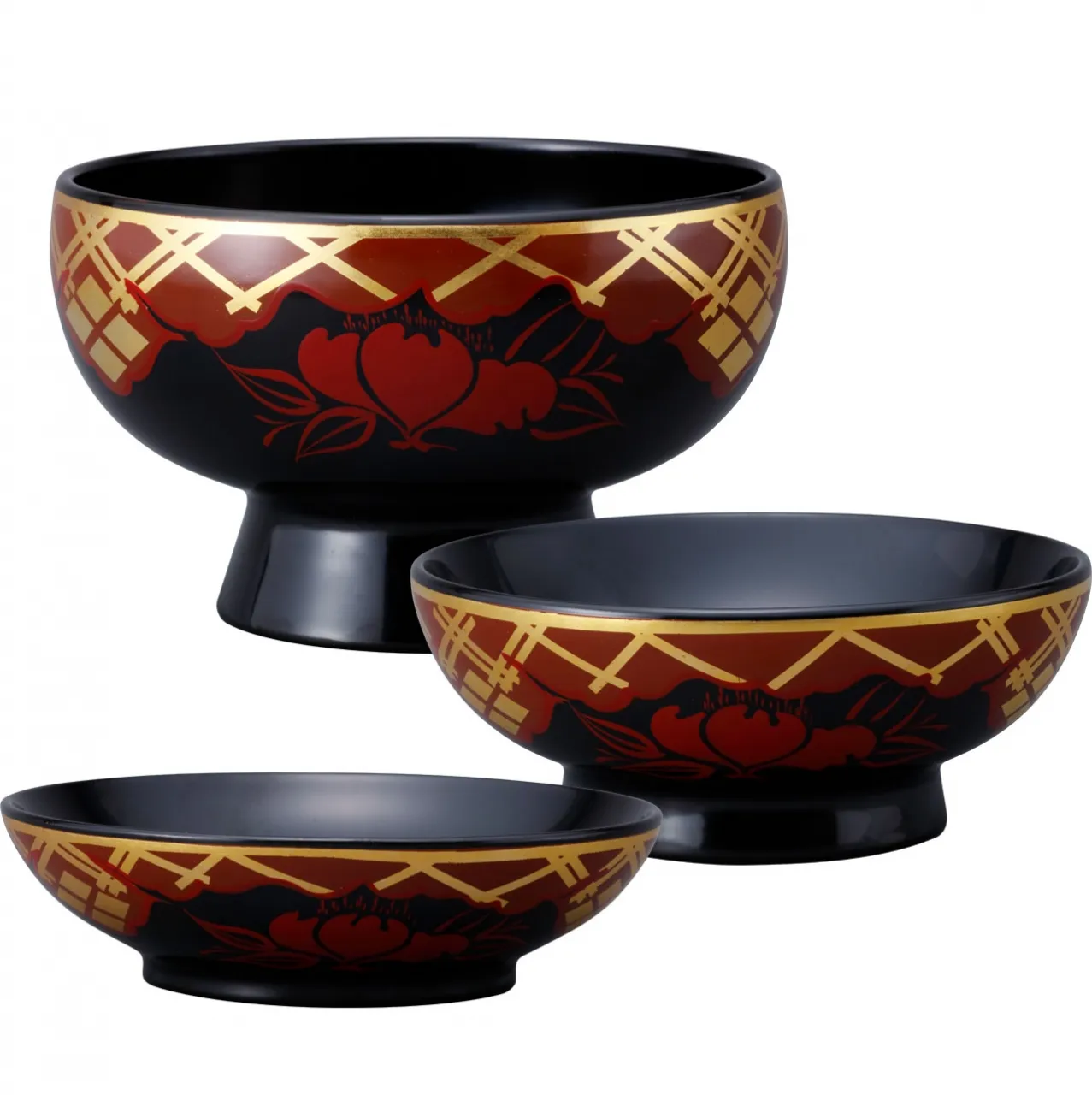
The Mitsu-wan — a nesting set of three graduated bowls (large, medium, small) — is the most representative and arguably the most practical entry point into Hidehira-nuri Japanese lacquerware. Originally designed to serve a complete traditional Japanese meal, the set’s three distinct scales lend themselves effortlessly to contemporary repurposing: the largest as a soup or salad bowl, the medium for dips and sauces, and the smallest for nuts, olives, or chocolates at a cocktail table. When not in use, all three nest compactly inside one another — a storage elegance that feels as modern as any Scandinavian design object, and far more singular.
Contemporary Forms: Wine Glasses, Show Plates, and Evolving Hidehira-nuri Design
Forward-thinking Hidehira-nuri workshops have begun extending the traditional decorative vocabulary onto forms that speak directly to global contemporary living. Wine glasses with lacquer and gold leaf applied to the stem and base bring the Hiraizumi gold leaf crafts aesthetic into the context of a Western table setting — and the interaction between the transparent bowl and the ornate base creates an effect that shifts dramatically with the angle and quality of light, making these pieces particularly compelling at candlelit or low-lit dinner tables. Flat show plates with Hidehira-nuri decoration applied to the rim are another evolution worth noting: they function as a framing device for any cuisine placed upon them, elevating the entire setting without demanding stylistic conformity from the food itself.

Japanese Lacquer Care Guide: How to Preserve Your Hidehira-nuri for Generations
Hesitation about purchasing high-end lacquerware often centers on perceived maintenance complexity. In practice, caring for Hidehira-nuri requires knowing a small number of simple habits — and a short list of things to strictly avoid. Reducing ambiguity around care is the most effective way to make these pieces a confident part of daily life.
Everyday Cleaning: The Right Technique for Lasting Urushi Lustre
Wash Hidehira-nuri by hand using a soft, non-abrasive sponge with a small amount of mild, neutral dish soap and lukewarm water. Use gentle, circular motions — never scrub. The critical step is immediate drying: after rinsing, dry the piece thoroughly with a soft cotton cloth before setting it aside. Allowing water to air-dry on the surface leaves mineral deposits from tap water that dull the lacquer’s characteristic depth of gloss. Over years of conscientious use, the surface will develop a deepening patina — an enriching of tone and lustre that is considered an intrinsic part of the object’s value in Japanese craft culture, not a sign of deterioration.
Why Microwaves and Dishwashers Will Damage Your Luxury Urushi Tableware
Two rules govern the long-term survival of any authentic Japanese lacquerware, and Hidehira-nuri is no exception. Microwaves must never be used: the rapid, uneven heating of moisture within the wooden core creates internal stress that can cause cracking, warping, and structural damage to the lacquer layers. Dishwashers are equally harmful: the combination of high-alkalinity detergent, high-temperature drying cycles, and high-pressure water jets degrades the Urushi surface and accelerates the separation and loss of gold leaf. The underlying principle is straightforward — protect the piece from extreme heat, aggressive chemicals, and mechanical force, and it will endure for generations. Hand washing and careful drying take less than two minutes per piece and cost nothing beyond the habit of attention.
Where to Buy Authentic Hidehira-nuri: Trusted Workshops and What to Look For
Because the visual language of Hidehira-nuri is distinctive and recognizable, the market includes pieces of widely varying quality. The most reliable framework for selection is not the retailer but the producing workshop: understanding each atelier’s philosophy, quality standards, and design direction will serve you far better than price alone. Below are two of the most respected names in contemporary Hidehira-nuri production.
Ochiya: Bridging Eight Centuries of Tradition with Contemporary Design Vision

Ochiya is one of Hiraizumi’s most established Hidehira-nuri workshops, with a documented founding history that anchors its current product development in genuine long-term craft continuity. The workshop’s contemporary range reflects a considered approach to adapting traditional forms for modern lifestyles without compromising the decorative integrity or material standards that define authentic Hidehira-nuri. For first-time buyers seeking guidance on form selection and practical use, Ochiya’s accessible product consultation process is a significant advantage.
Ochiya Official Website: https://ochiya.jp/
Marusan Shikki: Pioneering Everyday Luxury in Iwate Traditional Crafts

Marusan Shikki is widely recognized as a leading force in both the manufacture and the cultural advocacy of Hidehira-nuri Japanese lacquerware. In recent years, the workshop has invested significantly in expanding its everyday-use product lines — notably the FUDAN series, a name that translates simply as “everyday” — reflecting a conviction that the finest Iwate traditional crafts belong on the tables of daily life, not sealed in display cabinets. Marusan Shikki’s official website provides unusually thorough documentation of the Hidehira-nuri tradition, making it an excellent educational resource for first-time buyers and serious collectors alike.
Marusan Shikki Official Website: https://hidehiranuri.jp/


