

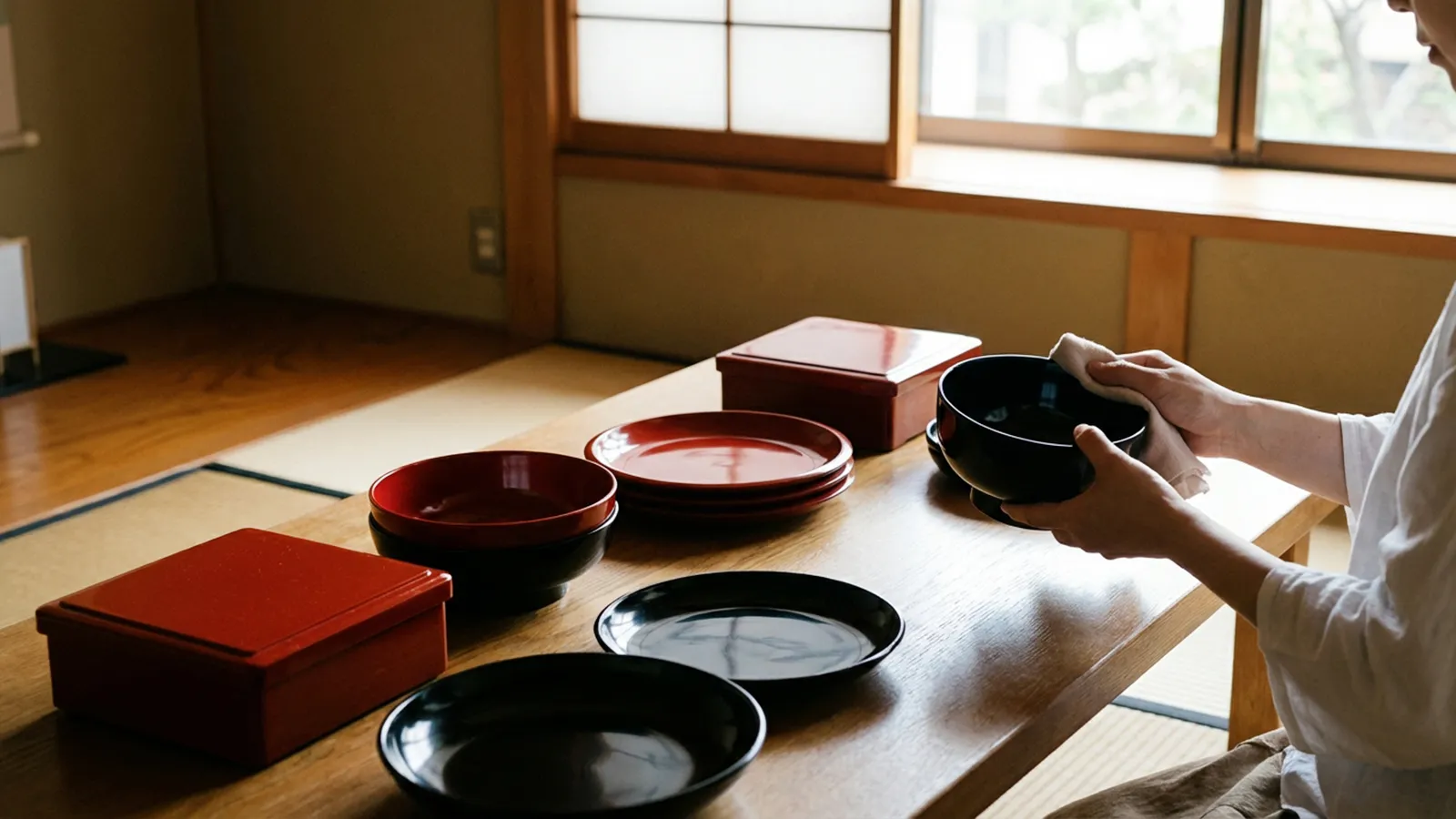
Japanese lacquerware, or shikki, is admired for its beautiful luster and smooth texture. Lacquerware feels completely different from ceramics or glass, and that tactile quality is part of its appeal. However, many first-time owners worry that high-end crafts must be difficult to handle, or that the wrong maintenance might ruin their new piece. Especially for those living overseas or handling lacquerware for the first time, getting the initial care right is important.
- Lacquerware is generally ready to use right after purchase. The fundamental first step is to check the instructions from the maker or seller, followed by a light wash and wipe.
- For daily care, gently wash the piece using a mild detergent and a soft sponge or cloth, and dry it promptly so no water drops remain.
- It is safest to avoid microwaves, dishwashers, and prolonged soaking in water unless the product specifically indicates they are supported.
Table of Contents
[Conclusion] Can You Use Japanese Lacquerware Right Away? The First 3 Steps
When you bring home your first piece of Japanese lacquerware, you might assume some complex preparation is required, but it is basically ready to use right out of the box. No difficult setup is necessary; by simply following these three initial steps, you can start using it smoothly.
- Check the included instruction manual (the maker’s guidelines)
- Lightly rinse with lukewarm water
- Wipe away moisture with a soft cloth
Rather than treating it exactly like ceramics, taking the time for this very basic confirmation provides peace of mind. Lacquerware is not a vessel restricted to “special occasions only”; once you understand the correct basics, it becomes a comfortable, everyday tool for your dining table.
[Step 1] Preparations for Your First Use: What to Do on Unboxing Day
First, Check the Maker’s Instructions
Modern lacquerware encompasses a wide variety of specifications. These range from pieces using traditional authentic lacquer (hon-urushi) to those utilizing advanced techniques like “MR Urushi®” (a refined lacquer with increased resistance to scratches and heat). Therefore, rather than relying solely on general advice, always prioritize the instruction manual and care notes provided by the seller or maker. Following the specific product guidelines, such as whether it is dishwasher or microwave safe, is the most direct way to prevent mistakes.
What to Do If the “New” Scent Bothers You
Right after opening the box, you may notice the distinct scent of fresh lacquer on new pieces. If the scent bothers you, try leaving the item in a well-ventilated area away from direct sunlight for a while. You can also gently wash it with lukewarm water and mild detergent, or fill the vessel with warm water and let it sit. In all cases, avoid harsh chemicals or extreme treatments; checking the seller’s guidance first is the safest approach.
(Source: Official JNTO – Joboji Urushi)
The Initial Wash and Wipe
Once the scent is no longer a concern, proceed with your initial preparations. Using lukewarm water around 30 to 40 degrees Celsius (86 to 104 degrees Fahrenheit), gently wash away any surface dust. After that, lightly wipe off the moisture with a soft, highly absorbent cloth, and your preparation is complete. The key here is to avoid scrubbing forcefully and to never leave the piece wet for an extended period after washing.
[Step 2] Daily Care | How to Wash, Dry, and Store
Once the initial preparation is finished, the rest is just your daily routine. Everyday care simply involves avoiding actions that place a heavy burden on the lacquerware, treating it much like standard tableware with a little extra mindfulness.
Washing: A Soft Sponge and Mild Detergent Are Fine
For everyday cleaning, it is perfectly fine to use a soft sponge and standard mild dish soap. Yamada Heiando, a historic purveyor of tableware to the Imperial Household, also recommends washing gently with a soft sponge or cloth. However, avoid using the abrasive side of sponges or cleaners containing polishing compounds, as these will ruin the surface luster.
(Source: Yamada Heiando – How to Handle Lacquerware)
Drying: Wipe Immediately to Prevent Water Spots
After washing, rather than leaving lacquerware to air dry in a dish rack, the basic rule is to dry it immediately with a soft cloth. Removing water droplets promptly prevents mineral deposits in tap water from leaving marks, keeping the piece looking pristine. Make it a habit to wipe your pieces right after washing.
Storing: Tips on Location and Stacking
The fundamental rule for storage is to avoid direct sunlight, extreme dryness, and high-temperature environments. Placing them in a stable spot within your everyday cupboard is the most practical approach, but stacking them directly with ceramics or glassware risks scratching the lacquer’s surface. If you must stack them, placing a thin sheet of paper or cloth between the items helps prevent abrasive damage.
4 Actions to Avoid That Shorten the Life of Lacquerware
While lacquer is generally highly resistant to acids and alkalis, it is best to avoid using it in ways outside the product specifications. To enjoy your lacquerware for a lifetime, the following four actions should generally be avoided.
(*Note: Some exceptional products are designed to withstand these, so always check your specific product’s label.)
- NG 1: Microwaves and Ovens
– Rapid temperature changes and intense heat place a burden on the piece, causing cracks or peeling. - NG 2: Dishwashers
– The high temperatures, strong water pressure, and hot air drying inside the machine can cause significant damage to both the lacquer and the wooden core. - NG 3: Prolonged Soaking in Water
– If the wooden core absorbs water for extended periods, it risks bearing the strain of swelling and deformation. - NG 4: Hard Sponges and Abrasives
– Metal scrubbers and abrasive cleansers will create fine scratches on the surface, ruining the luster.
The official care guidelines from Wajima Kirimoto, a historic workshop based in Wajima City, Ishikawa Prefecture, also advise that lacquerware made with natural wood and authentic urushi should not be exposed to water for long periods, nor used in dishwashers or microwaves.
(Source: WAJIMA KIRIMOTO)
Frequently Asked Questions for Lacquerware Beginners
Here, we answer some of the common points of confusion regarding the daily handling of lacquerware for first-time owners.
Q1. Will it crack if I pour hot soup into it?
The temperature of everyday soups, such as standard miso soup, is well within the expected range of regular use. However, you should avoid sudden, extreme heat loads, such as placing the bowl over an open flame, putting it in an oven, or suddenly pouring boiling hot liquids into it.
Q2. Can I use metal forks and spoons?
You can, but hard metal cutlery may leave fine scratches on the surface over time. For everyday dining, wooden or bamboo spoons and forks are softer against the vessel and make a much gentler option for regular use.
Q3. What should I do if it chips or cracks?
Avoid using superglue or similar products on your own; your safest approach is to first consult the seller or a specialized lacquerware repair shop. Depending on the damage, lacquerware can often be restored through localized lacquer patching, a complete recoating, or kintsugi-style finishing. Kintsugi is fundamentally a traditional Japanese repair technique utilizing urushi, and it can certainly be applied to lacquerware. However, “visible kintsugi” is not always the optimal choice; depending on the condition, invisible lacquer mending (urushi-tsukuroi) or full recoating might be more appropriate.


Conclusion: Daily Use, Rather Than Storing It Away, Is the Best Maintenance
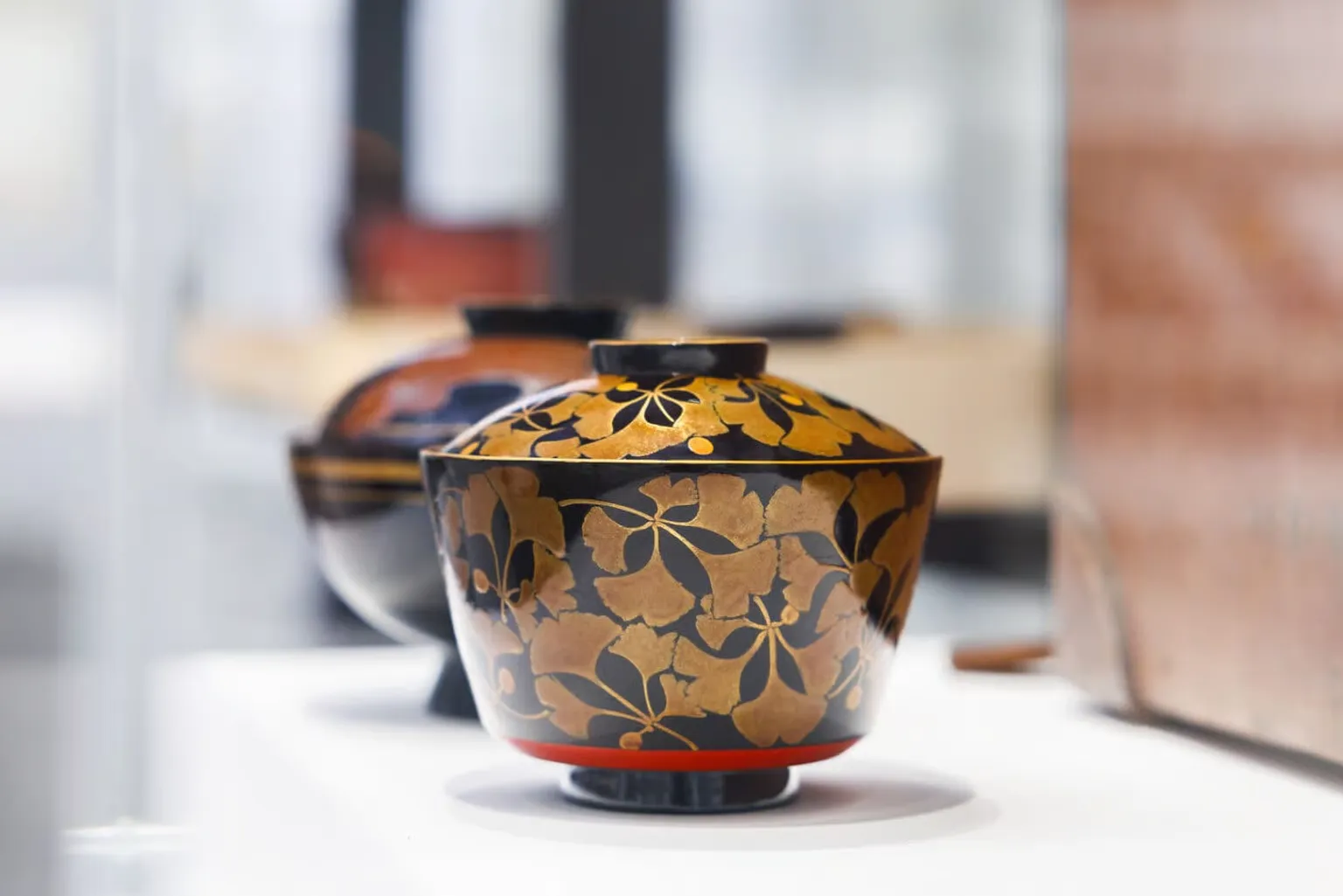
Interest in urushi has been growing overseas in recent years, highlighted by exhibitions of Wajima lacquerware at Japan House London, as well as expansions into related events and international craft art fairs. Together, these developments suggest that lacquerware is being rediscovered not only as an art object to admire, but as a living craft meant to be passed down through active, modern use.
(References: Japan House London – Wajima lacquerware / Making 2026 the “Year of Urushi” in London | PR TIMES)
To begin, try comfortably introducing a frequently used “first piece”—such as an everyday soup bowl or small side dish—to your dining table. The time spent carefully handling the vessel will gradually allow you to appreciate its high quality as an everyday tool.
