

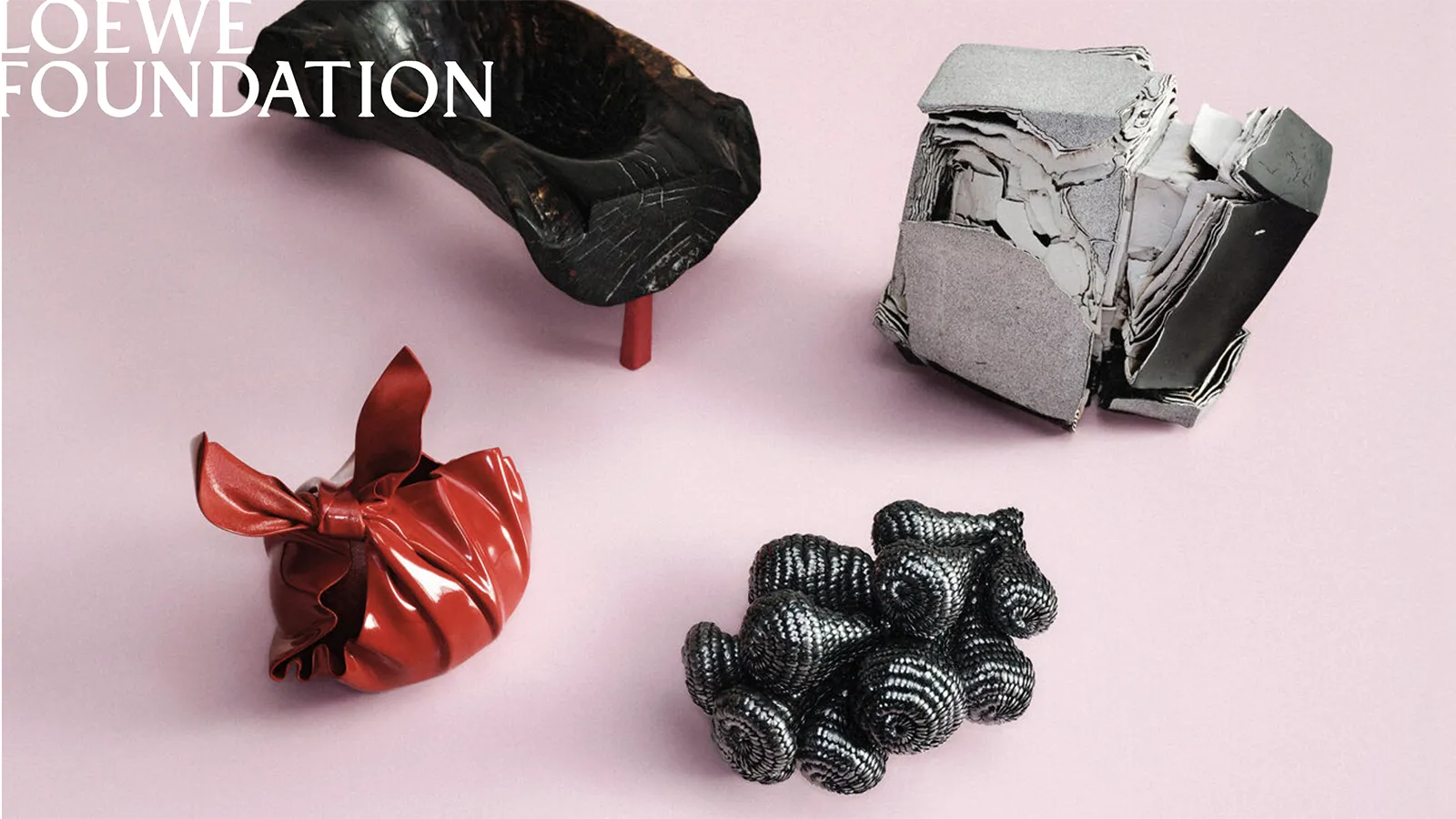
The LOEWE Foundation Craft Prize 2026 was awarded to Korean ceramicist Jongjin Park for Strata of Illusion (2025).
Now in its ninth edition, the prize received more than 5,100 applications from 133 countries and territories. The winner was announced on May 12 in Singapore, and the finalists’ exhibition opened the following day at the National Gallery Singapore.
Three Japanese artists reached the finals: Misako Nakahira, Nobuyuki Tanaka, and Ayano Yoshizumi.
If you follow contemporary craft internationally, May 12 was a date worth keeping.
The editor of Kogei Japonica was among those waiting on the announcement from Singapore.
This article draws on primary sources — the LOEWE Foundation, the National Gallery Singapore, and major press coverage — to compile the winner, Special Mentions, and Japanese finalists in one place. It also offers an editorial reading of what this year’s finalist selection reveals about where contemporary craft evaluation currently stands.
Exhibition details, a FAQ, and notes on each artist are included. We hope this serves collectors, gallerists, and practicing craft artists alike.
Table of Contents
Who won the LOEWE Foundation Craft Prize 2026?
The 2026 prize was awarded to Korean ceramicist Jongjin Park for Strata of Illusion (2025). The work layers paper coated in porcelain slip — a liquid clay mixture — and fires it in a kiln, where the paper burns away and the combined forces of heat and gravity determine the final form.
On May 12, 2026, the LOEWE Foundation held the award ceremony at the National Gallery Singapore and formally announced the winner of the ninth Craft Prize.
(Source: LOEWE FOUNDATION Craft Prize 2026 | LOEWE Official)


About the winning work: Strata of Illusion
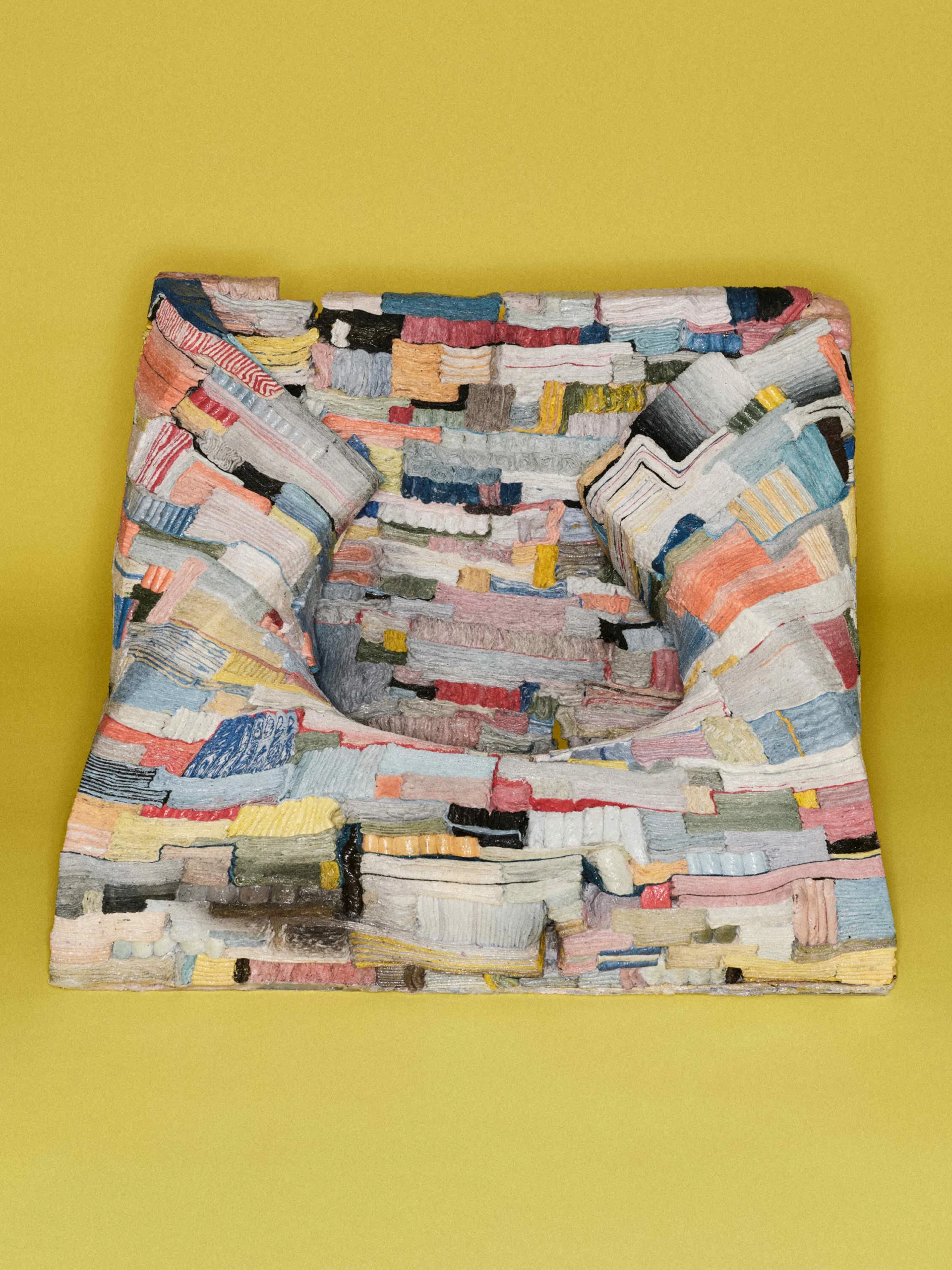
Strata of Illusion — the title suggests layers of sediment as much as layers of perception — takes the form of a chair-like structure whose function is deliberately unresolved. Park coats paper in colored porcelain slip, stacks the sheets into rectangular formations, and fires the assembly in a kiln. The paper disappears in the process; heat and gravity introduce distortion and partial collapse. The finished work is not fully authored by the artist: material and physical law are active participants in shaping the outcome. In this sense, the piece moves beyond the familiar categories of vessel, sculpture, and furniture.
The jury was reported to have recognized the work for its sculptural presence — one that overturns assumptions about what ceramics can be — and for the poetic quality of the paper’s erasure during firing. Park is based in Seoul and holds an assistant professorship in Craft and Collectible Design at Seoul Women’s University.
(Source: Loewe Craft Prize 2026 winner announced | Wallpaper*)
(Source: The LOEWE Foundation Craft Prize 2026 Spotlights Its Finalists At The National Gallery Singapore | ELLE Singapore)
The two Special Mention recipients
Alongside the main prize, two works received Special Mentions this year.
Baba Tree Master Weavers × Álvaro Catalán de Ocón (Spain)
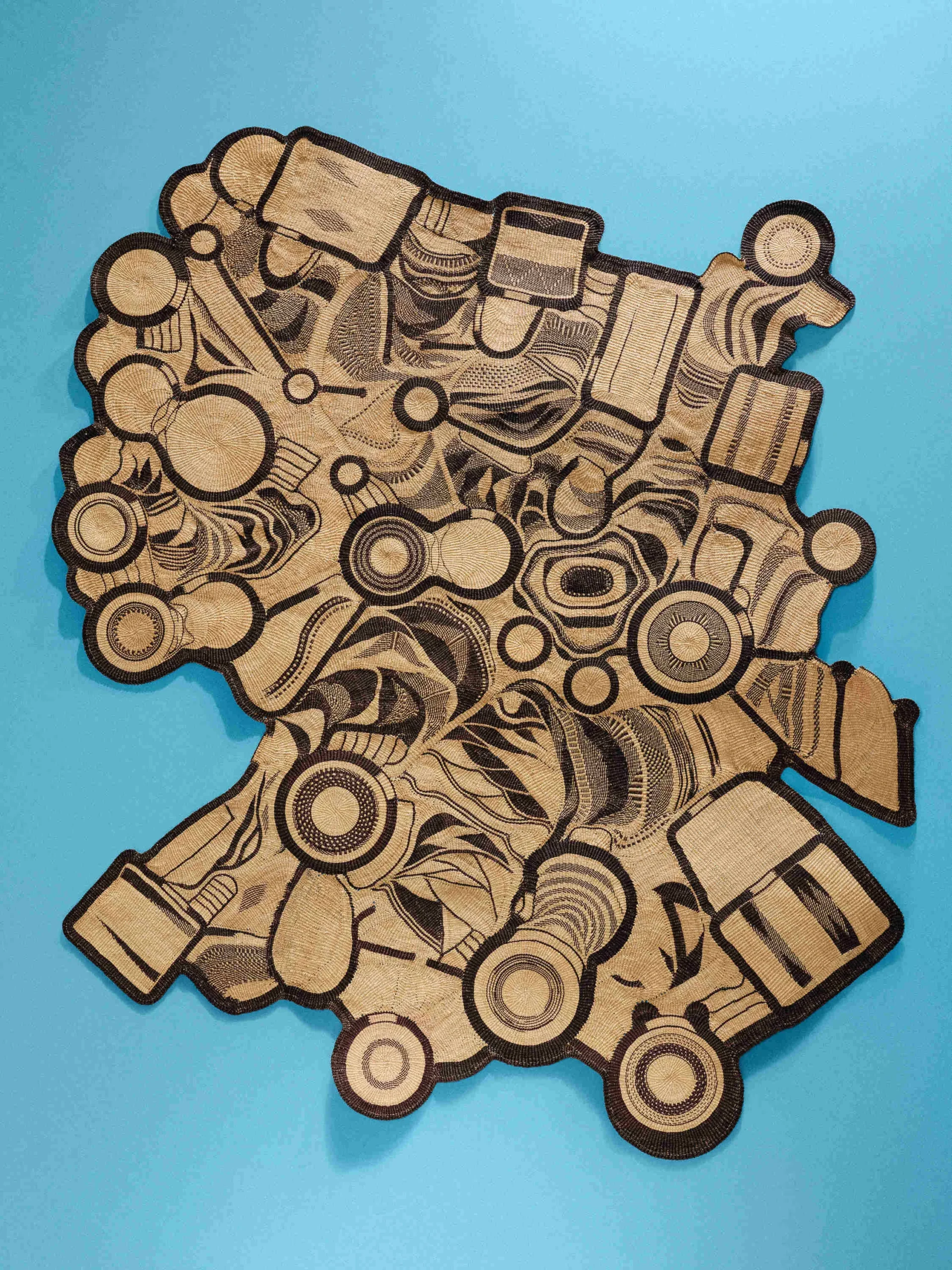
Frafra Tapestry (2024) is a collaboration between Ghanaian artisan collective Baba Tree Master Weavers and Spanish designer Álvaro Catalán de Ocón. The work translates aerial drone footage of circular communal dwellings in the Gruni region of northern Ghana into a large-format tapestry using traditional basketry techniques with elephant grass.
Graziano Visintin (Italy)
Collier (2025) by Italian goldsmith Graziano Visintin comprises two necklaces built from minute cubes of thin gold sheet, worked in niello — a black metallic inlay technique with ancient origins. The pieces bring historical goldsmithing into direct conversation with contemporary jewelry.
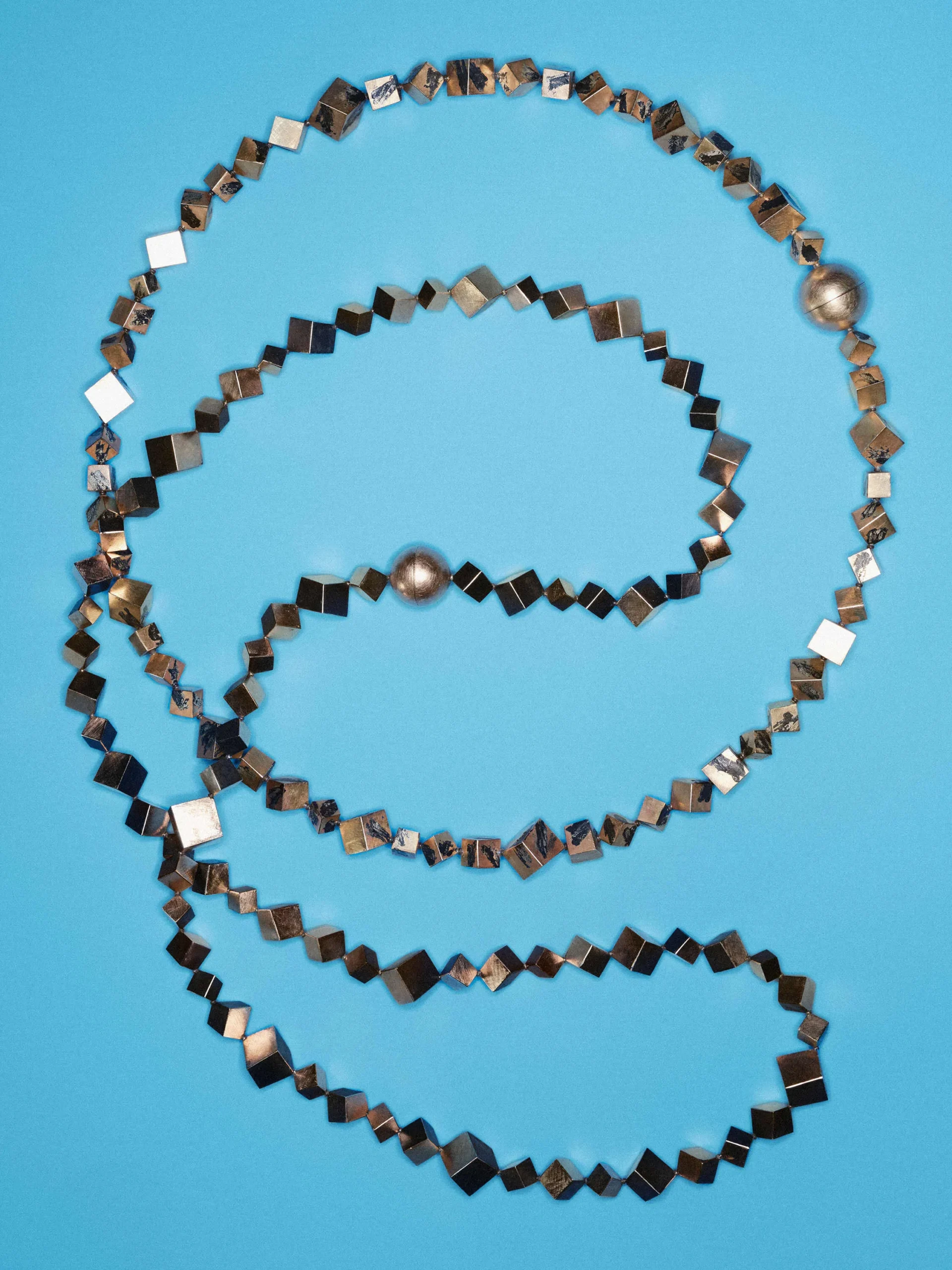
(Source: LOEWE FOUNDATION Craft Prize 2026 | LOEWE Official)
Which Japanese artists reached the finals?
Three Japanese artists were selected from this year’s 30 finalists: Misako Nakahira (textile / tapestry), Nobuyuki Tanaka (kanshitsu dry lacquer), and Ayano Yoshizumi (glass). The fact that all three work in different materials and pursue distinct conceptual directions is itself a fair reflection of the range of practice currently coming out of Japan.
(Source: LOEWE FOUNDATION Craft Prize 2026 | KOGEI STANDARD)
Misako Nakahira — Tapestry Weaving
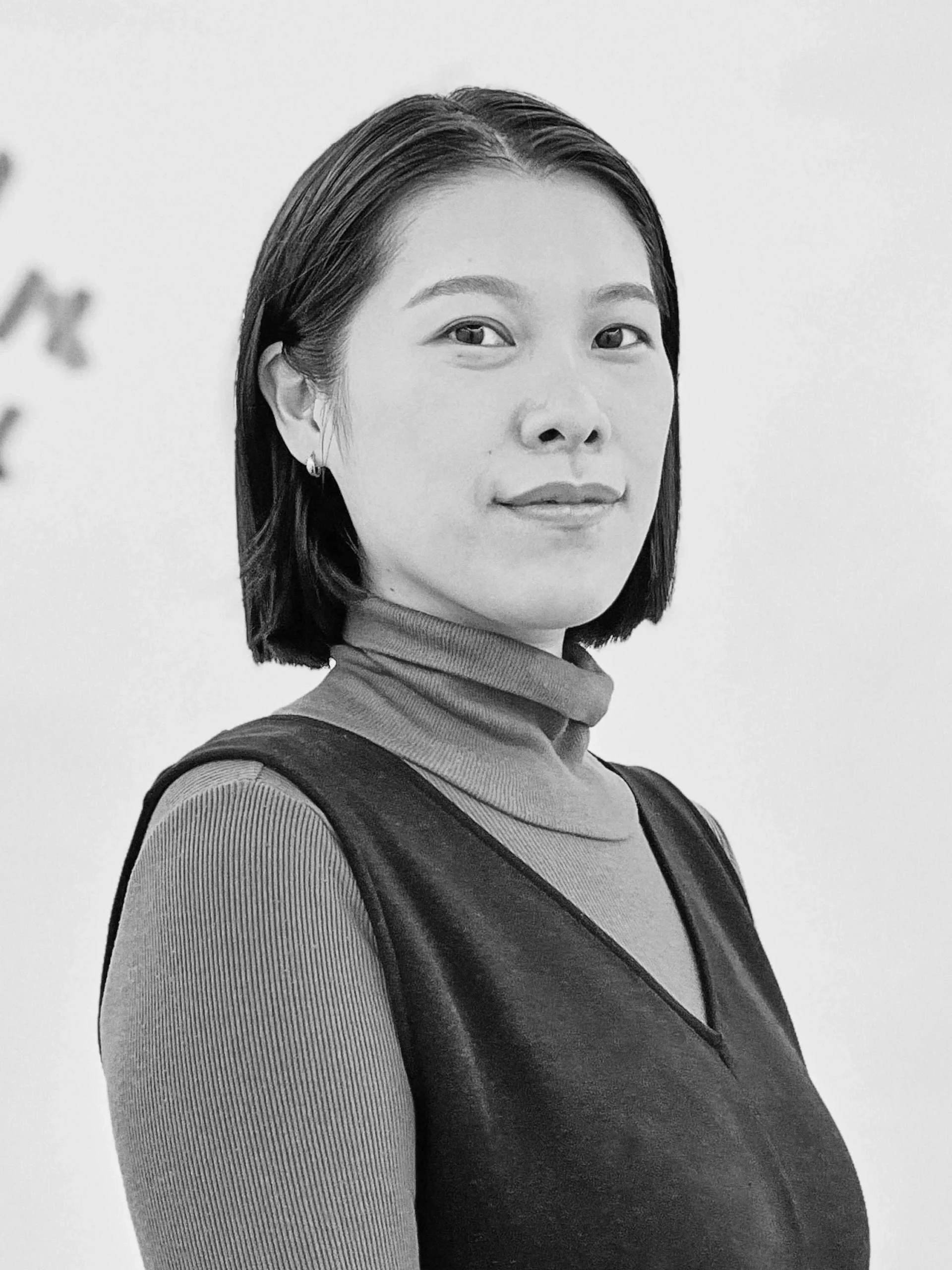
According to KOGEI STANDARD, Kyoto-based Nakahira works through tapestry as a vehicle for reinterpreting striped pattern structures. Her submitted work is Interaction #YB (2024), a tapestry in wool and cotton measuring 1,134 × 1,023 × 8 mm.
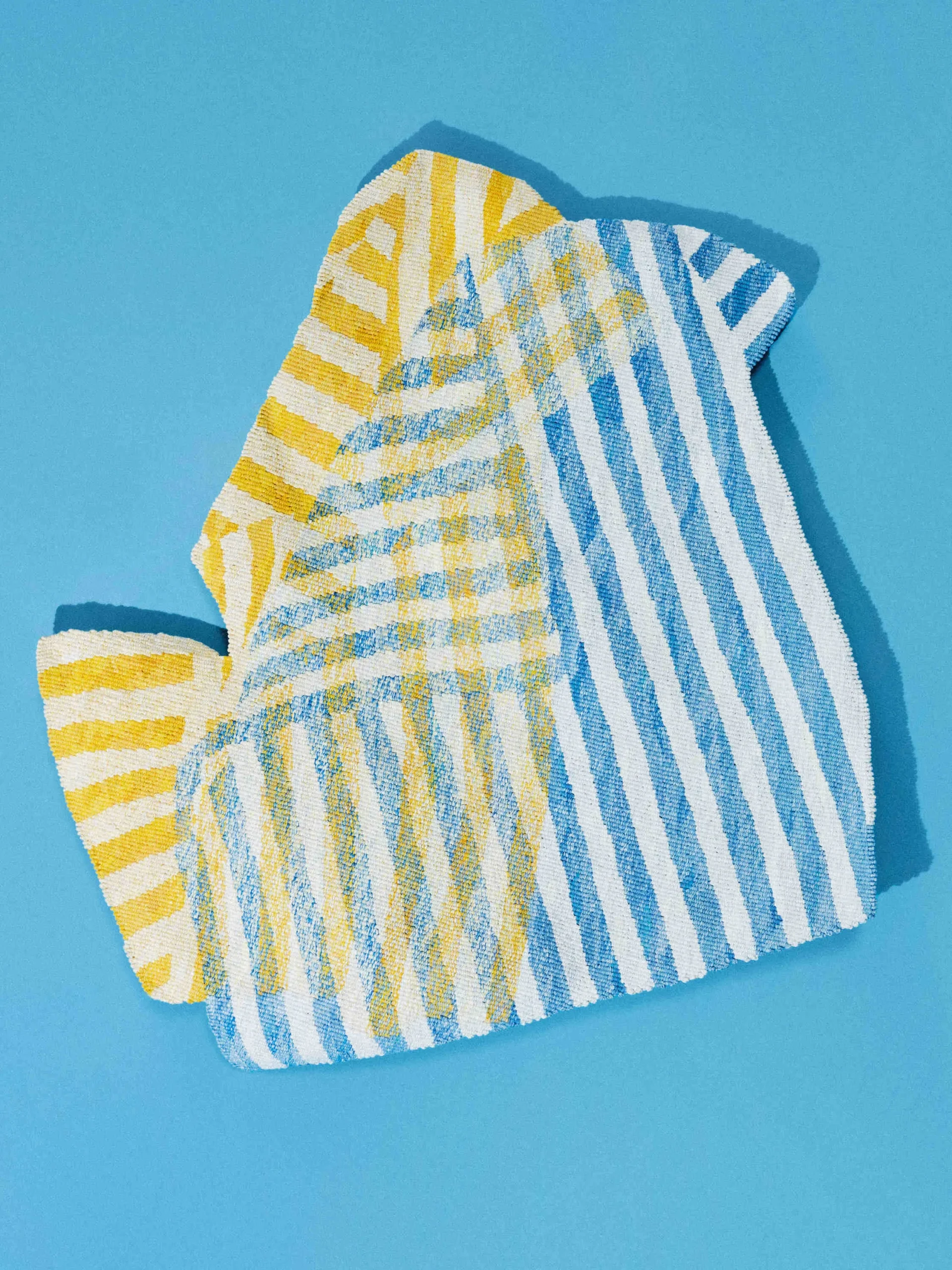
In interviews, Nakahira has spoken about technique and concept as inseparable — neither, in her view, can carry a work on its own. The tension between material and intention sits at the center of her practice. She dyes her own wool, developing a personal color language through the dyeing process itself.
(Source: Misako Nakahira Interview | Crafters of Today)
Nobuyuki Tanaka — Kanshitsu Dry Lacquer
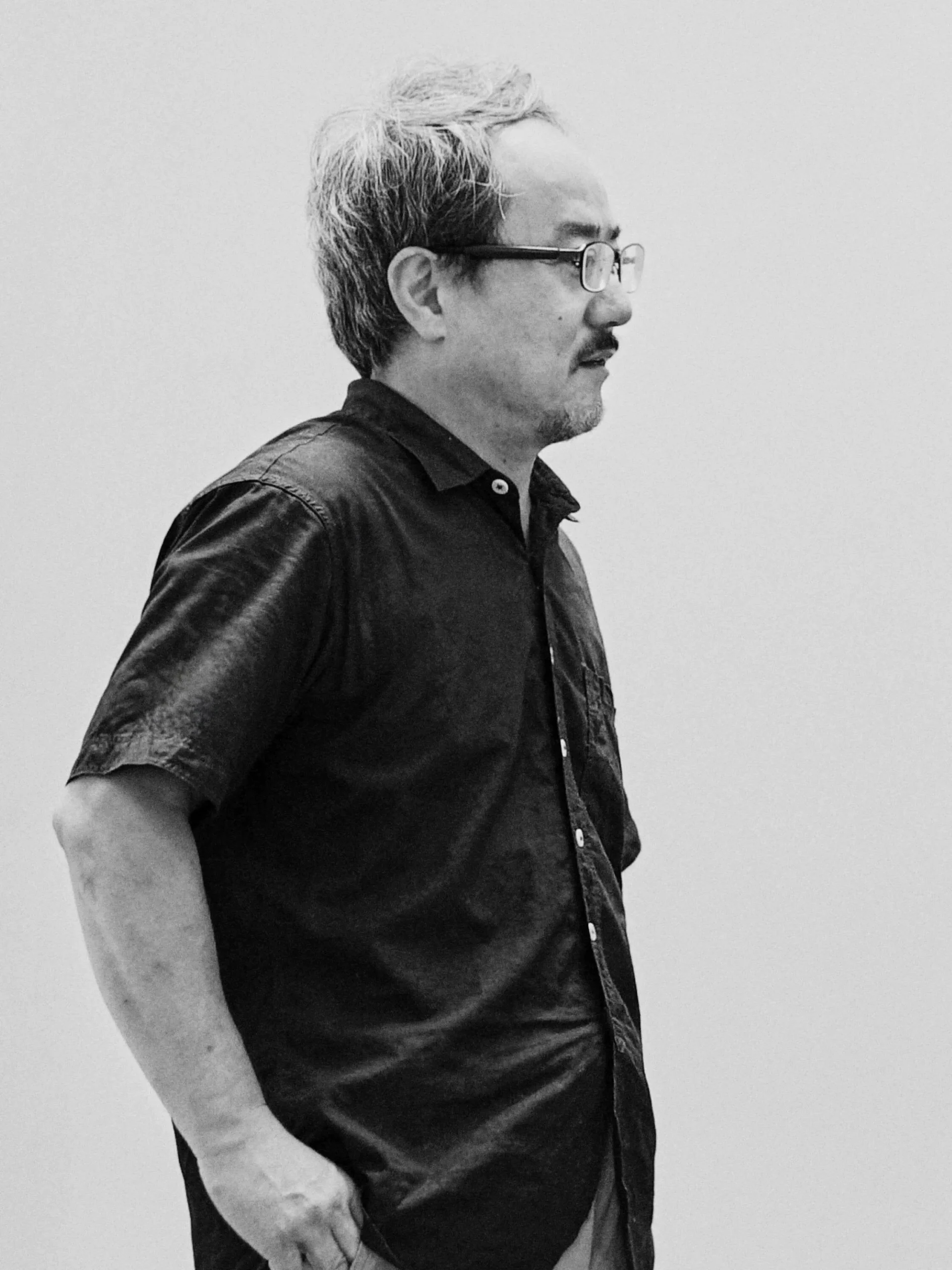
Born in 1959, Tanaka studied lacquer art at the Tokyo University of the Arts (BA 1983, MA 1985) and continues to teach and make work at the Kanazawa College of Art. KOGEI STANDARD describes his practice as one that positions lacquer within a contemporary critical framework, working from his base in Kanazawa.
The technical foundation of his work is kanshitsu — a process in which hemp cloth is saturated with urushi lacquer and built up in layers around a core form; once the structure has set, the core is removed and the interior and exterior surfaces are finished with further lacquer applications. His submitted work, Inner Side – Outer Side 2021 N (2021), is a large vessel-form sculpture standing over two meters tall. The exterior carries a mirror-finish lacquer black; the interior is matte. How the work presents itself shifts substantially depending on where light falls. Apollo Magazine described Tanaka’s forms as occupying a space “between strength and collapse.”
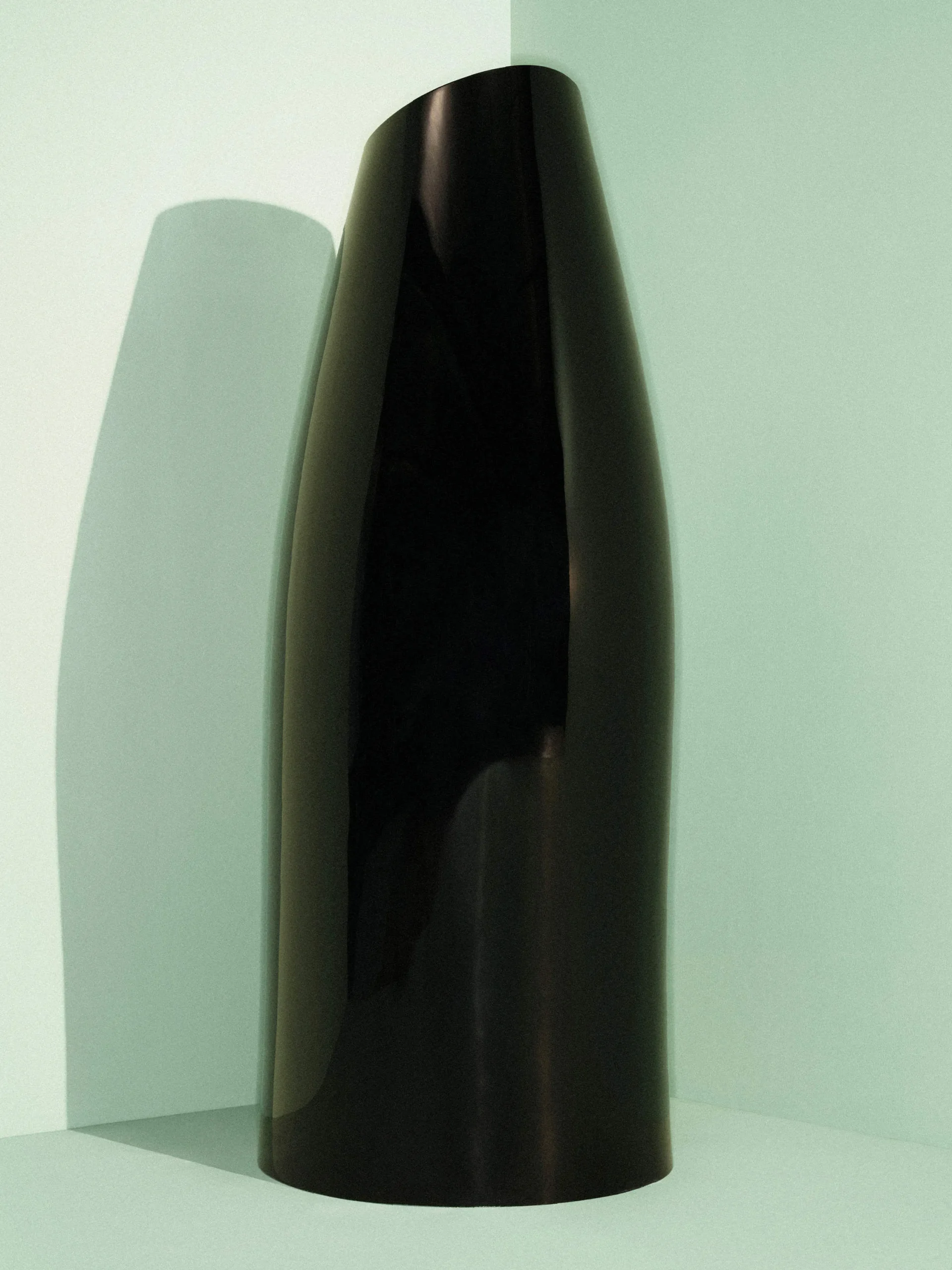
His work is held in the collections of the V&A in London, the Metropolitan Museum of Art in New York, and the 21st Century Museum of Contemporary Art, Kanazawa, among other institutions. He has consistently brought lacquer into international exhibition contexts as a sculptural language in its own right.
(Source: The Loewe Foundation pushes craft out of its comfort zone | Apollo Magazine)
(Source: Nobuyuki Tanaka | A Lighthouse called Kanata)
Ayano Yoshizumi — Glass

According to KOGEI STANDARD, Yoshizumi is based in Toyama and draws on Fauvism and the Japanese spatial concept of ma — the meaningful pause or interval between forms — as starting points for her glass work. Her submitted piece, ICON #2507 Group (2023–2025), is a series that explores glass as a material through its transparency, refraction, and physical presence.
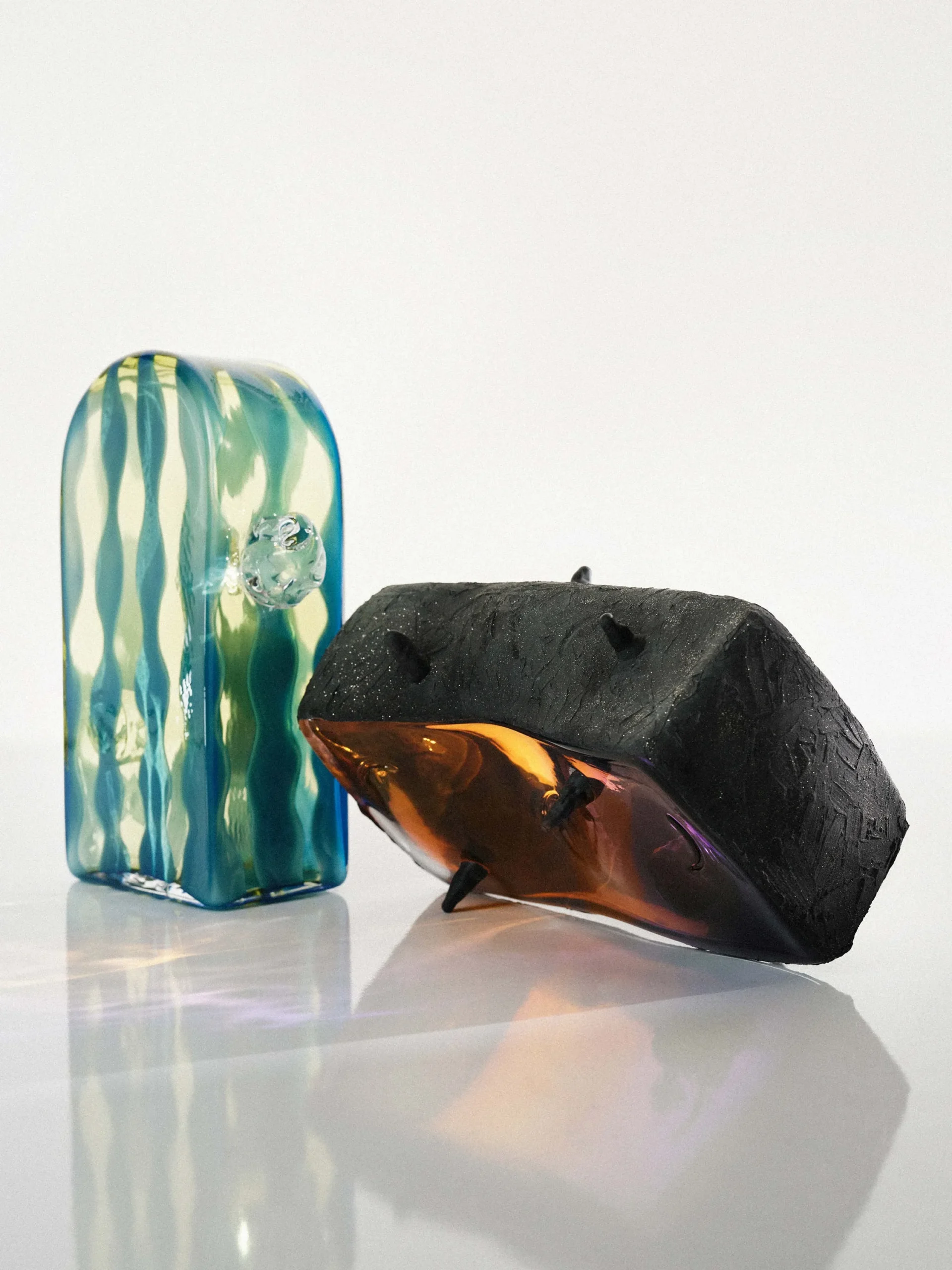
For full biographical details, please refer to the official LOEWE finalists page and her gallery listings.
(Source: Craft Prize 2026 Finalists | LOEWE Official)
| Artist | Material / Technique | Submitted Work | Year | Base |
|---|---|---|---|---|
| Misako Nakahira | Textile / tapestry (wool, cotton) | Interaction #YB | 2024 | Kyoto |
| Nobuyuki Tanaka | Kanshitsu dry lacquer (hemp, urushi) | Inner Side – Outer Side 2021 N | 2021 | Kanazawa |
| Ayano Yoshizumi | Glass | ICON #2507 Group | 2023–2025 | Toyama |
※ Artist information compiled by the Kogei Japonica editorial team based on LOEWE Foundation official sources, KOGEI STANDARD, and related press coverage.
What materials and techniques make up the 2026 finalist list?
The 30 finalists span ceramics, textiles, lacquer, glass, metalwork, woodworking, bookbinding, and more. A defining thread this year is the number of works that incorporate material transformation — collapse, conversion, negotiation with physical law — as an active element of the work, rather than simply demonstrating technical mastery of a single medium.
(Source: LOEWE FOUNDATION Craft Prize 2026 | LOEWE Official)
Full list of 30 finalists
| Artist | Listed Country / Region | Material Category (editorial classification) |
|---|---|---|
| Baba Tree Master Weavers × Álvaro Catalán de Ocón | Spain | Textile (elephant grass / basketry) |
| Jobe Burns | United Kingdom | Metal (steel / lacquer finish) |
| Soohyun Chou | South Korea | Metal / sculptural |
| Morten Løbner Espersen | Denmark | Ceramics (glazed stoneware) |
| Liam Fleming | Australia | Glass |
| Oskar Gustafsson | Sweden | Woodworking |
| Susan Halls | United Kingdom | Ceramics |
| Gjertrud Hals | Norway | Textile (cotton, linen, resin) |
| Chia-Chen Hsieh | Taiwan | Bamboo craft |
| Adelene Koh | Singapore | Bookbinding / paper |
| Maria Koshenkova | Denmark | Glass |
| Jong In Lee | South Korea | Woodworking |
| Somyeong Lee | South Korea | Ceramics / mixed media |
| Misako Nakahira | Japan | Textile / tapestry |
| Fadekemi Ogunsanya | Nigeria | Textile (embroidery, beadwork) |
| Jieun Park | South Korea | Metal (silver) |
| Jongjin Park (winner) | South Korea | Ceramics (paper / porcelain slip) |
| Rafael Pérez Fernández | Spain | Ceramics |
| Dorothea Prühl | Germany | Jewelry (titanium, gold) |
| Kirstie Rea | Australia | Glass |
| Vivi Rosa | Brazil | Mixed media |
| Hervé Sabin | Haiti | Mixed media |
| Xanthe Somers | Zimbabwe | Ceramics (woven clay) |
| Coco Sung | South Korea | Jewelry / mixed media |
| Nobuyuki Tanaka | Japan | Kanshitsu dry lacquer (hemp, urushi) |
| Graziano Visintin (Special Mention) | Italy | Jewelry (gold, niello) |
| Rayah Wauters | Belgium | Textile / sculptural |
| Nan Wei | China | Lacquer |
| Jane Yang-D’Haene | United States | Ceramics (stoneware) |
| Ayano Yoshizumi | Japan | Glass |
※ Material categories have been assigned by the Kogei Japonica editorial team for reader reference, based on LOEWE Foundation finalist information and related press coverage. They may differ in part from official LOEWE classifications.
(Source: Craft Prize 2026 Finalists | LOEWE Official)
Material trends across the 2026 selection
Looking across the 30 finalists by material, ceramics, textiles, and glass appear most frequently. Japan’s three representatives work across lacquer, textile, and glass — no overlap in material or approach — which reflects something of the selection’s broader interest in cross-material range.
This year’s criteria: material transformation and the crossing of boundaries
What stands out when reading the 2026 finalist list as a whole is how consistently it reaches toward work in which the material’s own transformation is built into the piece.
In Strata of Illusion, paper burns and porcelain deforms. In Tanaka’s Inner Side – Outer Side, the accumulated time of layering hemp and lacquer becomes the form. Baba Tree Master Weavers’ Special Mention work re-translates a contemporary drone perspective on Ghanaian architecture through traditional grass-weaving. Recent editions of the prize suggest a broader shift in craft evaluation: from technical transmission alone toward works that treat material as an active partner in the making process.
What does it mean for a luxury house to run a craft prize?
[What is the LOEWE Foundation Craft Prize?]
The LOEWE Foundation Craft Prize was established in 2016 by the LOEWE Foundation (Madrid, Spain). Its stated criteria are technical excellence, innovation, a deep understanding of material, and clarity of artistic intent. The prize is open annually to craft practitioners worldwide. The ninth edition, in 2026, received more than 5,100 applications from 133 countries and territories. The main award carries a prize of €50,000, with €5,000 awarded to each Special Mention recipient.
LOEWE was founded in Madrid in 1846 as a collective leather workshop and is today a Spanish luxury brand within the LVMH group. It is from that historical grounding in craft that the prize emerged — created under then-creative director Jonathan Anderson with the explicit aim of recognizing craft’s place in contemporary culture.
Technical tradition is only part of what is evaluated
What distinguishes this prize within the craft world is its stated indifference to traditional technique as an end in itself. Alongside technical excellence, the official criteria name innovation, artistic vision, and a deep understanding of material. The body of finalist work has been described in terms of “making as a careful negotiation between balance, instability and tension” — a framing that positions practice as inquiry rather than reproduction.
The jury and the participation of 2025 winner Kunimasa Aoki
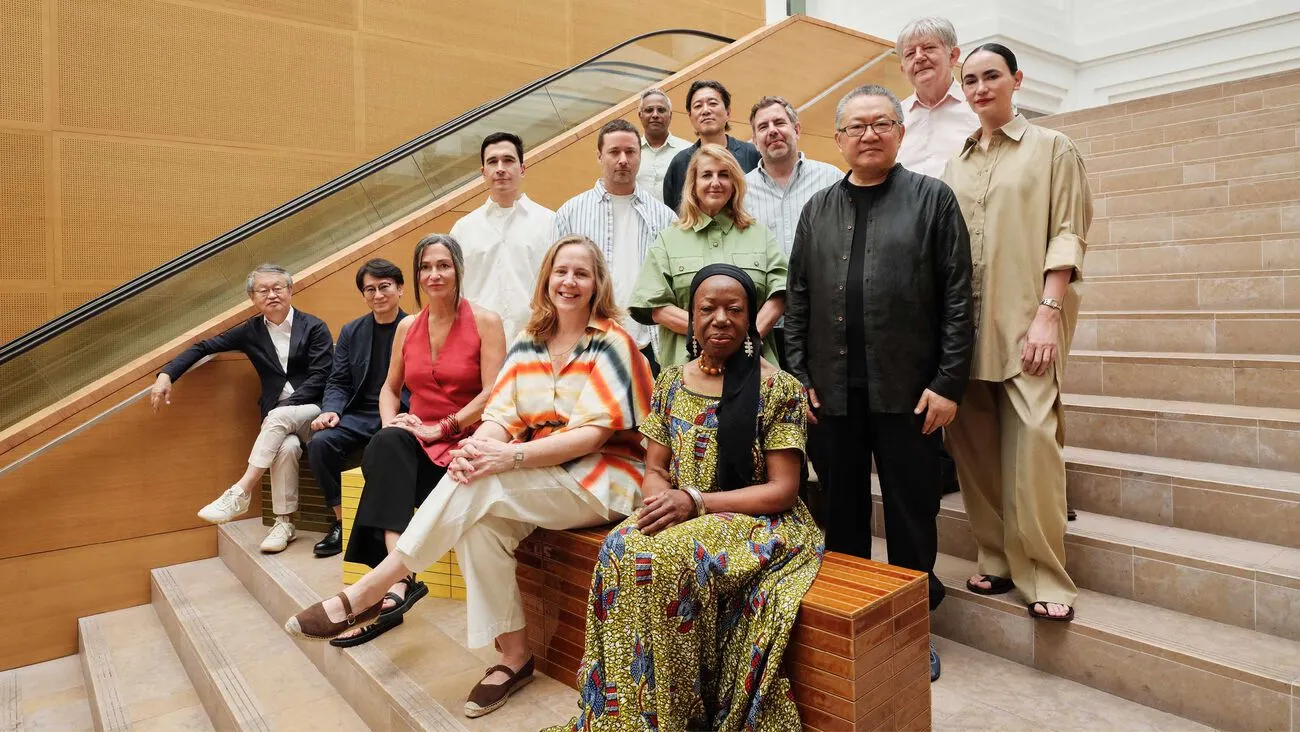
This year’s jury included design critic Deyan Sudjic, designer Patricia Urquiola, architect Frida Escobedo, Abraham Thomas of the Metropolitan Museum of Art, Olivier Gabet (head of decorative arts at the Louvre), and designer and director of the Japan Folk Crafts Museum Naoto Fukasawa. LOEWE’s new creative directors Jack McCollough and Lazaro Hernandez joined the jury for the first time. Also on the panel was 2025 prize winner Kunimasa Aoki.
The structure in which the previous year’s winner joins the following year’s jury is worth noting as a signal of the prize’s continuity and its interest in sustaining dialogue between practitioners. What specific judgments Aoki brought to the 2026 deliberations is not part of the public record, but his presence on the jury is part of the broader picture of how Japanese craft practice is engaging with international evaluation platforms.
(Source: LOEWE FOUNDATION Craft Prize 2026 | KOGEI STANDARD)
A note on following this prize
To be direct about it: one reason Kogei Japonica follows this prize closely is the tension that runs through it. LOEWE is a luxury brand, and any prize run by its foundation will inevitably mix craft value with brand value.
That said, the prize has earned a degree of credibility within the craft world — through the transparency of its selection process, the expertise of its juries, and the fact that its winners have consistently gone on to build substantive careers rather than simply providing a news cycle. This does not mean LOEWE defines what contemporary craft should be. But as a platform that makes certain evaluative priorities visible, this prize is worth tracking.
Where and until when is the exhibition on view?
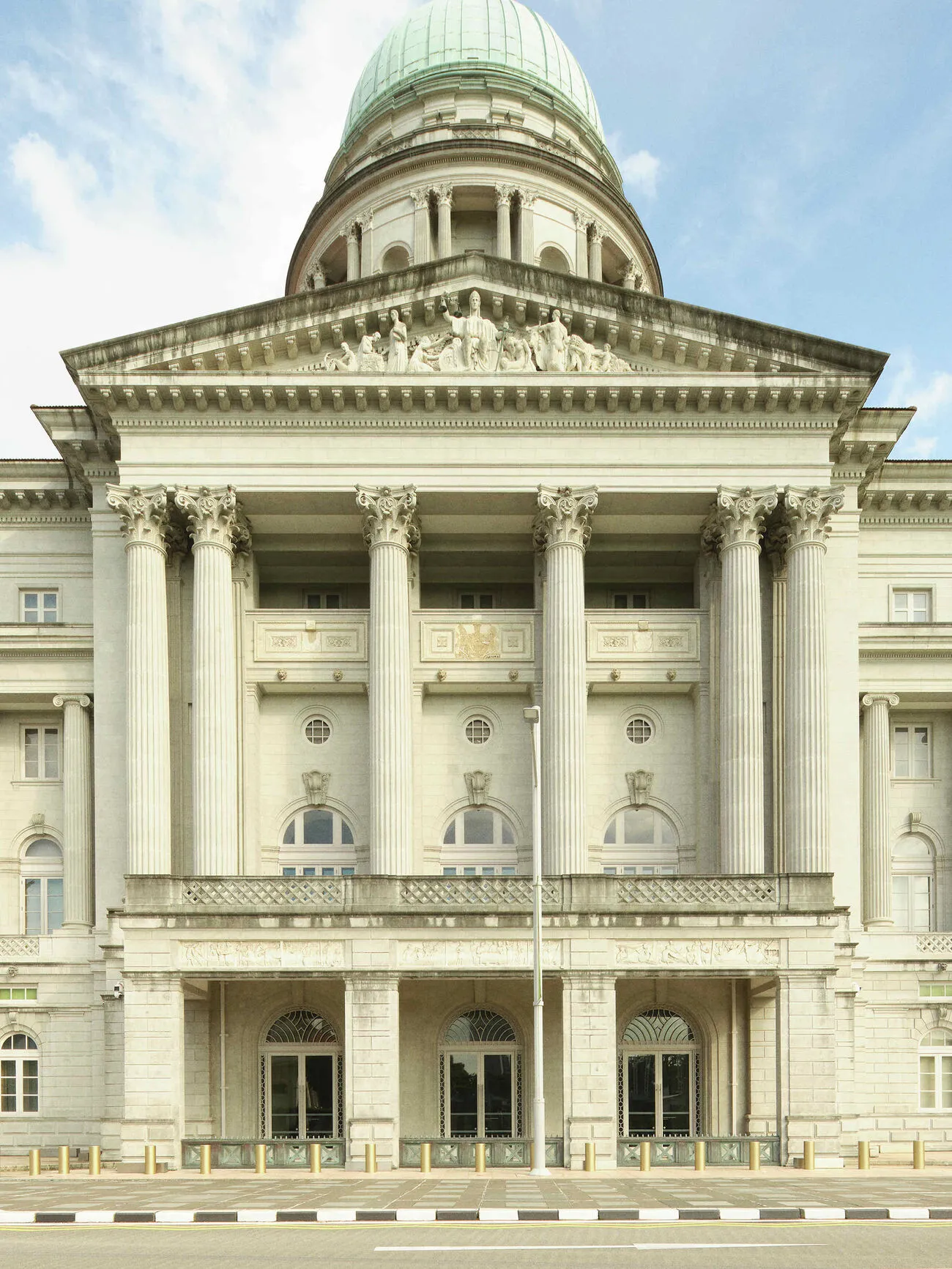
Works by all 30 finalists are on view at the National Gallery Singapore through June 14, 2026. Admission is free. Opening hours are 10:00–19:00 daily (last entry 18:30). Please check the official listings before visiting to confirm current details.
| Detail | Information |
|---|---|
| Dates | May 13 (Wed) – June 14 (Sun), 2026 |
| Venue | National Gallery Singapore |
| Address | 1 St Andrew’s Road, Singapore 178957 |
| Admission | Free |
| Hours | 10:00–19:00 daily |
| Last entry | 18:30 |
| Works on view | All 30 finalists |
(Source: LOEWE FOUNDATION Craft Prize 2026 | LOEWE Official)
(Source: National Gallery Singapore Official)
Why Singapore?
The exhibition venue changes each year. In 2024 it was the Palais de Tokyo in Paris. For 2026, the LOEWE Foundation has cited a desire to bring the prize to cities where interest in contemporary craft is growing.
This is not only a logistical choice. Singapore sits at an active intersection of art, design, and collectible culture internationally, and for local collectors and younger craft practitioners, the presence of an international craft prize on this scale offers direct contact with where the field is being evaluated. Finalist and Singapore-based artist Adelene Koh has spoken about the significance of the prize coming to Singapore in the context of mentorship and growing interest in craft among younger generations.
(Source: Loewe Craft Prize 2026 winner announced | Wallpaper*)
What should collectors, gallerists, and craft artists look for?
Reading the LOEWE Craft Prize announcement purely as a question of who won misses most of what the selection has to offer. Looking at material, process, artist statement, and how work reads in exhibition space gives a clearer picture of the criteria shaping contemporary craft evaluation internationally.
For collectors
A finalist position in an international craft prize is one data point in assessing an artist’s trajectory — not a complete picture of a work’s value. If you are considering a purchase, verify conservation requirements, dimensions, representing gallery, and pricing independently. These vary significantly by work, artist, and point of sale; always consult the representing gallery or the artist’s official channels directly.
For gallerists
What stands out in this year’s finalist group is the number of works that presuppose a relationship with exhibition space rather than resolving as self-contained objects. Tanaka’s large-scale lacquer sculpture is the clearest example, but Nakahira’s tapestry is also a work that operates in dialogue with the wall plane. Approaching the works with gallery context in mind makes the connection between material choices, scale, and the artist’s underlying concept much easier to read.
For craft artists
For artists considering an application to a future edition: the selection consistently rewards the pairing of technical achievement with a clearly articulated artistic position. Command of material is not sufficient on its own — the ability to state, in your own words, why this material and this form are the necessary answer to the question you are asking, matters. Preparing an English-language artist statement is a practical part of that preparation. Applications for the 2027 edition are expected to open after June 2026; check the LOEWE Foundation website for current information.
(Source: Loewe Craft Prize 2026 winner announced | Wallpaper*)
Ten things to examine when following an international craft prize
- Artist name, nationality, and working base
- Title of submitted work and year of completion
- Primary material and technique
- How the material is handled — the making process
- The artist’s stated intent and central question
- Dimensions and mode of display
- How the work relates to the exhibition space
- Whether an artist statement exists, and in which languages
- Representing gallery and official contact information
- Exhibition and award history — verified through primary sources
What can the 2026 prize tell us about where Japanese craft stands internationally?
“Three Japanese artists were selected” is a starting point, not a conclusion. The more useful question is what kind of practice each of them was recognized for — and those are three different answers.
Resisting the reflex to read the Japanese finalists as representatives of “Japanese craft”
Nakahira, Tanaka, and Yoshizumi were each selected for their individual practice. Grouping them as a single expression of “Japanese craft” does a disservice to what each of them is actually doing.
Tanaka’s kanshitsu work has been developed as a sculptural language — one that draws on the optical properties of urushi and the accumulation of making time as formal elements. Nakahira’s tapestries come out of a specific practice of self-dyeing, wool as primary material, and a sustained investigation of stripe as structure. Yoshizumi’s glass work stands as its own inquiry into material presence and light. All three happen to be Japanese. That is a result of selection, not a shared artistic program.
International prizes make evaluation criteria legible
What the LOEWE Craft Prize does, across editions, is make certain priorities in contemporary craft evaluation visible. This year’s selection — prize, Special Mentions, and finalists as a body — points toward work that re-examines the relationship between material and process, blurs the line between craft, sculpture, and design, and finds ways to connect individual technical knowledge with collective or collaborative practice.
This does not mean LOEWE defines what contemporary craft should be. It is one influential international platform revealing its current angle of attention — which is a different and more limited claim, and the right way to read it.
Editor’s note
When Japanese craft is discussed internationally, the framing of “transmission of tradition” tends to arrive first. But looking at the three Japanese finalists this year, each of them was selected as an artist engaged with a present-tense question through their material — not as a custodian of a historical form. Reading their selection as “Japanese craft being recognized” is less accurate than reading it as three artists, each recognized for a specific practice on its own terms. That, it seems to us, is the more honest form of attention.
FAQ: LOEWE Foundation Craft Prize 2026
Answers to common questions about the winner, exhibition, selection criteria, and how to apply.
- Q1. Who won the LOEWE Foundation Craft Prize 2026?
- Korean ceramicist Jongjin Park, for Strata of Illusion (2025). The main award carries a prize of €50,000.
- Q2. Which Japanese artists were selected as finalists?
- Misako Nakahira (textile / tapestry, Kyoto), Nobuyuki Tanaka (kanshitsu dry lacquer, Kanazawa), and Ayano Yoshizumi (glass, Toyama).
- Q3. Where is the finalists’ exhibition being held?
- At the National Gallery Singapore (1 St Andrew’s Road, Singapore 178957). The exhibition runs May 13 – June 14, 2026. Admission is free; hours are 10:00–19:00 daily, last entry 18:30. Please check the official site before visiting to confirm current details.
- Q4. What are the selection criteria for the LOEWE Craft Prize?
- The official criteria are technical excellence, innovation, a deep understanding of material, and clarity of artistic intent. How a traditional technique connects to a contemporary conceptual position is part of what is evaluated, not just the technique itself.
- Q5. How many finalists are there?
- 30 finalists in 2026, from more than 5,100 applications across 133 countries and territories. Country counts vary slightly between sources; this article focuses on artist numbers and material range.
- Q6. How can I apply for a future edition?
- Application requirements, deadlines, and submission details are updated each year. Applications for the 2027 edition are expected to open after June 2026. Check the LOEWE Foundation official site for current information.
- Q7. When and where was the 2026 winner announced?
- On Tuesday, May 12, 2026, at an award ceremony held at the National Gallery Singapore.
Closing
The LOEWE Foundation Craft Prize 2026 selected Jongjin Park’s Strata of Illusion as its main award winner from more than 5,100 applications across 133 countries and territories. Three Japanese artists — Misako Nakahira, Nobuyuki Tanaka, and Ayano Yoshizumi — reached the finals.
Reading the selection as a national result, or flattening each artist into a single story about Japanese craft, leaves most of what is interesting on the table. Each of these three was recognized for a specific practice. That specificity is worth following.
The exhibition continues through June 14. Scale and material presence are things that comparison tables cannot convey — worth seeing in person if you are in Singapore.
We support international outreach for craft practitioners, including English-language portfolio development and exhibition preparation. Get in touch to discuss.
For galleries, hotels, and institutions
We consult on contemporary craft for spatial contexts and collection development. Contact Kogei Japonica to start a conversation.

