

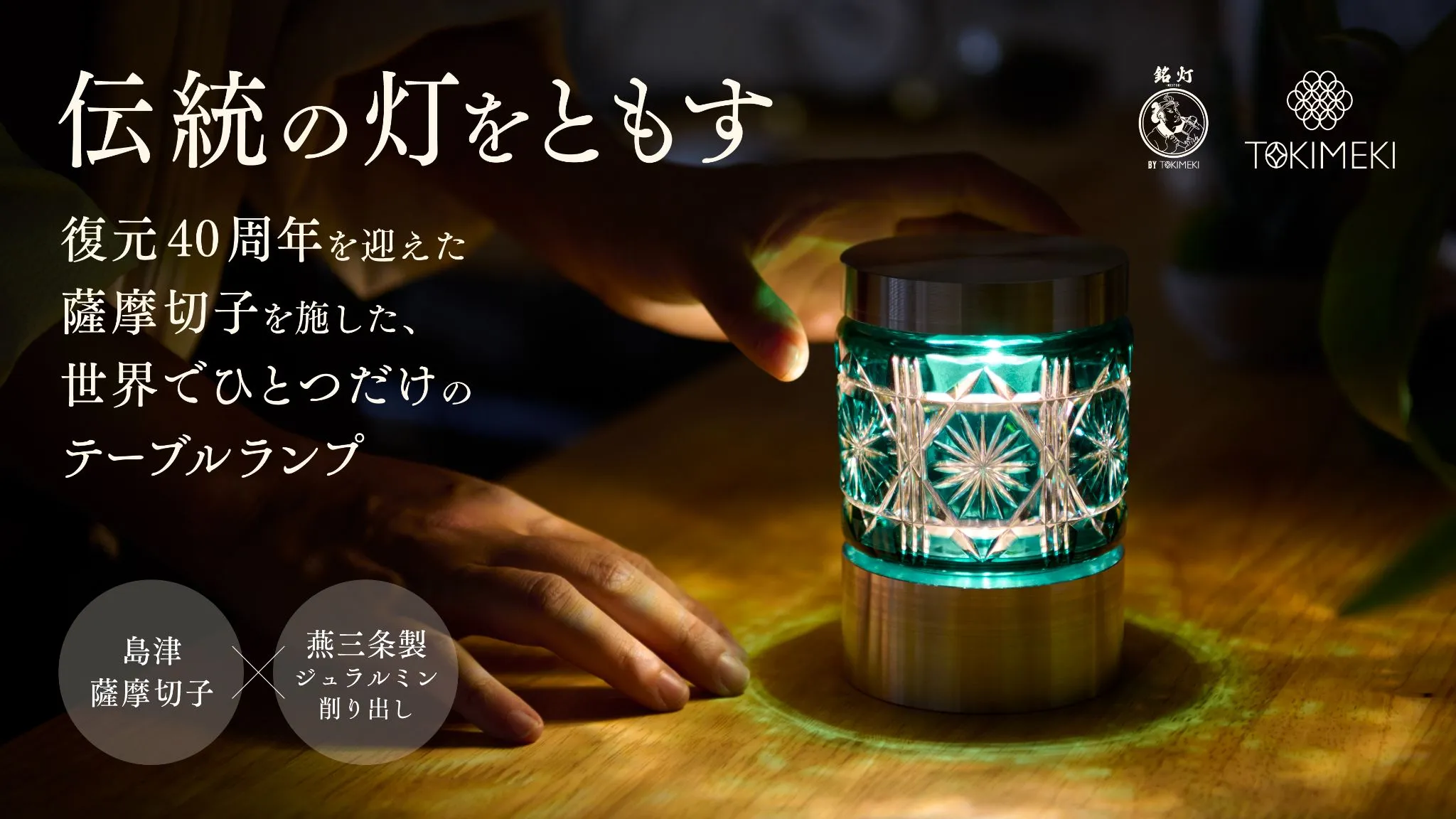
This article looks at the Satsuma Kiriko table lamp — conceived and produced by TOKIMEKI Inc. — through the editorial lens of Kogei Japonica. What kind of craft is Satsuma Kiriko? Why does cut glass work as a light source? How do the three colorways differ, and how should you choose between them? We cover indoor and outdoor use, and what to verify before purchasing.
Table of Contents
What Is the Satsuma Kiriko Table Lamp?
This table lamp pairs a Shimadzu Satsuma Kiriko glass shade with a precision-machined metal body made in the Tsubame-Sanjō region of Niigata Prefecture. When lit from within, the cut patterns and color gradations spread across the surrounding desk, walls, and floor. Available in three colorways — Shimadzu Purple, Satsuma Yellow, and Midori — it is scheduled to launch on Makuake on Friday, June 5, 2026, at 1:00 p.m. JST.
The project is conceived and produced by TOKIMEKI Inc.; the glass shade is made by Shimadzu Satsuma Kiriko in Kagoshima. Indoors, the lamp functions as a table lamp; outdoors, the shade detaches and fits as a lantern globe onto compatible models.
A lantern globe is the glass component that covers a lantern’s flame or light source. If you plan to use the shade outdoors, check the official product page for compatible models, permitted light sources, heat tolerance specifications, and safety guidelines.
(Source: Shimadzu Satsuma Kiriko × Tsubame-Sanjō Table Lamp (Revival 40th Anniversary) | Makuake)
What Is Satsuma Kiriko? A Cut-Glass Craft Born in the Edo Period and Revived a Century Later
In brief, Satsuma Kiriko is a Japanese cut-glass tradition that originated in the Satsuma region in the late Edo period, fell out of production within roughly thirty years, and was revived after a gap of approximately one century. That history of interruption and revival is essential context for understanding the craft.
For further background, see also our introductory feature on Satsuma Kiriko.


Late Edo Period: Beginnings in a Domain-Operated Glass Workshop
Satsuma Kiriko was born in the late Edo period through a glass production initiative run by the Satsuma domain — the region that is now Kagoshima Prefecture. The craft reached its peak under domain lord Shimadzu Nariakira, who oversaw the development of both colored glass and cutting techniques.
After Nariakira’s death, however, production ceased within roughly thirty years of the craft’s emergence. It was eventually revived — following a gap of roughly a century — through an effort closely associated with the Shimadzu family, centered in the Iso district of Kagoshima City, where it continues to be made today. Shimadzu Satsuma Kiriko reached the fortieth anniversary of its revival in 2025. A range of commemorative pieces and reintroduced colorways were released to mark the occasion.
(Source: About Shimadzu Satsuma Kiriko | Shimadzu Satsuma Kiriko)
Shimadzu Satsuma Kiriko and Satsuma Kiriko: Understanding the Distinction
“Satsuma Kiriko” is a broad term for the regional cut-glass tradition and its techniques. Within that tradition, Shimadzu Satsuma Kiriko is the registered trademark of the cut glass produced by Shimadzu Kogyo Co., Ltd.
Shimadzu Satsuma Kiriko was also designated as a traditional craft by Kagoshima Prefecture on March 31, 1989.
The glass shade used for this table lamp is produced under the Shimadzu Satsuma Kiriko brand. When choosing a piece, knowing which maker’s work you’re considering gives the craft’s background considerably more definition.
(Source: About Shimadzu Satsuma Kiriko | Shimadzu Satsuma Kiriko)
What Is Bokashi? The Gradation Technique at the Heart of Satsuma Kiriko
No account of Satsuma Kiriko is complete without the technique known as bokashi.
Bokashi is the soft color gradation produced when an artisan cuts into the thick layer of colored glass fused over a clear glass body — a technique distinctive to Satsuma Kiriko.
Contemporary Edo Kiriko — Tokyo’s cut-glass tradition — encompasses both clear-glass pieces and designs using comparatively thin cased glass, where “cased glass” refers to a glass body formed by fusing a layer of colored glass over a clear base. The contrast between the colored and transparent areas in Edo Kiriko tends to be sharp and defined. In Satsuma Kiriko, by contrast, cutting through thick cased glass at varying depths and angles produces a gradual, smooth tonal shift — the source of the craft’s characteristic warmth.
The depth and angle of each cut shape that tonal transition. This is what gives Satsuma Kiriko its precise yet soft character — and, as discussed below, the property that becomes most significant when light passes through the glass from within.
(Source: The Revival of Satsuma Kiriko | Highlighting Japan (Government of Japan))

Glossary
| Term | Definition |
|---|---|
| Cased glass (iro-kise) | A glass body formed by fusing a layer of colored glass over a clear glass base |
| Bokashi | The soft color gradation produced by cutting through thick cased glass — a technique distinctive to Satsuma Kiriko |
| Kiriko-shi (cut-glass artisan) | A craftsperson who hand-cuts decorative patterns into the glass surface |
| Lantern globe (rantan-hoya) | The glass component that encloses a lantern’s flame or light source |
| Machined from solid stock (kezuridashi) | A metalworking process in which form is cut directly from a solid block of material |
Why Does Satsuma Kiriko Work So Well as a Light Source?
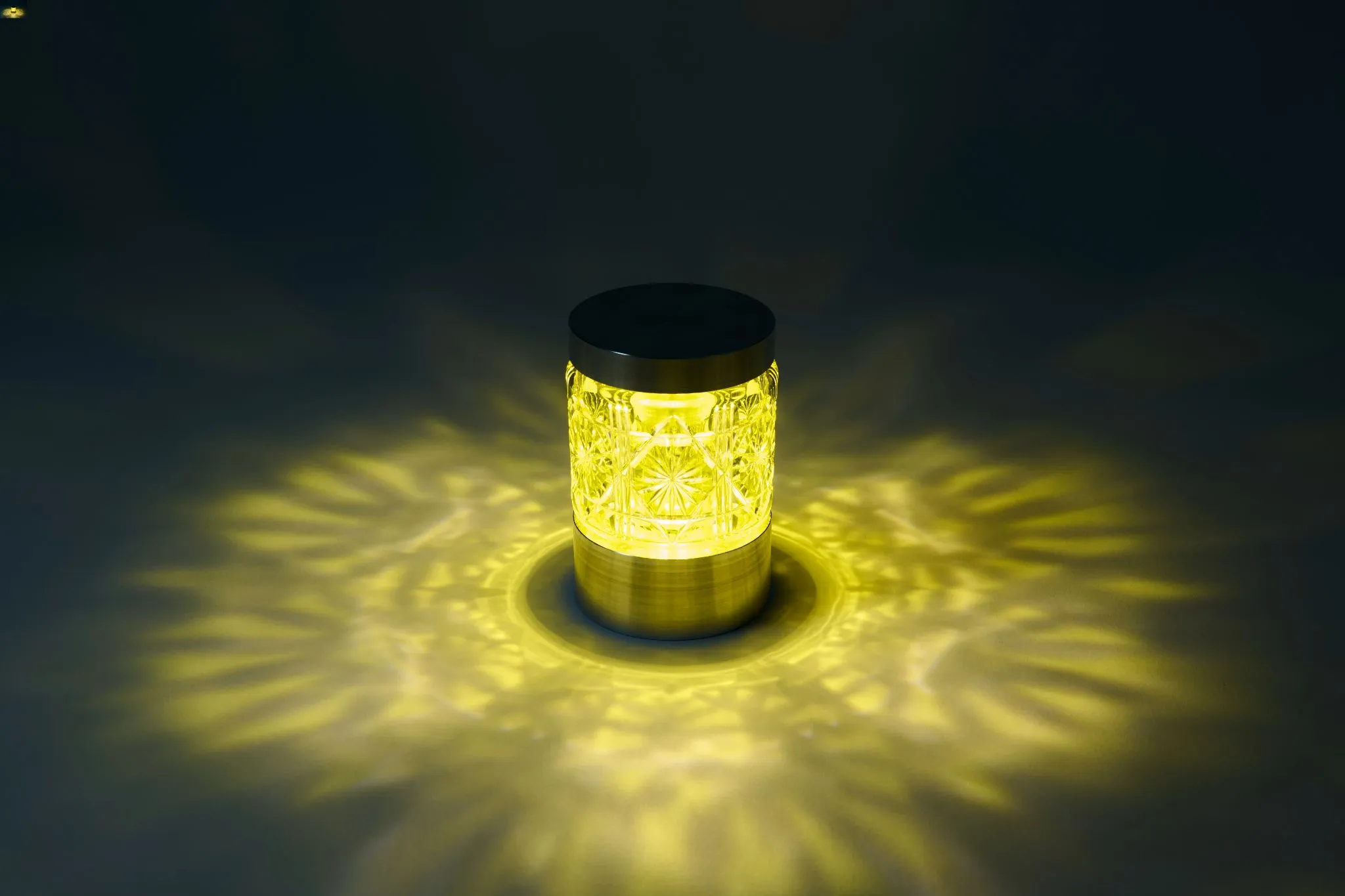
Satsuma Kiriko works especially well as a light source because its thick cased glass, deep cuts, and bokashi gradation reveal a different character when illuminated from within.
From a Craft That Receives Light to One That Radiates It
When you look at a Satsuma Kiriko cup or vessel under ordinary conditions, its brilliance comes from the way it receives and bends incoming light. In this table lamp, light passes through the glass from the inside out.
That reversal draws out a different quality in the material. When lit from within, the ridges of the cut facets cast shadows, and the bokashi gradation becomes a gradation in the light itself — projecting intricate patterns across the desk, walls, and floor around it.
The experience shifts from appreciating the object to inhabiting a space shaped by it. That shift is what this editorial team found most compelling about this product.
“From a craft that receives light to one that radiates it and shapes the space around it” — Satsuma Kiriko is being approached from a different angle.
Technique First, Not Decoration
What the lamp does not do is simply cast Satsuma Kiriko in a decorative role. The specific properties of cased glass, deep cutting, and bokashi are directly engaged by the function of transmitting light from the inside out.
The standard Kogei Japonica question when examining cross-material or cross-industry collaborations is: “Is there a reason this specific craft has to be used — or could something else be substituted?”
Satsuma Kiriko’s thick cased glass and bokashi gradation generate a quality of shadow and tonal shift native to this technique. The result feels purposeful rather than decorative.
Three Defining Features of the Satsuma Kiriko Table Lamp
The product’s character can be organized around three points: (1) light and shadow cast through cut patterns; (2) a design that moves between indoor and outdoor use; and (3) a metal body made in Tsubame-Sanjō.
1. Light and Shadow Through the Cut Patterns
Each Satsuma Kiriko glass shade is cut by hand by a kiriko-shi — a cut-glass artisan.
When lit, the cut patterns spread light across the surrounding surfaces. Unlit, the piece stands on its own as a craft object. The same colorway will read differently depending on where it is placed and how much ambient light surrounds it — the experience changes between the moment before lighting and the moment after.
The variation that comes from hand work is, for those who value craft objects, part of what makes the piece worth living with.
2. A Design That Moves Between Table Lamp and Lantern Globe
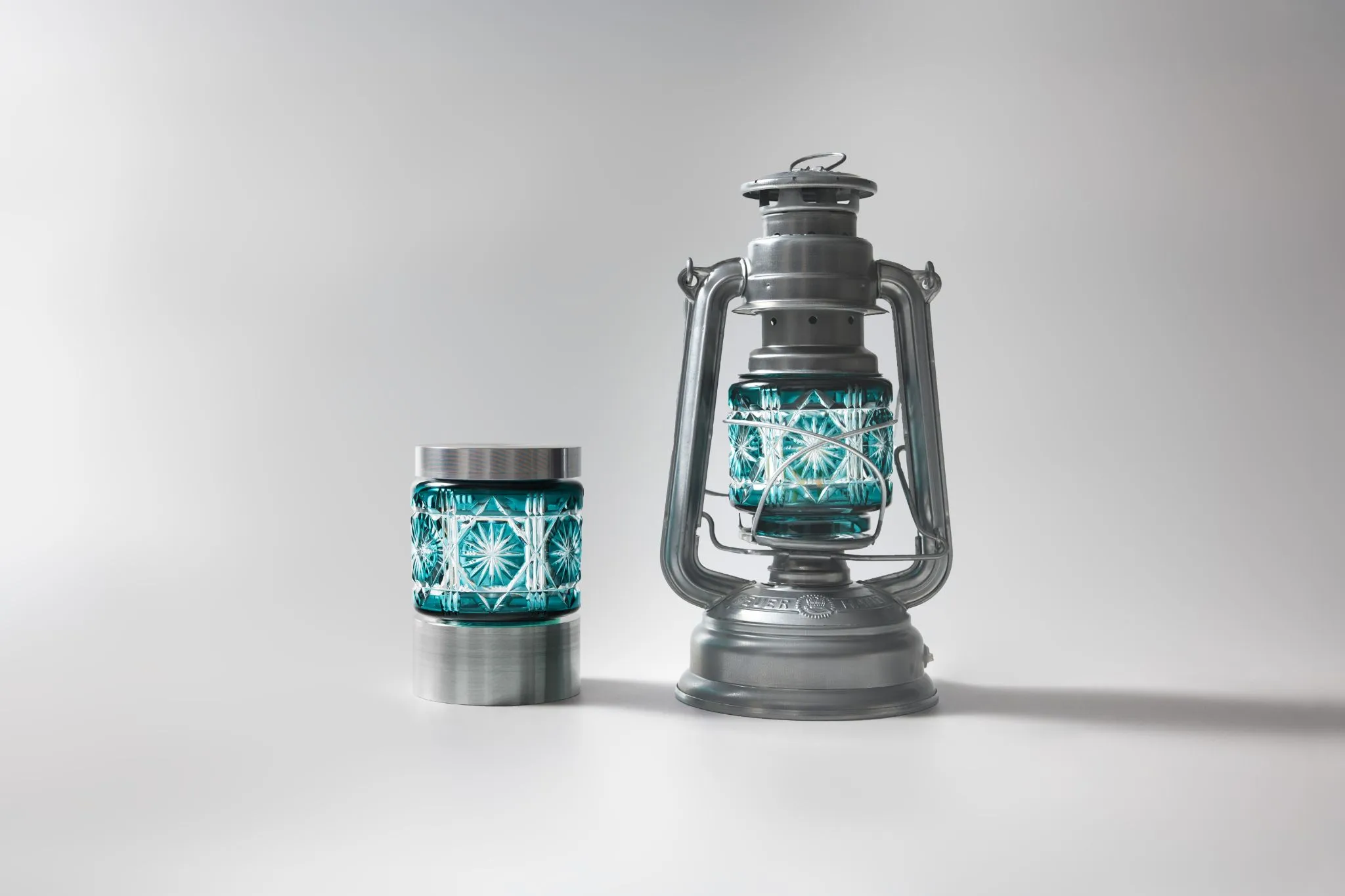
The glass shade detaches. Indoors, it serves as a table lamp for a desk, bedroom, or living area. Outdoors, it fits as a lantern globe onto compatible models, as described by the maker.
In TOKIMEKI Inc.’s product materials, the glass shade is described as having been designed with reference to the globe of Feuerhand’s Baby Special 276 — the classic German lantern — and as fitting compatible models in that size range.
Safety note: Glass requires careful handling in relation to heat and impact. Whether this shade can be used with an open-flame lantern, which models are officially compatible, and what light sources and heat tolerances apply — if you plan to use it outdoors, confirm these points on the Makuake project page and official product documentation before purchasing.
Portability and compatibility — the ability to move between indoor and outdoor settings — are central to what this product is designed to do.
(Source: Shimadzu Satsuma Kiriko × Tsubame-Sanjō Table Lamp (Revival 40th Anniversary) | Makuake)
3. A Metal Body Made in Tsubame-Sanjō
The metal base and cap are machined in Tsubame-Sanjō, as announced by the maker.
Tsubame-Sanjō is a metalworking cluster in Niigata Prefecture. In Tsubame, a tradition rooted in Edo-period nail making developed into metal tableware and cutlery manufacturing. In Sanjō, the same nail-making origins gave rise to blade and tool production.
(Source: Tsubame Manufacturing | City of Tsubame)
(Source: The History of Sanjō Metalworking | City of Sanjō)

Against the visual warmth of the glass, the metal body is minimal in form — designed to blend into a workspace alongside monitors and other desk equipment.
Comparing the Three Colorways: Shimadzu Purple, Satsuma Yellow, and Midori
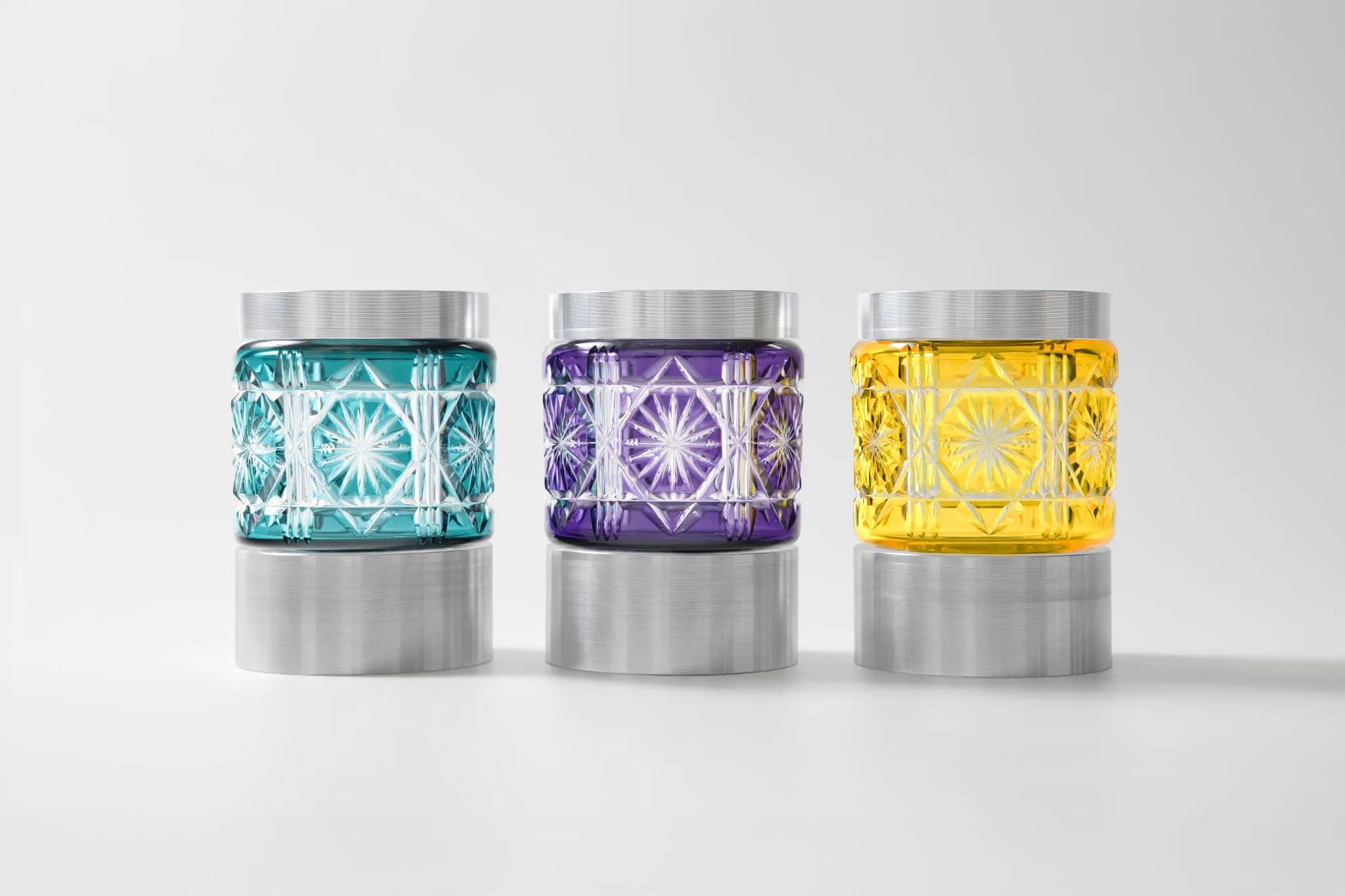
Color selection comes down to how each colorway reads lit and unlit, and how it sits in the space where you plan to use it. Each of the three has a distinct character.
| Colorway | Character | When Lit | Suited To |
|---|---|---|---|
| Midori | A green that reads well with wood furniture and in outdoor settings | A calm, clear light | Outdoor settings; wood-heavy interiors |
| Shimadzu Purple | One of Shimadzu Satsuma Kiriko’s signature colors; a rich, deep violet | A calm, layered glow | Bedroom, study, hotel-inspired interiors |
| Satsuma Yellow | A yellow associated with the revival fortieth anniversary colorway | A bright, vivid light | Living room, desk, gift giving |
*Listed left to right as pictured
What to Consider When Choosing a Color
It helps to think through the following before committing to a color.
- Whether you primarily want to enjoy the piece unlit or lit
- The intended room: bedroom, desk setup, or living area
- The materials around it — wood, metal, glass, and so on
- Whether it will stay indoors or also go outdoors
- Whether it is for personal use or as a gift
- Whether you want only the glass shade
Midori reads well with wood and natural materials; Shimadzu Purple suits quiet, contained interiors; Satsuma Yellow fits brighter, more open spaces.
From Indoors to Outdoors: What to Check Before Using the Shade as a Lantern Globe
If you plan to use this outdoors, confirm before purchasing that it is compatible with your specific lantern model and that the relevant safety conditions are clearly documented.
The shade is described as crystal glass in TOKIMEKI Inc.’s product materials. Whether it is suitable for use with an open-flame oil lantern depends on heat tolerance ratings and the model involved.
What to Confirm Before Purchasing
- The official name and model number of compatible lanterns
- Globe dimensions, attachment method, and how individual variation is handled
- Required clearance from flame or heat source; heat tolerance; permitted light sources
- Outdoor handling precautions
- Terms for breakage replacement and warranty
- Whether a carrying case is included
This is handcrafted glass. The right question is not “it should probably fit” but “is this model explicitly listed as compatible?”
Kagoshima and Tsubame-Sanjō: How Two Distinct Material Cultures Meet
This product brings together Kagoshima’s glass tradition and the metalworking culture of Tsubame-Sanjō in Niigata — two regional craft backgrounds with quite different characters. Separating what each side contributes makes the collaboration’s logic clearer.
Satsuma Kiriko: Forming the Character of the Light
Kagoshima’s contribution is the quality of the light itself. Cased glass, deep cutting, bokashi, and the variation that comes from handwork — these are what produce the patterns of light and shadow when the lamp is on.
That contribution carries the accumulated knowledge of forty years of revival — and before that, the work of reconstructing a craft that had been dormant for roughly a century.
Tsubame-Sanjō Metalwork: Forming the Structure for Everyday Use
Tsubame-Sanjō’s contribution is the structure that allows the lamp to be used in daily life. The machined base and cap support the glass shade and allow it to be carried; the hardness of the metal provides a visual counterpoint to the glass’s warmth.
Glass to form the light; metal to make it workable in everyday use. The roles are distinct.
In Cross-Material Collaborations, What Matters Is Whether the Roles Can Be Explained
Editor’s Note
Simply describing a collaboration as a “combination” of regions or materials does not, on its own, communicate value. A lamp like this — designed for long-term use, appreciated each time it is lit for the quality of shadow cast by the cuts and the physical presence of the glass — is not a straightforward purchase. It means bringing a material tradition and a body of craft knowledge into everyday life, then allowing that relationship to deepen over time.
Where did this technique originate? Why these materials and this approach? Which artisans worked at which stage, and what did they consider important? And how does this work connect to the future of Japanese craft and its regional cultures? Makers have a responsibility to convey not only the finished object but its origins, intent, and the conditions of its making — as a coherent account, offered with care to the people who will live with it.
For those on the receiving end, understanding why the piece matters before bringing it into their home is equally important. The relationship with a craft object does not conclude at purchase. Each time you light it, you may notice how the quality shifts; you may find yourself thinking about the work behind the cuts or the place the glass came from. That accumulation is what, over time, shifts an object from something owned to something genuinely lived with.
Craft and Luxury: Communicating Value, Building a Future for the Market
TOKIMEKI Inc. describes its vision as building next-generation luxury brands from Japan with global appeal, working to create conditions in which artisans can concentrate fully on making. The approach draws on operating methods from international luxury houses and applies them to the goal of bringing Japanese traditional techniques into step with contemporary life.
(Source: TOKIMEKI Inc. Official Website | TOKIMEKI)
This kind of approach is a meaningful option for keeping Japanese craft visible and accessible to a wider range of people, both domestically and internationally.
The appeal of craft objects does not lie solely in the appearance of the finished piece. When a maker communicates the material, the technique, the artisan’s work, and the intentions embedded in the object, the people who receive it can understand and engage with the value far more fully.
When craft value is communicated clearly and work is chosen by a wider range of people, it sustains the conditions in which artisans and craft makers can continue to work. When work is recognized and leads to new commissions, those outcomes feed back into the next round of making. Building that cycle is part of what it means to carry Japanese craft forward.
This Satsuma Kiriko table lamp is one case study in channeling the properties of Satsuma Kiriko cut glass into a form that can be used in contemporary daily life. Communicating the value embedded in the craft’s background, and creating new points of contact between the craft and the people who use it — that accumulation continues to expand what Japanese craft can do.
Product Overview: Pre-Sale on Makuake
Sales details will be confirmed on the Makuake project page following launch. The following reflects information available at the time of writing. International shipping availability has not yet been confirmed; please check the project page for the latest details on shipping regions and purchase options.
| Item | Details |
|---|---|
| Launch date and time | Friday, June 5, 2026, 1:00 p.m. JST (scheduled) |
| Platform | Makuake |
| Colorways | Shimadzu Purple, Satsuma Yellow, Midori |
| Listed price | All colorways listed at ¥130,000. Whether this is inclusive or exclusive of consumption tax has not been confirmed; please check the project page. |
| Early supporter discount | Up to 10% off the listed price, as announced. Pricing, quantity, and conditions are subject to confirmation on the project page. |
| Glass shade only | Available for separate purchase (planned). Price, applicable colors, and quantity to be confirmed on the project page. |
| Shipping, international delivery, corporate orders, warranty | For the latest details, see the project page and official product announcements. |
Early notification and exclusive discount codes are also available through TOKIMEKI Inc.’s official LINE account. If you are considering a purchase, check that alongside the Makuake project page.

Frequently Asked Questions: Satsuma Kiriko Table Lamp
- Q1. What is the Satsuma Kiriko table lamp?
- A table lamp that pairs a Shimadzu Satsuma Kiriko glass shade with a precision-machined metal body made in Tsubame-Sanjō. Lit from within, the cut patterns and bokashi gradation cast light and shadow across the surrounding surfaces.
- Q2. What is bokashi?
- The soft color gradation produced when an artisan cuts into the thick layer of colored glass fused over a clear glass body — a technique distinctive to Satsuma Kiriko.
- Q3. Is Shimadzu Satsuma Kiriko a nationally designated traditional craft?
- No. Shimadzu Satsuma Kiriko is designated as a traditional craft by Kagoshima Prefecture. It is distinct from crafts designated at the national level by the Minister of Economy, Trade and Industry under Japan’s Act for the Promotion of Traditional Craft Industries.
- Q4. Can it be used outdoors?
- The glass shade can be detached and used as a lantern globe on compatible models, as described by the maker. Before purchasing for outdoor use, confirm compatible models, permitted light sources, heat tolerance, and safety specifications on the Makuake project page and official product documentation.
- Q5. How many colorways are available?
- Three: Shimadzu Purple, Satsuma Yellow, and Midori. Each has a distinct character when lit; consider the space and furnishings where you plan to use it.
- Q6. Can the glass shade be purchased separately?
- A shade-only option is planned. Price, applicable colors, and quantity will be confirmed on the project page after launch.
- Q7. Where can I purchase it?
- A pre-sale is planned on Makuake. Launch date, availability, and reward options will be confirmed on the project page.
- Q8. What is Makuake?
- Makuake is a Japanese pre-sale and crowdfunding platform for product launches. Availability, shipping regions, payment methods, and international delivery options should be confirmed directly on the project page.
Living with Satsuma Kiriko: Light as Part of Daily Life
Bringing a craft object into contemporary life does not always require changing what it fundamentally is.
What this table lamp demonstrates is, if anything, the opposite. By reconsidering the properties Satsuma Kiriko has always had — cased glass, bokashi — and connecting them to the function of transmitting light, the vessel becomes something that illuminates a space.
Rather than returning craft to everyday life, the more accurate description is: finding a place in contemporary life where the qualities already embedded in the craft can be properly received.
Born in the late Edo period, lost, and rebuilt over forty years of revival — this lamp brings Satsuma Kiriko’s light and shadow to a desk, a nightstand, a room. It is, in our view, one compelling way to keep traditional craft part of contemporary life.
For those considering a purchase, the latest details are on Makuake. For companies and professionals interested in craft-business collaboration, we hope this case study serves as a useful reference point.
For companies and teams considering craft-based product development, corporate gifts, hotel and retail space design, or collaborations with artisans and craft workshops, Kogei Japonica works with you from initial consultation and maker connections through to PR and domestic and international communications.

