
For craft studios and organisations in Japan, the Japan Arts Fund is one potential source of support for preserving craft skills and passing them on. Eligibility, however, depends on three separate checks: the applicant organisation, the project and the costs.
“We want to hand these skills on to the next generation, but how do we budget for teaching time, materials and documentation?” Craft studios and regional craft cooperatives often know that a project is needed, yet stall when it comes to turning it into an application and a budget.
For FY2027, grants in the craft category come in four fixed amounts: ¥200,000, ¥500,000, ¥1 million and ¥2 million. Beyond the amount itself, applicants need to consider the eligibility rules, how the final grant amount is confirmed and when payment is made, and the cash flow until that payment arrives. Drawing on official documents, this guide works through the process from project planning to the final checks before submission.
(Source: FY2027 Application Guidelines, p.110 | Japan Arts Council)
Note: Scheme information is current as of 27 October 2026. All dates and times are given in Japan Standard Time (JST, UTC+9). The official guidelines and application forms are available in Japanese. Applicants should check the official pages for updates and the latest forms.
Table of Contents
FY2027 funding: key dates and documents
Preparing for an FY2027 project begins by distinguishing the application window from the activity period, and by gathering the latest documents for the relevant category.
Application dates and the funding period

This call is for projects taking place in Japan’s fiscal year 2027, but applications are made in autumn 2026. The official label, Reiwa 9 (Reiwa being Japan’s current era name), refers to the year in which the work takes place, so do not assume that applications open only in 2027.
| Item | Details |
|---|---|
| Scheme | Japan Arts Fund |
| Funding strand | Regional cultural promotion activities |
| Category covered here | Preservation and transmission of traditional craft techniques and conservation techniques for cultural properties |
| Application window | 10:00, Friday 30 October to 17:00, Thursday 12 November 2026 (JST) |
| Activity period | 1 April 2027 to 31 March 2028 |
| Applicant and location | Organisations in Japan carrying out activities in Japan |
| Submission | Online, via the grant application submission form |
(Source: Regional Cultural Promotion Activities: Guidelines and Application Forms | Japan Arts Council)
Within the organisation, it helps to assign people to check the conditions, to draft the project description and to review the budget. Even where a small team shares these roles, keep drafting and checking separate.
What this guide covers
The Japan Arts Fund has several categories, spanning the performing arts, fine arts, regional culture and more. This guide focuses only on the category for preserving and transmitting craft techniques and conservation techniques for cultural properties. Exhibitions and events related to craft are not necessarily eligible on the same terms.
(Source: FY2027 Grant Programmes | Japan Arts Council)
Even a studio planning to upgrade its equipment should not build the application around what it wants to buy. Instead, set out what the equipment or tools will be used to teach, who will learn, and what will remain once the project is over. Whether an expense is necessary for the craft and whether it is eligible under the scheme are two separate questions.
Who can apply, and which activities qualify?
Working in craft does not in itself make an organisation eligible. The organisation’s purpose, structure and track record are checked separately from the conditions for the activity.
Studios, cooperatives and unincorporated associations: where to check the requirements
Terms such as “studio”, “preservation society” or “regional craft cooperative” describe what a group does, but they do not determine eligibility. Start by checking the legal form and rules of the body that will actually apply. Applications cannot be made in an individual’s name.
(Source: FY2027 Call FAQ | Japan Arts Council)
The craft category is open to organisations whose main purpose is preservation and transmission, and which take responsibility for planning, producing and funding the project. Besides incorporated bodies, unincorporated associations and organising committees that meet the requirements may also apply.
Unincorporated associations must have, among other things, written rules; a body that makes and carries out decisions; an accounting structure that keeps and audits its accounts; an office that serves as the base of activity; and at least one year of activity since establishment at the time of application. The applicant, or the core organisation of an organising committee, must also have organised activities involving similar techniques itself.
(Source: FY2027 Application Guidelines, p.108 | Japan Arts Council)
Creating a name and rules just for this call will not meet the track-record requirement. When considering a partnership with an existing organisation, do not simply borrow its name; be clear about who is responsible for the project and for the payments.
| What to check | Question to answer | Documents and information |
|---|---|---|
| Applicant | Who is responsible for planning and costs? | Articles or rules, organisational structure, track record |
| Project | Which technique is passed on, to whom, and how? | Target technique, participants, process, outcomes |
| Costs | What work does each expense support? | Cost category, unit price, quantity, payee |
| Cash flow | Will funds be in place when payments fall due? | Payment schedule, expected income, cash on hand |
Training, documentation and hands-on sessions: explain the purpose and content of each
Two sessions may look alike yet serve very different ends. Training the next generation of craft practitioners and a hands-on session that introduces the public to craft differ in both purpose and preparation. Rather than simply relabelling the project in the scheme’s terms, be specific about what participants should take away.
In FY2026, three projects were selected in this category. The amounts shown are the planned grant amounts at the time of announcement, not final payments. Organisation names are romanised; the descriptions in brackets are our own.
| Organisation | Selected project | Planned grant |
|---|---|---|
| Kohoku Kominka Saisei Network | Preservation and transmission of kayabuki, or thatching, as a traditional building craft | ¥500,000 |
| Kyoto Senshoku Bunka Kyokai | Reconstruction of costumes for the Senshoku-sai textile festival | ¥2 million |
| Bunkazai Shuri Hyosogire Keisho Kyokai | Production of a film on making hyōsō-gire, the textiles used to mount hanging scrolls and screens, and its public presentation and use | ¥2 million |
(Source: FY2026 Japan Arts Fund: Decision on Grant Recipients | Japan Arts Council)
Thatching, costume reconstruction and a film of a technique: the range alone shows that preserving craft skills can take several forms. The project titles, however, do not reveal why they were selected or exactly what each involves. Treat them as reference points for making your own plans concrete.
How cultural heritage designations affect eligibility
Four types of activity are eligible: preservation and transmission; public presentation and use; preservation through documentation; and reconstruction based on historical evidence. Techniques essential to making traditional craft objects or repairing cultural properties, such as making tools or producing raw materials, also fall within scope.
Designation needs particular care. In the guidelines, the condition “excluding those designated or selected by the national government” is attached to preservation and transmission activities, one of the four types. Do not read it as ruling out every type, including public presentation and documentation.
(Source: FY2027 Application Guidelines, p.108 | Japan Arts Council)
What we mean by preserving and passing on craft skills
Here, the phrase refers to recording how materials are handled, how tools are used, the steps of a process and how the finished result is judged, and passing that knowledge on to the next generation of practitioners. This calls for different work from storing finished pieces. The scheme’s own scope is defined by the application guidelines.
If a technique has been designated, note its name, the designating body and the type of designation. Designation as a traditional craft product, a system administered by the Ministry of Economy, Trade and Industry, is not the same as the designation or selection of a technique as a cultural property, and the two should not be treated as one.
Turn preservation goals into a workable project plan
A project plan should go beyond naming the techniques to be preserved. It should set out who will pass what on to whom, and how the results will be checked once the project ends.
Break “what to preserve” down into processes, judgements and material handling
A goal such as “passing traditional techniques on to future generations” is not enough to set a schedule or a budget. Divide the technique into what will be taught and what will be documented.
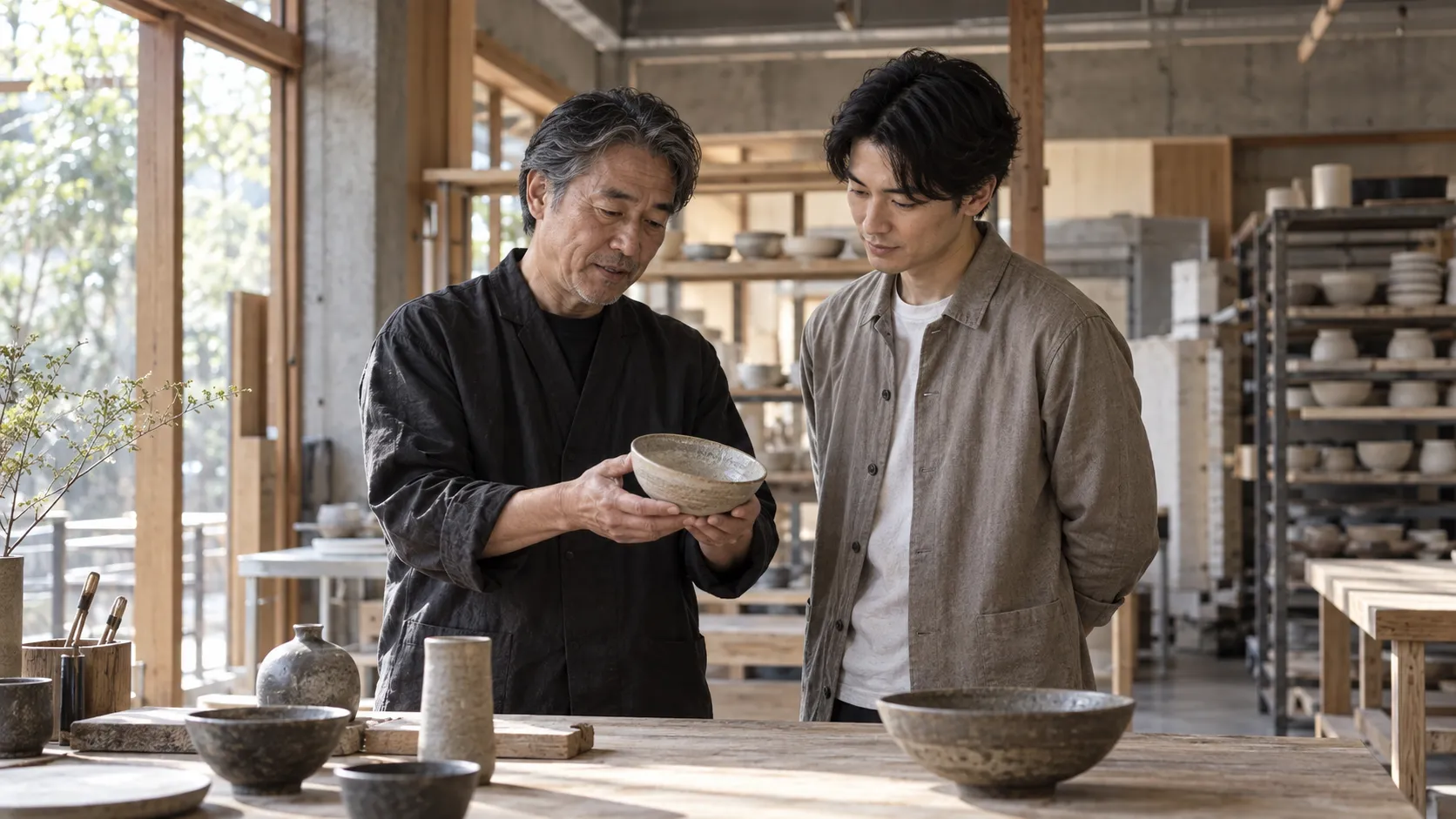
In ceramics, for example, glazing can be broken down into a series of judgements: the condition of the glaze, how absorbent the vessel is, how to judge thickness. Rather than simply “filming the work”, plan for the maker to explain why a particular method was chosen. That makes the purpose of the documentation clear.
Showing a procedure is not the same as enabling the next person to make the judgement themselves. Working out what will be explained, what will be tried and where the instructor will check progress also clarifies the time and materials required.
Assign roles for those who teach, learn and document
A plan in which the instructor also prepares materials, handles communication, books venues and deals with filming can eat into teaching time. List the work required first, then assign each task.
The table below is an example prepared by our editorial team to help structure a project. It does not guarantee that any activity or cost will be eligible.
| Stage | Main tasks | What to check |
|---|---|---|
| Preparation | Selecting processes, preparing materials and tools | Is the content suited to participants’ experience? |
| Instruction and practice | Demonstration, explaining judgements, repeated practice | Does it go beyond observation? |
| Documentation | Organising explanations, photographs and video | Can participants use it to review the technique later? |
| Review | Confirming what was achieved and what remains | What carries over to the next session? |
Editor’s Note
One thing a preservation plan should not overlook is the time instructors spend away from their own production. Leaving that time out of the budget does not make the burden disappear. Identify all the work involved first, then decide which parts the grant can cover and which the organisation will support itself. I believe that order is what allows a project to continue without strain.
Decide on outcomes and access before the project begins
Measuring outcomes by attendance alone makes it hard to see what was actually passed on. Prepare ways of checking that fit the project’s aim, such as “can explain the process” or “can choose a working method suited to the material”.
Producing the documentation is only the first step. Decide in advance who will keep it, who may view it and how it will be used in future training. In this category, documentation must be followed by use, such as public release, and the guidelines also advise seeking expert advice and handling the rights of the people filmed, along with other related rights.
(Source: FY2027 Application Guidelines, p.109 | Japan Arts Council)
The scope of public access is easier to agree during planning than after filming. Check both the scheme’s conditions for use and the wishes of the makers.
If the handover of the whole studio is also under consideration, equipment, business partners and other matters need to be organised alongside the techniques.

Budget in three layers: total project cost, eligible costs and cash flow
The cost of the whole project, the costs that can be claimed under the grant and the cash needed when payments fall due are three different things. Separating them prevents an unrealistic financial plan.
Calculate costs and quantities for each stage
A budget needs the basis for each figure, not just the amount. Rather than a single lump sum for materials, state how many people will use them and how many times, so that the budget can be checked against the project.
| Work or item | How to calculate | What to check |
|---|---|---|
| Technical instruction | Unit fee × number of sessions, etc. | Teaching hours and scope of responsibility |
| Practice materials | Quantity × participants × sessions, etc. | Separating practice materials from those used for samples |
| Documentation | Separate quotes for filming, editing and other tasks | Delivery format, revisions, permitted use |
| Venue and equipment | Rate × number of days, etc. | Hours of use, including set-up and clearing |
These are examples for listing costs. Whether an item can actually be claimed depends on the official lists of eligible and ineligible costs. Do not remove necessary work to make the budget look smaller, and where help is given free of charge, make sure everyone knows who is responsible for what.
Check which costs are eligible, and flag those still unconfirmed
In the craft category, the grant tier is chosen according to the total of three selected cost categories and the total of eligible costs. Do not apply the tables used for other categories, such as folk cultural properties.
| Grant tier | Total of three selected cost categories | Total eligible costs |
|---|---|---|
| ¥200,000 | ¥200,000 or more | ¥200,000 or more |
| ¥500,000 | ¥500,000 or more | ¥500,000 or more |
| ¥1 million | ¥1 million or more | ¥1 million or more |
| ¥2 million | ¥2 million or more | ¥2 million or more |
(Source: FY2027 Application Guidelines, p.110 | Japan Arts Council)
These thresholds do not mean that the organisation can proceed without funds of its own. Ineligible costs and bridging funds must be covered separately. Organisations that deduct consumption tax paid on purchases determine their tier using amounts excluding tax, so check with whoever handles the accounts.
The choice of the three cost categories does not affect assessment, but it cannot be changed after submission. If their total after the project falls below the grant awarded, the grant is reduced. For example, if a project is awarded ¥1 million but the selected costs come to ¥800,000 once the work is done, the grant becomes ¥800,000.
(Source: FY2027 Application Guidelines, p.110 | Japan Arts Council)
Budget terms to keep separate
- Total project cost: the cost of the whole project.
- Eligible costs: costs that meet the scheme’s conditions.
- Costs used to calculate the grant: the three cost categories selected at the application stage.
- Bridging funds: the money needed to make payments before the grant arrives.
Among the cost categories, distinguish documentation costs (記録作成費), for records made to preserve a technique, from recording and online distribution costs (記録・配信費), for capturing the project itself. Purchases of tools and similar items are not ineligible across the board, but they require a purchase justification statement and quotations, and must be approved. Completing the paperwork does not make them eligible automatically.
On the other hand, staff salaries, office running costs, meeting expenses, and allowances or travel for trainees are listed as ineligible in the craft category. Even where such spending is necessary, identify the portion to be covered from other sources.
(Source: FY2027 Application Guidelines, pp.111–113 | Japan Arts Council)
Check income, the organisation’s own funds and the timing of payments
The grant is paid after the project ends, once the final report has been submitted and the amount confirmed. Funds are not transferred at the point of selection, so money for materials and outsourced work needs to be secured in advance.
Eligible costs are those the organisation itself paid between 1 April 2027 and 31 March 2028, as shown by supporting documents. Venue deposits or production costs paid in an earlier fiscal year cannot be claimed.
Payments should, in principle, be made by bank transfer from an account in the organisation’s name. Cash payments require receipts showing the organisation’s name and other details, as well as a cash book. If members plan to pay with personal cards and claim reimbursement, check in advance how the account name and supporting documents will be treated.
(Source: FY2027 Application Guidelines, pp.6, 8, 17 | Japan Arts Council)
In a cash-flow table, set the months when payments fall due alongside the months when income is expected. Include ineligible spending, and identify the point at which cash on hand will be at its lowest.
Projects that receive grants from local governments or private bodies may also be eligible, but the same costs cannot be claimed twice, and the other funder’s rules must be checked as well. A project cannot receive overlapping grants from the Ministry of Education, Culture, Sports, Science and Technology (MEXT) or the Agency for Cultural Affairs, and simply splitting the cost categories may not be enough.
(Source: FY2027 Application Guidelines, pp.9–10 | Japan Arts Council)
Submit with the latest forms, after a full final check
Prepare your application in four steps: obtain the latest forms, cross-check the project plan and budget, check the attachments, then submit. Set aside time for checking, separate from the day the writing is finished.
Replaced forms and changes to the application process
The forms for this category were reissued on 16 October 2026 after errors were found. Do not use any version obtained before that date; download the forms again from the official page.
Prior registration of organisation details is no longer required. Forms must be completed in Microsoft Excel, without changing file names or extensions. The guidelines also warn that cutting and pasting cells can cause calculation errors.
(Source: Guidelines and Application Forms Download | Japan Arts Council)
When several people are working on an application, record the date the forms were downloaded and decide who manages the final version. If old and new versions get mixed up, the wrong file could be submitted even when its contents are correct.
Check that the plan, budget and attachments agree
Check that the number of sessions matches the quantities of materials, that participant numbers match the size of the venue, and that the intended use of the documentation matches the outsourced work. Read everything together as a single project rather than reviewing the text and the figures separately.
- The applicant’s purpose, structure and track record meet the conditions.
- The target technique, the aim of the project and its outcomes can be explained concretely.
- Dates, venues and staff availability align.
- The number of sessions, participants and quantities of materials are consistent.
- The three selected cost categories and total eligible costs meet the conditions for the chosen tier.
- No ineligible or unconfirmed costs have been included.
- Payments fall within the fiscal year, and funds are in place to cover the period until the grant arrives.
- The latest forms and all required attachments are ready.
- The files display correctly, formulas work and no text is cut off.
Applications cannot be amended or resubmitted. Ask someone other than the author to read the application and check that the plan comes across without verbal explanation. After sending, confirm that the acknowledgement email has arrived.
(Source: FY2027 Application Guidelines, pp.14–15 | Japan Arts Council)
Consultation, enquiry and application deadlines
The periods for consultation and for applications are different. As of 27 October 2026, bookings for online consultations had closed. The Japan Arts Council listed the enquiry form as open until 17:00 JST on 29 October, and applications as accepted until 17:00 JST on 12 November.
(Source: Guidelines and Application Forms Download | Japan Arts Council)
When making an enquiry, set out the organisation’s legal form, the aim of the project, the conditions you believe apply and the points on which you are unsure. This conveys the issues more clearly than a broad question such as “Are we eligible?”
Anyone considering an application should start by opening pages 108–113 of the official guidelines and the latest forms, and checking the conditions for the organisation, the project and the costs.
(Source: Guidelines and Latest Application Forms | Japan Arts Council)
Frequently asked questions and next steps
Work through eligibility in order: organisation, project, costs. Beyond meeting the financial thresholds, make sure the organisation has the capacity to deliver the project and the funds to cover the period until payment.
FAQ: applicants, projects and costs
- Q. Can an individual maker or a sole-proprietor studio apply?
- Applications cannot be made in an individual’s name. What matters is not whether the body is called a studio but whether the applicant meets the requirements for organisations.
(Source: FY2027 Call FAQ | Japan Arts Council) - Q. Can we apply if we set up an unincorporated association now?
- Setting one up is not enough to meet the conditions. Unincorporated associations need, among other things, at least one year of activity since establishment, as well as a record of organising similar activities.
(Source: FY2027 Application Guidelines, p.108 | Japan Arts Council) - Q. Are all nationally designated or selected techniques ineligible?
- This cannot be decided across the board. The condition excluding national designation or selection applies to preservation and transmission activities. Check each activity type separately.
(Source: FY2027 Application Guidelines, p.108 | Japan Arts Council) - Q. Are hands-on sessions for the public eligible?
- The label alone does not decide it. Be specific about which technique the project presents or passes on, and check it against the requirements for both the organisation and the activity.
- Q. Can the grant be used for documentary films of techniques or for buying tools?
- Some cost categories may cover these. However, the purpose of the documentation, the need for the purchase and the plans for its use must all be confirmed. Writing a purchase justification statement does not mean approval is automatic.
(Source: FY2027 Application Guidelines, pp.111–113 | Japan Arts Council) - Q. Does the ¥2 million tier require eligible costs of ¥4 million or more?
- Not in the craft category. Both the total of the three selected cost categories and the total of eligible costs must be ¥2 million or more. Ineligible costs and bridging funds need to be considered separately.
(Source: FY2027 Application Guidelines, p.110 | Japan Arts Council) - Q. Is the grant paid before the project takes place?
- It is paid after the project ends, once the final report has been submitted and the amount confirmed. Secure the funds needed during the project in advance.
(Source: FY2027 Application Guidelines, pp.6, 17 | Japan Arts Council) - Q. Can it be combined with other grants?
- That depends on the other funder and the project. Check both the Fund’s rules on overlapping applications and grants and the other funder’s own rules. Splitting the cost categories alone may not be accepted.
(Source: FY2027 Application Guidelines, pp.9–10 | Japan Arts Council)
Keep application preparation separate from communication and partnerships
Questions about eligibility and costs should be checked against the Japan Arts Council’s official documents and with its staff. Deciding who the skills will be passed on to, and which partners to work with, is a separate task for the organisation running the project.
When communicating about the work, do not stop at “we are preserving tradition”. Show which processes are being passed on, to whom, and what you would like partners to take on. If you are considering having your project featured or exploring a partnership, see the Kogei Japonica support pages. These cover communication and collaboration, and are separate from grant eligibility and application procedures.

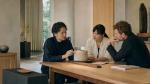
In preparing an application to the FY2027 Japan Arts Fund, the first thing to put in place is not a polished proposal but a concrete plan for what will be passed on, to whom and how.
Editor’s Note
At Kogei Japonica, we believe that preserving craft skills should not depend on makers’ dedication alone. A realistic plan accounts for teaching time, materials for trial and practice, and the work of reviewing the documentation. Building the budget and assigning responsibilities around these tasks is what prepares those skills to be put to work by the next generation of practitioners.
