
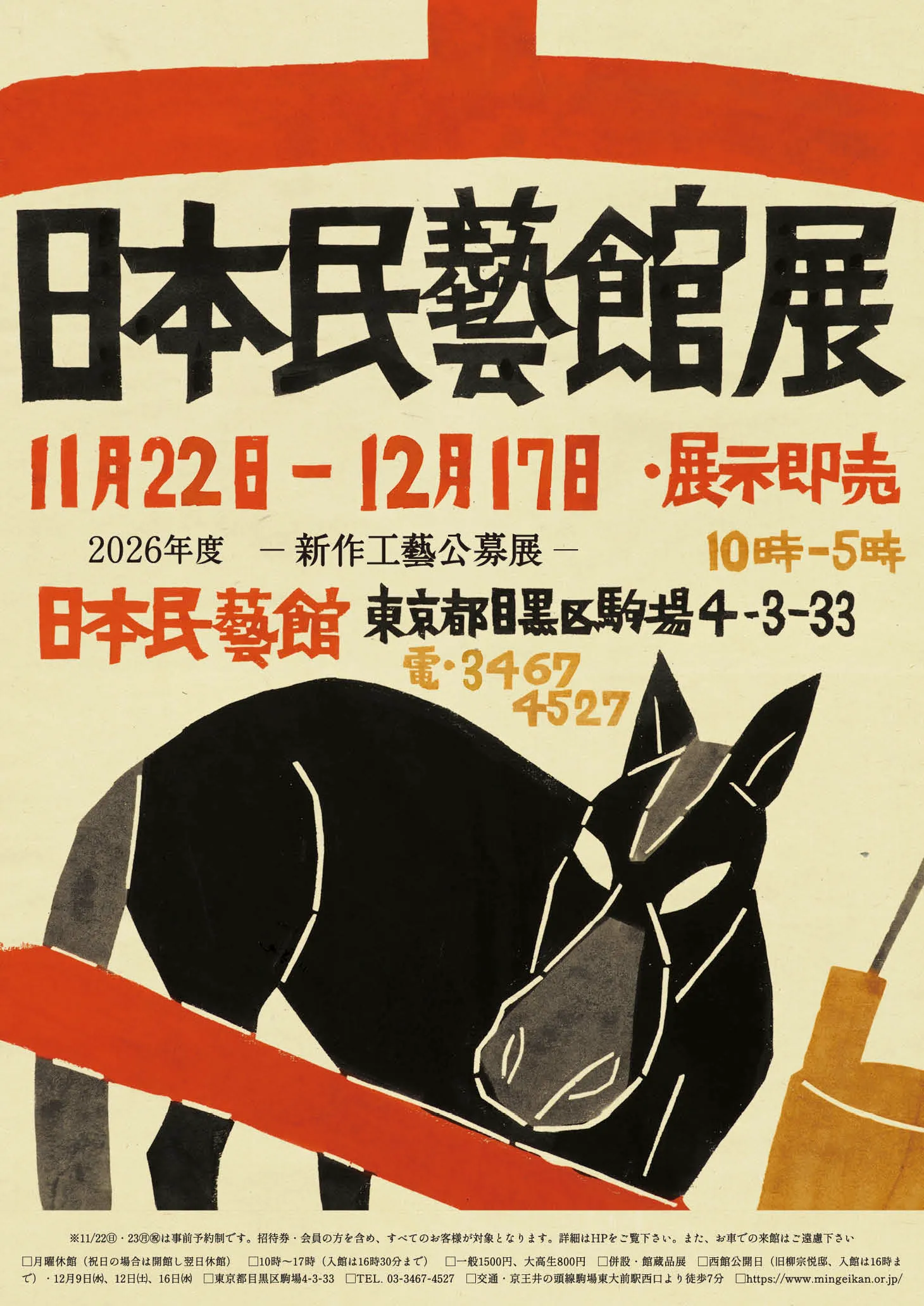
At the Japan Folk Crafts Museum’s New Works Competition and Exhibition 2026, you can view and buy new work by craftspeople from across Japan. Booking a timed-entry slot and reserving a piece for purchase are separate processes. It helps to look at the information you need to choose your visiting day separately from the conditions for buying and collecting a work.
Which pieces are for sale, and can you take one home on the day you buy it? For first-time visitors, it may not be clear which works are available or when they can be collected. Alongside the dates and booking arrangements, this guide explains the two categories of work and how each is sold, how prices are set, and what to check so that you choose pieces that suit the way you live.
Exhibition details and sales arrangements are based on this year’s official information and the 2026 application guidelines. Where these sources do not give specifics, such as individual payment or shipping terms, this is noted in the relevant section.
What is the New Works Competition and Exhibition?
The New Works Competition and Exhibition (Nihon Mingeikan-ten) is an open-call exhibition that invites new crafts from across Japan, then displays and sells the works chosen by its jury in two categories. It places weight on objects made for everyday use and capable of being made again, with the aim of developing such crafts and helping them reach a wider public.
(Source: About the New Works Competition and Exhibition (in Japanese) | The Japan Folk Crafts Museum)
Table of Contents
When and Where Is the Japan Folk Crafts Museum Exhibition 2026?
The exhibition runs from Sunday 22 November to Thursday 17 December 2026. Closure days during the run, and the dates when the West Hall is open, should be checked separately.
| Item | Details |
|---|---|
| Official title | New Works Competition and Exhibition 2026 |
| Dates | Sunday 22 November – Thursday 17 December 2026 |
| Venue | The Japan Folk Crafts Museum |
| Main Hall opening hours | 10:00–17:00 (last admission 16:30) |
| Closed | Tuesday 24 November, Monday 30 November, Monday 7 December, Monday 14 December |
| Admission | Adults ¥1,500; university and high school students ¥800; junior high school students and younger free |
| West Hall open dates | Wednesday 9, Saturday 12 and Wednesday 16 December |
| Address | 4-3-33 Komaba, Meguro-ku, Tokyo |
Dates, closure days and West Hall open dates are taken from this year’s exhibition page; admission fees come from the museum’s official visitor information. Visitors with a disability certificate and one carer pay a reduced fee of ¥750 each on presenting the certificate.
(Source: New Works Competition and Exhibition 2026 (in Japanese) | The Japan Folk Crafts Museum)
(Source: Hours, Closures and Admission (in Japanese) | The Japan Folk Crafts Museum)
The museum is open on Monday 23 November, a national holiday, and closed the following day, Tuesday 24 November. Rather than assuming that closures always fall on a Monday, check your intended date.
The West Hall is the former residence of Soetsu Yanagi, and its hours differ from those of the Main Hall. On its open dates, it is open from 10:00 to 16:30, with last admission at 16:00. If you plan to see both buildings, allow for the West Hall’s earlier last admission time.
(Source: Hours, Closures and Admission (in Japanese) | The Japan Folk Crafts Museum)
The museum is a seven-minute walk from the West Exit of Komaba-todaimae Station on the Keio Inokashira Line, or a fifteen-minute walk from the East Exit of Higashi-kitazawa Station on the Odakyu Line.
(Source: Access (in Japanese) | The Japan Folk Crafts Museum)
Do You Need to Book? In 2026, Timed Entry Applies Only to the First Two Days
Timed-entry booking for general visitors applies to 22 and 23 November, with bookings opening at 10:00 JST (UTC+9) on Sunday 1 November. Group visits are covered by a separate advance-booking requirement.
Days that require booking, and days that do not
According to this year’s official information, only the first two days of the exhibition operate on an online, timed-entry, advance-booking basis. From 25 November onwards, days when the museum is open fall outside this timed-entry system.
(Source: New Works Competition and Exhibition 2026 (in Japanese) | The Japan Folk Crafts Museum)
| Visit date / type of visit | Booking |
|---|---|
| Sunday 22 and Monday 23 November (national holiday) | Online timed-entry, advance booking required |
| Days when the museum is open from Wednesday 25 November | Not covered by this year’s timed-entry booking |
| Group visits | Advance booking required under the museum’s standard visitor information; check with the museum |
Members and invitation-ticket holders should check the guidance provided when bookings open. Do not assume that booking arrangements from previous years still apply; always refer to the 2026 page.
(Source: Hours, Closures and Admission (in Japanese) | The Japan Folk Crafts Museum)
How to book, and what to watch for
Once bookings open, follow the booking method set out on the official exhibition page. The official information does not currently specify the time slots, whether payment is taken when you book, or how changes and cancellations are handled.
- Decide on your date, preferred time and the number of people in your party.
- Find the booking method via the official page and read the conditions.
- After booking, keep a record of the date and time, and of anything you will need at reception on the day.
An entry booking does not reserve a work for you. If there is a piece you hope to buy, check separately whether it is still available and how to buy it.
Should you visit on the first two days or later?
Choose your date according to the booking requirement and your own schedule. How visitor numbers will develop in 2026, and whether any stock will be replenished, have not been confirmed, so it cannot be said that the first two days offer the widest choice or that later dates will be quieter.
Under the 2026 application guidelines, however, nyūsen (selected) works remain on display for the full run. You can plan to see them later in the exhibition, but being able to see a work is not the same as being able to buy it. Whether each piece is still available needs to be checked individually.
(Source: 2026 Application Guidelines (in Japanese) | The Japan Folk Crafts Museum)
Can You Buy the Works on Display? How Sales and Collection Work
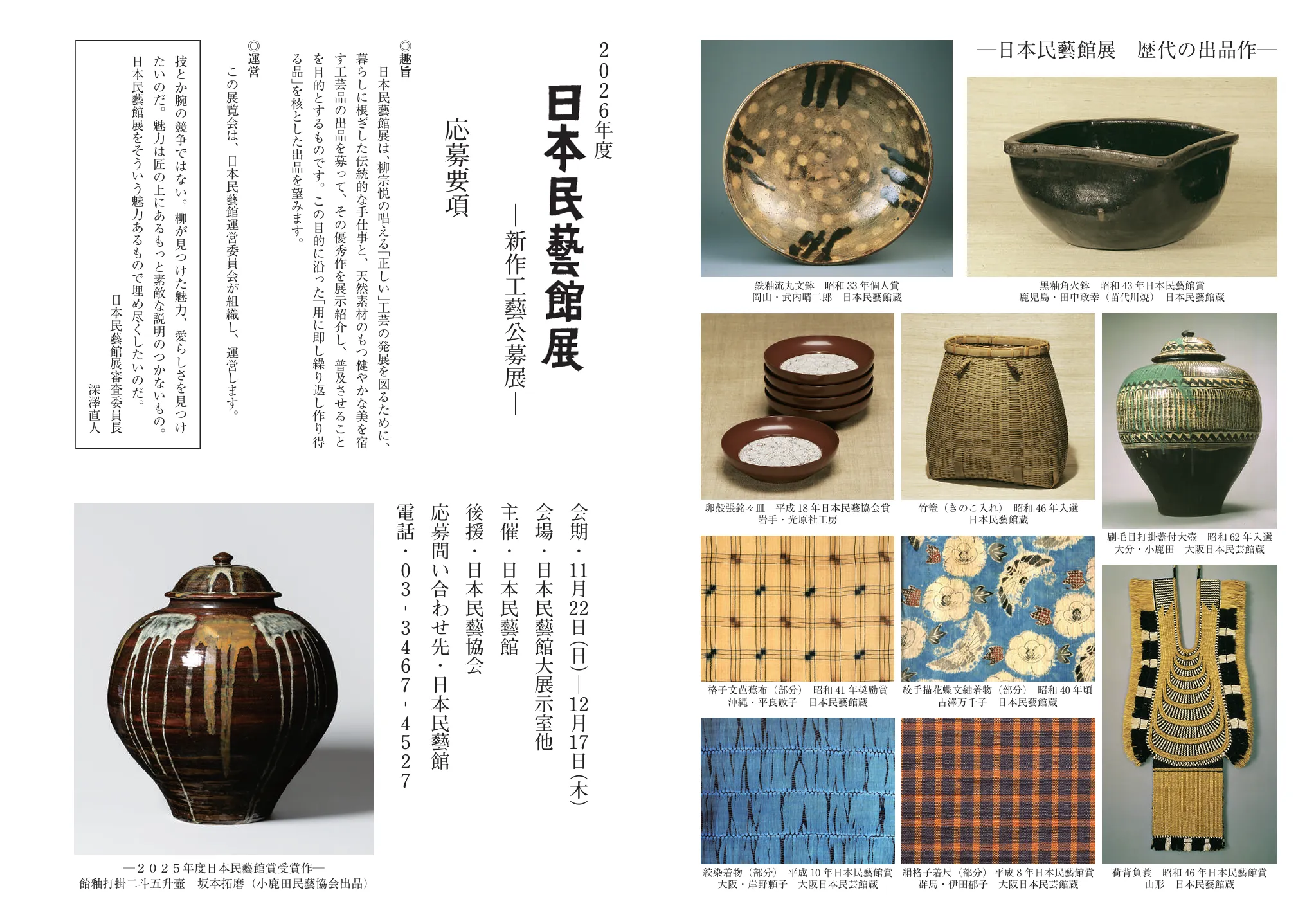
Nyūsen works can be reserved for purchase and remain on display throughout the exhibition; jun-nyūsen works can be bought on the day of your visit. The key is to check separately when you can buy a piece and when you can collect it.
Nyūsen and jun-nyūsen works
The jury assigns each entry to a category. The museum distinguishes between nyūsen (selected works) and jun-nyūsen, works that were not selected for nyūsen status but meet the exhibition’s aims. Being selected is not the same as receiving a prize.
(Source: Information for Prospective Exhibitors (in Japanese) | The Japan Folk Crafts Museum)
| Point to check | Nyūsen works | Jun-nyūsen works |
|---|---|---|
| Display | On display throughout the exhibition | Displayed in the exhibition galleries |
| How they are sold | Reserved for purchase | Available to buy on the day of your visit |
| Collection | As the work stays on display, check the collection date and method | Check whether you can take it home that day, and the shipping conditions |
| What to check when buying | Availability, when payment is due, how you will receive the work | Availability, payment method, how you will transport it |
Display and sales arrangements are based on the 2026 application guidelines. Do not assume that “available to buy on the day” means every piece can be carried home that same day.
(Source: 2026 Application Guidelines (in Japanese) | The Japan Folk Crafts Museum)
The jury’s assessment is a useful guide when looking at the work. But whether a piece fits on your table or in your cupboards, and whether its care requirements fit your routine, is for the person who will use it to decide. Rather than choosing by category alone, consider how well a piece suits your daily life.
Who sets the price?
Under the 2026 application guidelines, exhibitors must state the sale price on the submission form. Works not for sale are not accepted, and Japan’s consumption tax, similar to VAT or sales tax, is added to the price specified by the exhibitor.
In addition, 30% of the sale price is taken as a commission and used to fund the running of the exhibition. How prices will be shown on the labels in the galleries has not been confirmed, so check the total amount payable when you buy.
(Source: 2026 Application Guidelines (in Japanese) | The Japan Folk Crafts Museum)
Editor’s Note: Reading the exhibition through the way it sells
What interests me is that presenting the work and getting it to the people who will use it are part of one system. Part of every sale also funds the exhibition itself. When I look at a price label, I want to weigh not only appearance or a maker’s reputation, but also what the object is for, the care taken in making it, and the time I will spend using it.
Payment, taking work home and shipping
The official information and application guidelines do not set out payment methods or shipping terms for visitors. Before buying, check the following points.
- Which payment methods are accepted, and the total amount payable.
- When payment is due for a nyūsen work, and the collection date.
- Whether you can take the piece home that day, or need to have it shipped.
- Where the museum can ship to, the shipping costs and the packing conditions.
- Whether there are limits on the number of purchases, or set procedures for buying.
If you are buying while travelling, it is essential to know whether you can receive the work before you return home. Do not assume that delivery to your hotel or shipping overseas is available; check first. Enquiries can be made before your visit by telephoning the Japan Folk Crafts Museum on +81-3-3467-4527 (03-3467-4527 from within Japan).
(Source: New Works Competition and Exhibition 2026 (in Japanese) | The Japan Folk Crafts Museum)
What Should You Check Before Buying? Five Points for Choosing Pieces You Will Keep Using
Check five things: size, care, how you will use the piece, how you will receive it, and who made it. Trust what draws you to a piece, but also picture your life with it at home. That is what leads to a purchase you feel sure of.
If it is a bowl, what will you serve in it? If it is a basket, what will it hold? If it is a textile, where will it be used? Settling on a single use makes the dimensions and handling you need much clearer. Moving from “I’ll use it someday” to “I’ll use it tomorrow morning” makes the choice easier.
Pre-purchase checklist
- I have checked the booking conditions and closure days for my visiting date.
- I know the dimensions of the space where the piece will sit or be stored.
- I have thought about what the piece is for and how often I will use it.
- I have checked the materials, the finish and how to care for it.
- I have checked the total amount payable and the payment method.
- I have checked the collection date and how the piece will be carried or shipped.
- I have noted the maker’s name, the title of the work and who to contact after purchase.
Pens and other writing instruments that use ink are not permitted in the galleries. Bring a pencil for notes, and take photographs only in permitted areas. Visitors are also asked not to bring large bags into the building.
(Source: Gallery Guidelines (in Japanese) | The Japan Folk Crafts Museum)
What to check for ceramics, textiles, wood and lacquer, and bamboo and basketry
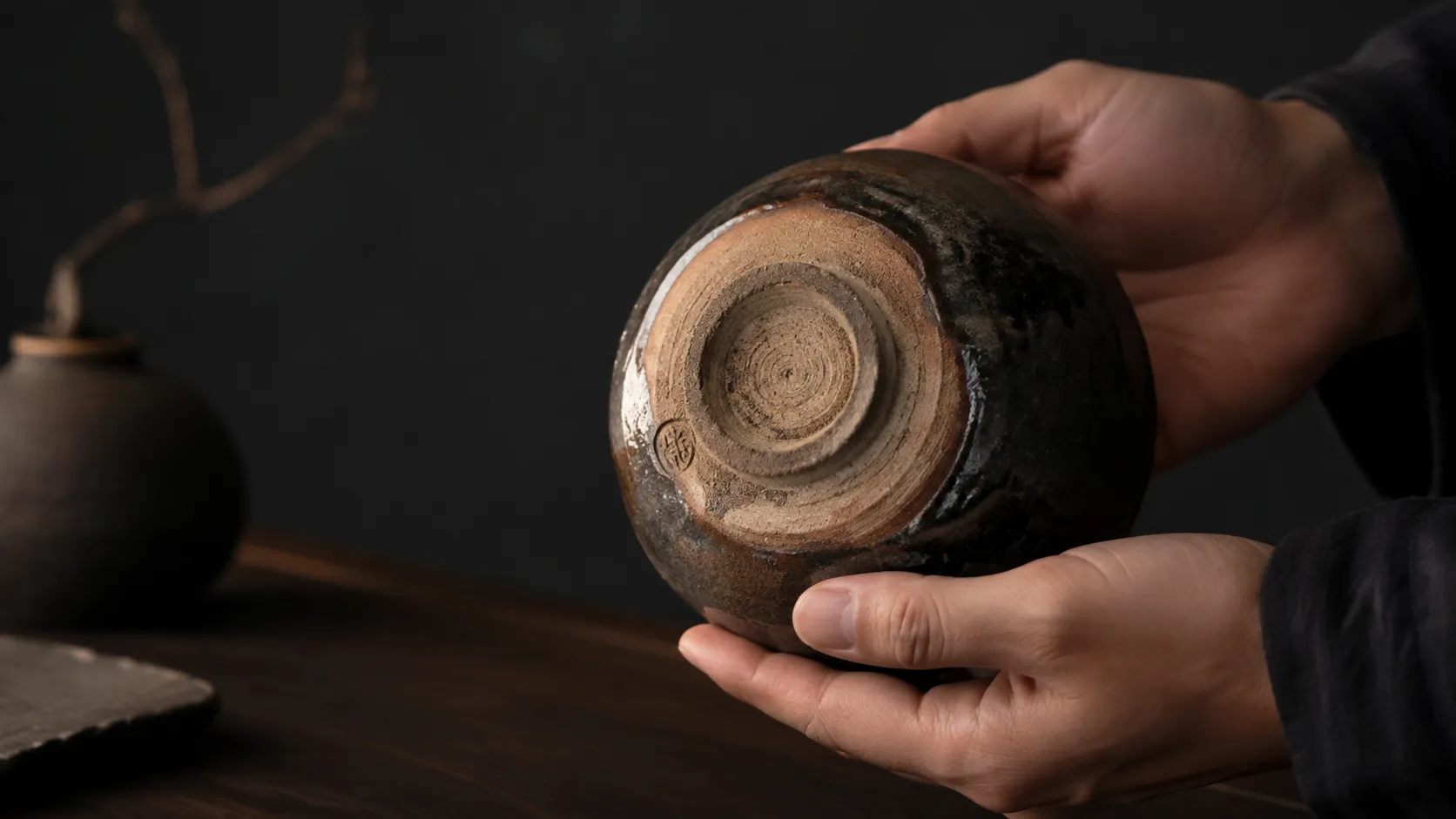
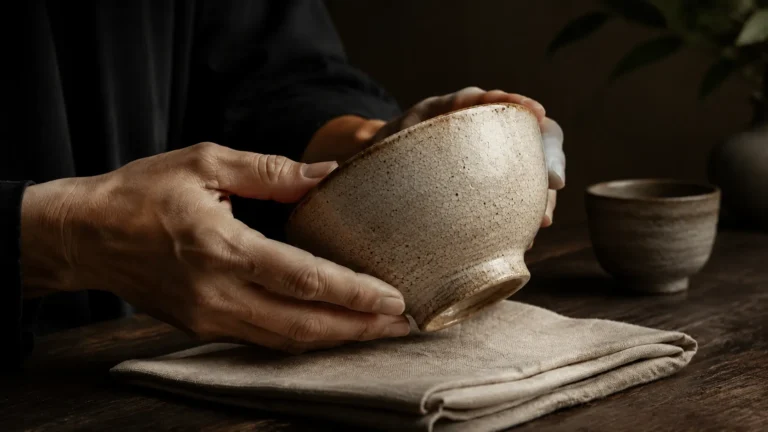
Ceramics: as well as size and intended use, check for each piece whether it is suitable for the microwave or dishwasher. If you would like to see the kōdai, the foot ring, or the underside of a piece, ask a member of staff first. As a rule, do not lift or turn over pieces on display without staff permission.
Glaze effects, crazing and iron spots can be appreciated as keshiki, the surface variations that contribute to a ceramic piece’s visual character. Even so, do not treat anything that affects use in the same light. If something concerns you, check it against the description of the work.

Woven and dyed textiles: check the intended use and dimensions, and how the piece should be washed and stored. Do not judge how to handle it from the name of the fibre alone; refer to explanations that also cover the dyeing method and finish.
Woodwork and lacquerware: check how the piece should be treated when you first start using it, how to wash and dry it, and whether it suits the place where you plan to keep it. It is also worth asking at the time of purchase where to turn if you would like it repaired.
Bamboo work and basketry: check not only the external dimensions but also the internal space and shape. Baskets and sieve baskets need to be carried in a way that will not crush their form.
Material and technique: what’s the difference?
Material tells you what an object is made from; technique tells you how it was made. The same material can call for different handling depending on its finish and construction. Rather than judging by appearance alone, check the labelling and description for that particular piece.
Why an Exhibition That Sells? The Open-Call Tradition Behind the Exhibition
The New Works Competition and Exhibition is an open-call show that presents crafts made for daily life and helps them reach a wider public. Getting work into the hands of people who will use it, through sale, is built into what the exhibition does.
In its guidance for exhibitors, the museum also uses the word hanpu, which carries the sense of distributing things widely. Recognising beauty in the gallery, and trying an object out in your own life: the exhibition can be understood as a system that links the two.
(Source: Information for Prospective Exhibitors (in Japanese) | The Japan Folk Crafts Museum)
The format since 1953, and how judging works
The Japan Folk Crafts Museum has held exhibitions of newly made crafts since it first opened. The current format dates from 1953, and the exhibition took its present Japanese name, Nihon Mingeikan-ten, in 1959.
(Source: About the New Works Competition and Exhibition (in Japanese) | The Japan Folk Crafts Museum)
The 2026 jury is chaired by Naoto Fukasawa, director of the Japan Folk Crafts Museum and a product designer. Judging takes place in two stages: a first round by category, followed by a second round in which the whole jury takes part. Glass is judged within its own category, while fields that fall outside the categories, such as metalwork, paper and basketry, are judged by the full jury.
(Source: 2026 Application Guidelines (in Japanese) | The Japan Folk Crafts Museum)
Knowing who sits on the jury, and how they work, helps in thinking about the perspective from which the exhibition selects its objects. There is no need, though, to turn the jury’s results directly into your own order of priorities when buying. It is worth using their assessment as a guide while keeping your own judgement as someone who will use the piece.
Finding out more about makers and stockists
Noting the maker’s name, region and workshop for any piece that catches your eye gives you a way to look into the background of their work after the exhibition. Keep any instructions and receipts from your purchase together with these notes.
Whether you can buy more, arrange repairs or place an order varies from maker to maker and from one point of sale to another. An open-call exhibition that values objects capable of being made again does not mean that the same piece will always be available.
When planning an exhibition with works for sale, it helps to separate the display period from collection and to state the terms of sale clearly, considering both how the pieces will be displayed and how buyers will receive them. Points to check when buying crafts through a gallery are covered in the following article.

Frequently Asked Questions
Booking, sales and collection are separate matters. It helps to distinguish what the official materials tell you from what you need to check when you buy.
- Can I visit without booking?
- Timed-entry booking for general visitors applies to 22 and 23 November. Later days when the museum is open are not covered, but group visits are subject to a separate advance-booking requirement.
- When do bookings open?
- At 10:00 JST (UTC+9) on Sunday 1 November 2026. Once bookings open, follow the method set out on the official exhibition page.
(Source: New Works Competition and Exhibition 2026 (in Japanese) | The Japan Folk Crafts Museum) - Does an entry booking secure the work I want?
- No. Booking entry and buying a work are separate processes. Check whether each work is still available, and how to buy it, separately.
- Is everything on display for sale?
- The application guidelines state that works not for sale are not accepted and that entries are sold. Whether an individual piece is still available, including pieces already reserved, needs to be checked. This does not mean that everything on view, such as works from the museum’s own collection, is for sale.
- Are nyūsen and jun-nyūsen works bought differently?
- Yes. Nyūsen works stay on display throughout and are reserved for purchase. Jun-nyūsen works can be bought on the day of your visit. Check the conditions for taking pieces home and for shipping separately.
(Source: 2026 Application Guidelines (in Japanese) | The Japan Folk Crafts Museum) - When can I collect a nyūsen work?
- The official materials do not specify the collection date or method for buyers. Check with the museum before buying.
- Can I pay by card, or have work shipped?
- This is not confirmed in the official information. If you need either, including overseas shipping, check with the museum before buying.
- Does the price include consumption tax?
- The application guidelines state that consumption tax is added to the price specified by the exhibitor. Check how prices are shown on the labels, and the total amount payable, when you buy.
(Source: 2026 Application Guidelines (in Japanese) | The Japan Folk Crafts Museum) - Can I handle a work to examine it?
- Do not touch pieces on display without staff permission. The museum’s standard visitor guidelines prohibit touching exhibits.
(Source: Gallery Guidelines (in Japanese) | The Japan Folk Crafts Museum)
In Summary: Choosing Pieces You Will Want to Keep Using
Before visiting the Japan Folk Crafts Museum exhibition in 2026, start by checking the booking conditions for your chosen day. If you buy a work, confirm not only its category but also the payment and collection terms.
(Source: Visiting conditions and latest information (in Japanese) | The Japan Folk Crafts Museum)
Editor’s Note: Thinking beyond the purchase
A jury’s assessment can help us notice qualities we might otherwise miss, but it cannot tell us how a piece will fit into our lives: how it sits on the table, where it is stored, whether its care suits our routine. Kogei Japonica encourages readers to weigh both what draws them to a piece and what will make them want to keep using it. In the gallery, ask yourself not only why something strikes you as beautiful, but where it would belong in your day.
Craft makers and artisans who would like a profile listing, or to have their work and activities featured, can find details on the registration page.

