

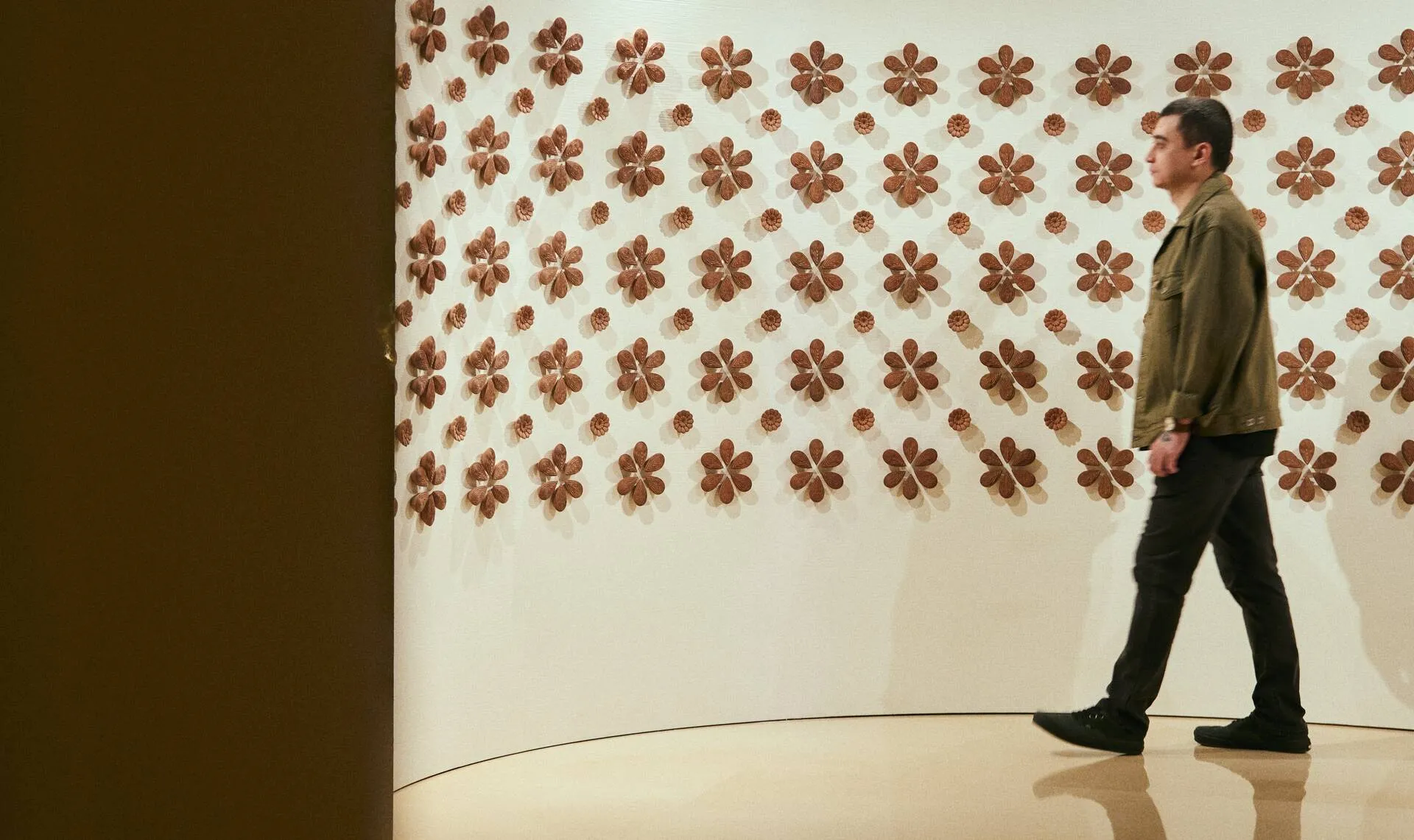
A ceramic work made for a hotel lobby in Hong Kong is, a few months later, on display in a London museum — reconfigured for a different room.
Cases like this make one thing clear: a hotel art commission is not the same as buying a finished work and putting it on the wall.
In 2026, the work commissioned through Art in Resonance, the global art programme of The Peninsula Hotels, was Metamorphic Modulation by the ceramicist Albert Yonathan Setyawan.
The work was first shown at The Peninsula Hong Kong, then reconfigured for the galleries of the Victoria and Albert Museum (V&A) in London. What matters here is not the simple picture of a work proving itself in a hotel and graduating to a museum afterwards. The Peninsula and the V&A worked together from the commissioning stage, developing a single commission across two very different kinds of space — and that is what makes this case worth reading closely.
This article sets out how the hotel, the V&A and the artist each came into the project, and what hotels, retailers and other commercial clients should be thinking about when they commission craft or art of their own.
Table of Contents
Why a ceramic work commissioned by a Hong Kong hotel reappeared in a London museum
The short answer is that Metamorphic Modulation reached the V&A through an ongoing collaboration between the hotel group and the museum. 2026 marked the second year of that partnership, and the V&A did not assess the finished work from the outside — it was part of the project from the point of commissioning.
The Peninsula states that its 2026 edition of Art in Resonance continued the V&A collaboration into a second year, and describes Setyawan’s work as a site-specific commission created and presented in partnership with the museum.
(Source: The Peninsula Announces 2026 Edition of Art in Resonance Programme|The Peninsula Hotels)
What Art in Resonance is
Art in Resonance is a commission-based global art programme launched by The Peninsula Hotels in 2019. The hotel group describes it as providing emerging and mid-career creators with the resources, expertise and curatorial support needed to realise new public works.
(Source: Art in Resonance|The Peninsula Hotels)
The 2026 edition was staged at The Peninsula Hong Kong to coincide with Hong Kong Arts Month, presenting three commissioned works: by the Hong Kong artist Angel Hui; by Setyawan, an Indonesian-born ceramicist based in Tokyo; and by the Hong Kong architect and artist Dr William Lim.
Setyawan’s commission was curated by Dr Louis Copplestone, the V&A’s curator for South-East Asia. One distinction is worth drawing here: the published material does not establish that Copplestone was responsible for selecting all of the artists. What it does confirm is that he curated Setyawan’s commissioned work.
(Source: 2026 Art in Resonance Programme|The Peninsula Hotels)
How Metamorphic Modulation is made
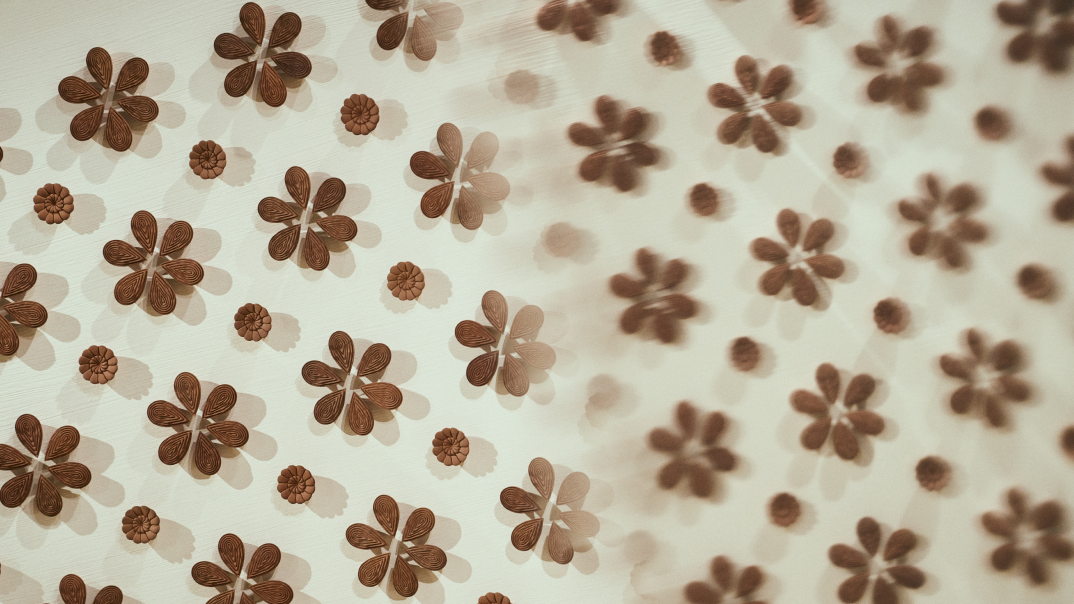
Metamorphic Modulation is a large-scale installation built from more than 700 ceramic elements.
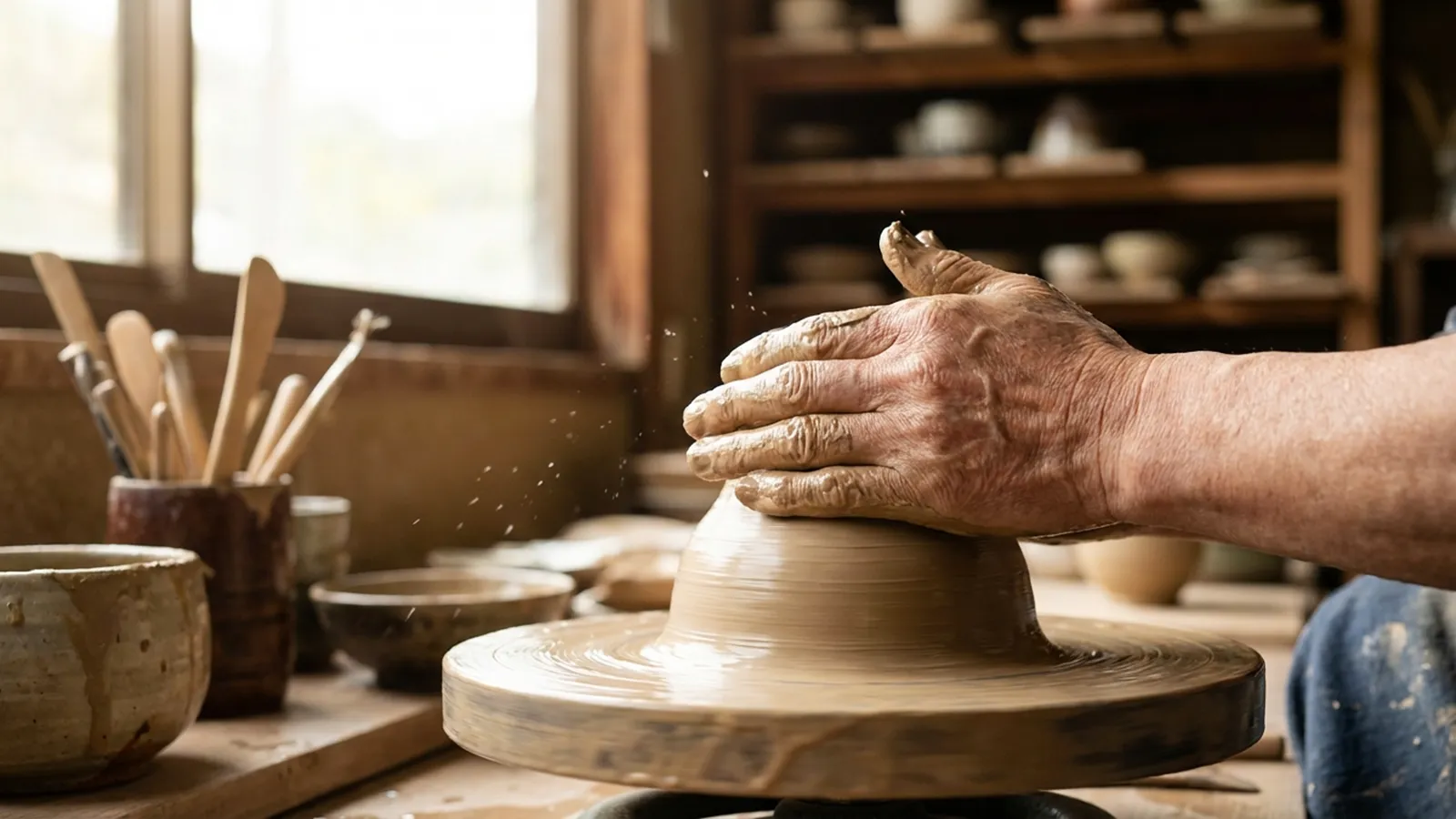
The forms are first modelled by hand in clay, then reproduced in red terracotta by slip-casting — a method in which liquid clay, or slip, is poured into a mould to take its shape.
The finished elements are left unglazed, so the colour and surface of the red terracotta remain visible. Two forms dominate: one suggesting a leaf, the other a flower. Repeated across the installation, they read differently depending on where the viewer stands and how the light falls.
(Source: Albert Yonathan Setyawan – Metamorphic Modulation|V&A)
Editor’s note
Reading this work as significant simply because it runs to more than 700 ceramic pieces misses what is happening in it. In Setyawan’s practice, the act of making the same form over and over is itself the structure of the work. Rather than treating ceramics as a vessel or a single sculpture, he uses repetition in clay to construct the space around the viewer — and that is what makes the piece worth looking at closely.
In a related event, the V&A notes that Setyawan describes this approach as “art labour”, producing original objects through replication from a mould. Where that phrase is used, then, it should be treated as the artist’s own framing of his practice, as set out by the museum.
(Source: Friday Late: Awakenings|V&A)
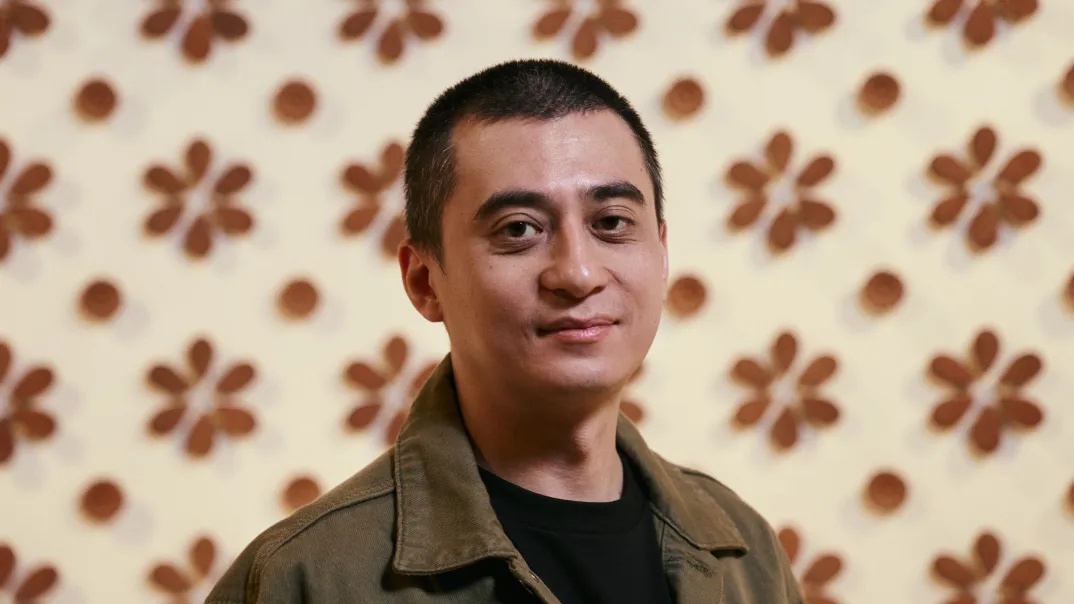
Setyawan was born in Bandung, Indonesia, in 1983. He studied ceramics at the Bandung Institute of Technology and went on to a graduate programme in ceramics at Kyoto Seika University. He is now based in Tokyo.
(Source: Albert Yonathan Setyawan|MIZUMA ART GALLERY)

Who did what, from commission to display
Three distinct roles run through this project: the hotel operating the commissioning programme, the museum involved in curating, and the artist making the work. This was not a case of a hotel selecting a work on its own and putting it on show.
The parties and their roles
| Party | Confirmed role |
|---|---|
| The Peninsula Hotels / The Peninsula Hong Kong | Running Art in Resonance, commissioning the work, providing the resources and expertise needed to realise it, and hosting the hotel display |
| V&A / Dr Louis Copplestone | Curating Setyawan’s work, collaborating with The Peninsula, and presenting the work again at the V&A |
| Albert Yonathan Setyawan | Conceiving and making Metamorphic Modulation |
| Carrie Chan | Working with Copplestone on the V&A presentation |
| Katya Spiers | Producing the V&A presentation |
For the London display, the V&A credits Copplestone as curator, working with Carrie Chan, and Katya Spiers as producer.
(Source: Metamorphic Modulation|V&A)
What this division of labour shows is not a hotel securing a museum’s stamp of approval. It is closer to the truth to say that a company and a cultural institution planned the project jointly, building the structure that would connect the artist’s work to the space from the start.
When museum specialists join at the planning stage, the curatorial thinking can take in the artist’s background and the cultural and art-historical context of the work — rather than stopping at whether a piece suits a room. That is a model worth noting for any organisation working with craft or art.
The hotel lobby in Hong Kong and the museum gallery in London: what changed
Metamorphic Modulation was shown in Hong Kong and London under the same title, but the two presentations were not identical. The V&A describes the installation, first shown in Hong Kong, as having been adapted for the museum.
In Hong Kong, a structure was built specifically for the work in The Lobby of The Peninsula Hong Kong. According to the hotel group, that structure surrounds the viewer, with the shadows cast by the ceramic elements blurring the boundaries between sculpture, structure and the person standing inside it.
(Source: The Peninsula’s 2026 Global Art in Resonance Programme|The Peninsula Hotels)
The 2026 Art in Resonance works went on view in Hong Kong on 17 March and remained until 5 May.
At the V&A, Metamorphic Modulation is presented in Sculpture, Room 21a at V&A South Kensington. The museum’s event page gives the dates as 15 September to 18 October 2026, with free admission.
(Source: Albert Yonathan Setyawan – Metamorphic Modulation|V&A)
The work also sits within Awakenings, the V&A’s programme for London Design Festival 2026.
One line needs drawing carefully here. Whether every ceramic element used in Hong Kong travelled to London, or whether some were newly made, cannot be established from the information publicly available.
What is confirmed is that the work first shown in Hong Kong was adapted for the V&A. Rather than saying the piece was moved from the hotel to the museum as it stood, it is more accurate to say that its underlying thinking and material were kept, while its relationship to a different architectural space was rebuilt.
Editor’s note
Treat a craft work purely as a finished object and relocation looks like a transport job. But with site-specific work, the experience depends on light, walls, distance and how people move through the room. What is interesting here is not that the piece travelled from a hotel to a museum — it is that the relationship between work and space was reassembled each time the setting changed.
In a hotel, people encounter a work while doing something else: staying, eating, waiting, passing through. In a museum, looking at the work is among the reasons for being there. The same forms meet different conditions — how long people look, from what distance, and with what degree of attention.
That said, it would be too neat to claim that hotel visitors always read the work as atmosphere while museum visitors always study its structure. How anyone experiences a work varies. The fair conclusion is simply that when the purpose of a space changes, so do the conditions under which people meet the work.
What hotels are actually commissioning art for
Hotel art commissions serve several purposes at once: not only furnishing a space, but supporting artists, enabling cultural exchange, bringing new work into existence and creating points of contact with visitors. Brand building can be part of the picture, but describing it as the sole purpose would be inaccurate.
The Peninsula presents Art in Resonance as a programme that supports cultural expression and gives emerging and mid-career creators the resources, expertise and curatorial support to realise new public works.
On the V&A collaboration, the hotel group frames its aims in terms of artistic exchange and international cultural exchange.
(Source: Art in Resonance|The Peninsula Hotels)
From a company’s side, cultural activity of this kind may well end up contributing to brand recognition or to the distinctiveness of a property. But that is one outcome among others. What can be confirmed directly from this case is that rather than acquiring an existing work, a company and a cultural institution together created the conditions for an artist to make a new one.
That distinction matters in craft as well.
When craft is brought into a commercial space, thinking only about which work to buy tends to mean matching an existing object to a room after the fact. A commission allows the relationship between maker and space to be designed from an earlier point: what should happen in this place, and what this material or technique can do there.
Commissioning is not the right answer in every case. Buying an existing work, or renting one, can make better sense in terms of timescale, budget and upkeep.
| Point of comparison | Buying an existing work | Rental or fixed-term display | Commissioning |
|---|---|---|---|
| The work | Already complete | Usually existing works | Usually new work |
| Relationship to the space | Adjusted after completion | Adjusted at installation | Can be built in from the concept stage |
| Working with the artist | Relatively limited | Varies by project | Substantial |
| Curatorial input | Optional | Important in some projects | Important in proportion to scale |
| Installation planning | Considered after purchase | Considered at display | Can run alongside making |
| Relocation | Relatively straightforward to consider | Sometimes anticipated from the outset | May require reconfiguring the work |
No one route is better than the others. What matters is choosing the approach that fits the purpose and the space.
What to settle before you commission
Starting a commission by deciding who to approach is the wrong order. The first thing to work out is what the space is for and what you want people to experience in it.
Once that is clear, decisions about the artist, curatorial arrangements, materials, installation, budget and schedule become far easier to make in practice.
- Purpose: whether the aim is the experience of the space, a relationship with the local area, support for artists, a curated display, or something else
- Who will see it: hotel guests, customers, staff, business partners, local residents
- Curatorial arrangements: selection in-house, or working with a specialist, gallery or museum
- Choosing the artist: looking beyond profile to suitability for the space and material, and capacity to deliver
- Material and installation conditions: weight, fixings, distance from people, light, temperature and humidity, cleaning
- Delivery and installation: access routes, who installs, and where responsibility for installation and removal sits
- Safety and insurance: risks of toppling, contact and damage, and how they are handled
- Budget: not only the cost of making, but transport, installation, lighting, insurance and maintenance
- Schedule: working back from making, prototyping, installation, delivery and the display period
- Rights: the permitted use of images of the work in photography, social media, advertising, websites and film
- After the display: storage, return, relocation or re-exhibition, agreed in advance
- Communications: how the artist’s name and the title of the work are credited, and how announcements are made jointly
Craft works are particularly sensitive here, since ceramics, lacquer, wood, metal, paper and textiles each carry different handling requirements. The question is not only whether a work suits the space, but whether it can be kept safely in that space.
It is also worth noting that buying a commissioned work does not automatically transfer copyright to the company. If photography, advertising use, social media posts or video are anticipated, that needs to be settled in the commissioning agreement.
The Kogei Japonica view
The most useful lesson from the Peninsula and V&A case is not “start by finding a well-known artist”. It is that the purpose and the place were defined first, and the work, the artist, the curation and the display conditions were then assembled as a single project. Companies bringing craft into their spaces tend to arrive at a workable collaboration — one that serves both the maker and the venue — by starting from the same point.
At Kogei Japonica we advise hotels, ryokan, retail spaces and workplaces on bringing craft and art into their spaces: not only selecting or renting existing works, but planning commissions in collaboration with artists and workshops from the earliest stage.

Frequently asked questions
A few points worth clarifying about hotel art commissions and Metamorphic Modulation.
- Q1. Is the same physical work on display in Hong Kong and London?
- The two presentations are not identically configured. The V&A states that the work was adapted for the museum. Whether every ceramic element was transported from Hong Kong, or whether some were newly made, cannot be established from the published information.
- Q2. What is Art in Resonance?
- A commission-based global art programme launched by The Peninsula Hotels in 2019. The hotel group describes it as providing emerging and mid-career creators with the resources, expertise and curatorial support to realise new work.
- Q3. Why was a hotel commission shown at the V&A?
- The V&A was not brought in after the work was finished. It was a partner of The Peninsula from the commissioning stage. Setyawan’s work was commissioned in collaboration with the museum, first shown in Hong Kong, and subsequently adapted for the V&A.
- Q4. How long is it on view at the V&A?
- The museum’s event page gives the dates as 15 September to 18 October 2026. The work is installed in Sculpture, Room 21a at V&A South Kensington, and admission is free.
- Q5. What should a company decide first when commissioning art or craft?
- Not who to commission, but what the space is meant to achieve and what experience it should offer. Decisions about the artist, curatorial arrangements, budget and installation conditions follow from that.
- Q6. Who is Albert Yonathan Setyawan?
- A ceramicist born in Bandung, Indonesia, in 1983, now based in Tokyo. He studied ceramics at the Bandung Institute of Technology and at Kyoto Seika University, and makes ceramic works and installations concerned with repetition, pattern, materiality and meditative experience.
What the case of Metamorphic Modulation shows is that a hotel art commission involves more than buying a finished piece and placing it in a room.
In the case of The Peninsula and the V&A, the institution did not assess a completed work and draw it into the museum afterwards. The two worked together from the commissioning stage, and Setyawan’s work — first presented in a hotel space in Hong Kong — was then reconfigured for a different setting at the V&A.
That difference matters for any company thinking about how it engages with craft and art.
The value of craft does not sit in the finished object alone. Which material is used, who makes it, where it is placed and how people come across it: the meaning and the experience of a work shift across that whole set of relationships.
Before asking which work to put in the space, ask what you want to make with an artist in this particular place.
Bringing that order of thinking to craft in hotels, shops and workplaces is what moves a project beyond decoration — towards something where both the space and the work have a reason to be there.
