




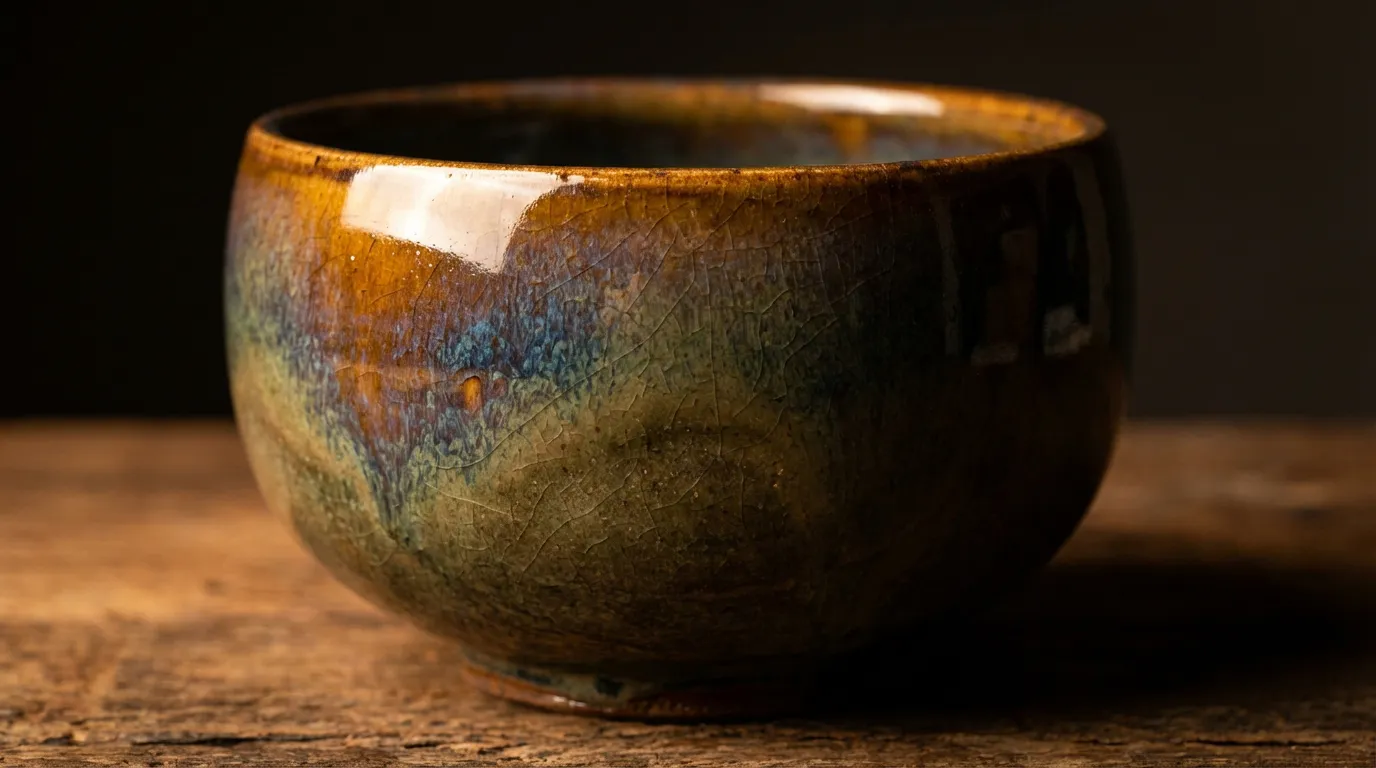
When admiring traditional Japanese ceramics, the profound colors and intricate patterns are not merely painted on; they are the result of dramatic chemical reactions born from earth, minerals, and fire. Understanding the foundational science of Japanese pottery glazes and firing techniques transforms how you appreciate these masterpieces. This guide explores the mechanics of oxidation and reduction firing, revealing how elements like iron and copper create vibrant colors. Beyond perfect control, Japanese pottery celebrates the unpredictable forces of nature. Phenomena such as Yohen (color mutation) and intentional crazing are not viewed as flaws, but as the embodiment of Wabi-Sabi—finding beauty in imperfection. By bridging chemistry and heritage, collectors and pottery enthusiasts can discover the profound aesthetic philosophy behind every unique piece.
Standing before a fine piece of Japanese ceramics in a gallery or museum, most visitors are immediately captivated by the depth of color and the complex surface patterns. What many do not realize is that these effects are not the result of ordinary paint or pigment. They are born from a remarkable interplay of mineral chemistry and fire—a series of dramatic reactions between clay, glaze, and intense heat. Once you understand this process, the experience of viewing and collecting Japanese ceramics is elevated to something far richer and more intellectually rewarding.
This guide is written for international collectors, cultural enthusiasts, and beginners who want to go beyond surface appreciation. We will walk through the core concepts of Japanese pottery glazes and Japanese ceramics firing techniques, explaining the science of color formation and the cherished aesthetic philosophy of Wabi-Sabi ceramics.
The three most important ideas to keep in mind throughout this guide are:
- The Nature of Glaze: A glaze is a glass-like mineral coating—composed primarily of wood ash, feldspar, and silica—that fuses to the clay body at high temperatures. It provides waterproofing and structural strength while serving as an artistic canvas. Trace metal elements such as iron and copper dissolved within the glaze produce a vast spectrum of colors through optical and chemical reactions.
- How Firing Determines Color: The atmosphere inside the kiln is decisive. Oxidation firing (supplying ample oxygen for complete combustion) and reduction firing (restricting oxygen to create incomplete combustion) alter the oxidation state of metal elements in the glaze, producing dramatically different colors from identical glaze recipes.
- The Beauty of Imperfection: Unpredictable transformations caused by kiln conditions—known as Yohen (color mutation)—and the fine crackling network called Crazing, produced by differential contraction between clay and glaze during cooling, are celebrated worldwide as the quintessential expression of Wabi-Sabi. What Western traditions once dismissed as defects, Japanese aesthetics have long revered as irreplaceable beauty.
With these ideas in mind, let us journey into the profound world where fire and chemistry converge.
Table of Contents
What Is Glaze? Understanding the “Glass Robe” That Envelops Japanese Pottery

The lustrous surface layer of a ceramic vessel is far more than decorative paint. A glaze is a vitreous coating applied to the clay body that melts during high-temperature firing and solidifies as glass upon cooling—sealing the vessel’s pores, enhancing its durability, and transforming it into a surface capable of breathtaking color and light. At its finest, a glaze is both an engineering material and an artistic medium, transmitting and reflecting light to create a sense of interior depth that no flat paint could replicate.
From Wood Ash to Masterpiece: The Natural Chemistry of Traditional Glazes

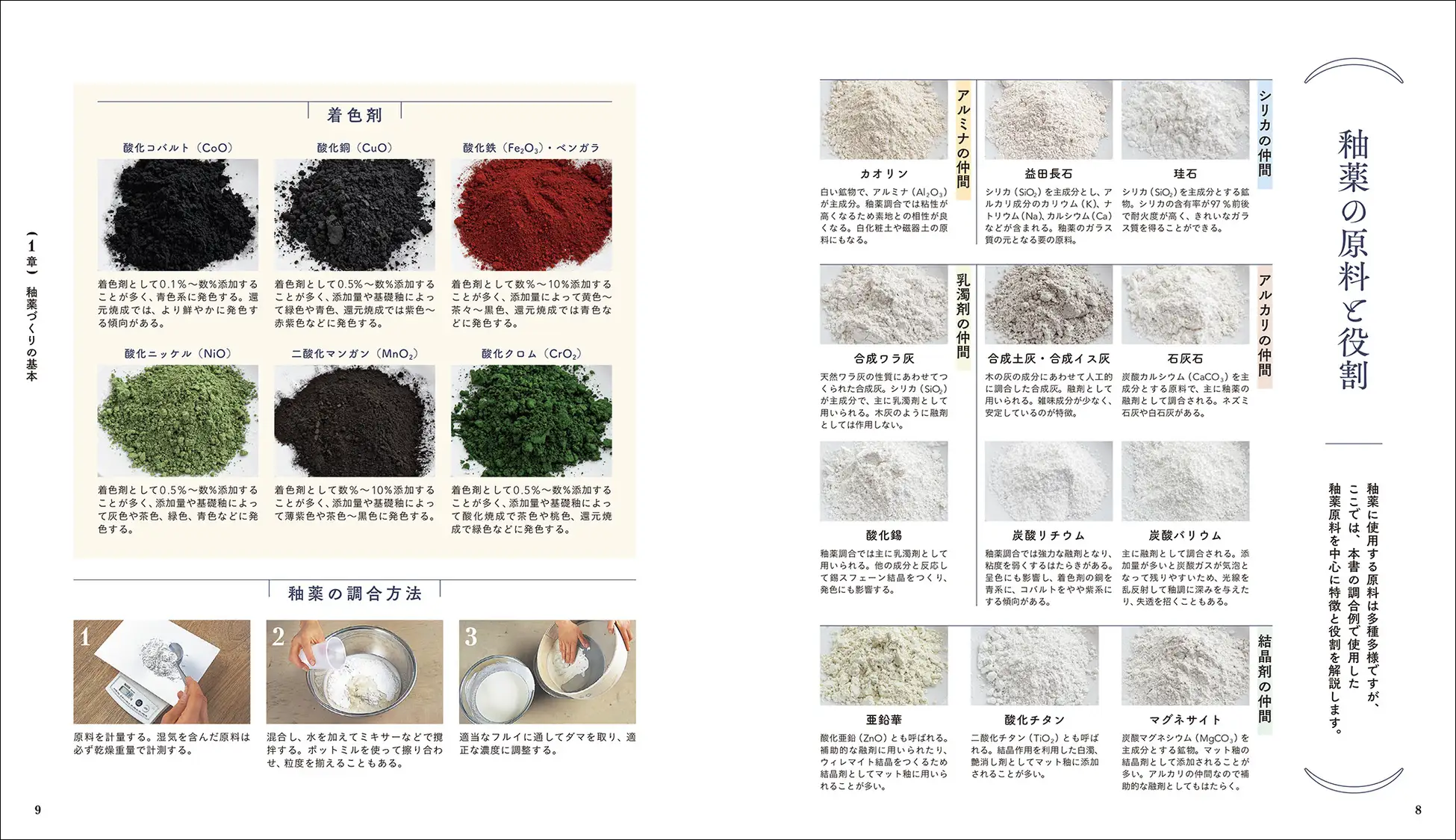
The origin of glaze itself is a story of happy accident. The earliest glazes—known as natural ash glazes—formed spontaneously when wood ash from the kiln’s fire settled onto vessels and melted at high temperatures, vitrifying on the surface. Ancient potters observed this phenomenon and deliberately harnessed it, mixing wood ash, feldspar, silica, and other minerals to create intentional glazes of increasing sophistication.
The fundamental chemistry has not changed. Contemporary Japanese pottery glazes are still formulated from a combination of glass-forming compounds, fluxes (materials that lower the melting point), and colorants. This elegant mineral alchemy—refined over centuries—is what continues to give Japanese ceramics their unmatched depth and character.


How Metal Elements Create Color in Japanese Pottery Glazes
Color in a ceramic glaze is not produced by pigment in the conventional sense. It arises from the optical behavior of metal ions dissolved within the molten glass. Iron, copper, and cobalt are the primary colorants used in Japanese pottery glazes, and each behaves differently depending on the firing environment.
A trace addition of cobalt produces the deep, luminous blue known as ruriko. Iron, depending on the quantity used and the kiln atmosphere, can shift from warm amber-brown all the way to the translucent blue-green of celadon. This is not pigment application—it is a precise scientific phenomenon in which ions interact with light at the atomic level inside the glass matrix, producing colors that seem to glow from within.
The Magic of Firing: How Oxidation and Reduction Firing Determine Color in Japanese Ceramics

Understanding Japanese ceramics firing techniques is essential to understanding Japanese pottery glazes, because the kiln atmosphere is ultimately what determines the final color outcome. Two pieces fired with identical glaze recipes can look completely different depending on whether they are fired in an oxidizing or reducing atmosphere. This is arguably the most dramatic intersection of science and art in the entire ceramic process.
Oxidation Firing: Color Through Oxygen-Rich Combustion
Oxidation firing is the process of supplying ample fresh air into the kiln to support complete combustion throughout the entire firing cycle. In this oxygen-rich environment, the metal elements within the glaze bond readily with available oxygen, reaching stable, fully oxidized states. Copper-based glazes fired under oxidation typically produce vivid greens; iron glazes yield warm, earthy browns and amber tones. Modern electric kilns naturally produce an oxidizing atmosphere, making this approach widely accessible to contemporary ceramic artists worldwide.
Reduction Firing: The Miracle of Oxygen Deprivation
Reduction firing is the antithesis of oxidation. By intentionally restricting the airflow into the kiln and creating incomplete combustion, the hungry flame is forced to scavenge oxygen directly from the metal oxides within the glaze and clay body. This triggers profound chemical transformations that would simply not occur in a standard oxidizing environment.
The most celebrated example is the copper red glaze—known in Japanese as Shinsha (辰砂). Under oxidation, copper glazes produce a reliable green. Under skilled reduction firing, the same copper glaze can yield a deep, blood-red to ruby hue of extraordinary beauty. The copper red glaze is notoriously difficult to control, as temperature precision and cooling rate are both critical variables. Achieving it consistently remains one of the supreme technical challenges in Japanese ceramics—and one of its most coveted outcomes.
A Collector’s Guide to Iconic Japanese Pottery Glaze Types and Their Science
With a firm grasp of how glazes and firing atmospheres interact, we can now explore the most celebrated glaze types in Japanese ceramics. Understanding the science behind each type of glaze deepens your ability to appreciate and evaluate works when visiting galleries, auction houses, or ceramics fairs.
Iron Glaze Ceramics: The World of Black, Brown, and Blue From a Single Element
Among all Japanese pottery glazes, iron glaze ceramics represent perhaps the broadest expressive range derived from a single metal. Iron has been the dominant colorant in East Asian ceramics for millennia, and its versatility under different firing conditions is remarkable.
In oxidation firing, iron combines with oxygen to form iron oxides that produce warm, stable earth tones: honey-brown ame (amber glaze) and rich rust-orange kaki (persimmon glaze) are classic examples. In reduction firing, the oxidation state of iron shifts—moving from its trivalent to its divalent form—and the result is the legendary celadon (青磁, seiji), a translucent, ethereal blue-green that has captivated collectors across cultures for over a thousand years. One element, two fundamentally different firing atmospheres, and an entire world of color.
Copper Glaze and the Drama of Copper Red: From Oribe Green to the Legendary Shinsha
Copper is the most theatrically expressive colorant in the Japanese ceramics tradition. The iconic Oribe style—a bold, asymmetric aesthetic that emerged during the Momoyama period (late 16th–early 17th century) and remains one of Japan’s most celebrated ceramic innovations—is defined by its striking copper green, achieved through oxidation firing.
Yet the same copper element, when subjected to the precise conditions of reduction firing, undergoes a transformation of near-mythological status in ceramics history. Microscopic copper particles suspended within the molten glass scatter light in a way that produces an intense, luminous red—the copper red glaze, or Shinsha. This vivid ruby and ox-blood red has been prized by royalty and connoisseurs in China and Japan for centuries. To hold a successful piece of Shinsha is to hold the result of extraordinary technical mastery and a good measure of the kiln’s own unpredictable will.
Where Science Meets the Sublime: Yohen Color Mutation and Crazing in Japanese Pottery

For many international collectors, the most compelling dimension of Wabi-Sabi ceramics is precisely the element that cannot be fully controlled: the moments when the kiln takes over. What Western aesthetic traditions have often dismissed as imperfections or manufacturing errors, Japanese ceramic philosophy has long elevated to the status of irreplaceable beauty. Two phenomena above all others define this sensibility: Yohen color mutation and crazing in pottery.
Yohen Color Mutation: When the Kiln Paints Its Own Masterpiece
The term Yohen (窯変) translates literally as “kiln transformation” or “color mutation.” It refers to the unpredictable, often breathtaking changes that occur when temperature gradients, flame patterns, wood ash deposits, and localized atmospheric variations within the kiln interact with the glaze in ways no artist could fully anticipate or engineer.
The supreme icon of Yohen color mutation is the Yohen Tenmoku (曜変天目)—a series of tea bowls designated as Japanese National Treasures, their jet-black glaze scattered with iridescent, star-like halos of blue and silver that seem to contain entire galaxies. Only a handful of authenticated examples survive worldwide, and despite rigorous scientific analysis, reliably reproducing the full effect remains beyond consistent human control. Each one is, in the truest sense, a once-in-a-universe collaboration between human craft and elemental chance—and a pinnacle of investment-grade Wabi-Sabi ceramics.
Crazing in Pottery: Transforming a “Defect” Into a Landscape

As a fired vessel cools and contracts, the clay body and glaze layer shrink at different rates—a physical consequence of their differing thermal expansion coefficients. When the glaze contracts faster than the clay, tensile stress builds until the glass layer cracks in a web of fine lines, often audible as soft pinging sounds as the piece exits the kiln. This phenomenon is called crazing in pottery.
In Western ceramics traditions, crazing was historically classified as a technical flaw—evidence of an improperly balanced glaze recipe. In Japan, however, the perspective is fundamentally different. A fine network of crazing is called kannyu (貫入), and it is considered a living, evolving feature of the vessel. As tea, ink, or other liquids are used over time, they seep into the crazed lines and deepen them, gradually building a patina of use and age that collectors call the vessel’s “keshiki“—its “landscape” or “scenery.”
This philosophy—that a crack is not damage but the beginning of a conversation between object and time—is closely related to the art of Kintsugi (金継ぎ), the practice of repairing broken ceramics with gold lacquer, turning fracture lines into features of beauty. Both traditions express a quiet luxury rooted in depth, authenticity, and the acceptance of impermanence.
Deepening Your Appreciation of Japanese Ceramics in 2026: Science as Aesthetic Literacy


For those who wish to explore the history and science of Japanese pottery glazes and firing at a world-class institutional level, the Aichi Prefectural Ceramic Museum (愛知県陶磁美術館) stands as one of Japan’s foremost centers of ceramic scholarship. Located in Aichi Prefecture—historically one of Japan’s most prolific ceramic production regions—the museum maintains extensive collections and research resources that illuminate the technical and cultural evolution of Japanese ceramics across the centuries.
Official Website: https://www.pref.aichi.jp/touji/index.html
Reading the Balance Between Human Intention and Natural Force
The entire history of Japanese ceramics can be read as humanity’s long dialogue with fire and chemistry—an ongoing effort to understand, guide, and ultimately surrender to forces larger than any individual craftsperson. The choices accumulate: oxidation or reduction, iron or copper, control or chance. Each decision layers meaning into the finished vessel.
When you approach a piece of Japanese ceramics with an understanding of glaze chemistry, firing atmospheres, Yohen color mutation, and the aesthetics of crazing, you are no longer a passive observer. You become a reader of the work—capable of perceiving the potter’s intentions, the kiln’s interventions, and the philosophy of Wabi-Sabi that binds them together.
In a world where collectors and enthusiasts increasingly seek both cultural authenticity and intellectual depth, this scientific literacy is not merely academic. It is the most powerful lens through which to experience the enduring beauty and profound heritage of Japanese ceramics.


