



The prize winners of the 73rd Japan Traditional Kōgei Exhibition were announced on 15 August 2026. Led by the Japan Kōgei Association President’s Prize, awarded to Toshie Ōki’s bamboo flower basket Tōsei (“Sound of Waves”), a total of sixteen prize-winning works have been made public across seven categories: ceramics, textiles, lacquer (shitsugei), metalwork, wood and bamboo (mokuchikkō), dolls, and other crafts (shokōgei).
Checking the list of winners and titles alone, though, doesn’t reveal what is happening in Japanese craft in 2026.
What matters when looking at the winning works isn’t the ranking of prizes, but how material, technique, form, and surface relate to one another to make a single work hold together.
The 73rd Japan Traditional Kōgei Exhibition runs from 2 to 15 September 2026 at Nihonbashi Mitsukoshi in Tokyo, before touring the country. This article keeps the dates and access details to a minimum and uses the sixteen officially announced prize works as a way into reading “where technique stands now” across the seven categories.
Note that the Japan Kōgei Association’s published list of winners gives the prize, title, maker, and an image for each work, but individual jury reasoning has not been published for every work. In this article, we keep the official prize results and Kogei Japonica’s own viewing and analysis clearly separate.
(Source:73rd Japan Traditional Kōgei Exhibition: list of prize-winning works | Japan Kōgei Association)


Table of Contents
The 73rd Japan Traditional Kōgei Exhibition 2026: what was recognised?

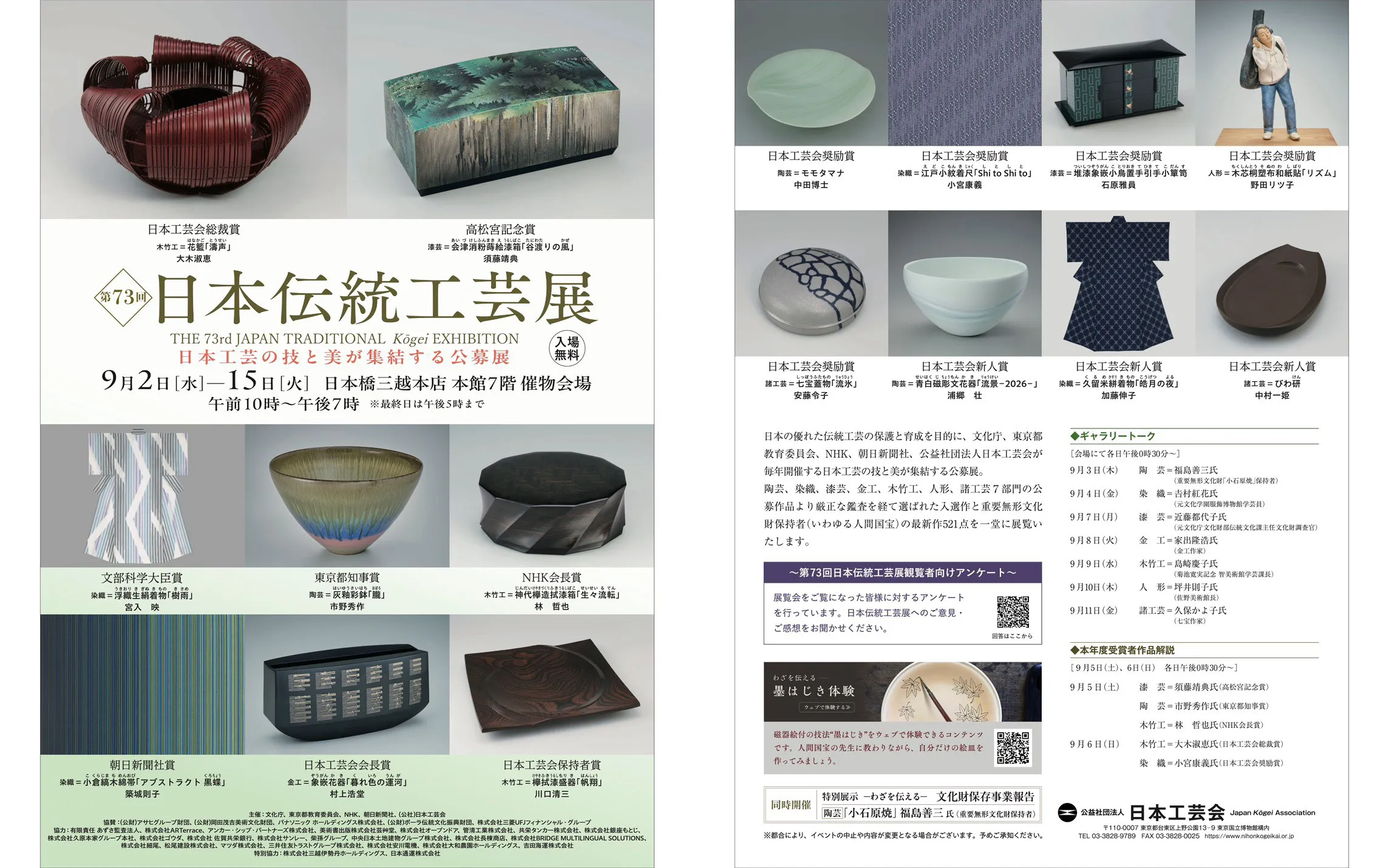
The results of the 73rd exhibition are more useful as a way to see how contemporary makers are reworking inherited techniques than as a simple ranking of “the year’s best works.”
(Source:73rd Japan Traditional Kōgei Exhibition: prize winners and selected entrants announced)
The Tokyo showing is scheduled from Wednesday 2 September to Tuesday 15 September 2026, in the event hall on the 7th floor of the main building of Nihonbashi Mitsukoshi. Opening hours are 10:00 to 19:00, and admission to the Tokyo showing is free. The organisers include the Agency for Cultural Affairs, the Tokyo Metropolitan Board of Education, NHK, The Asahi Shimbun, and the Japan Kōgei Association.
The Japan Kōgei Association describes the Japan Traditional Kōgei Exhibition as the largest open-call exhibition in the craft field, and the only one the national government co-organises. It is an annual open call for works in seven categories: ceramics, textiles, lacquer, metalwork, wood and bamboo, dolls, and other crafts.
One more thing matters for understanding the winning works: the Japan Kōgei Association’s own idea of “tradition.” The aims of the 73rd exhibition don’t frame traditional craft as imitating old things or keeping earlier techniques exactly as they were. They emphasise refining inherited techniques further while creating something new, suited to life today.
Editor’s note
The phrase “traditional craft” can bring to mind a world of accurately reproducing finished old styles.
But reading the official aims of the Japan Traditional Kōgei Exhibition, that understanding isn’t enough. What is inherited isn’t only a finished design—it’s material knowledge, process, and accumulated judgement. What today’s makers build using that technique: in the 73rd exhibition, it’s this space between “inheritance” and “the present” I want to watch.
What is the Japan Traditional Kōgei Exhibition? How the seven categories divide [definition box]
The Japan Traditional Kōgei Exhibition is made up of seven categories with different materials and systems of making: ceramics, textiles, lacquer, metalwork, wood and bamboo, dolls, and other crafts. Even within one “craft,” the materials, processes, and points at which technical judgement matters differ greatly from category to category.
According to the Japan Kōgei Association, the Japan Traditional Kōgei Exhibition is an open call divided into seven categories, with selected works shown at venues across the country.
(Source:Open-call information, Japan Traditional Kōgei Exhibition | Japan Kōgei Association)
Definition box | The seven categories of the Japan Traditional Kōgei Exhibition
- Ceramics (tōgei): forming clay or porcelain stone and firing it. Alongside glazed works, there are varied techniques such as unglazed stoneware (yakishime) and bluish-white porcelain (seihakuji).
- Textiles (senshoku): covering the techniques of dyeing thread and cloth, and of weaving thread into cloth. With kasuri (ikat), Edo komon, ukiori (float-weave) and the like, the very process by which the pattern arises is the key to understanding the work.
- Lacquer (shitsugei): a field covering applying, layering, grinding, and polishing lacquer, together with varied decorative and modelling techniques such as maki-e (sprinkled-metal-powder decoration), raden (mother-of-pearl inlay), and tsuishitsu (built-up carved lacquer).
- Metalwork (kinkō): working metals such as gold, silver, copper, and iron by hammering (tankin), casting (chūkin), chasing and engraving (chōkin), and inlay (zōgan).
- Wood and bamboo (mokuchikkō): creating form through carving, joining, plaiting (henso), and bending, while drawing on the physical properties of wood and bamboo—grain direction, figure, elasticity.
- Dolls (ningyō): a field that creates figures and forms by combining several materials and techniques—wood carving, paulownia-paste modelling (tōso), paper-covering, cloth-covering, costume.
- Other crafts (shokōgei): a field taking in materials and technical systems different from the other six, such as cloisonné enamel (shippō), glass, inkstones (suzuri), and cut gold leaf (kirikane).
Set the seven categories side by side, and it becomes clear that seeing the Japan Traditional Kōgei Exhibition as “a show of Japanese-style works” doesn’t fit. Each field has different material properties, processes, histories, and problems of form, and they can’t be compared by a single measure alone.
On Important Intangible Cultural Properties, the Agency for Cultural Affairs explains that the state designates the most important among skills (waza) of high historical or artistic value as Important Intangible Cultural Properties, and certifies the individuals or groups who embody and command those skills to a high degree as holders or holding groups. Among these, individually certified holders are commonly known as “Living National Treasures.”
(Source:Intangible cultural properties | Agency for Cultural Affairs)
In 2026, what kind of works were recognised in each category? [comparison table]
At the 73rd Japan Traditional Kōgei Exhibition, sixteen prize-winning works were announced on 15 August 2026. The top honour, the Japan Kōgei Association President’s Prize, went to Toshie Ōki’s bamboo flower basket Tōsei.
Looking at the list of winners, works were chosen from different material systems—bamboo, lacquer, silk, cotton, ceramic and porcelain, metal, wood, dolls, cloisonné, inkstone. First, here are the sixteen officially announced works.
(Source:73rd Japan Traditional Kōgei Exhibition: list of prize-winning works | Japan Kōgei Association)
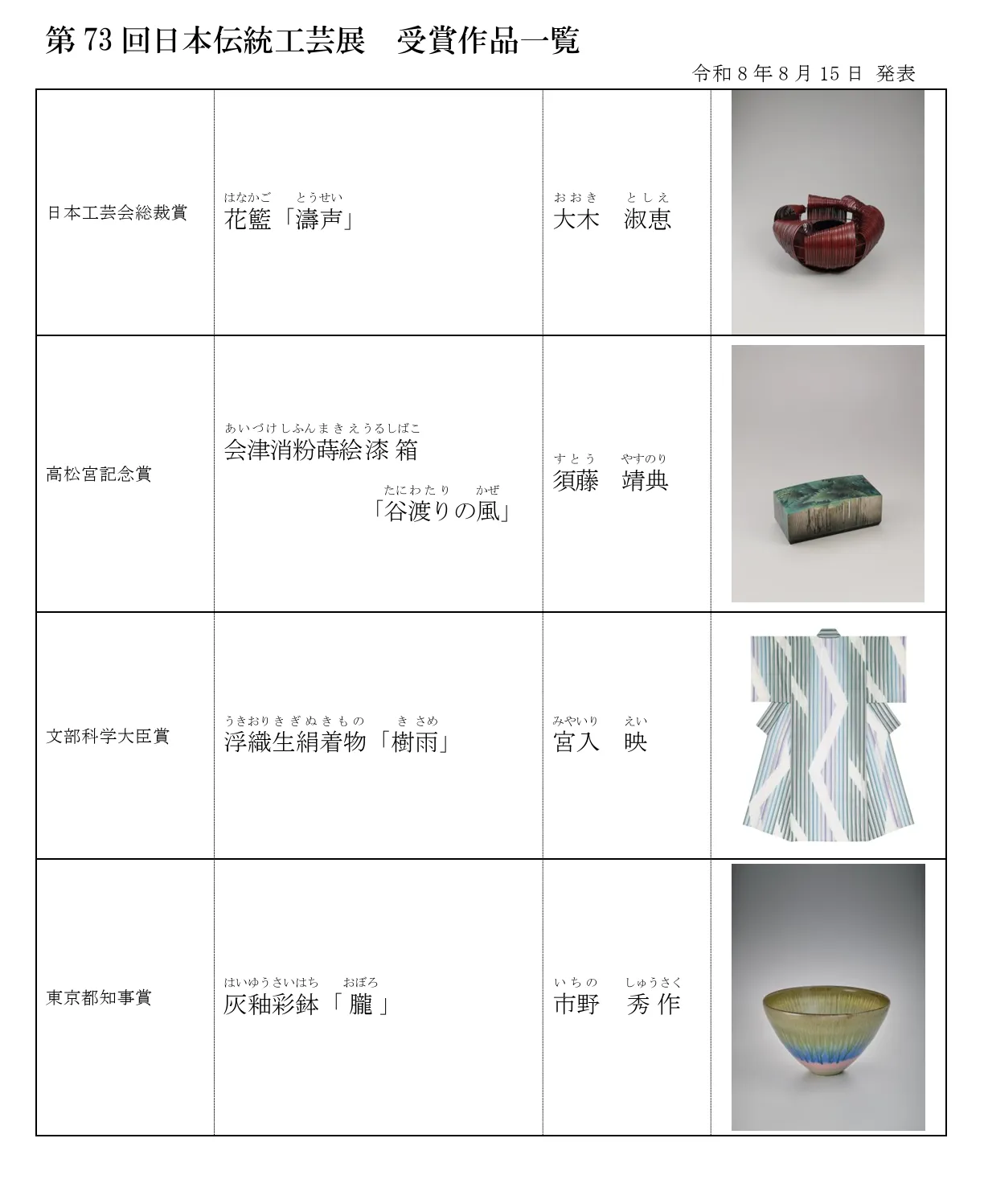
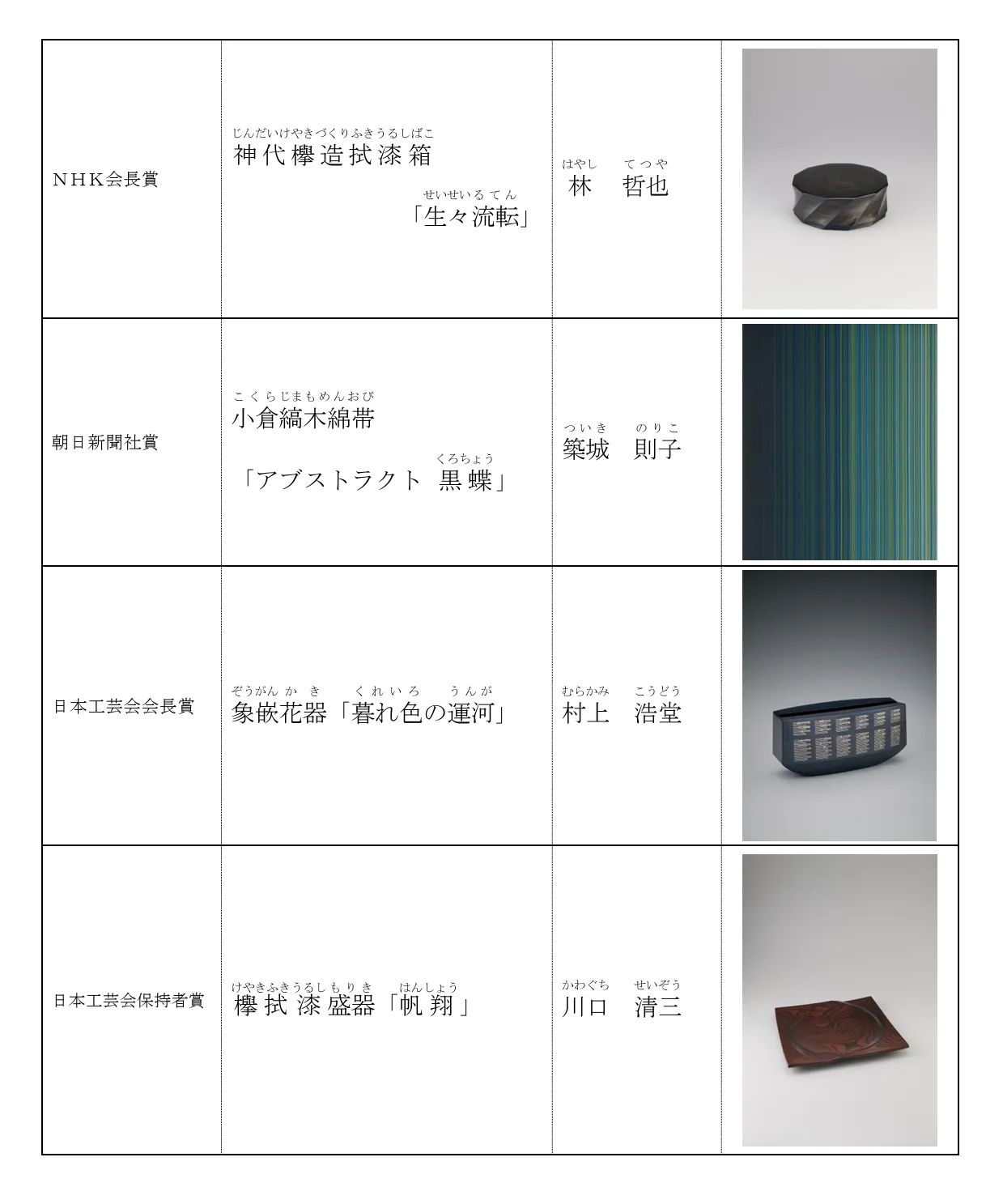
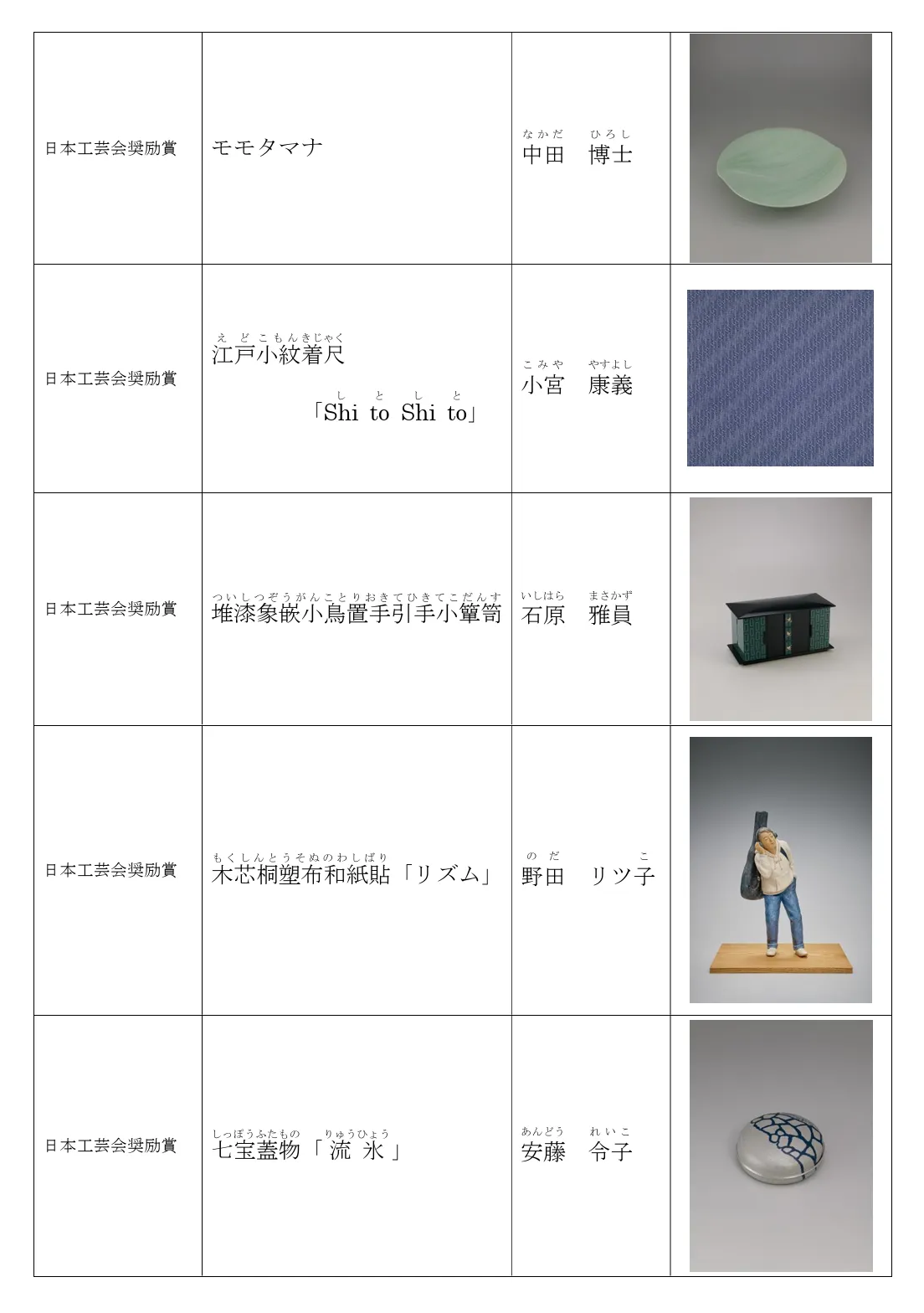
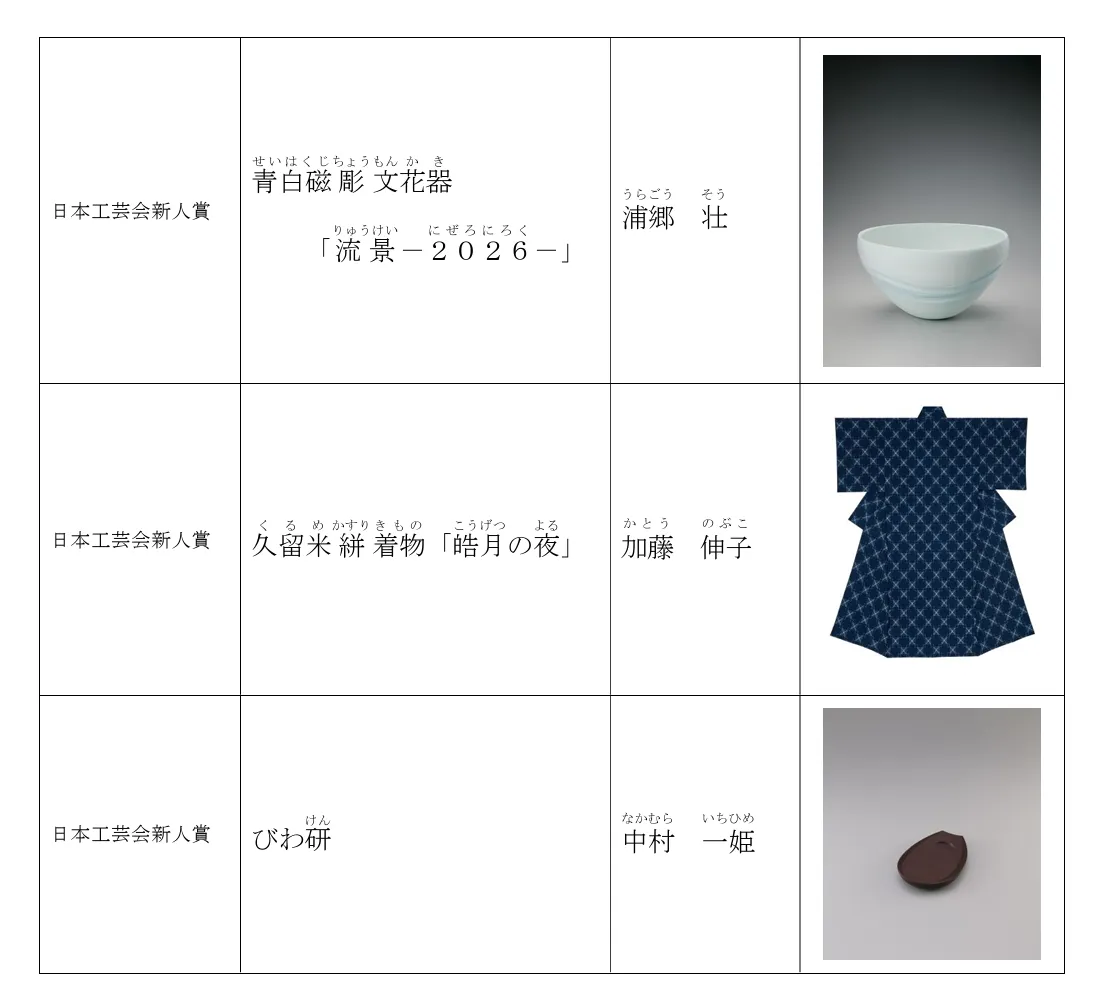


| Category | Prize | Maker | Work | What to look for in technique and material |
|---|---|---|---|---|
| Wood and bamboo | Japan Kōgei Association President’s Prize | Toshie Ōki | Flower basket Tōsei (“Sound of Waves”) | Linear structure in bamboo; plaiting, void, and volume |
| Lacquer | Prince Takamatsu Memorial Prize | Yasunori Sudō | Aizu keshifun maki-e lacquer box “Wind Crossing the Valley” | Lacquer, keshifun maki-e, the relationship between the box’s planar form and its decoration |
| Textiles | MEXT Minister’s Prize | Ei Miyairi | Ukiori raw-silk kimono “Tree Rain” | Raw silk, float-weave, a surface arising from the weave structure |
| Ceramics | Tokyo Governor’s Prize | Shūsaku Ichino | Ash-glazed coloured bowl “Oboro” (“Haze”) | Ash glaze, colour, the bowl’s form and glaze quality |
| Wood and bamboo | NHK Chairman’s Prize | Tetsuya Hayashi | Buried-zelkova wiped-lacquer box “Ceaseless Change” | Jindai-keyaki (buried zelkova), wiped lacquer, grain and box structure |
| Textiles | Asahi Shimbun Prize | Noriko Tsuiki | Kokura-jima cotton obi “Abstract: Black Butterfly” | Cotton, Kokura stripe, the repetition of stripes and colour |
| Metalwork | Japan Kōgei Association Chairman’s Prize | Kōdō Murakami | Inlaid flower vessel “Canal in Dusk Colours” | Metal, inlay, plane and colour from different metals |
| Wood and bamboo | Japan Kōgei Association Member Holder’s Prize | Seizō Kawaguchi | Zelkova wiped-lacquer serving vessel “Hanshō” (“Soaring Sail”) | Zelkova, wiped lacquer, grain and mass |
| Ceramics | Japan Kōgei Association Encouragement Prize | Hiroshi Nakata | Momotamana | Ceramics. The specific technique should be confirmed from the exhibition label or catalogue |
| Textiles | Japan Kōgei Association Encouragement Prize | Yasuyoshi Komiya | Edo komon kimono length “Shi to Shi to” | Edo komon, fine stencilled repetition |
| Lacquer | Japan Kōgei Association Encouragement Prize | Masakazu Ishihara | Tsuishitsu and inlay small chest with bird-shaped drawer pulls | Tsuishitsu, inlay, form that treats the lacquer layer itself as material |
| Dolls | Japan Kōgei Association Encouragement Prize | Ritsuko Noda | Wood-core paulownia-paste, cloth- and washi-covered “Rhythm” | Wood-core tōso, cloth and washi covering, body and surface |
| Other crafts | Japan Kōgei Association Encouragement Prize | Reiko Andō | Cloisonné lidded vessel “Drift Ice” | Cloisonné, metal body and glassy layer, the form of the lidded vessel |
| Ceramics | Japan Kōgei Association Newcomer’s Prize | Sō Uragō | Bluish-white porcelain carved flower vessel “Ryūkei–2026–” | Seihakuji, carved decoration, pale colour and relief |
| Textiles | Japan Kōgei Association Newcomer’s Prize | Nobuko Katō | Kurume-gasuri kimono “Night of the Bright Moon” | Kurume-gasuri, pre-dyed thread and pattern |
| Other crafts | Japan Kōgei Association Newcomer’s Prize | Ichihime Nakamura | Biwa inkstone | Inkstone. The stone, form, and grinding surface are worth confirming |
The “what to look for” column in this table isn’t a summary of official jury reasoning. It gathers points worth attending to when viewing, based on the work titles, the maker’s category, and past works and technique information verifiable through the Japan Kōgei Association.
Ceramics
In ceramics, Shūsaku Ichino’s ash-glazed coloured bowl “Oboro” received the Tokyo Governor’s Prize, 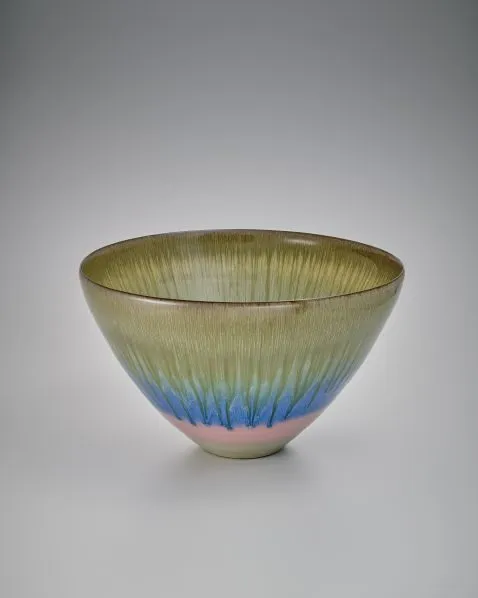
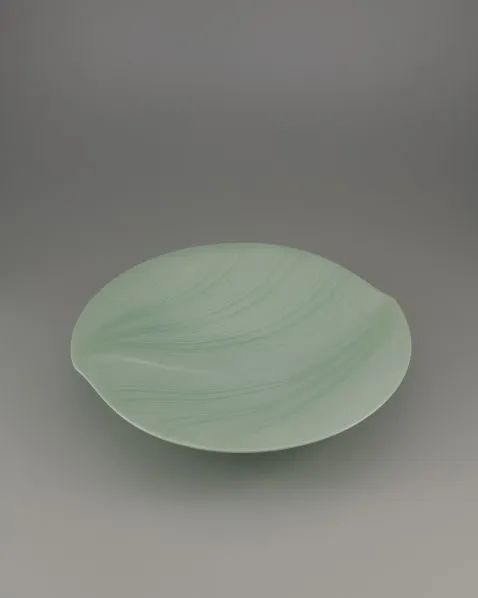
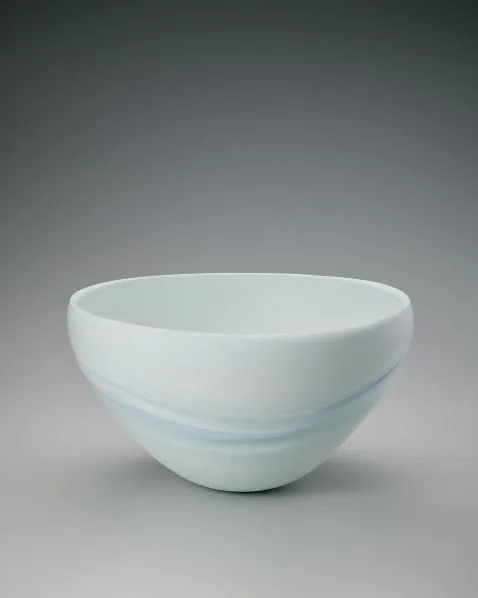
(Source:73rd Japan Traditional Kōgei Exhibition: list of prize-winning works | Japan Kōgei Association)

Even within a single category such as ceramics, it helps to separate form and surface when comparing the three works.
For the ash-glazed coloured bowl “Oboro,” the title suggests one useful starting point: the relationship between the ash glaze, colour, and the bowl’s form. For the bluish-white porcelain carved flower vessel “Ryūkei–2026–,” meanwhile, you can look closely at seihakuji’s pale tone, the relief of the carved decoration, and the shadow when light falls across it.
Hiroshi Nakata can be confirmed through the Japan Kōgei Association’s official maker information as a full member in ceramics, and has continued to show ceramic works titled “Shinju kōsai” (pearl lustre). That said, it’s best not to infer the specific making technique of “Momotamana” from the title alone; it should be confirmed at the venue caption or in the catalogue.
(Source:Hiroshi Nakata, list of works | Japan Kōgei Association)
In ceramics, what matters isn’t only “is the glaze beautiful,” but how form, firing, glaze quality, and surface are integrated into a single work.


Textiles
In textiles, Ei Miyairi’s ukiori raw-silk kimono “Tree Rain” received the MEXT Minister’s Prize, 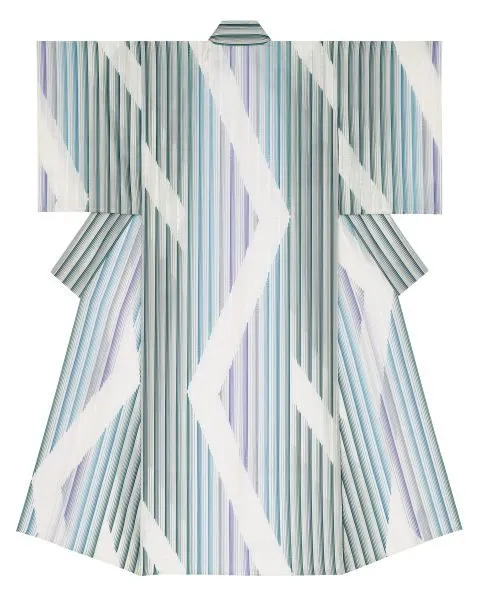

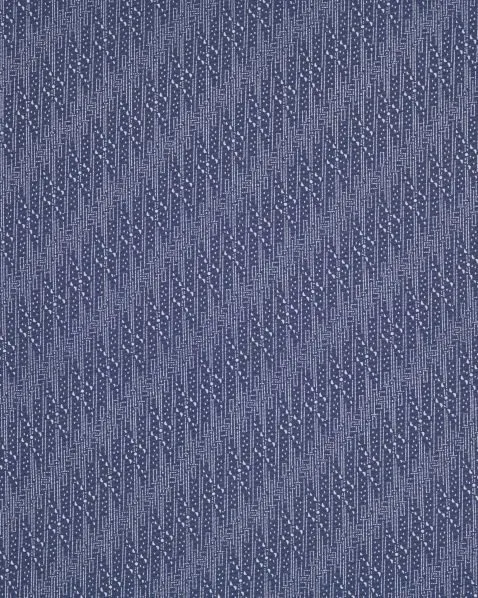

(Source:73rd Japan Traditional Kōgei Exhibition: list of prize-winning works | Japan Kōgei Association)

These four works are easier to compare if you ask at what stage of the process the pattern is created.
Ukiori produces variation on the surface through the weave structure itself. In Kokura stripe, the arrangement and colour of thread make the stripes; in Edo komon, the fine, repeated stencil-dyeing matters. In Kurume-gasuri, weaving pre-dyed threads brings the pattern into view.
In other words, even what looks like the same “pattern” isn’t drawn onto the surface afterwards. Where the image is made—at the thread stage, the dyeing stage, or the weaving stage—lies at the heart of each technique.
Ei Miyairi can be confirmed through the Japan Kōgei Association as a maker in textiles who has continued to show ukiori raw-silk kimono.
(Source:Ei Miyairi, list of works | Japan Kōgei Association)
Lacquer
In lacquer, Yasunori Sudō’s Aizu keshifun maki-e lacquer box “Wind Crossing the Valley” received the Prince Takamatsu Memorial Prize, 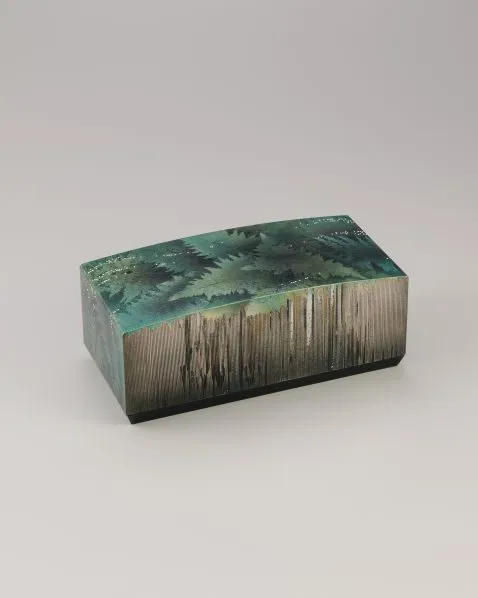
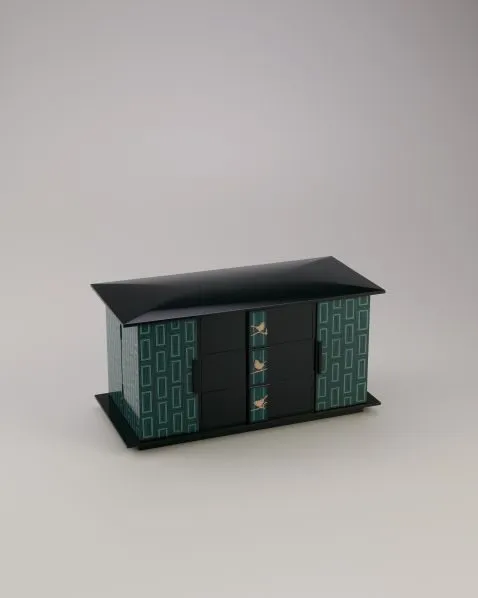
(Source:73rd Japan Traditional Kōgei Exhibition: list of prize-winning works | Japan Kōgei Association)
Though both are lacquer, these two works are a way into seeing the difference between treating lacquer as surface decoration and as a material in its own right.
Keshifun maki-e is a maki-e technique that uses fine metal powder over patterns drawn in lacquer. Tsuishitsu, by contrast, takes the thick layer built up by repeated lacquer coats as the object to be worked.
Masakazu Ishihara can be confirmed through the Japan Kōgei Association as belonging to lacquer, and has consistently produced works combining tsuishitsu and inlay, such as “Tsuishitsu inlay layered box.”
(Source:Masakazu Ishihara, list of works | Japan Kōgei Association)
In lacquer, rather than seeing only “colour” such as gold or black, understanding deepens when you look at how the surface is made through layering, grinding, polishing, and decoration.
Metalwork
In metalwork, Kōdō Murakami’s inlaid flower vessel “Canal in Dusk Colours” received the Japan Kōgei Association Chairman’s Prize. 
(Source:73rd Japan Traditional Kōgei Exhibition: list of prize-winning works | Japan Kōgei Association)

Inlay (zōgan) is a technique of setting a different material into a base metal to create pattern, colour, and variation across the surface.
In metalwork, colour isn’t necessarily “painted on” like pigment. Visual difference is produced through the colours of the different metals themselves, surface treatment, colouring, and polishing. So when looking at “Canal in Dusk Colours,” rather than taking in colour alone, it’s worth confirming where that colour arises, and how the boundaries of the planes are made.
Metalwork handles hard materials, but in the finished work the physical force and technical difficulty involved in making can disappear from the finished appearance, leaving what reads as a quiet plane. The distance between that “force of process” and “stillness of the finished form” is one of the interesting things about contemporary metalwork.
Wood and bamboo
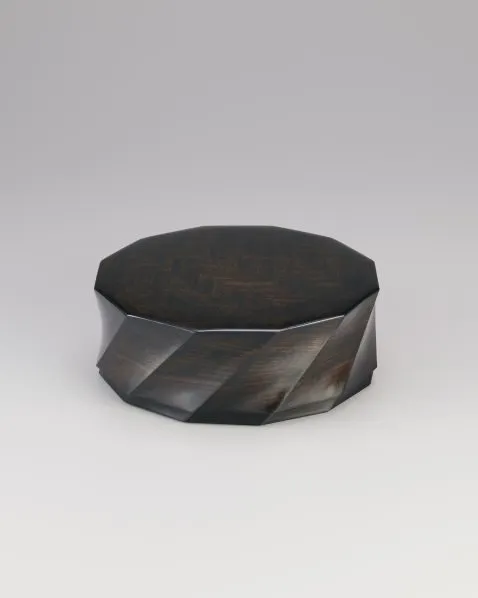
In wood and bamboo, Toshie Ōki’s flower basket “Tōsei” received the Japan Kōgei Association President’s Prize, 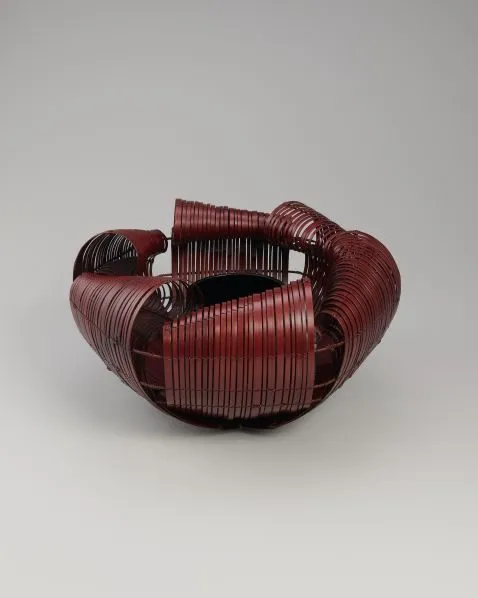

(Source:73rd Japan Traditional Kōgei Exhibition: list of prize-winning works | Japan Kōgei Association)

Even within wood and bamboo, Ōki’s flower basket and the woodwork of Hayashi and Kawaguchi differ greatly in how their forms are constructed.
In the bamboo flower basket, the repetition, curve, and crossing of the linear material, and the voids (kūgeki) themselves, make the form. The “empty parts” inside are also part of the three-dimensional structure. In the zelkova boxes and serving vessel, by contrast, grain, plane, thickness, ridge lines, and how the surface reads through wiped lacquer (fuki-urushi) matter.
When looking at wood and bamboo, what matters isn’t only how extensively the material has been manipulated, but how the maker incorporates the material’s inherent properties—such as grain and the directional character of bamboo—into the form.
Even at the stage of viewing the official work images, “Tōsei” holds together through a gathering of lines and an interior space, while in “Ceaseless Change” and “Hanshō” the planes and mass of the wood are large visual elements—giving a sense of the range within a single category.
Dolls
In the dolls category, Ritsuko Noda’s wood-core paulownia-paste, cloth- and washi-covered “Rhythm” received the Japan Kōgei Association Encouragement Prize. 
(Source:73rd Japan Traditional Kōgei Exhibition: list of prize-winning works | Japan Kōgei Association)

Wood-core tōso is a doll technique that models with paulownia paste (using paulownia powder and the like) over a core of wood or similar. This work’s title also carries “cloth- and washi-covered,” showing that not only the three-dimensional form but the materials making up the surface matter.
Noda can be confirmed through the Japan Kōgei Association as belonging to the dolls category, continuing to make works using wood-core tōso and paper-covering.
(Source:Ritsuko Noda, list of works | Japan Kōgei Association)
With doll works, the eye tends to go to the face, but the body’s centre of gravity, the direction of the limbs, the flow of clothing and surface material, and the distance to the base matter too. Given the title “Rhythm,” this is a work where you’d want to confirm at the venue not just the figure’s momentary pose but the sense of movement created by the figure as a whole.
Other crafts
In other crafts, Reiko Andō’s cloisonné lidded vessel “Drift Ice” received the Japan Kōgei Association Encouragement Prize, 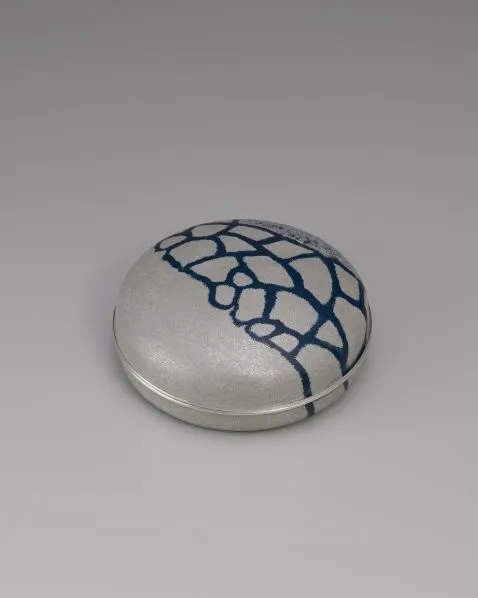

(Source:73rd Japan Traditional Kōgei Exhibition: list of prize-winning works | Japan Kōgei Association)

Thinking of other crafts as “miscellaneous crafts” misses the specialism of this category. Between cloisonné and inkstone, the materials, the making processes, and what to look for in the finished work all differ greatly.
Reiko Andō belongs to other crafts in the Japan Kōgei Association, and has shown wired cloisonné (yūsen shippō) and cloisonné vessels. Because cloisonné works through a metal body and glassy glaze, what matters visually is not only the surface gloss and colour but how the metal and glassy layers make a single plane.
(Source:Reiko Andō, list of works | Japan Kōgei Association)
Ichihime Nakamura also belongs to other crafts in the Japan Kōgei Association, and has continued to show inkstone works such as “Kyūjō-ken,” “Tōka-ken,” and “Kayō-ken.” With “Biwa inkstone,” it’s worth attending to how the form of an object with the function of an inkstone connects with the sculptural quality of the form itself.
(Source:Ichihime Nakamura, list of works | Japan Kōgei Association)
What trends in technique and material appeared in 2026?
From the sixteen prize works of the 73rd exhibition alone, you can’t assert a single trend that “2026 craft moved in this direction.” Even so, reading across the official work images, titles, techniques, and makers’ histories, a few recurring questions do emerge that are useful when viewing the works.
The first is the difference between showing the material as it is and greatly transforming its impression.
In wood and bamboo, the material’s own properties—the line of bamboo, the grain of zelkova—remain visible. By contrast, in tsuishitsu that layers lacquer, inlay that sets one metal into another, and kasuri that makes pattern from thread placement, layering several processes onto the material creates an expression different from the starting point.
The second is that works that visibly foreground technical virtuosity and works in which technique dissolves into the finished form exist side by side.
Explanations of craft tend toward the order “because the technique is very difficult, the work is excellent.” But difficulty of making isn’t the same as a work’s value. Some works strongly visualise a complex process; others converge into a plane so quiet that technical complexity is barely felt.
The third is that names indicating use—bowl, box, kimono, obi, flower vessel, serving vessel, lidded vessel, inkstone—remain in many of the winning works today.
Still, the presence of a use-name doesn’t mean the work should be seen only for its “usability” as an everyday object. Among the works at the Japan Traditional Kōgei Exhibition are those that keep the structure of a vessel while pursuing form deeply as art craft.
Rather than an either/or of usable or not usable, it’s easier to read across the 73rd exhibition’s works by asking how strongly the object’s original function remains legible in its form.
Editor’s note | How to read “where technique stands now”
Looking at this year’s winners, what I’d most avoid is the either/or of “tradition or innovation.” Ukiori, Edo komon, Kurume-gasuri, maki-e, wiped lacquer, inlay, cloisonné, bluish-white porcelain. By name alone, long-inherited techniques line up. But the works that came from them—”Tōsei,” “Wind Crossing the Valley,” “Abstract: Black Butterfly,” “Canal in Dusk Colours,” “Ryūkei–2026–”—aren’t re-makes of past works.
What is inherited in craft isn’t only a finished design, but the knowledge and technique for engaging with material. Using that shared language, where do today’s makers make their difference? Looking there is one way to read the 2026 Japan Traditional Kōgei Exhibition as “where technique stands now.”
Note that this article analyses mainly the official materials and work images released before the Tokyo showing opens. In the actual works, there is information images can’t convey—size, gloss, three-dimensionality, the finish of details. After seeing them in person, it’s worth allowing that the impression may differ from this preliminary analysis based on published images.
Five viewing points to keep in mind at the venue [checklist]
If you stand before a winning work and feel “I don’t know what’s impressive about it,” there’s no need to worry about a lack of knowledge. Looking in the order material, technique, size, surface, and overall structure makes it easier to organise a work’s information.
Checklist | Five viewing points for the winning works
- 1. Look at the material: confirm what the work begins from—clay, thread, lacquer, metal, wood, bamboo, washi, glassy matter, stone.
- 2. Look at the technique: rather than just memorising a technique’s name, find where in the work that technique appears.
- 3. Look at size and mass: confirm the height, width, thickness, and its scale in relation to the viewer’s body that official images make hard to gauge.
- 4. Look at surface and light: attend to the change when you shift your viewing position a little—the gloss of lacquer, colour difference in metal, the thickness of glaze, the raised texture of a textile.
- 5. Look at the relation of form and use: consider how much a use-indicating form—bowl, box, flower vessel, kimono, obi, serving vessel, lidded vessel, inkstone—remains within the modelling.
If you have time to spare, don’t end your viewing with the winning works—go on to see other selected works shown in the same category.
Even within ceramics, some foreground glaze, while others foreground form. Even within textiles, some make pattern through dyeing and others make it from the weave structure. Even within wood and bamboo, bamboo work that builds up line and woodwork that handles the plane and grain of wood proceed from different thinking.
Rather than seeing a winning work as “the answer,” see it as one possible response to the same material and technical tradition. Do that, and the whole Japan Traditional Kōgei Exhibition becomes interesting as a place of comparison.

Frequently asked questions (FAQ)
Here we organise the points worth checking when researching the winning works or the venues of the 73rd Japan Traditional Kōgei Exhibition 2026.
- When and where is the 73rd Japan Traditional Kōgei Exhibition held?
- The Tokyo showing is scheduled from Wednesday 2 September to Tuesday 15 September 2026, in the event hall on the 7th floor of the main building of Nihonbashi Mitsukoshi. Opening hours are 10:00 to 19:00, and admission to the Tokyo showing is free.
(Source:The 73rd Japan Traditional Kōgei Exhibition) - Who won the top prize at the 73rd Japan Traditional Kōgei Exhibition 2026?
- The Japan Kōgei Association President’s Prize went to Toshie Ōki’s flower basket “Tōsei.” It can be confirmed in the list of prize-winning works the Japan Kōgei Association announced on 15 August 2026.
(Source:73rd Japan Traditional Kōgei Exhibition: list of prize-winning works | Japan Kōgei Association) - How many categories does the 73rd exhibition have?
- Seven: ceramics, textiles, lacquer, metalwork, wood and bamboo, dolls, and other crafts. The Japan Kōgei Association holds an annual open call divided into these seven categories.
(Source:Open-call information, Japan Traditional Kōgei Exhibition | Japan Kōgei Association) - What trends are there in the 2026 winning works?
- It would be misleading to reduce the sixteen winners to a single trend, but they include both works that draw on the material’s inherent properties and works that greatly transform the material through processes such as layering, inlay, and weaving-dyeing. The relation between use-indicating forms—bowl, box, kimono, obi, flower vessel, serving vessel, lidded vessel, inkstone—and sculptural expression is also an important axis of comparison. This is Kogei Japonica’s analysis of the works, and doesn’t represent an official jury summary.
- What was recognised in the winning works?
- The Japan Kōgei Association’s list of winners gives the prize, maker, title, and image, but individual jury reasoning hasn’t been published for every winning work. So for works where official jury reasoning can’t be confirmed, it’s best to avoid asserting from the outside that “this technique was recognised.” This article analyses the works as viewing points for material, technique, and form.
- What is a Living National Treasure?
- According to the Agency for Cultural Affairs, the state designates important intangible cultural properties as Important Intangible Cultural Properties, and certifies the individuals or groups who embody and command those skills to a high degree as holders or holding groups. Among these, individually certified holders are commonly known as “Living National Treasures.”
(Source:Intangible cultural properties | Agency for Cultural Affairs) - Are the “Japan Traditional Kōgei Exhibition” and “Traditional Craft Products” the same system?
- They aren’t the same. The Japan Traditional Kōgei Exhibition is an open-call exhibition organised by the Japan Kōgei Association and others. “Traditional Craft Products,” by contrast, is a designation system based on law; despite the similar names, they are institutionally separate.
- Can the winning works be purchased?
- Winning a prize and a work being for sale are separate matters. Whether a work is for sale, its price, and where it’s handled differ by work, so check the venue’s sales information, official maker information, and handling galleries. You can’t tell from the prize information alone whether a work is available for purchase.
- Can the 73rd Japan Traditional Kōgei Exhibition be seen outside Tokyo?
- Yes. After Tokyo, the 73rd exhibition for 2026 is scheduled to tour Aichi, Kyoto, Osaka, Miyagi, Ishikawa, Okayama, Shimane, Kagawa, Fukuoka, and Hiroshima. Dates, venues, admission, and closed days differ by venue, so check the official page before visiting.
(Source:73rd Japan Traditional Kōgei Exhibition: schedule | Japan Kōgei Association)
Set the sixteen winning works of the 73rd Japan Traditional Kōgei Exhibition 2026 side by side, and it becomes clear how inadequate the single label “traditional craft” is for describing them all.
There are works that make space from the line of bamboo, and works that draw on the plane and grain of wood. Works that make pattern from thread arrangement, and works that set one metal into another. There are ways of decorating lacquer on the surface, and ways of treating the layering of lacquer itself as material.
The interest of viewing the Japan Traditional Kōgei Exhibition isn’t confirming that “traditional craft has forms like this,” but being able to compare how differently makers working within the same technical tradition have arrived at their works.
See the winning works first, then the selected works in the same category. And compare how, even with the same material, the relation of form, surface, light, and use differs.
Widen your view that far, and the 73rd Japan Traditional Kōgei Exhibition shifts from “a show for seeing advanced technique” to a show for seeing what today’s makers choose to preserve, reinterpret, and renew.